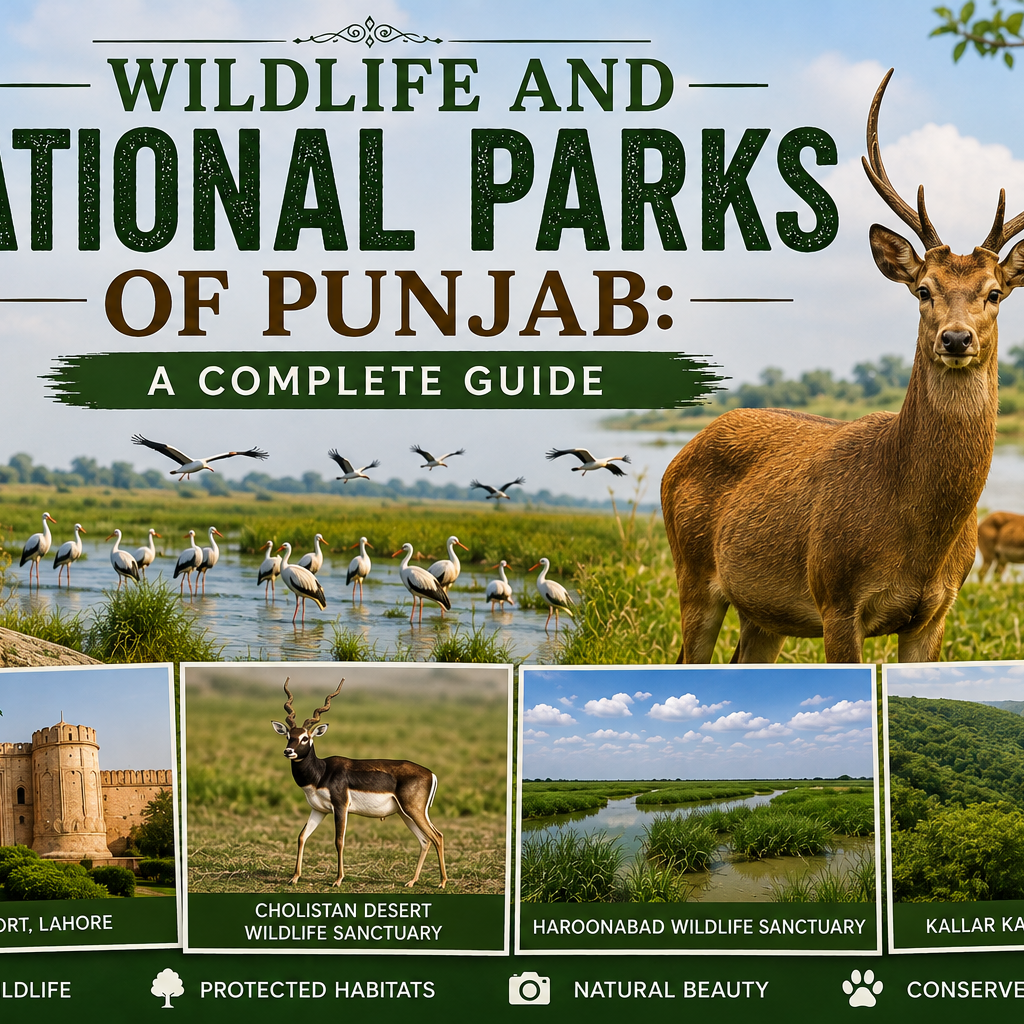
Wildlife and National Parks of Punjab: A Complete Guide
Punjab is richer in wildlife than many travellers expect. Deserts, wetlands, hills and forests each shelter their own creatures. Blackbuck, gazelle and river dolphins live within its bounds. National parks and sanctuaries protect these animals across the province. A network of reserves keeps rare species safe for the future. This guide covers the wildlife and parks of Punjab for the curious traveller. It explains the setting the parks the key species the conservation work and how to visit.
This guide offers a general overview. Figures and details vary between sources.
Quick answer: Punjab shelters a surprising variety of wildlife across its deserts, wetlands, hills and forests. Its protected areas include Lal Suhanra National Park, one of the largest in South Asia along with many wildlife sanctuaries and game reserves. Key species include the blackbuck, chinkara gazelle, nilgai, houbara bustard and the rare Indus river dolphin. Conservation efforts protect these animals through reserves, breeding and hunting bans. Winter is the finest season for wildlife watching.
About the wildlife of Punjab
Punjab holds a surprising wealth of wildlife. Its plains may look tame and settled. Yet deserts, wetlands and hills teem with life. Many creatures shelter across the province.
Varied country supports varied wildlife. Deserts hold gazelle, fox and desert birds. Wetlands shelter dolphins and migratory flocks.
A network of reserves protects this wild life and National parks guard the greatest habitats. Sanctuaries and game reserves add more cover. Together they shield the wildlife of Punjab.
Laws protect the animals too. A Punjab Wildlife Act guards native species. Hunting of rare animals is banned. These rules help wildlife survive and recover.
National parks and reserves in Punjab
Lal Suhanra is the great national park of Punjab. This park rises near Bahawalpur on the edge of Cholistan. It was the first national park in the country. A dedicated guide covers it in full.
Lal Suhanra blends three worlds in one. Desert, forest and wetland meet within its bounds. UNESCO has named it a Biosphere Reserve. Blackbuck and many birds shelter here.
Wildlife sanctuaries dot the province. Dozens of these reserves protect key habitats. Each shields the animals within its bounds. Some guard wetlands, others deserts or hills.
Game reserves add further cover. These areas manage wildlife with care. They allow the animals room to breed. Together with the parks they form a wide network.
Key species in Punjab
A blackbuck is the symbol of Punjab. This graceful antelope once roamed the plains. Hunting nearly wiped it from the wild. Reserves have brought the blackbuck back.
A chinkara gazelle roams the desert. This small gazelle suits the dry sands. It survives with little water for days. Cholistan and the Salt Range shelter it.
An Indus river dolphin is a rare treasure. This blind dolphin swims in the great river. It ranks among the rarest dolphins on earth. Sanctuaries on the Indus protect it.
Other creatures fill the province. Nilgai, hog deer and wild boar roam the plains. Urial and gazelle range the Salt Range hills. Leopards and monkeys haunt the northern forests.
Birds of Punjab
Punjab is a paradise for birds. Its wetlands draw great flocks each winter. Migratory birds fly here from far north. They rest and feed on lakes and rivers.
These barrages create rich bird habitats. Still water gathers above their gates. Ducks, coots and waders crowd the shallows. Taunsa and Chashma teem with winter birds.
A houbara bustard visits the deserts. This large bird winters in Cholistan. It crosses vast distances to reach Punjab. Conservation now works to protect it.
Raptors and songbirds fill the skies. Eagles, falcons and vultures hunt the plains. Smaller birds flit through scrub and forest. Birdwatchers find rich rewards here.
Conservation and its challenges
Conservation has won some real successes. A rescued blackbuck came back from the brink. Breeding centres have raised rare species. River dolphins have grown in number too.
This work faces many challenges. Farming and cities press on wild habitats. Water shortages threaten the wetlands. Poaching still endangers some species.
Reserves lie at the heart of the effort. Parks and sanctuaries shield key habitats. Breeding programmes restore lost species. Laws guard animals against hunting.
Awareness grows across the province. Schools and centres teach the value of wildlife. Eco tourism brings visitors to the parks. This interest helps fund conservation.
Visiting the National parks in Punjab
Come in winter. Summers grow fiercely hot on the plains. Cooler months are best for wildlife. Winter also brings the migratory birds.
Head to Lal Suhanra. This great park is the finest for wildlife. Blackbuck, birds and desert scenery await. A dedicated guide covers the visit in full.
Seek the wetlands for birds. Barrage sanctuaries teem with winter flocks. Dawn and dusk are the best times. Bring binoculars for the finest views.
Respect the wild places. Keep a distance from the animals. Follow the rules of each reserve. Take away nothing but photographs.
Frequently asked questions
What wildlife lives in Punjab? Punjab shelters a surprising variety of wildlife across its deserts, wetlands, hills and forests. Its best known animal is the blackbuck a graceful antelope once nearly lost to hunting and now protected in reserves alongside the chinkara gazelle, nilgai and hog deer. A rare Indus river dolphin swims the rivers, one of the most endangered dolphins in the world. Salt Range hills shelter urial and gazelle, while the northern forests hide leopards and monkeys. Wetlands and deserts also attract a great variety of birds, especially in winter.
What are the national parks of Punjab? A best known national park is Lal Suhanra, near Bahawalpur. It is one of the largest in South Asia and the first to be established in the country, in 1972. It blends desert, forest and wetland ecosystems and is recognised as a UNESCO Biosphere Reserve, sheltering blackbuck, chinkara and over 160 species of birds. Beyond the national parks, Punjab has many wildlife sanctuaries and game reserves. These include dolphin sanctuaries on the Indus and important wetland sites around the barrages, forming a wide network of protected areas.
What is the Indus river dolphin? A rare freshwater dolphin lives in the Indus and its tributaries. It ranks among the most endangered dolphins in the world. Almost blind, it finds its way and hunts using sound rather than sight, navigating the muddy waters of the great river. Once close to extinction, its numbers have slowly recovered, helped by sanctuaries along the Indus, such as those near the Chashma and Taunsa barrages. It is now a symbol of river conservation in Pakistan a species that attracts the interest of scientists and nature lovers alike.
Why is the blackbuck important to Punjab? A blackbuck is one of the most iconic animals of Punjab a graceful antelope with spiralling horns that once roamed the open plains in great numbers. Hunting and the loss of habitat nearly wiped it from the wild, making its recovery a major conservation goal. Within Lal Suhanra National Park, blackbuck were reintroduced and now live in a protected reserve, where they have bred and recovered. As a result the blackbuck has become a symbol of wildlife conservation in the province and a highlight for many visitors to the park.
When is the best time to see wildlife in Punjab? Winter from around November to February, is the best time to see wildlife in Punjab, when the weather is mild and the summer heat has passed. Winter is also the peak season for birdwatching as migratory birds arrive in great numbers at the wetlands, lakes and barrages across the province. Early morning and late afternoon are the best times of day to spot animals, when they are most active. Lal Suhanra National Park, near Bahawalpur, is the finest single destination, while the barrage sanctuaries reward those seeking birds.
Wild life side of Punjab
These wild places are the untamed side of settled Punjab. Deserts, wetlands and hills shelter a wealth of creatures. Blackbuck, gazelle and river dolphins survive within its bounds. Parks and sanctuaries guard these animals for the future. Winter brings great flocks of birds to its waters. Few settled lands hold such hidden wild riches.
You may seek the wildlife for the animals the birds or the wild scenery. This wild side rewards the search either way. You can watch the blackbuck herds at Lal Suhanra. You can spot winter flocks on the barrage wetlands. You can learn how rare species are being saved. Come in winter and explore the wild side of Punjab. This is the wildlife of Punjab.