Jamrud Fort: A Complete Guide
Jamrud Fort is the great gateway fort of the Khyber Pass. This mighty fort keeps guard at the mouth of the pass. A famous Sikh general raised it nearly two centuries ago. Its thick walls have watched the road to Afghanistan. A great battle was fought on the plain before it. This guide covers Jamrud Fort for the curious traveller. It explains the setting the name the history the great battle and how to visit.
This guide offers a general overview. Details and figures vary between sources.
Quick answer: Jamrud Fort also known as Fatehgarh, guards the eastern entrance to the Khyber Pass. It rises beside the Bab e Khyber gate west of Peshawar. It was built in 1836 by the Sikh general Hari Singh Nalwa with thick walls raised in just weeks. This fort is famous for the Battle of Jamrud in 1837, where Nalwa lost his life. It now serves as a frontier post, so it is not open to the public. Spring and autumn are the finest seasons to see it.
About Jamrud Fort
Jamrud Fort keeps guard at the mouth of the Khyber Pass. It is located a short way west of Peshawar. A grand gate the Bab e Khyber, rises close beside it. Roads and rail run past towards the pass.
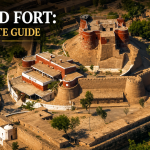
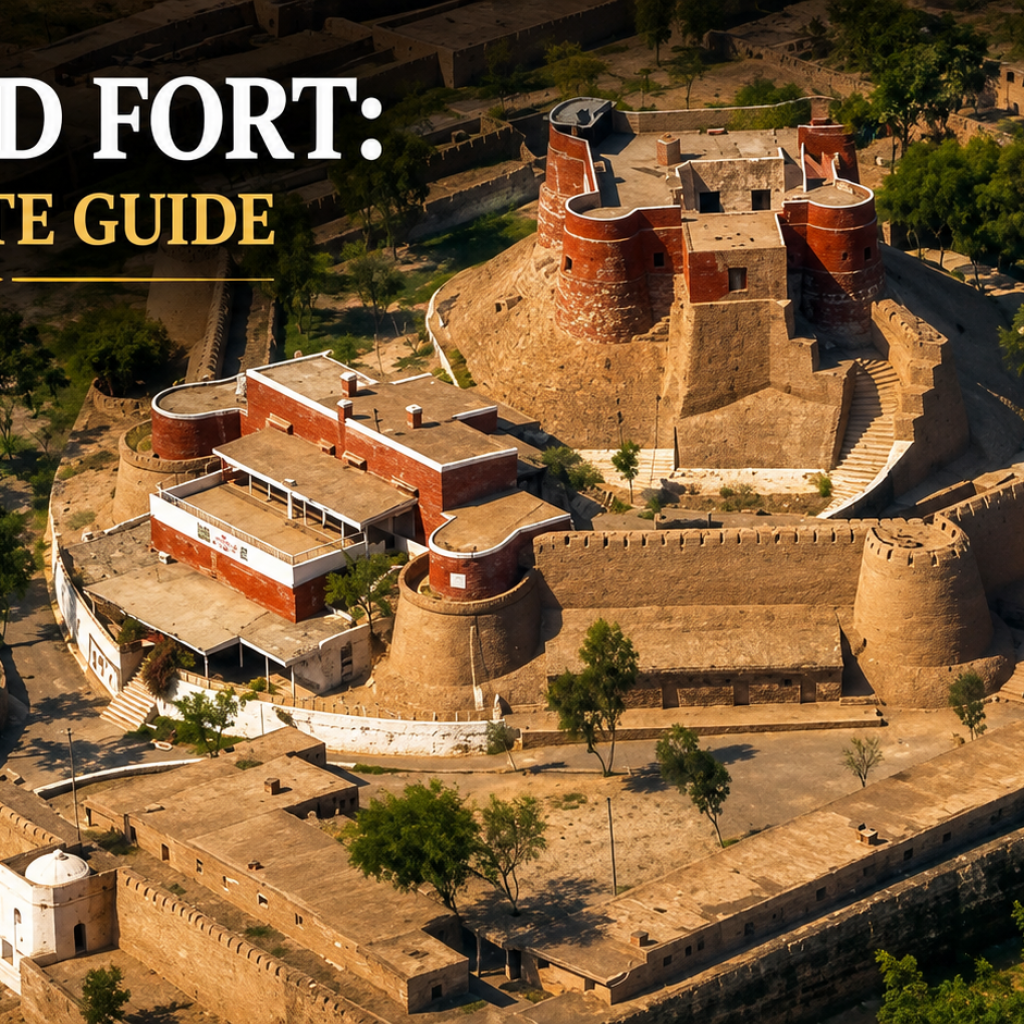
A commanding spot marks the old fort. It rests on a high mound above the plain. Views reach out across the frontier country. This position long gave the fort its weight.
A great gateway role shaped its story. This stronghold guards the entrance to the famous pass. Caravans and armies passed by its walls. Trade and war flowed through the country.
This fort keeps firm to this day. Thick walls still ring the old stronghold. Watchtowers rise above the great mound. Few forts guard so famous a road.
Name of Jamrud Fort
Jamrud carries an old and storied name. Its word joins two Persian roots. Jam recalls a legendary king of Persia. Rud means a river in the old tongue.
A legendary king lends his name. Old tales tell of Jamshed of Persia. His name lives on in the word Jamrud. So the whole means the river of Jamshed.
Deep roots mark the old site. Traditions tie it to ancient Persia. A place of importance stood here long ago. History runs deep beneath the fort.
An older fort may have stood here. Some hold that the Mughals built here first. Nalwa raised his fort on the older site. Layers of the past rest beneath the walls.
History of Jamrud Fort
Jamrud Fort carries a proud Sikh story. Hari Singh Nalwa built it in 1836. He served as the great general of Ranjit Singh. His fort marked the edge of the Sikh empire.
Sikh forces took Jamrud from the tribes. Nalwa seized the frontier village in 1836. He laid the foundation of the fort at once. Thousands of workers raised it in weeks.
A mighty stronghold rose on the mound. Thick walls of great width ringed the fort. Watchtowers held cannons on every side. Its design recalled the fort of Bala Hisar.
A proud name marked the victory. Nalwa called the fort Fatehgarh. This word means the fort of victory. So the name honoured the Sikh triumph.
Battle of Jamrud
Jamrud saw a famous battle in 1837. Afghan and Sikh forces clashed on the plain. This clash cost Hari Singh Nalwa his life. Yet the Sikhs held the fort in the end.
Trouble came while the army was away. Sikh troops had gone to Lahore for a wedding. Afghan forces struck the weakly held fort. They hoped to seize the frontier stronghold.
Nalwa defended the fort to the last. He held on with a small force against many. Word went out for help from Lahore. Reinforcements could not reach him in time.
A great general fell in the fight. His death marked a heavy loss for the Sikhs. Still the Afghans failed to take the fort. They withdrew without their prize at last.
Jamrud Fort today
Jamrud Fort still guards the mouth of the pass. It serves as a frontier post today. Troops keep watch from the old walls. This use has kept it in careful hands.
A frontier force holds the old stronghold. Guards keep the fort as a military post. Its walls and towers stand intact. Careful hands maintain the historic site.
A grand gate rises close beside it. This grand gate marks the way to the pass. Travellers pass it on the frontier road. Fort and gate together guard the route.
Access to the fort stays limited today. Its military role bars the general public. Visitors may view it from the road. Its walls still impress from without.
Visiting Jamrud Fort
Come in spring or autumn. Summers grow hot and dusty on the plain. Winters turn cool and crisp. Mild seasons suit a visit best.
Start from Peshawar city. This fort rests a short drive to the west. Jamrud town marks the gateway to the pass. A guide helps for the frontier road.
Check access before you go. This fort serves as a military post. Public entry is barred or arranged. A view from the road may be the best option.
Take in the setting and the gate. A grand arch marks the way to the pass. Great walls impress from the road. Bring time to picture the battle of old.
Frequently asked questions
Who built Jamrud Fort? Jamrud Fort was built in 1836 by Hari Singh Nalwa the famous general and commander in chief of the army of the Sikh ruler Maharaja Ranjit Singh. After Sikh forces captured the frontier village of Jamrud from the local tribes, Nalwa laid the foundation of a strong fort at the mouth of the Khyber Pass. Thousands of workers raised it in a matter of weeks. Builders gave it thick walls and watchtowers, on a high mound overlooking the surrounding country. It marked the western edge of the Sikh empire and guarded the approach to the famous pass.
Why is it called Fatehgarh? Jamrud Fort was originally named Fatehgarh a word meaning the fort of victory, to mark the Sikh triumph over the tribes of the frontier. Hari Singh Nalwa gave the fort this proud name after capturing Jamrud and pushing the Sikh frontier to the very mouth of the Khyber Pass. This name reflects the role of the fort as a symbol of Sikh power on the north west frontier. Although it was built as Fatehgarh the fort came to be known more widely by the name of the town. Today it is usually called simply Jamrud Fort.
What was the Battle of Jamrud? A great clash the Battle of Jamrud, was fought in April 1837 between the Sikhs and the Afghans at the fort that Hari Singh Nalwa had built the year before. While much of the Sikh army was away at Lahore for a royal wedding afghan forces attacked the weakly guarded fort, hoping to seize this key frontier stronghold. Nalwa led its defence with a small force, holding out against far greater numbers. Reinforcements from Lahore could not reach him in time. He was killed in the fighting. Despite his death the Sikhs held the fort. Afghan forces withdrew without taking it.
Can you visit Jamrud Fort? Jamrud Fort is not generally open to the public as it serves today as a post of the Frontier Corps, guarding the entrance to the Khyber Pass. Visitors travelling towards the pass can see the fort and the neighbouring Bab e Khyber gate from the road, where its thick walls and high mound are clearly visible. Because the fort rests in the frontier country of the Khyber, travel in the area may require local permission or guidance. For most visitors a view of the fort from the road along with the grand gateway beside it, is the usual way to experience the site.
Where is Jamrud Fort? Jamrud Fort is located at the eastern entrance to the Khyber Pass about eighteen kilometres west of Peshawar, in the Khyber District of Khyber Pakhtunkhwa. It is set beside the Bab e Khyber the grand gateway arch that marks the start of the pass. Road and rail run past towards Landi Kotal and the Afghan border at Torkham. Set on a high mound at around 1,500 feet the fort commands the plain at the mouth of the pass. Its position made it a key guard post on the historic route between the subcontinent and Central Asia.
Sentinel of the Khyber
Jamrud Fort is the great sentinel of the Khyber Pass. This mighty fort keeps guard at the mouth of the pass. A famous Sikh general raised it nearly two centuries ago. Its thick walls have watched the road to Afghanistan. A great battle was fought on the plain before it. Few forts guard so storied a gateway.
You may come to Jamrud Fort for the history the battle or the gate. This landmark rewards the visit either way. You can gaze at its walls from the frontier road. You can picture the battle that made it famous. You can stand before the grand gate of the Khyber. Come to Jamrud Fort and discover the sentinel of the pass. This is the great gateway fort of the frontier.