Sphola Stupa: A Complete Guide
A last Buddhist shrine keeps guard over the Khyber Pass. This ancient mound rises beside the old road through the hills. Kushan builders raised it nearly two thousand years ago. Its dome once held relics of the Buddhist faith. This shrine survives as the sole such monument along the pass. This guide covers the Sphola Stupa for the curious traveller. It explains the setting the history the architecture, its later story and how to visit.
This guide offers a general overview. Details and figures vary between sources.
Quick answer: A Buddhist stupa in the Khyber Pass the Sphola is set between Ali Masjid and Landi Kotal near Zarai village. Built in the Kushan age from around the 2nd to the 5th century CE, it is the most complete Buddhist monument left in the pass. A dome on a three tiered base marks its striking form. Gandhara sculptures found here now rest in the Peshawar Museum. A great mound rests in the frontier country near Jamrud. Spring and autumn are the finest seasons.
About the Sphola Stupa
A great shrine rises beside the old road through the Khyber Pass. It is located between Ali Masjid and Landi Kotal. Zarai village rests close by near Jamrud. High hills ring the ancient mound.
A commanding spot marks the old shrine. This mound keeps guard on a rocky platform. A valley opens out below it. Mountains rise on the far side.
An ancient faith raised the great mound. Buddhist builders shaped it in the Kushan age. Pilgrims once came to worship here. Trade and faith flowed along the pass.
This shrine survives almost alone today. Few such shrines survive in the pass. This one has weathered many centuries. It recalls a lost Buddhist world.
History of Sphola Stupa
A great shrine carries a very old story. Kushan builders raised it long ago. Its age reaches back nearly two thousand years. Deep history rests within the mound.
Buddhism once flourished across this country. A wider land of Gandhara embraced the faith. Monasteries and stupas rose across the hills. This shrine formed part of that great age.
Kushan kings favoured the Buddhist faith. Their empire held the Khyber in its day. Stupas rose along the trade routes. Faith and commerce moved together through the pass.
Scholars link the site to famous ages. Days of Ashoka and the Kushans meet here. Fine sculptures came to light at the mound. These finds tell of the golden age of Gandhara.
Architecture of Sphola Stupa
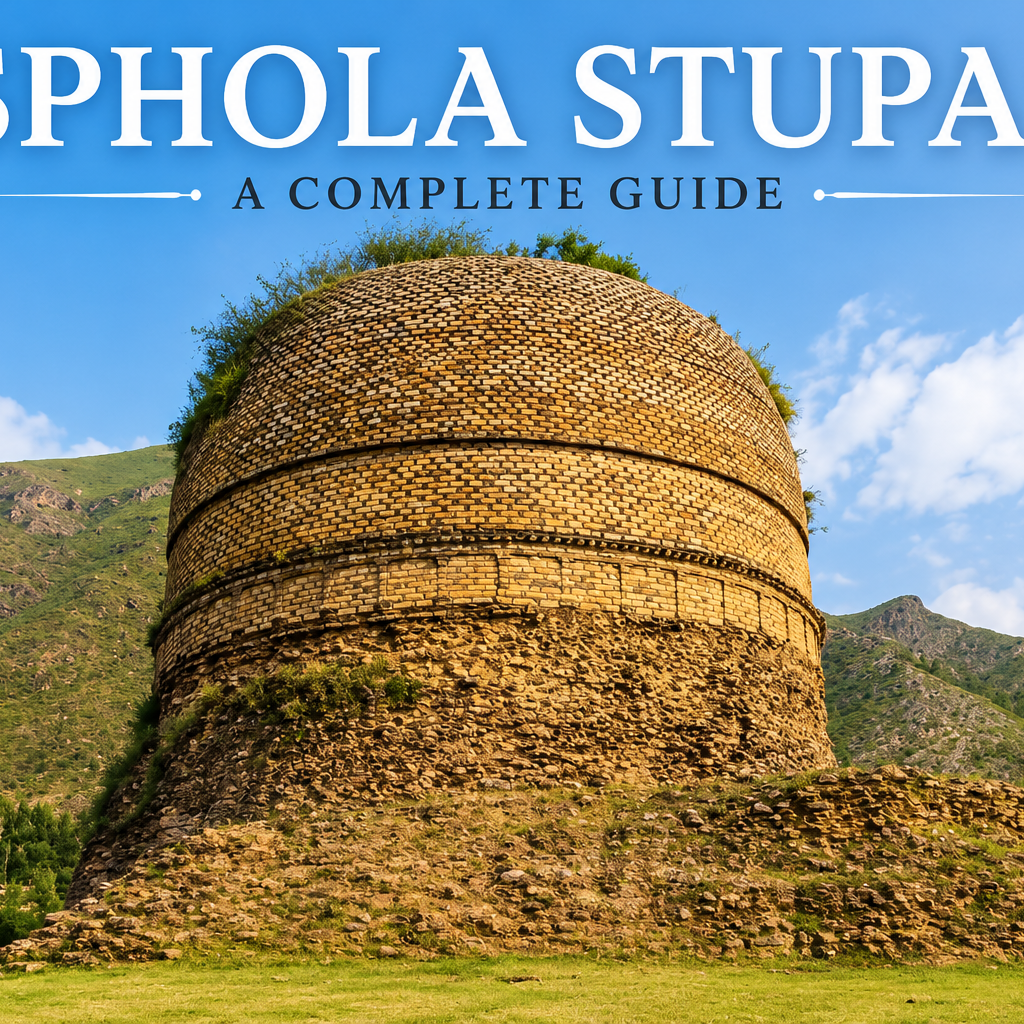
A great mound shows the classic form of its age. A great dome once crowned the shrine. A tiered base lifts it above the rock. This shape marks the stupas of Gandhara.
A three tiered base supports the mound. Square terraces rise one above another. A dome once sat upon this platform. Strong stonework holds the whole together.
A rocky platform lifts the stupa high. Layers of rock support its heavy base. This shrine faces out across a valley. Mountains form a grand backdrop behind.
Time has worn the ancient shrine. Grass now pushes through the fallen stones. A worn dome has lost much of its old form. Yet the base still shows its ancient shape.
Later story
A lonely shrine met hard times in later ages. It stood well preserved for many centuries. Damage came with the changes of the modern age. Much of its glory has since been lost.
Trouble followed the coming of new rulers. Diggers tore at the dome in search of treasure. Builders took stone from the mound for roads. So the ancient shrine slowly suffered.
Sculptures left the site in the last century. Diggers unearthed fine Gandhara carvings here. A statue of the Buddha came to light. These treasures now rest in the Peshawar Museum.
Care has returned to the old shrine of late. Archaeologists work to restore the base. Plans call for a Buddha figure before the stupa. So the ancient mound may yet be saved.
Visiting the Sphola Stupa
Come in spring or autumn. Summers grow hot in the pass. Winters turn cold on the heights. Mild seasons suit a visit best.
Reach the stupa through the Khyber Pass. It rests beside the old road near Zarai. Jamrud marks the gateway to the route. Local guidance helps for the frontier road.
Check access before you travel. This shrine rests in a sensitive frontier area. Local permission may be needed to visit. A little planning saves much trouble.
Take in the site and the setting. An old mound recalls a lost faith. Grand hills frame the ancient shrine. Bring time to picture the pilgrims of old.
Frequently asked questions
What is the Sphola Stupa? A stupa in the Khyber Pass also spelt Shpola, is set between Ali Masjid and Landi Kotal near the village of Zarai, not far from Jamrud. Built during the Kushan age from around the 2nd to the 5th century CE, it is one of the largest Buddhist mounds of ancient Gandhara. No other such monument survives so complete in the pass. This shrine takes the form of a dome resting on a three tiered base, set on a rocky platform above a valley. It survives as a rare reminder of the time when Buddhism flourished along this ancient route.
How old is the Sphola Stupa? A great mound dates from the Kushan period, generally placed between the 2nd and the 5th century CE, making it around fifteen to eighteen centuries old. It belongs to the great age of Gandhara Buddhism, when the Khyber and the wider country around Peshawar formed a heartland of the faith. Some scholars connect the site to the earlier age of the emperor Ashoka as well as to the Kushans, reflecting the long span of Buddhist devotion in the area. Whatever its exact date the stupa is among the oldest surviving monuments along the historic pass.
What was found at the Sphola Stupa? Excavations at the Sphola Stupa in the early 20th century brought to light fine examples of Gandhara Buddhist art, including sculptures and a statue of the Buddha. These works, carved in the distinctive Gandhara style that blended Buddhist subjects with Greek and Roman influences are now held in the Peshawar Museum. That museum holds one of the great collections of such art in the world. These finds confirm the importance of the stupa as a centre of Buddhist worship in the Kushan age. For visitors, seeing these sculptures in Peshawar adds much to a visit to the stupa itself.
Can you visit the Sphola Stupa? A great shrine can be visited, though it rests in the frontier country of the Khyber Pass. This sensitive border area may require local permission or guidance for travel. Visitors usually reach the site through Jamrud and along the main road of the pass, ideally with a local guide who knows the area and the current arrangements. This shrine rests beside the road on its rocky platform with fine views over the surrounding hills. Because access can change, it is wise to check the latest position and make arrangements before setting out.
Why is the Sphola Stupa important? A great shrine is important as the most complete surviving Buddhist monument in the Khyber Pass, perhaps the only one. This rare link recalls the Buddhist past of the famous route. It recalls the age when the Khyber lay within the Kushan Empire and Buddhism flourished across Gandhara with stupas and monasteries spread along the trade routes. Fine sculptures found here, now in the Peshawar Museum, show the richness of that heritage. As a lone survivor along a pass better known for conquest and trade the shrine holds a special place in the history of the area.
Last stupa of the Khyber
A last shrine keeps watch over the Khyber Pass. This ancient mound rises beside the old mountain road. Kushan builders raised it nearly two thousand years ago. Its dome once held relics of the Buddhist faith. Grand hills frame the lonely shrine today. Few monuments hold such deep and lonely history.
You may come to the Sphola Stupa for the history the art or the setting. This site rewards the visit either way. You can stand before the last stupa of the pass. You can picture the pilgrims who once worshipped here. You can trace its sculptures in the Peshawar Museum. Come to the Sphola Stupa and discover the last shrine of the Khyber. This is the lost faith of the frontier.