Chitral Fort: A Complete Guide
Chitral Fort is the royal stronghold of the Hindu Kush. This old fort rests at a bend of the Chitral River. Great chinar trees shade its orange walls. This fort served as the home of the ruling Mehtars for ages. A famous siege made it known across the wider world. This guide covers Chitral Fort for the curious traveller. It explains the setting the history the siege the fort today and how to visit.
This guide offers a general overview. Details and figures vary between sources.
Quick answer: Chitral Fort also known as the Shahi Qila, is a historic royal fort on the bank of the Chitral River in the town of Chitral. Built in 1774 by the ruling Katur dynasty and later restored, it long served as the residence of the Mehtars the rulers of the mountain state. This fort is famous for the Siege of Chitral in 1895, when a British force was besieged here for weeks. It remains the home of the ceremonial Mehtar, so access is limited. Summer is the finest season.
About Chitral Fort
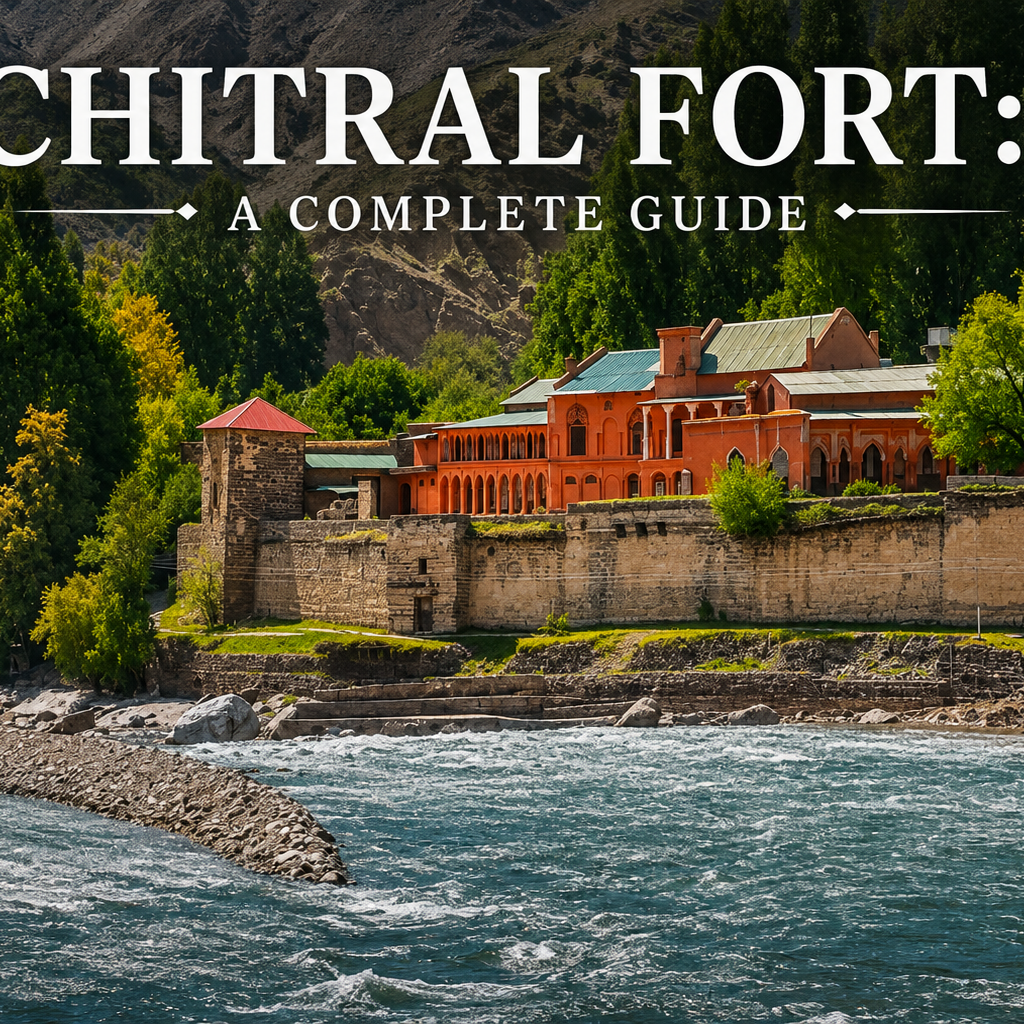
Chitral Fort rests on the bank of the Chitral River. It is located in the heart of Chitral town. Great chinar trees shade its riverside walls. A commanding spot marks the old stronghold.
An orange block rises above the water. This stronghold keeps guard at a bend of the river. Its walls look out over the flowing stream. Mountains ring the whole town beyond.
A royal past clings to the fort, once the seat of the Mehtars of old. Their court and guards filled its halls. This town grew up around the great fort.
This fort ranks among several in the area. Chitral once held four or five forts. This one served as the chief of them all. Its strength made it the hardest to take.
History of Chitral Fort
Chitral Fort carries a long royal story. A ruling line the Katur dynasty, held the mountain state. Their Mehtars held sway for centuries. This fort stood at the heart of their rule.
Katur rulers raised the fort in 1774. Mohtaram Shah Katur built it by the river. Some hold that an older fort stood here before, guarding the town for ages.
This fort served the rulers in many ways. It housed the Mehtar and his guards in winter. Its halls formed the seat of the state. Around it grew the bazaar and the town.
Later rulers restored the old fort. Shuja ul Mulk refurbished it in the early 1900s. He reigned for over forty years in peace. His works left their mark on the fort.
Siege of Chitral
Chitral Fort is famous for a great siege. This event unfolded in the spring of 1895. A British force found itself trapped inside. This crisis drew the eyes of the wider world.
Trouble followed the death of a ruler. Rival claimants fought for the throne. A British agent held the fort against them. Armed men surrounded the walls for weeks.
A long siege lasted around seven weeks. Food and hope ran short inside the fort. Its defenders held on against the odds. Relief came at last in the spring.
Two British forces marched to the rescue. One column climbed up from Gilgit. Another fought its way over the passes. Their arrival ended the siege at the town.
Chitral Fort today
Chitral Fort still keeps its royal role. It remains the home of the ceremonial Mehtar. Royal offspring live within its walls. This use has kept the fort in careful hands.
Old halls fill the great fort. A grand Darbar hall rests at its heart. State rooms open off the courtyards. Old cannons rest along the walls as relics.
An earthquake struck the fort in 2015. A strong tremor damaged the old halls. Careful work has since restored them. A grand Darbar hall shines again today.
A fine mosque rises close beside the fort. Shuja ul Mulk built this mosque in the 1920s. White marble and pink domes adorn it. Fort and mosque together crown the town.
Visiting Chitral Fort
Come in summer for the finest weather. Warm days reward the long journey here. Spring and autumn bring mild, clear skies. Winter shuts many high passes with snow.
Reach the fort within Chitral town. It rests on the bank of the river. A fine mosque rises right beside it. A short walk links the two landmarks.
Check access before you go. This fort remains a private royal home. A permit or arrangement may be needed. Local guides can help with the visit.
View the fort from across the river. Its finest side faces the flowing water. A far bank offers a grand view. Bring a camera for the riverside scene.
Frequently asked questions
What is Chitral Fort? Chitral Fort also known as the Shahi Qila or Royal Fort, is a historic fortress on the bank of the Chitral River in the heart of Chitral town. It rises in the far north of Khyber Pakhtunkhwa. Built in 1774 by the ruling Katur dynasty and restored in later years, it served for centuries as the residence of the Mehtars the hereditary rulers of the mountain state. It also formed the seat of their government. Set at a bend of the river amid great chinar trees the fort held a commanding position that made it the strongest of the several forts around Chitral. It remains a treasured symbol of the royal heritage of the area.
Why is Chitral Fort famous? Chitral Fort is famous above all for the Siege of Chitral in 1895 a dramatic episode on the North West Frontier. After the death of a ruler led to a struggle for the throne a British agent and his small force were besieged inside the fort for around seven weeks. They held out against surrounding fighters until relief arrived. Two British columns marched to the rescue, one climbing up from Gilgit and another fighting over the high passes, finally lifting the siege. This episode drew wide attention at the time and secured the fame of the fort in the history of the area.
Who built Chitral Fort? Chitral Fort was built in 1774, during the reign of Mohtaram Shah Katur of the Katur dynasty. This line ruled the mountain state of Chitral for centuries. Some traditions suggest that an older fort stood on the same commanding site by the river before that date. A later ruler restored and refurbished it in the early 20th century, Mehtar Shuja ul Mulk, one of the longest reigning rulers of the state, who also built the neighbouring Shahi Masjid. Over the years the fort has been repaired and renovated several times, including after an earthquake in 2015, keeping it close to its original form.
Can you visit Chitral Fort? Chitral Fort can be admired from the outside, though access to the interior is limited as it remains the private residence of the ceremonial Mehtar and the royal family. Visitors usually need a permit or special arrangement to enter, often granted through the local administration or by prior contact. A finest view opens from across the Chitral River or from the far end of the nearby bazaar, where its riverside walls are seen to best effect. A neighbouring mosque the Shahi Masjid with its white marble and pink domes, is also well worth seeing on the same visit.
When is the best time to visit Chitral Fort? A best time to visit Chitral Fort along with Chitral as a whole, is in summer from around May to September. Warm days come then. High passes and roads into the valley stay open. Spring and autumn bring mild, clear days that are also pleasant for sightseeing, while winter is cold with snow closing many of the higher routes into the area. Visitors often come to see the fort and the Shahi Masjid together along with the wider attractions of the town. These summer months are also the season for exploring the nearby Kalash valleys.
Royal fort of Chitral
Chitral Fort is the royal fort of the Hindu Kush. This old stronghold rests at a bend of the river. Great chinar trees shade its orange walls. Mehtars ruled the mountain state from its halls. A famous siege made it known across the world. Few forts hold such royal history in the mountains.
You may come to Chitral Fort for the history the siege or the views. This landmark rewards the visit either way. You can gaze at its walls above the flowing river. You can picture the siege that made it famous. You can admire the marble mosque that rises beside it. Come to Chitral Fort and discover the royal seat of the Hindu Kush. This is the great stronghold of the mountains.