Sialkot Surgical Instruments: A Complete Guide
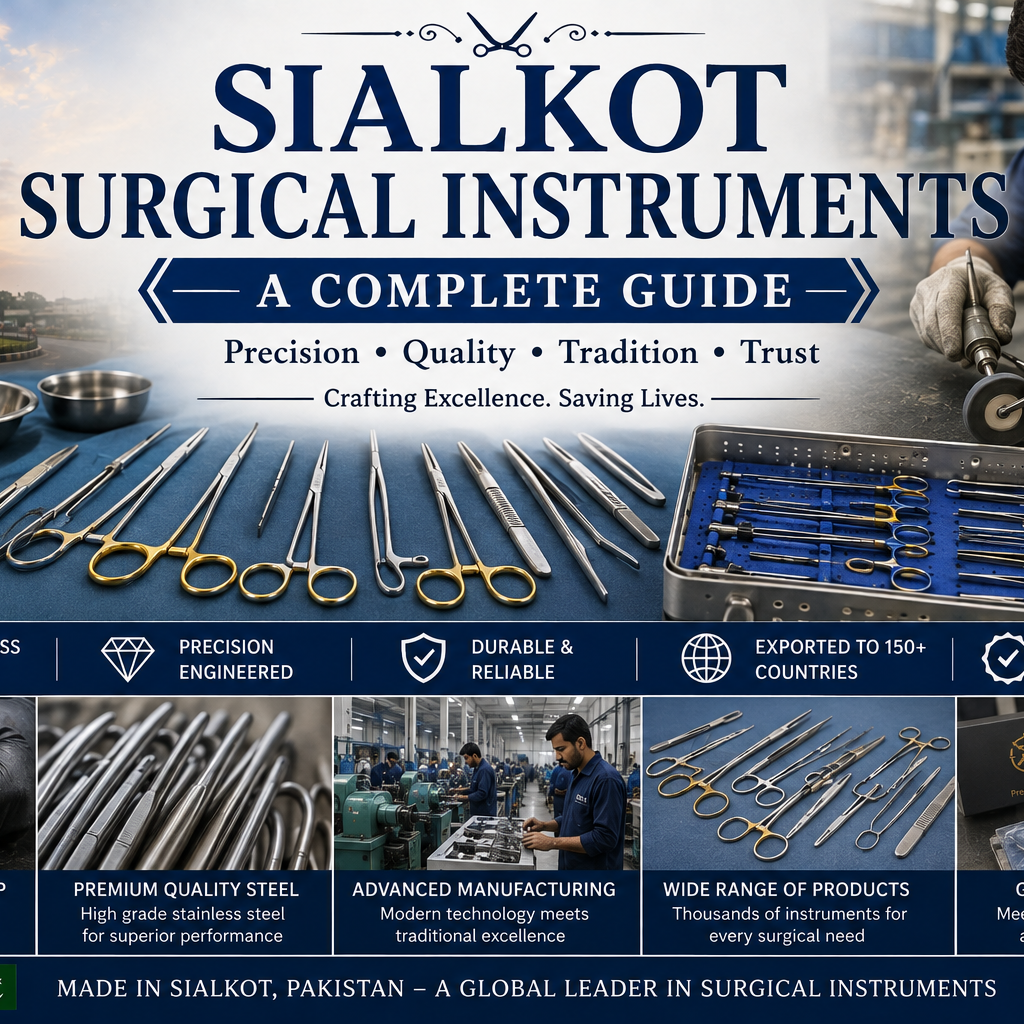
Sialkot surgical instruments serve operating theatres around the world. This Punjab city is a global hub for surgical tools. Skilled hands forge scalpels, forceps and scissors from fine steel. Its instruments reach hospitals in more than a hundred countries. This same metalworking skill drives its famous sports goods too. This guide covers Sialkot surgical instruments for the curious traveller. It explains the roots the products the making the standards and its place in the world.
This guide offers a general overview. Figures and dates vary between sources.
Quick answer: Sialkot, in north eastern Punjab, is one of the great centres for surgical instrument manufacturing in the world. Its craft began in the late 19th century, when local blacksmiths made tools for British army surgeons. Sialkot now produces thousands of different instruments from scalpels and forceps to scissors, mostly in stainless steel. Its goods are exported to well over a hundred countries and are reckoned among the finest anywhere. Sialkot ranks with the great names of the trade.
Roots of the industry
Sialkot surgical instruments have deep roots. This city has worked metal for centuries. Its blacksmiths won fame for fine metalwork. Skill lay ready for a new trade.
British surgeons needed fine instruments. Their tools broke or wore out in service. Local smiths repaired them with great skill. Soon Sialkot made whole instruments of its own.
A craft grew fast in the early 1900s. Craftsmen learned to make full ranges of tools. Scalpels, forceps and scissors flowed from the workshops. Word of their quality spread abroad.
Export began between the world wars. Orders arrived from Europe and beyond. A metal centre opened to aid the makers. So a great export trade took root.
Instruments
Sialkot makes a vast range of instruments. Its workshops turn out thousands of designs. Each tool serves a special surgical need. Surgeons across the world rely on them.
Cutting tools form the core of the trade. Scalpels make the fine first incision. Scissors cut clean in straight or curved forms. Sharp edges demand great care in the making.
Gripping tools fill the range too. Forceps hold tissue with a sure grip. Many kinds serve many tasks. Needle holders aid the surgeon in stitching.
Specialised sets serve every field. Dental and eye tools need fine work. Bone and heart surgery call for their own kits. Veterinary sets round out the range.
Both reusable and single use tools are made. Reusable instruments serve for years of surgery. Disposable ones suit a single, sterile use. Hospitals choose to fit their needs.
Steel and the making
Fine steel rests at the heart of the craft. Medical grade stainless steel resists rust. Its strength suits the surgical blade. Much of the steel comes from abroad.
Forging shapes the raw metal first. Smiths beat the steel into rough form. Heat and hammer give the tool its shape. One piece forging makes a strong instrument.
Skilled hands finish each piece. Craftsmen file and grind the rough tool. They polish the steel to a bright shine and fine handwork sets the best tools apart.
Machines aid the modern workshop. New tools bring speed and fine measure. Craft and machine work side by side. This blend keeps the quality high.
Standards and quality
Quality is the hallmark of the trade. Surgeons trust their tools with lives. So each instrument must meet strict marks. Careful checking guards every piece and international rules shape the work. Markets abroad set high standards. European buyers demand the CE mark. American sales need their own approval.
Testing runs through the whole process. Makers check each tool before export. They measure, inspect and test with care. Only sound instruments leave the workshop.
Sialkot ranks among the great names. Its quality ranks second to few in the world. Only the top makers surpass it. Sialkot has earned a proud name.
Surgical industry and the world
Sialkot surgical instruments form a huge industry. Many hundreds of firms fill the city. Around a hundred thousand people work in the trade. Together they supply the world with tools.
Exports reach far across the globe. Instruments ship to well over a hundred countries. This trade earns hundreds of millions each year. It forms a great share of engineering exports.
Great buyers rely on the city. American and European hospitals use its tools. Some famous names have parts made here. Sialkot serves the top of the market.
German firms lean on the city too. Sialkot supplies the great surgical town of Tuttlingen. Some tools ship rough for finishing abroad. This quiet link binds the two great centres.
Skill remains the great strength. Fine handwork still shapes the best tools. This craft has passed down the generations. Human skill rests behind the global name.
Frequently asked questions
Why is Sialkot famous for surgical instruments? Sialkot, in north eastern Punjab, is famous as one of the great centres for surgical instrument manufacturing in the world alongside its renown for sports goods. This craft grew from the skill of local blacksmiths, long known for fine metalwork, who began making tools for British army surgeons in the late 19th century. Over more than a century, this developed into a major industry. Today Sialkot produces thousands of different instruments in stainless steel, exported to well over a hundred countries. Its instruments are reckoned among the finest in the world, ranking with the great names of the trade.
How did the Sialkot surgical industry begin? A Sialkot surgical instrument industry began in the late 19th century, during British colonial rule, when British army surgeons stationed in the area needed instruments repaired and replaced. Local blacksmiths of Sialkot already famous for their high quality metalwork, took up the task and soon learned to make whole instruments themselves. By the early 1900s they were producing complete ranges of scalpels, forceps and scissors. Export orders began to arrive from Europe. A metal industries centre, set up to support the makers, helped the trade grow into a leading export industry.
What surgical instruments does Sialkot make? Sialkot makes a vast range of surgical instruments, said to number in the thousands of different designs, serving nearly every field of medicine. Among the most common are cutting tools such as scalpels and surgical scissors, made in straight and curved forms. Gripping tools such as forceps come in many kinds for different tasks. Its workshops also produce needle holders for suturing and retractors, plus specialised sets for dental, eye, bone, heart and plastic surgery along with veterinary instruments. Both reusable and disposable instruments are made, covering the needs of surgeons around the world.
What are Sialkot surgical instruments made of? Most Sialkot surgical instruments are made from medical grade stainless steel, chosen for its strength, durability and resistance to rust and corrosion all essential for tools used in surgery. Much of this high quality steel is imported, often from Germany, to meet strict standards. Some instruments are also made from other materials such as carbon steel or titanium, depending on their use. Many tools are shaped by one piece forging, giving a strong and reliable instrument, before skilled craftsmen file, grind and polish each piece to a fine finish by hand.
How large is the Sialkot surgical instrument industry? A Sialkot surgical instrument industry is very large, made up of many hundreds of small and medium firms and employing around a hundred thousand people in and around the city. Its exports are worth hundreds of millions of dollars each year and make up a large share of the engineering exports of the country. These instruments are sold to well over a hundred countries with major markets in the United States, Germany the United Kingdom and Japan. Valued for their quality and affordability, Sialkot instruments have made the city a trusted name in the global surgical trade.
Workshop of the surgeon
Sialkot surgical instruments have made this city the workshop of the surgeon. Its craft grew from the skill of local blacksmiths of old. Fine hands now forge the tools that save lives. Scalpels, forceps and scissors ship across the world. Hospitals in a hundred countries trust its steel. Few cities have served medicine so well.
You may look to Sialkot for the craft the history or the sheer reach. This industry rewards the interest either way. You can trace the trade from a soldier's broken tool to a modern kit. You can picture the thousands of instruments made each year. You can see how metalworking skill built a global name. Skill has carried this city into every operating theatre. These are the surgical instruments of Sialkot.