Sialkot Sports Goods: A Complete Guide
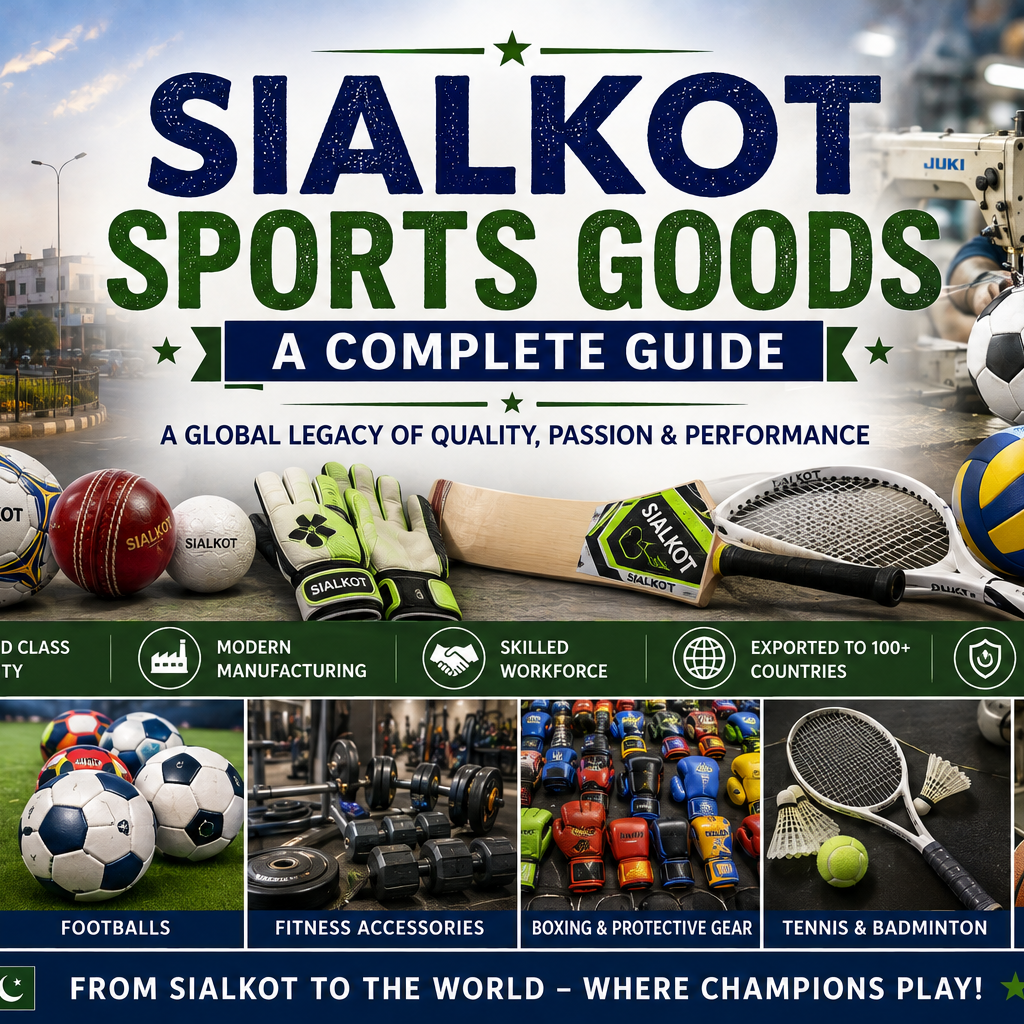
Sialkot sports goods have earned this Punjab city worldwide fame. This northern town is the sports goods capital of the world. Its workshops stitch footballs used in the greatest tournaments. Cricket bats, hockey sticks and gloves flow from here too. Sialkot supplies gear to nearly every country on earth. This guide covers Sialkot sports goods for the curious traveller. It explains the roots the football fame the wider range the industry and its place in the world.
This guide offers a general overview. Figures and dates vary between sources.
Quick answer: Sialkot, in north eastern Punjab, is one of the great sports goods manufacturing centres of the world. Its craft began in 1883 under the British, making cricket bats and hockey sticks. It grew to include the famous hand stitched football. Sialkot now makes around 70 per cent of the footballs on earth, including official FIFA World Cup match balls. Thousands of firms and hundreds of thousands of workers drive the industry. Its goods reach nearly every country on earth.
Roots of the industry
Sialkot sports goods began under the British. Its craft dates back to the year 1883. Local hands first made wooden gear. Cricket bats and hockey sticks led the way.
British soldiers sparked the trade. They played their games far from home. Broken bats and balls needed repair. Skilled local craftsmen answered the need.
A football story began with a repair. A soldier brought a torn leather ball. A local craftsman mended it with skill. Soon Sialkot made whole footballs of its own.
These first footballs travelled far. Sialkot supplied the British Army abroad. Balls reached the troops in Singapore by 1918. So a great export trade was born.
Rise of the industry
This craft grew from small beginnings. Family workshops stitched the early balls. Skills passed from father to son. A cottage trade took root in the city.
Great growth came in the last century. Workshops grew into organised factories. A growing trade survived the upheaval of Partition. Export markets opened across the world.
Quality won Sialkot its fame. Careful choice of materials marked its goods. Fine stitching gave the balls their strength. Buyers abroad came to trust the city.
Sialkot rose to world renown. It became the football factory of the world, its name spreading across the globe. Sport tied the city to distant lands.
Football capital
Sialkot is famous above all for footballs. It makes most of the hand stitched balls on earth. Around seventy per cent come from this city. Tens of millions leave its workshops each year.
World Cup years bring a great surge. Demand soars when the tournament nears. Output can top sixty million balls a year. Thousands of workers stitch through the season.
Sialkot has made the greatest match balls. Its factories craft official World Cup balls. Fame began with the Tango ball of 1982. Later balls carried the city to every World Cup.
A leading factory drives this fame. Forward Sports makes balls for the top brands. It has crafted recent World Cup match balls. Sialkot thus shapes the game at its highest level.
Wider range of sports goods
Sialkot makes far more than footballs. Its workshops turn out a world of gear. Cricket bats and hockey sticks come from here. Rugby balls and volleyballs join them too.
Gloves are a great Sialkot product. Goalkeepers and boxers wear its gloves. Motorbike and shooting gloves ship abroad too. This city long led the world in gloves.
Protective gear fills the range. Pads and guards shield players from harm. Nets and shuttlecocks leave the workshops too. Few sports lack a Sialkot product.
Sportswear rounds out the trade. Jerseys and kit ship to many lands. This same skill and care go into them. Sialkot dresses players as well as arming them.
Industry and the world
Sialkot sports goods form a huge industry. Thousands of firms fill the city. Hundreds of thousands of workers drive the trade. Together they supply the world with sport.
Exports reach almost every country. Goods worth billions leave the city each year. This trade forms a big share of national exports. Sport carries the name of Sialkot far.
Great brands trust the city. Adidas, Nike and Puma source from here. Their gear passes strict global standards. Sialkot meets the highest marks of quality.
Skilled hands remain the great strength. Hand stitching still shapes the finest balls. This craft has passed down the generations. Human skill rests behind the global fame.
Hand stitching sets the best balls apart. A worker sews the panels with strong thread. Each ball takes hundreds of careful stitches. This handwork gives a truer, rounder shape.
This industry faces modern challenges too. Machine made balls compete on price abroad. Firms invest in new methods to keep pace. Care for the workers has grown in recent years.
Frequently asked questions
Why is Sialkot famous for sports goods? Sialkot, in north eastern Punjab, is famous as one of the great sports goods manufacturing centres of the world, often called the sports goods capital of the world. A craft began in 1883 under British rule, when local craftsmen made and repaired wooden cricket bats, hockey sticks and polo sticks for British soldiers. They later took up the making of footballs. Over more than a century the trade grew into a huge industry. Today Sialkot produces around 70 per cent of all footballs along with a vast range of other sports goods exported across the globe.
How did the Sialkot football industry begin? A football industry began with a simple repair in the late 19th and early 20th centuries. British soldiers stationed in the area played football with imported leather balls. When one was damaged a local craftsman was asked to repair it. His skilled work so impressed the soldiers that Sialkot craftsmen soon began making whole footballs themselves. By 1918, footballs made in Sialkot were supplied to British troops as far away as Singapore. This marked the start of an export trade that would grow into a world leading industry.
Does Sialkot make World Cup footballs? Yes, Sialkot has a long and proud history of making official match balls for the FIFA World Cup. Global fame first came with the Tango ball used in the 1982 World Cup. Its factories have gone on to produce match balls for later tournaments, including the Brazuca and more recent World Cup balls. A key manufacturer is Forward Sports, working with major brands to craft these balls to exacting standards. This role has confirmed Sialkot as one of the foremost football making cities in the world.
What else does Sialkot make besides footballs? Besides footballs, Sialkot produces a wide range of sports goods that reach markets around the world. These include cricket bats, hockey sticks, rugby balls, volleyballs and other balls. A strong tradition of glove making adds goalkeeper, boxing, motorbike and shooting gloves. Sialkot also makes protective gear such as pads and guards along with nets, shuttlecocks and sportswear.
How big is the Sialkot sports goods industry? A Sialkot sports goods industry is very large, built on thousands of companies and employing hundreds of thousands of workers in and around the city. Its exports are worth billions of dollars a year and make up a significant share of national exports, with footballs alone accounting for a major part. It supplies goods directly and indirectly to nearly every country in the world and works with leading international brands such as Adidas, Nike and Puma. Skilled hand stitching, especially of footballs, remains at the heart of its success.
Sports capital of the world
Sialkot sports goods have made this Punjab city a world capital of sport. Its craft began with British soldiers over a century ago. Skilled hands now stitch the footballs of the greatest tournaments. Cricket bats, gloves and much more flow from the city. Sialkot supplies gear to nearly every country on earth. Few cities have made such a mark on world sport.
You may look to Sialkot for the footballs the history or the sheer scale. This industry rewards the interest either way. You can trace the craft from a repaired ball to a World Cup. You can picture the millions of balls stitched each year. You can see how skilled hands built a global name. Sport has carried this city to the world. These are the sports goods of Sialkot.