Saraiki Cuisine: A Complete Guide
Saraiki cuisine is the rustic soul of food in southern Punjab. Bold spices and slow cooking set it apart from northern fare. Multan and the southern cities form its great heartland. Sohan halwa, grilled chaamp and camel pulao rank among its treasures. Sufi shrine culture and desert heat have shaped its table. This guide covers Saraiki cuisine for the curious traveller. It explains the roots the flavours the great dishes the sweets and drinks, plus the culture.
This guide offers a general overview. Dishes and traditions vary between families and areas.
Quick answer: Saraiki cuisine, once known as Multani, is the native food of the Saraiki belt of southern Punjab, centred on Multan, Bahawalpur and Dera Ghazi Khan. It is more rustic and spice forward than northern Punjabi food, shaped by Sufi shrine culture and desert heat. Famous for Multani sohan halwa, grilled chaamp, sajji and rich mutton dishes, it also prizes cooling drinks like lassi and sattu. Multan is its great hub. This food is enjoyed year round.
Roots of Saraiki food
Saraiki food belongs to the south of Punjab. This cuisine feeds the Saraiki speaking belt. Multan forms the heart of the tradition. Bahawalpur and Dera Ghazi Khan add their own touch.
An old name marks the cuisine. People once called it Multani food. Multan gave the tradition its early fame. This name honours the great southern city.
It differs from northern Punjabi fare. Saraiki cooking is slower and more rustic. Sufi shrine culture shaped it more than the Mughal court. This gives it a homely, earthy character.
A harsh desert heat shaped the food too. Southern summers grow fiercely hot. Cooling drinks and hearty meats answer the heat. This climate marks the whole cuisine.
Flavours and cooking of Saraiki food
Saraiki food is bold and spice forward. Dried red chilli brings a fierce heat. Black pepper deepens the flavour further. These spices set it apart from the north.
Slow cooking defines the kitchen. Cooks simmer dishes over a low fire. A traditional chulha burns wood or dung cakes. Time and patience draw out the flavour.
Meals tend to run drier than the north. Cooks use less gravy in the pot. Rich spice clings to the meat itself. This gives the food an intense taste.
Desi ghee enriches the cooking. Butter and ghee flavour many dishes. Dairy runs through the tradition too. These fats carry the bold spices well.
Great dishes of Saraiki food
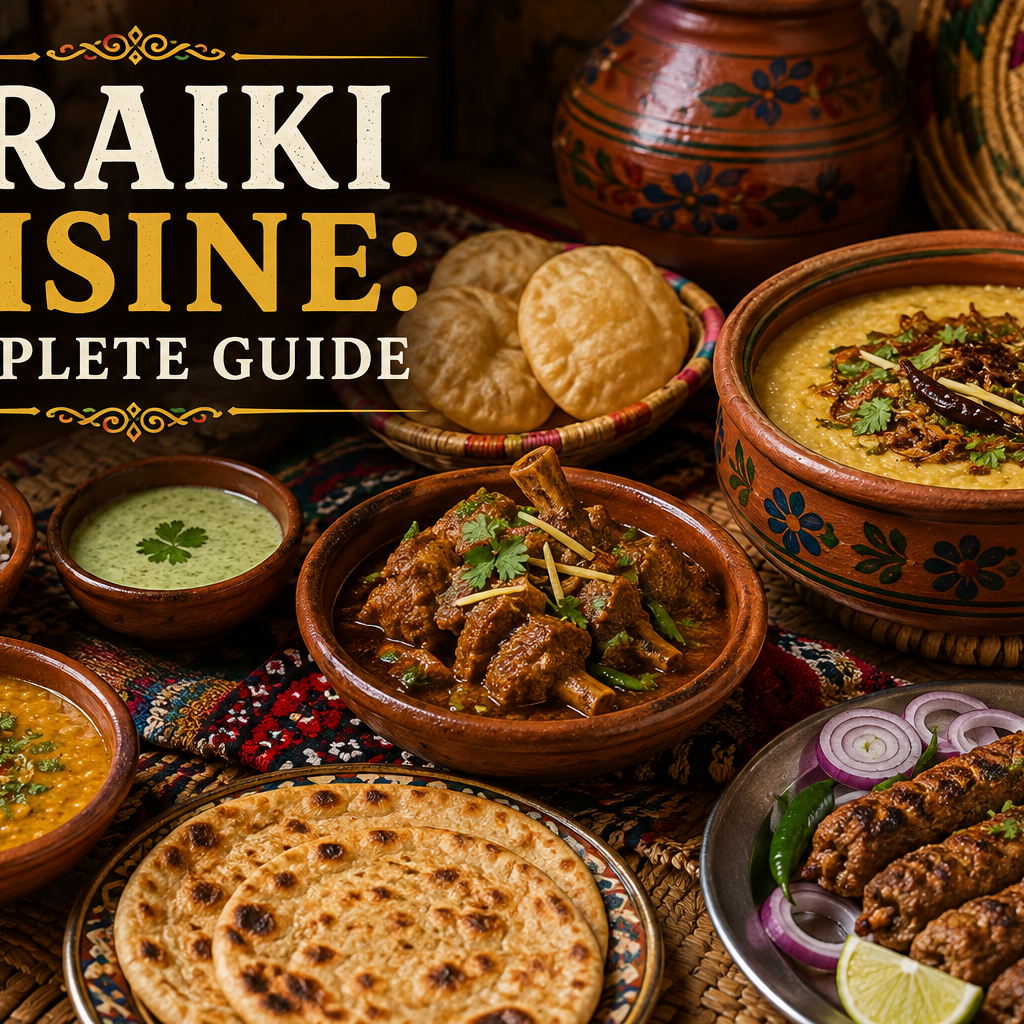
Multani chaamp is a beloved meat dish. Cooks marinate lamb chops in spice. They grill them over glowing charcoal. Smoke and spice flavour the tender meat.
Sajji is a speciality of the south. This dish roasts a whole leg or bird. It comes from the Sulaiman mountains and beyond. Slow roasting gives it a smoky depth.
Multani biryani is the grand showpiece. Cooks layer mutton with fragrant rice. Saffron, dried fruit and spice enrich it. This dish ranks apart from other biryanis.
Cholistani pulao brings a desert flavour. Cooks make it with camel meat. Desert people prize this hearty dish. It carries the taste of the Rohi sands.
Saag, breads and snacks
Saraiki saag is a rustic classic. Cooks simmer mustard greens for hours. They spice it more boldly than the north. A cloud of white butter crowns it.
Breads fill the Saraiki table. Bajra and corn breads suit the winter. Aloo paratha stuffs bread with spiced potato. These breads pair well with the meats.
Sohbat is a traditional dish of the belt. This hearty meal feeds the Damaan area. Bread, meat and broth combine in it. Saraiki and Pathan tables share it alike.
Snacks tempt at every corner. Samosa, pakora and dahi bhalla are common. Golgappas and spiced potatoes join them. These snacks brighten a day out.
Sweets, drinks and fruit
Sohan halwa is the great Multani sweet. This dense treat cooks down ghee and sugar. Saffron almonds and pistachios enrich it. A dedicated guide covers it in detail.
Southern cities prize this sweet. Multan leads the way in making it. Dera Ghazi Khan and Bahawalpur follow close. People send it as a gift across the country.
Cooling drinks answer the desert heat. Lassi comes thick, sweet or salty. Sattu makes a refreshing summer drink. Both cool the body in the fierce summer.
Mango is the fruit of the south. Summer orchards bring a rich harvest. Dates, jamun and falsa ripen here too. These fruits crown the southern table.
Culture of the table
Food carries a sacred touch in the south. Multan is famed as the city of saints. Shrine kitchens serve langar to all comers. This gives food a spirit of sharing.
Hospitality runs deep in the culture. Hosts press food warmly on their guests. A shared meal seals bonds of friendship. Generosity marks the Saraiki table.
Festivals fill the table with treats. Shrine fairs draw great crowds to eat. Sweets and rich dishes mark the days. Food and faith mingle at these gatherings.
Each city lends its own flavour. Multan brings its sweets and grilled meats. Bahawalpur adds a courtly, Nawabi touch. Cholistan lends its desert dishes to the mix.
Frequently asked questions
What is Saraiki cuisine? Saraiki cuisine, once known as Multani cuisine, is the native food of the Saraiki speaking belt of southern Punjab, centred on cities such as Multan, Bahawalpur and Dera Ghazi Khan. It also reaches into parts of southern Khyber Pakhtunkhwa, northern Sindh and eastern Balochistan. Far more rustic and spice forward than the food of northern Punjab, it is shaped by Sufi shrine culture and the fierce desert heat of the south. Mughal court cooking had less sway here. Famous dishes include Multani sohan halwa, grilled chaamp, sajji, rich mutton biryani and a rustic, boldly spiced saag.
What is Multan famous for in food? Multan the great hub of Saraiki cooking, is famous above all for sohan halwa a dense, ghee rich sweet studded with almonds and pistachios and flavoured with saffron. Often sent as a gift across the country, it has become a symbol of the city itself. Beyond this sweet, Multan is known for grilled Multani chaamp, spiced lamb chops cooked over charcoal along with its distinctive biryani, layered with mutton, saffron and dried fruit. As the city of saints, Multan also has a deep tradition of langar the free communal food served at its many shrines.
How is Saraiki food different from Punjabi food? Saraiki food from the south of Punjab, differs from the Punjabi food of the north in both flavour and spirit. It tends to be more rustic and slower cooked, shaped by Sufi shrine culture rather than the rich Mughal court cooking of Lahore. Saraiki dishes are usually spicier, with more dried red chilli and black pepper. They often run drier, with less gravy, so the spice clings to the meat. A fierce desert heat also shapes the cuisine, giving rise to cooling drinks such as lassi and sattu alongside hearty, heavily spiced meat dishes.
What is Multani sohan halwa? Multani sohan halwa is the most famous sweet of southern Punjab. This dense and glossy confection cooks down sugar, ghee and starch slowly until it sets into a firm disc. It is flavoured with saffron and studded with almonds, pistachios and cardamom, giving it a rich taste and a distinctive texture. Made above all in Multan, though also in Dera Ghazi Khan, Bahawalpur and other southern cities, it is often bought as a gift and carried across the country. For many a box of sohan halwa is a taste of Multan itself.
What drinks and fruits are part of Saraiki cuisine? Saraiki cuisine, shaped by the fierce heat of the southern summers, is rich in cooling drinks. Chief among them are lassi a thick yoghurt drink served sweet or salty, plus sattu, made from ground grains. These help the body cope with the extreme summer heat of the south. This area is also famous for its mangoes, ripening in the summer orchards around Multan and Bahawalpur and prized across the country. Other local fruits include dates, jamun and falsa adding to the rich harvest of the southern plains.
Rustic soul of the south
Saraiki cuisine is the rustic soul of southern Punjab. It grew from the Sufi shrines and desert heat of the south. Bold spice and slow cooking set it apart from the north. Sohan halwa, chaamp and camel pulao rank among its treasures. Lassi and mango cool the fierce summer heat. Few cuisines carry such earthy, spice rich character.
You may come to Saraiki food for the meats the sweets or the drinks. This cuisine rewards the appetite either way. You can savour a spiced chaamp grilled over charcoal. You can taste the famous sohan halwa of Multan. You can cool down with a glass of thick lassi. Come hungry and taste the rustic soul of the south. This is the cuisine of the Saraiki belt.