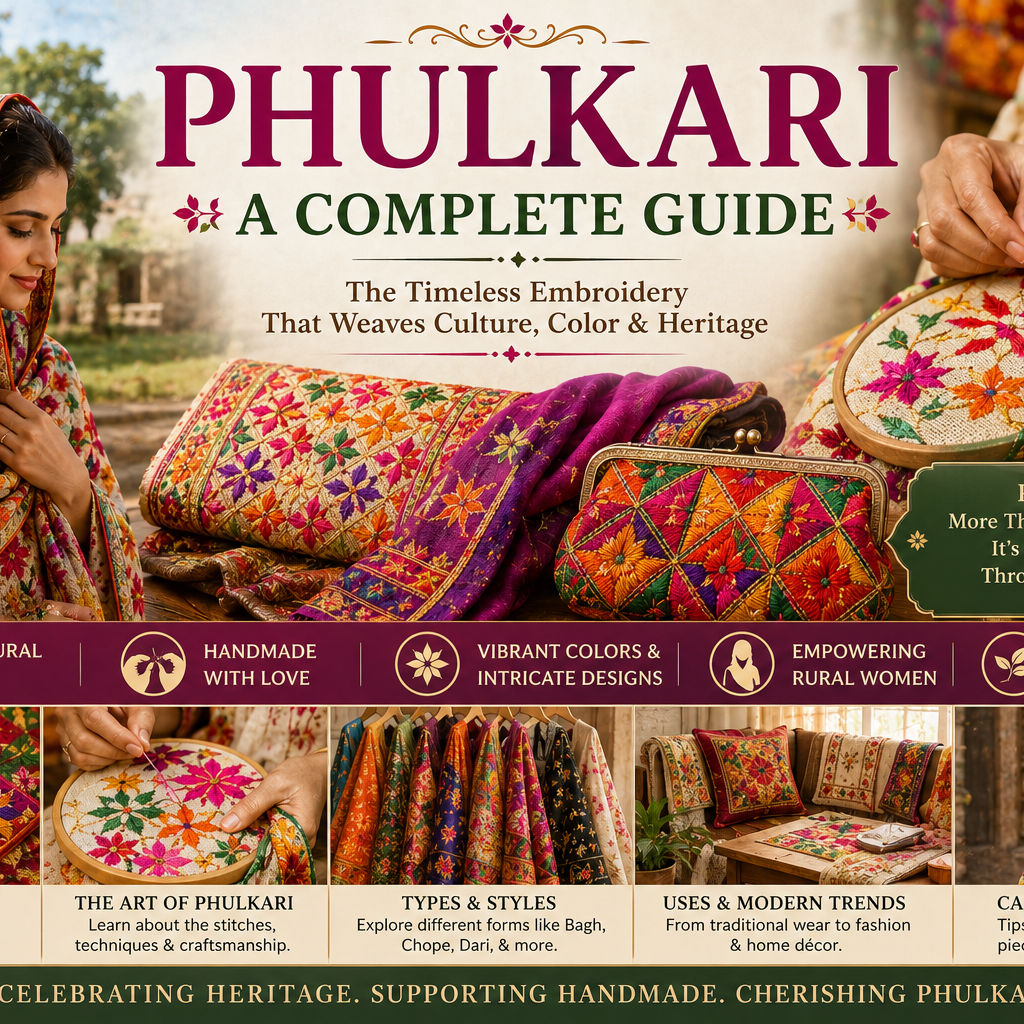
Phulkari: A Complete Guide
Phulkari is the flower work embroidery that adorns Punjab. This folk art covers cloth in bright silk blooms. Mothers and grandmothers once stitched it for their daughters. A phulkari dupatta crowns a bride on her wedding day. Its colours light up festivals and family milestones alike. This guide covers phulkari for the curious traveller. It explains the roots the technique the types the meaning and where to find it.
This guide offers a general overview. Details and traditions vary between families and areas.
Quick answer: Phulkari is a traditional folk embroidery of Punjab, its name meaning flower work, from phul, meaning flower, plus kari, meaning work. Craftswomen stitch bright silk thread onto coarse cotton khaddar, working from the back in a darning stitch to form dense floral and geometric patterns. Types range from scattered phulkari to the fully covered bagh. Long tied to weddings and family life, phulkari is made across Punjab. In Pakistan it is linked with Multan, Bahawalpur and Lahore. It graces dupattas, shawls and festive dress.
Roots of phulkari
Phulkari is an old folk embroidery of Punjab. Its name means flower work in Punjabi. Two words form it: phul, meaning flower, plus kari, meaning work. Yet its designs reach far beyond flowers.
Its exact origins remain unclear. Some trace it to Central Asian nomads. Others link it to the gulkari flower work of Persia. Written mentions appear in old Punjabi verse.
Phulkari belongs to all of Punjab. Craftswomen have stitched it on both sides of the border. In Pakistan it ties closely to Punjabi identity. Multan, Bahawalpur and Lahore keep the craft alive.
It grew as an art of the home. Women stitched it for their own families. This set it apart from courtly embroidery. Everyday life shaped its colours and forms.
Technique of Phulkari
Phulkari rests on a simple stitch. Craftswomen work a long darning stitch. They stitch from the back of the cloth. This forms a smooth, flat face on the front.
Silk thread gives the work its glow. Untwisted floss, called pat, fills the design. Bright colours shine against the cloth. Skilled hands lay the threads with care.
Khaddar forms the base fabric. This coarse cotton is handspun and handwoven. Old pieces used deep, earthy dyes. Rust red, brown and indigo were common.
This craft demands great patience. One dupatta can take months to finish. A dense bagh may take far longer. Each piece rewards the long, careful work.
Types of phulkari
Phulkari comes in several great forms. Each type serves its own purpose. Some scatter motifs across the cloth. Others cover the whole surface in thread.
Phulkari proper scatters its motifs. Flowers and shapes dot the open cloth. A plain base shows between them. This lighter style suits daily wear.
Bagh means garden in Punjabi. Its embroidery covers the whole cloth. No base fabric shows beneath the thread. This dense, formal type marks great occasions.
Chope guards a special place. A grandmother stitches it for the bride. Golden thread works a red base cloth. Its stitch looks the same on both sides.
Rarer types enrich the tradition. Thirma works bright thread on a white base. Elder women once wore this pure style. Darshan dwar shows gates and was offered at shrines.
Motifs and their meaning
Phulkari motifs spring from daily life. Flowers, wheat sheaves and vines fill the cloth. Peacocks and birds join the design. Nature shapes the whole tradition.
Some motifs carry old meanings. A small nazar butti wards off the evil eye. Sunflowers and jasmine speak of the fields. Each shape ties the cloth to Punjabi life.
Sainchi phulkari tells village tales. It shows farmers animals and daily scenes. This rare type paints a picture in thread. Few areas kept this storytelling style.
Colour carries its own message. Bright reds and golds mark joy and weddings. A white base once suited elder women. Each choice speaks without a word.
Culture and the revival
Phulkari runs deep in Punjabi life. A mother began her daughter's pieces early. A count of phulkaris marked the standing of a family. So this craft joined every great milestone.
Weddings call for the finest work. In laws present the bride with a rich bagh. It signifies love, blessings and plenty. This heirloom passes down the family.
Festivals bring the colours out. Women wear phulkari dupattas at Lohri and Baisakhi. They dance the gidda in bright cloth. Joy and fellowship fill these days.
This craft has seen a fresh revival. Designers weave phulkari into modern fashion. Dupattas, kurtis and jackets carry its motifs. Yet much on the market is now machine made.
Phulkari suits many modern looks. A bright dupatta lifts a plain suit. Jackets and waistcoats add a folk touch. Men too wear phulkari on turbans and juttis.
Frequently asked questions
What is phulkari? Phulkari is a traditional folk embroidery of Punjab, its name meaning flower work, from the Punjabi words phul, meaning flower, plus kari, meaning work. Craftswomen embroider bright, untwisted silk thread onto a base of coarse handspun cotton known as khaddar. They work from the back of the cloth with a long darning stitch to build up dense floral and geometric patterns. Unlike court embroideries, phulkari grew as an art of the home, made by women for their families to mark weddings and other milestones. It remains a cherished symbol of Punjabi culture on both sides of the border.
What is the difference between phulkari and bagh? Phulkari and bagh are two forms of the same embroidery tradition, differing mainly in how much of the cloth they cover. In phulkari proper the motifs are scattered across the fabric with the plain base cloth showing between them, giving a lighter look suited to everyday and semi formal wear. In bagh, meaning garden the embroidery covers the whole surface so densely that no base fabric is visible. This creates a rich, formal piece. Bagh is far more labour intensive and was traditionally reserved for weddings and other great occasions, often forming part of a bride's trousseau.
What fabric and thread are used in phulkari? Traditional phulkari is worked on khaddar a coarse cotton fabric that is handspun and handwoven, historically dyed in deep, earthy shades such as rust red, brown, indigo and green. A silk floss called pat, untwisted and soft in sheen, works the embroidery itself. This catches the light and gives phulkari its glow. This thread is worked from the reverse of the cloth using a darning stitch, so that the front shows a smooth, flat surface of colour. Modern pieces sometimes use lighter fabrics such as georgette or silk in place of khaddar.
Why is phulkari important in Punjabi weddings? Phulkari has an important significance in the marriage ceremony of the Punjabis because it is seen as a symbol of love and blessings bestowed on the family. Traditionally, the mother and grandmother used to start making Phulkaris for the girl child from a young age, thus collecting some pieces that would be used for her marriage trousseau. The number and quality of these Phulkaris were a sign of the status of the family. On the day of marriage, the in-laws gift the bride with an elaborately decorated Bagh.
Where can you buy phulkari? Authentic handmade phulkari can be found in the traditional markets of Punjab. In Pakistan it is especially linked with Multan, Bahawalpur and Lahore, where craftswomen still work the embroidery by hand. Genuine pieces are hand stitched from the reverse in silk thread and carry small irregularities that mark them apart from machine made work. Much of what is sold today is machine embroidered or digitally printed in phulkari style patterns. Buyers seeking the real craft should look closely and buy from trusted artisans or craft centres. Buying handmade phulkari helps support the women who keep the tradition alive.
Flower work of Punjab
Phulkari is the flower work that clothes Punjab in colour. This folk art covers cloth in bright silk blooms. Craftswomen stitch it from the back in patient darning. Scattered phulkari and dense bagh mark its great forms. Weddings and festivals bring out its finest pieces. Few crafts hold such love and meaning in thread.
You may come to phulkari for the colour the craft or the culture. This embroidery rewards the eye either way. You can watch the silk threads build a garden of flowers. You can see a bride crowned in a rich red bagh. You can carry home a dupatta bright with blooms. Discover the flower work stitched across Punjab. This is phulkari.