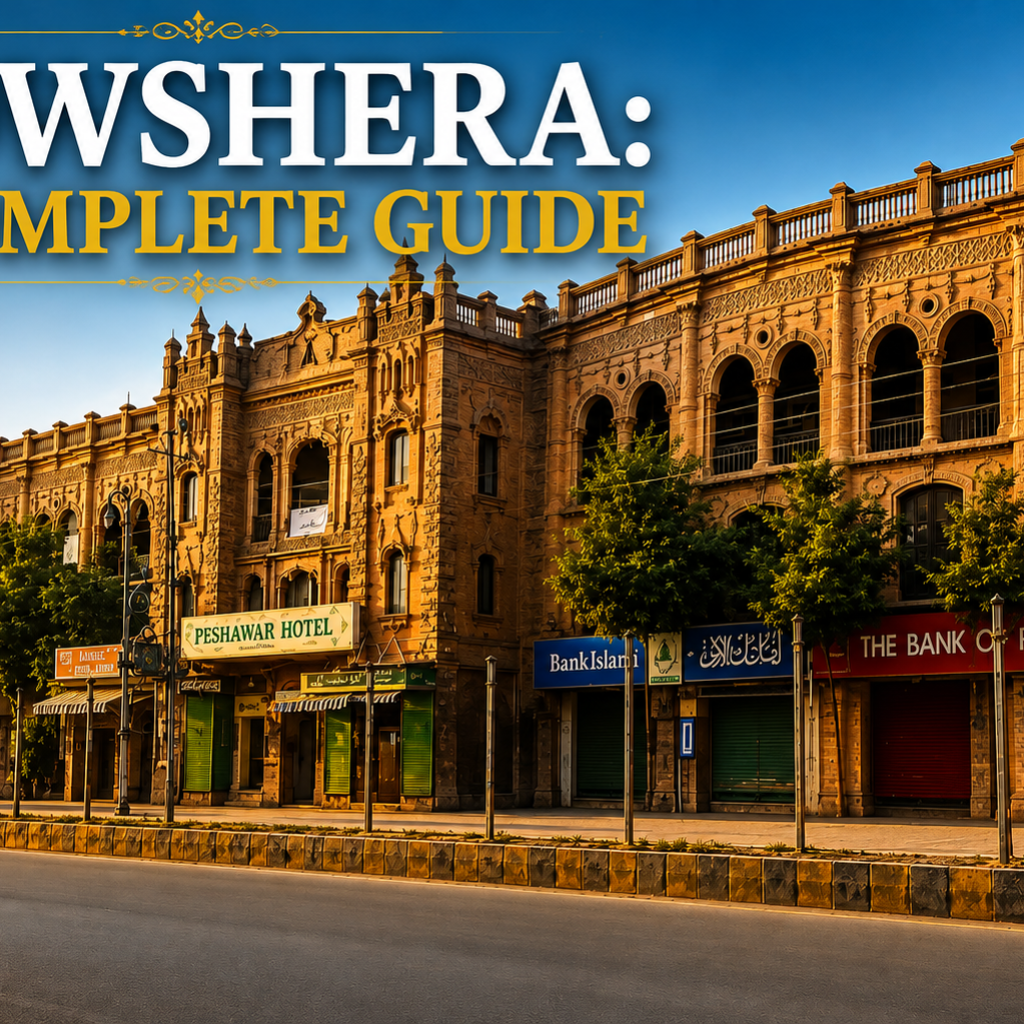
Nowshera: A Complete Guide
Nowshera is the central crossroads city of Khyber Pakhtunkhwa. This old town rests on the banks of the Kabul River. Its name means the new city in Persian. A British cantonment and the Grand Trunk Road shaped its rise. It links Peshawar, Mardan and the wider valley. This guide covers Nowshera for the curious traveller. It explains the setting the history the heritage the river and how to visit.
This guide offers a general overview. Details and figures vary between sources.
Quick answer: Nowshera is a centrally located city and district of Khyber Pakhtunkhwa, set on the banks of the Kabul River, west of Peshawar. Its name means the new city, from the Persian words for new and city. Founded as a British cantonment in 1851, it grew on the Grand Trunk Road and the old railway. This area is famed for the Khattak tribe the poet Khushal Khan Khattak and Sufi shrines. Farming drives its economy. Spring and autumn are the finest seasons.
About Nowshera
Nowshera is a central city of Khyber Pakhtunkhwa. It is located in the fertile Peshawar Valley. A great river the Kabul, flows past the city edge. Peshawar rises a short way to the west.
A fine position marks the city. Mardan, Charsadda and Swabi lie close around. Roads reach out to each of them. This central place has long given Nowshera weight.
A name tells a simple story. Two Persian words form it. Nau means new and shahr means city. So Nowshera is the new city.
Farming shapes life in the area. Fertile plains spread along the river. Crops grow well in the rich soil. Agriculture drives the local economy.
History of Nowshera
Nowshera rose to note in the British age. British forces built a cantonment here in 1851. They chose the bank of the Kabul River. A military town grew on the sandy plain.
This cantonment saw a peaceful mutiny year. In 1857 many garrisons across India rose. Nowshera saw no bloodshed at that time. Its native troops were disarmed without a fight.
A great highway ran through the town. This Grand Trunk Road linked distant cities. A railway later followed the same path. Trade and troops passed steadily through Nowshera.
A great bridge crossed the river. A boat bridge first spanned the Kabul River. An iron road and rail bridge replaced it in 1903. This crossing bound the two banks together.
Heritage and the Khattaks
Nowshera holds a proud tribal heritage. A famous Khattak tribe settled this area long ago. Their chiefs held sway from the river country. Their story runs deep in the valley.
Akora Khattak is located east of the city. Malik Ako Khan gave the town its name. Its Khattak chiefs made it their seat. A town on the old Grand Trunk Road, it grew around the chiefs.
A great poet rests at Akora. Khushal Khan Khattak led the tribe of old. He was a warrior a writer and a patriot. His tomb draws visitors to the town.
Sufi shrines grace the area too. Ziarat Kaka Sahib honours a revered saint. Manki Sharif holds another holy shrine. These places draw the faithful and the curious.
River and the country
A great river shapes the district. Kabul waters flow in from the west across the plains. Its waters feed the fields along its banks. It joins the mighty Indus near Khairabad.
Fertile plains line the great river. Farmers grow crops in the rich soil. A changing river brings both life and flood. Careful farming works the changing land.
Low hills edge the river plains. A Khattak Range crosses the district. Cherat rises as a cool hill station. Its sanatorium once drew those seeking clean air.
A mighty Indus meets the Kabul near Khairabad. Black rocks mark the river at Moderay. This site rests protected by law. Old crossings recall the trade of ages.
Visiting Nowshera
Come in spring or autumn. Summers grow hot and dry on the plains. Winters turn cool and pleasant. Mild seasons suit a visit best.
Reach the city with ease. A busy Grand Trunk Road runs straight through it. Trains and buses serve the town well. Peshawar and Mardan lie a short drive away.
See the heritage of the Khattaks. Akora Khattak holds the tomb of the great poet. Sufi shrines reward a quiet visit. A day can take in several sites.
Enjoy the river and the hills. A calm Kabul River offers pleasant views. Cherat gives cool air in the summer heat. Bring time for both history and scenery.
Frequently asked questions
What does the name Nowshera mean? A name comes from two Persian words, nau, meaning new, plus shahr, meaning city, so that Nowshera means the new city. This kind of name is common across areas once shaped by Persian influence, marking the founding of a new urban centre. In Pashto and the local speech the meaning stays the same. This town is also known locally by an older name. Set on the banks of the Kabul River in the Peshawar Valley, Nowshera grew from a small settlement into an important cantonment. It became a district headquarters over the course of its history.
Why was Nowshera important to the British? Nowshera was important to the British as a military cantonment and a key point on their lines of movement across the frontier. Founded in 1851 on the bank of the Kabul River then renovated in 1859, it became a major garrison town. It guarded the approaches to Peshawar and the Khyber. A town on the Grand Trunk Road and the North Western Railway, Nowshera became a hub for trade and troops alike. A great iron bridge was built across the Kabul River in 1903. This military and strategic role shaped the growth of the city.
Who was Khushal Khan Khattak? Khushal Khan Khattak was one of the prominent leaders of the Khattak tribe, belonging to the most eminent personalities of Pashto culture. He was born in the seventeenth century and was not only a warrior and tribal chief but also a renowned poet and writer whose Pashto poems are even read today. He was also known as a patriot who struggled for the honour and freedom of his nation. The tomb of Khushal Khan Khattak can be found in Akora Khattak, which lies on the old Grand Trunk Road close to Nowshera.
What is there to see in Nowshera? Nowshera offers a mix of tribal heritage, Sufi shrines and river scenery. Akora Khattak, on the Grand Trunk Road, holds the tomb of the great poet Khushal Khan Khattak. Sufi shrines such as Ziarat Kaka Sahib and Manki Sharif draw pilgrims and visitors. Kabul waters flow through the district to meet the Indus near Khairabad, offering pleasant views. A hill station at Cherat, set on the Khattak Range, gives cool air and wide outlooks. Colonial era buildings and old bridges add to the historical character of the area.
When is the best time to visit Nowshera? A best time to visit Nowshera is in spring, from around March to April. Autumn, from October to November, is also mild and comfortable. Summers on the plains can be very hot and dry, making sightseeing tiring in the middle of the day, though the hill station of Cherat stays cooler even then. Winters are generally cool and pleasant with crisp, clear days that suit travel. Spring brings green fields to the river plains adding to the appeal of the area for those exploring its history and scenery.
Central crossroads
Nowshera is the central crossroads of Khyber Pakhtunkhwa. This old town rests where the Kabul River crosses the plains. A British cantonment and the Grand Trunk Road shaped its rise. A proud tribe and a great poet mark its heritage. Sufi shrines and river views reward the visitor. Few towns hold such a central place in the province.
You may come to Nowshera for the history the shrines or the river. This city rewards the visit either way. You can honour the poet Khushal Khan at Akora Khattak. You can seek out the old Sufi shrines of the area. You can follow the Kabul River to its meeting with the Indus. Come to Nowshera and discover the crossroads of the frontier. This is the new city on the river.