Mingora: A Complete Guide
Mingora is the beating heart of the Swat Valley. This busy city is the largest in the valley. Set on the banks of the Swat River, this city belongs to the Malakand division. Ancient stupas and a fine museum crown its heritage. It serves as the great gateway for Swat tourism. This guide covers Mingora for the curious traveller. It explains the setting the history the Buddhist sites the bazaar and how to visit.
This guide offers a general overview. Details and figures vary between sources.
Quick answer: Mingora is the third largest city of Khyber Pakhtunkhwa and the commercial and cultural heart of the Swat Valley. Set on the Swat River at around 900 metres, some 230 kilometres north west of Islamabad, it is the main base for exploring Swat. Once part of the Gandhara world, it is rich in Buddhist heritage above all the Butkara Stupa and the Swat Museum. Its bustling bazaar sells Swati shawls, handicrafts and gemstones. Spring and autumn are the finest seasons.
About Mingora
Mingora is the largest city of the Swat Valley. Among the cities of Khyber Pakhtunkhwa it ranks third. Its streets run along the banks of the Swat River. A height of around 900 metres cools its air.
This city is set in the heart of Swat. Islamabad is around 230 kilometres to the south. Peshawar rises about 100 kilometres to the west. Deeper valleys stretch away to the north.
Mingora forms a twin city with Saidu Sharif. These two towns sit close together. Their bazaars have grown into one over time. Together they form the hub of the valley.
A great base for travel fills the valley. Mingora offers hotels, markets and transport. Roads lead on to Kalam, Bahrain and Malam Jabba. This makes it the gateway to Swat.
History of Mingora
Mingora carries a very ancient story. People have lived here for thousands of years. Old graves lie scattered around the city. These recall the Gandhara Grave Culture.
A great Buddhist age flowered here. Monks came from the Gangetic plains long ago. Swat grew into a centre of Buddhist learning. Stupas and monasteries rose across the valley.
Gandhara art blossomed in these hills. Sculptors carved the Buddha in a Greek touched style. Fine stone reliefs told sacred tales. Their work spread far across ancient Asia and later ages brought fresh faiths and rulers. Islam shaped the traditions of the valley. Pashtun culture took deep root here. Mingora grew into a modern city over time.
Buddhist heritage in Mingora
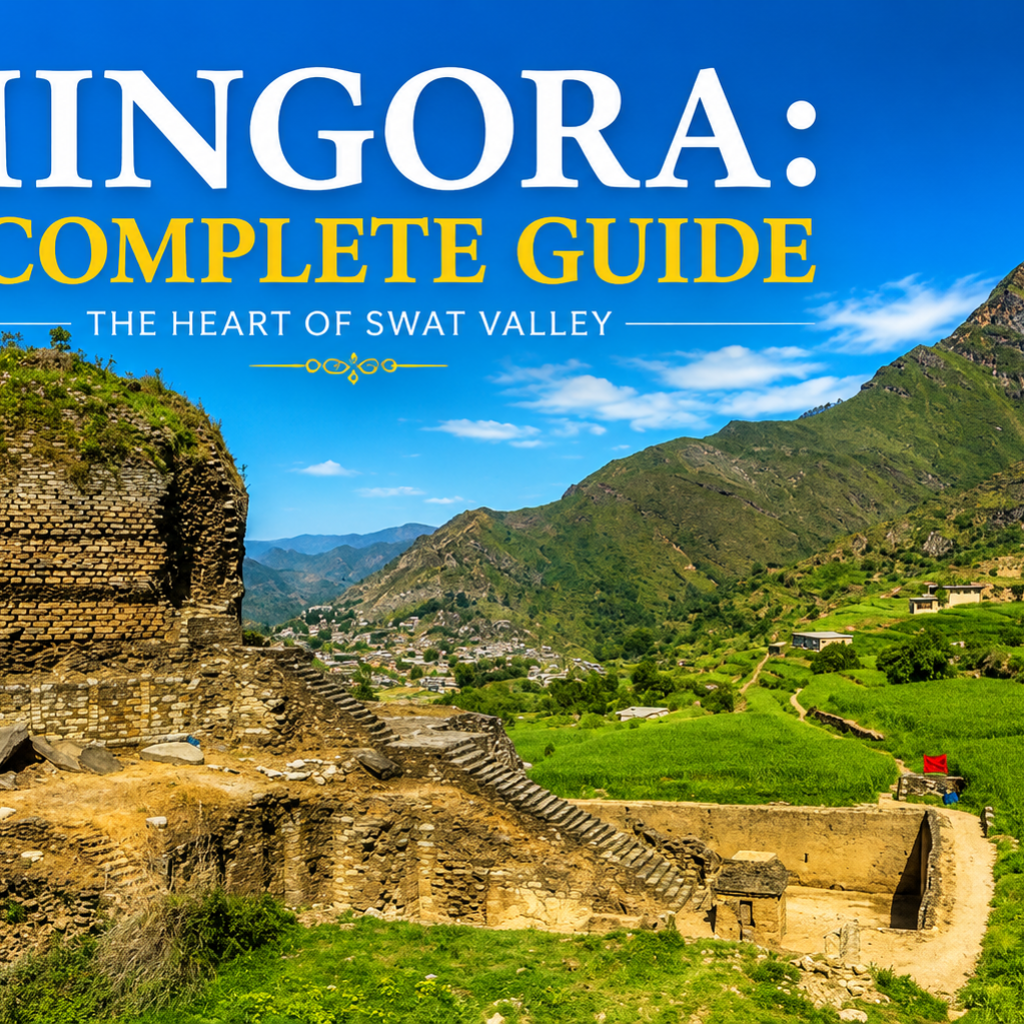
Mingora holds a rich Buddhist past. Ancient sites ring the busy city. Stupas and ruins recall the age of the monks. History rests close beneath the modern streets.
A Butkara Stupa is the great treasure. This Buddhist monument dates back over two thousand years. Excavation has revealed fine art and relics. It ranks among the great stupas of Swat.
A fine museum tells the ancient tale. It is located between Mingora and Saidu Sharif. Its galleries trace the life of the Buddha. Gandhara art and Swati crafts fill the cases.
More sites dot the valley around. Amluk Dara raises a great stupa near Barikot. A giant Buddha is carved at Jahanabad. This whole valley brims with ancient wonders.
Bazaar and culture of Mingora
Mingora Bazaar is the great market of Swat. It brims with trade and colour. Shoppers crowd its lanes and stalls. This is the commercial heart of the valley.
Swati crafts fill the bazaar. Embroidered shawls hang in the shops. Handicrafts and carved wood tempt the buyer. Dry fruits and honey scent the air.
Gems are brilliant in the marketplace and Swat is renowned for the green emeralds it produces. Stones and jewellery are sold by merchants in this place. This attracts many buyers from distant lands.
Pashtun culture is well-represented in the city. Each visitor receives hospitable treatment. The local cuisine and music enrich their everyday lives.
Visiting Mingora
Come in spring or autumn. Summers stay mild in the valley. Winters turn cold with snow on the heights. Green, clear seasons suit a visit best.
Use Mingora as your base. Hotels and guesthouses fill the city. Roads lead on to the deeper valleys. A short stay here opens the whole of Swat.
Explore the ancient sites nearby. A Butkara Stupa is located close to the centre. A quiet hour in the Swat Museum rewards the visitor. A day can take in several Buddhist ruins.
Enjoy the bazaar and the river. Fizagat Park offers a riverside walk. Mingora Bazaar tempts with crafts and gems. Bring time for both history and shopping.
Frequently asked questions
Why is Mingora important? Mingora is the largest city of the Swat Valley and the third largest in Khyber Pakhtunkhwa, serving as the commercial and cultural heart of the whole Malakand Division. Set on the banks of the Swat River, it is the main base and gateway for tourists exploring Swat, with good hotels, markets and transport. Roads lead on to Kalam, Bahrain and Malam Jabba. This city is also rich in history, once part of the ancient Gandhara world, with important Buddhist sites nearby. This blend of heritage, trade and access makes Mingora a key city of northern Pakistan.
What Buddhist sites are near Mingora? Mingora is surrounded by important Buddhist sites, reflecting the days when Swat was a great centre of the Gandhara civilisation. Best known is the Butkara Stupa a major monument dating back over two thousand years, richly excavated to reveal fine sculpture and relics. Nearby lie other sites such as the Amluk Dara Stupa near Barikot and the giant carved Buddha at Jahanabad. A Swat Museum, between Mingora and Saidu Sharif, gathers much of this heritage, with galleries of Gandhara art tracing the life of the Buddha alongside Swati crafts.
What is the Swat Museum? A Swat Museum, set between Mingora and Saidu Sharif, is one of the finest in northern Pakistan, devoted to the ancient heritage of the valley. Its galleries arranged with Japanese support, trace the life of the Buddha through a rich collection of Gandhara art, including sculptures, coins, pottery and terracotta figures. It also holds fine ethnographic pieces, such as Swati embroidery, tribal jewellery and carvings, showing the living culture of the valley. For visitors, it offers an excellent introduction to the long history of Swat before exploring the ancient sites nearby.
What can you buy in Mingora Bazaar? Mingora Bazaar is the largest market in the Swat Valley and a fine place to shop for local crafts and produce. It is known above all for Swati handicrafts, including beautifully embroidered shawls, carved wooden objects and traditional jewellery. It also sells dry fruits, honey and other produce of the valley along with the green emeralds for which Swat is famous. Shopping here offers a chance to experience the daily life and culture of the city, plus a way to take home genuine handmade souvenirs of the valley.
When is the best time to visit Mingora? A best time to visit Mingora is in spring from around April to May. Autumn from September to October, is also mild and lovely, when the valley is at its finest. Summers are pleasant, drawing many visitors escaping the heat of the plains, while winters can be cold, with snow on the surrounding heights. Spring brings blossom and green fields to the valley, while autumn paints the trees in warm colours. Whatever the season, Mingora makes a comfortable base for exploring the wider Swat Valley.
Heart of Swat
Mingora is the beating heart of the Swat Valley. This busy city gathers the trade and life of the valley. Ancient stupas and a fine museum crown its heritage. Its bazaar brims with shawls, crafts and green gems. Roads lead on from here to the deeper valleys. Few cities blend such history and mountain beauty.
You may come to Mingora for the history the bazaar or the valley beyond. This city rewards the visit either way. You can explore the ancient Butkara Stupa near the centre. You can browse the crafts and gems of the great bazaar. You can set off from here into the heart of Swat. Come to Mingora and discover the heart of the valley. This is the gateway to Swat.