Khyber Pass: A Complete Guide
A great pass forms the historic gateway of the north west. This famous pass cuts through the mountains between Peshawar and Kabul. Armies and caravans have crossed it for thousands of years. Old forts and a daring railway crown its heritage. This route links the subcontinent to Central Asia and beyond. This guide covers the Khyber Pass for the curious traveller. It explains the setting the history the forts the railway and how to visit.
This guide offers a general overview. Details and figures vary between sources.
Quick answer: A historic mountain pass through the Spin Ghar range the Khyber links Peshawar in Pakistan with Kabul in Afghanistan. Running about 53 kilometres, it rises to Landi Kotal and descends to the Torkham border. For thousands of years it has served as a great gateway for trade and conquest, part of the ancient Silk Road. Its landmarks include Jamrud Fort ali Masjid and the famous Khyber railway. It runs through the Khyber district of Khyber Pakhtunkhwa. Spring and autumn are the finest seasons.
About the Khyber Pass
A great cleft cuts through the mountains of the north west. This route links Peshawar in Pakistan with Kabul in Afghanistan. A range called the Spin Ghar rises on either side. Steep hills and gorges hem the winding route.
A great length marks the famous pass. It runs for around 53 kilometres through the hills. Landi Kotal crowns its highest point. Torkham marks the border at its western end.
Its width varies greatly along the route, narrowing to a few metres in places. Near Ali Masjid only a camel could once pass. Elsewhere it opens into broad valleys.
A winding route threads the Khyber district. This area was long a tribal agency. It joined Khyber Pakhtunkhwa in 2018. Pashtun tribes have lived here for ages.
History of Khyber Pass
This great pass carries a very long history. Armies and traders have crossed it for millennia. This route served as a great gateway to the subcontinent. Few passes have seen so much history.
An ancient Silk Road ran through the pass. Caravans carried goods between distant lands. China, Persia and India traded along the route. This traffic made the pass rich and famous.
Great conquerors marched through the hills. Aryans and Persians came this way of old. Alexander the Great crossed with his army. Mughals and Afghans followed in later ages.
British forces held the pass in their turn. They built roads, forts and a railway here. Their engineers braved the steep and barren hills. This frontier route guarded their empire.
Forts and landmarks in Khyber Pass
This great pass holds many historic landmarks. Forts guard its length at key points. Mosques and old stations mark the route. History lines the winding road.
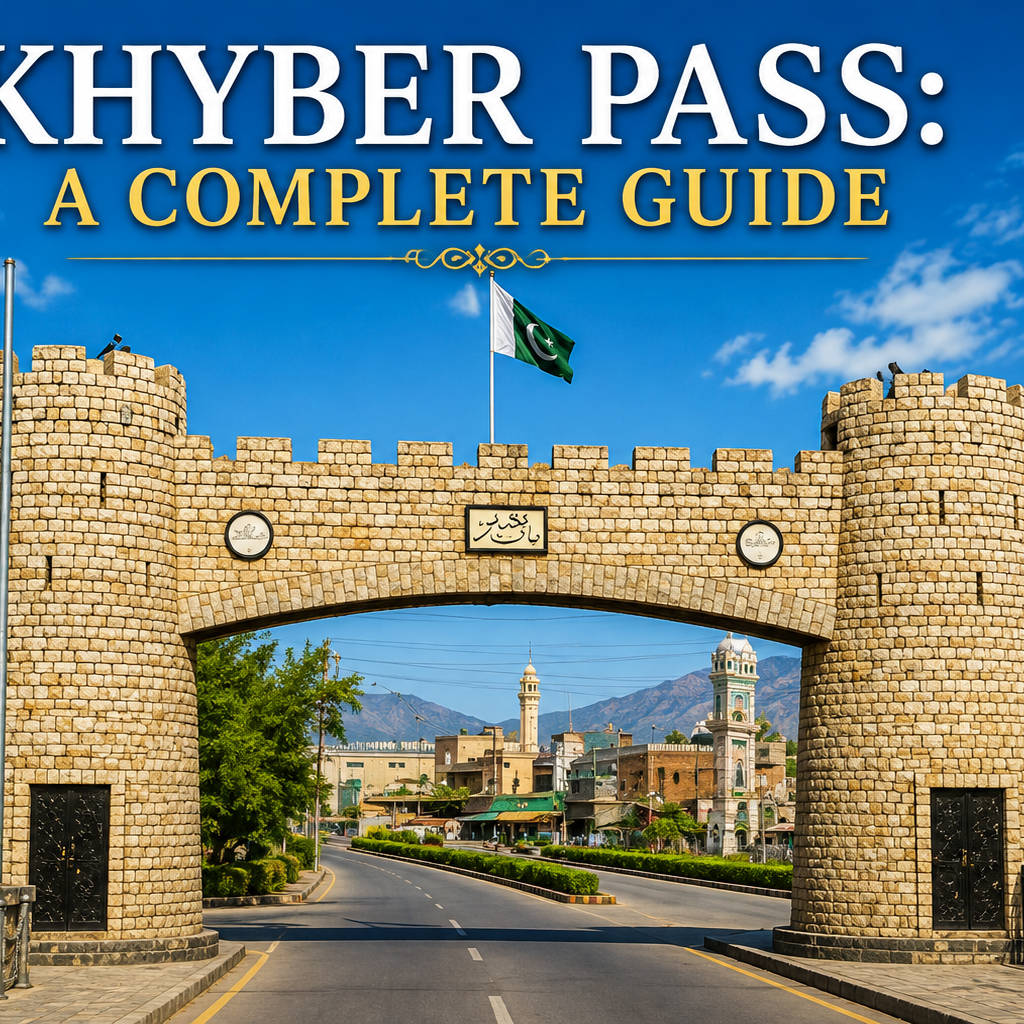
Jamrud Fort guards the eastern gateway. Sikhs built this great fort in the 19th century. It rises at the mouth of the pass. A grand gate now marks the entrance nearby.
Ali Masjid rests at the narrowest point. A mosque gives the spot its name. A British fort once crowned the heights above. Old graves recall a long ago war.
Landi Kotal crowns the summit of the pass. A fort and cantonment rose here of old. Its market has long served the frontier. Roads branch back towards Peshawar from here.
Khyber railway
A daring railway was a great feat of engineering. British builders drove it through the hills, running the line from Peshawar up to Landi Kotal. Steep grades and hard rock defied the work.
This line braved the mountains with bold design. Some 34 tunnels pierced the barren hills. Around 92 bridges carried the track across ravines. Engineers switched back and forth up the slopes.
A famous train once climbed the pass. Steam engines pushed and pulled the carriages. A safari drew travellers to the great route. It ran until floods broke the track in 2006.
Old stations still recall that age. Landi Kotal station rests quiet and abandoned. Its tanks and platforms mark a bygone era. Dreams of revival stir from time to time.
Visiting the Khyber Pass
Come in spring or autumn. Summers grow hot and dusty in the hills. Winters turn cold on the heights. Mild seasons suit a visit best.
Start from Peshawar city. A winding route begins a short drive to the west. Jamrud marks the gateway to the route. A permit and guide help for the frontier road.
See the forts along the way. Jamrud guards the eastern mouth of the pass. Ali Masjid marks the narrowest point. Landi Kotal crowns the high summit.
Take in the history and the views. A winding road climbs through dramatic hills. Old railway tracks run beside the route. Bring time to picture the caravans of old.
Frequently asked questions
Why is the Khyber Pass famous? A famous route the Khyber Pass ranks among the great historic gateways of the world, linking the Indian subcontinent with Central Asia through the mountains between Peshawar and Kabul. For thousands of years it has served as a route for both trade and conquest, forming part of the ancient Silk Road and carrying caravans, merchants and armies alike. Great figures of history from Alexander the Great to the Mughals and the British, have crossed it in their turn. Its dramatic scenery, its old forts and its daring railway have made the pass a symbol of the frontier country.
How long is the Khyber Pass and where does it go? A winding route the Khyber Pass runs for about 53 kilometres through the Spin Ghar mountains, connecting the city of Peshawar in Pakistan with the road to Kabul in Afghanistan. From the plains near Peshawar, it climbs west through the town of Jamrud and past Ali Masjid. It rises to its highest point at Landi Kotal then descends to the border post of Torkham on the Afghan frontier. Along the way the pass narrows to a few metres in places and widens into broad valleys in others. It remains an important trade route between the two countries to this day.
What forts are in the Khyber Pass? Several historic forts guard the Khyber Pass, marking its long strategic importance. Jamrud Fort, built by the Sikhs in the 19th century, rises at the eastern entrance to the pass, near a grand gateway arch. Ali Masjid at the narrowest point of the pass, is marked by a mosque and the remains of a British era fort on the heights above. Old graves from a 19th century war rest nearby. Landi Kotal at the summit, holds a fort and cantonment, while other posts such as Shagai Fort line the route, reflecting centuries of frontier defence.
What is the Khyber railway? A historic mountain railway the Khyber line was built by the British in the 1920s, running from Peshawar up through the pass to Landi Kotal near the Afghan border. It was a remarkable feat of engineering, crossing around 34 tunnels and some 92 bridges and culverts as it climbed the steep and barren hills. Engineers switched it back and forth to gain height. For many years a famous steam safari carried travellers along the line, offering dramatic views of the mountains. This service ran until 2006, when floods damaged the track, though the old stations still recall its golden age.
When is the best time to visit the Khyber Pass? A best time to visit the Khyber Pass is in spring from around March to April. Autumn from October to November, is also mild and clear. Summers in the hills can be hot and dusty, while winters turn cold on the higher ground, so the milder seasons are more comfortable for travel. Visitors usually set out from Peshawar. A permit and local guide are often needed for the frontier road. Dramatic scenery, old forts and the railway make the journey a memorable one at any time of year.
Gateway of empires
A great pass forms the ancient gateway of empires. This famous pass cuts through the mountains to Kabul. Armies and caravans have crossed it for thousands of years. Old forts and a daring railway crown its heritage. Trade still flows through it between two lands. Few places on earth hold such deep and stirring history.
You may come to the Khyber Pass for the history the forts or the views. This route rewards the visit either way. You can stand at the gateway fort of Jamrud. You can gaze up at Ali Masjid in its narrow gorge. You can trace the old railway winding through the hills. Come to the Khyber Pass and cross the gateway of empires. This is the great pass of the frontier.