Head Marala and the Barrages of Punjab: A Complete Guide
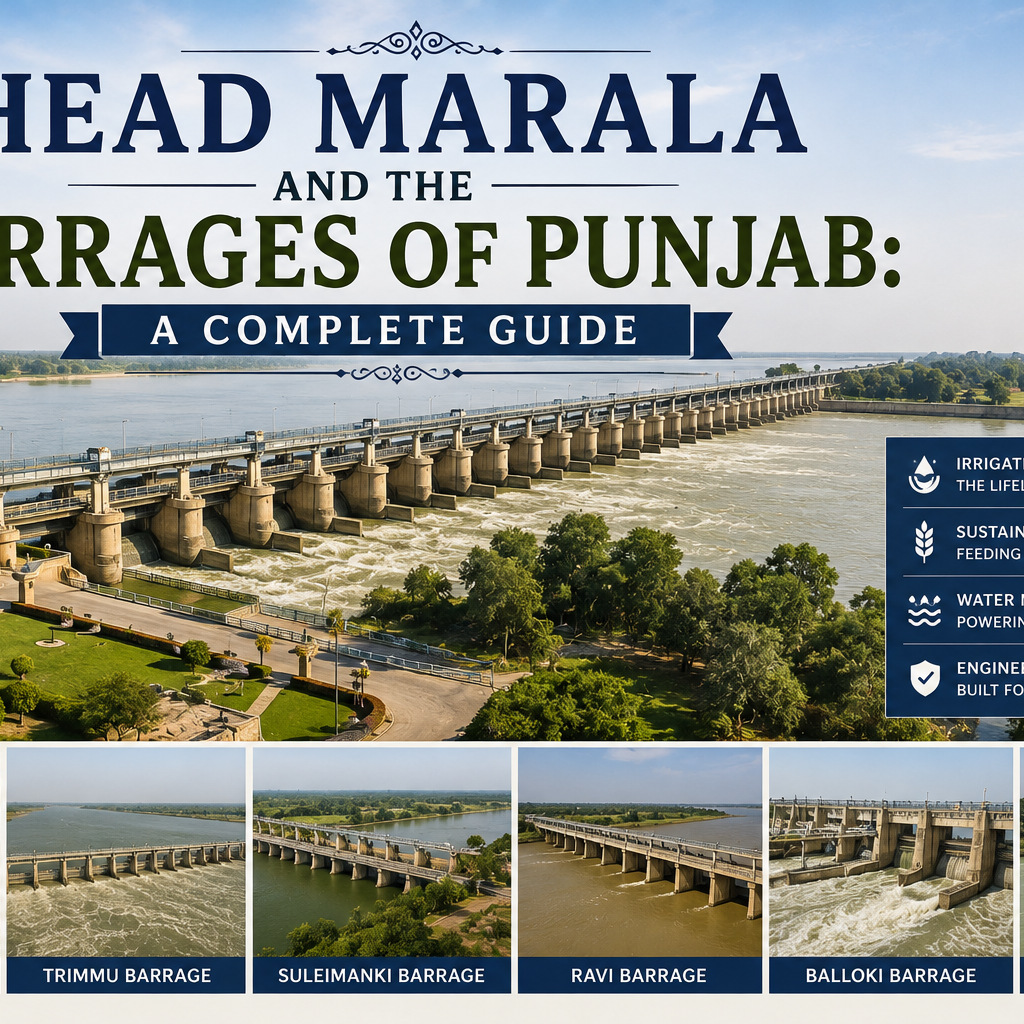
Head Marala is one of the great water landmarks of Punjab. This headworks tames the Chenab where it enters the plains near Sialkot. Its canals turned dry plains into green fields. Head Marala ranks among a chain of great barrages across the province. A cool riverside spot, it attracts families and anglers near Sialkot. This guide covers Head Marala and the barrages for the curious traveller. It explains the setting the history the canals the other barrages and how to visit.
This guide offers a general overview. Figures and details vary between sources.
Quick answer: Head Marala is a headworks on the Chenab River near Sialkot in Punjab, first built by the British between 1906 and 1912 with a new barrage added in 1968. It feeds the Upper Chenab Canal and the Marala Ravi Link Canal which water vast areas of farmland. It also serves for flood control and as a popular picnic spot near Sialkot. It is one of many great barrages across Punjab. Winter and spring are the finest seasons to visit.
About Head Marala
Head Marala is a great headworks in northern Punjab. This structure spans the Chenab River near Sialkot. It is located where the river enters the plains. A headworks controls and diverts the flow of a river.
A mighty river bows here. This Chenab pours down from the Kashmir mountains. Head Marala captures its flow at the plains. Its gates spread the water into canals.
A huge flow passes through. This headworks can carry over a million cusecs. Floodwaters surge through its many gates. This makes it a key flood control point.
More than an engineering site, it welcomes visitors. Green banks and cool water attract them. Families picnic along the river here. Anglers cast their lines in the calm water.
History of Head Marala
Head Marala was born in the British age. Engineers first built a weir here. This work ran from 1906 to 1912. It formed part of the Triple Canals Project.
A great scheme drove the project. This vast plan reshaped the water map of Punjab. It aimed to green the dry plains. Canals would carry water far from the rivers.
A first weir fed a great canal. It sent water into the Upper Chenab Canal. This canal irrigated vast tracts of farmland. Fields spread across the Gujranwala area.
A new barrage rose in 1968. It replaced and improved the old weir. This barrage added the Marala–Ravi Link Canal. So the works could feed the Ravi too.
Canals and the fields
Head Marala feeds a network of canals. Its gates send water down great channels. These canals spread across the plains. They carry life to the farmland of Punjab.
An Upper Chenab Canal is the first great channel. It draws its water at Head Marala. It waters a wide belt of farmland. Crops thrive along its long course.
A Marala–Ravi Link Canal joins the rivers. It carries Chenab water towards the Ravi. This transfer feeds fields near the border. It links two of the great rivers of Punjab.
These canals transformed the land. Dry plains became fields of wheat and cotton. Villages and farms grew along the channels. This bounty feeds much of the province.
Barrages of Punjab
Head Marala is one of many great works. Barrages and headworks span the rivers of Punjab. Each tames a river and feeds canals. Together they water the whole province.
A busy Chenab carries several great works. Khanki, Qadirabad and Trimmu span its course. Khanki was among the earliest, built in 1889. A new barrage rose there in recent years.
Ravi and Sutlej hold barrages too. Balloki spans the Ravi near Lahore. Sulemanki and Islam tame the Sutlej. These works feed the canals of the south.
A mighty Indus holds the greatest barrages. Jinnah, Chashma and Taunsa span its flow. Taunsa waters over two million acres of land. It is also a famous wildlife sanctuary.
Nature and the barrages
These barrages create rich wetland habitats. Still water gathers above their gates. Reeds and shallows ring the reservoirs. Birds and fish thrive in these waters.
Taunsa is a haven for wildlife. Its sanctuary was named a Ramsar site in 1996. Ponds and lakes spread between its embankments. Migratory birds flock here in winter.
Head Marala draws wildlife too. Waterbirds gather along its banks. Fish fill the calm water above the gates. This makes it a fine spot for nature lovers.
These barrages balance many needs. They water farms and hold back floods. They shelter wildlife in their wetlands. They also carry roads and railways across the rivers.
Visiting Head Marala
Come in winter or spring. Summers grow hot on the plains. Cooler months are the finest for a visit. Green banks and mild days reward the traveller.
Reach it from Sialkot. Head Marala is a short drive from the city. Roads lead out to the Chenab. A private vehicle is the easiest way to visit Head Marala.
Enjoy the riverside. Families picnic along the green banks. Anglers cast their lines in the calm water. Cool river air is a treat in the heat.
Take care near the water. Currents can run strong below the gates. Keep children well back from the edge. Bring food, water and sun cover along.
Frequently asked questions
What is Head Marala? Head Marala also known as the Marala Headworks, is a large water control structure on the Chenab River near Sialkot in Punjab. First built by the British between 1906 and 1912 as part of the Triple Canals Project, it captures the flow of the Chenab as the river enters the plains. It then diverts the water into canals for irrigation. A new barrage was added in 1968 allowing it to feed both the Upper Chenab Canal and the Marala–Ravi Link Canal. Beyond irrigation, it serves for flood control and has become a popular riverside picnic spot near Sialkot.
Why was Head Marala built? Head Marala was built to capture the waters of the Chenab River and divert them into canals to irrigate the dry plains of Punjab. It formed part of the Triple Canals Project a major British irrigation scheme begun in 1906 to green vast tracts of arid land. A first weir fed the Upper Chenab Canal, watering a wide belt of farmland in the Gujranwala area. It turned barren plains into fields of wheat and cotton. A later barrage added in 1968, extended the works to feed the Marala–Ravi Link Canal as well.
What are the main barrages in Punjab? Punjab has a network of great barrages and headworks spanning its rivers. On the Chenab are Marala, Khanki, Qadirabad and Trimmu, while the Ravi holds Balloki. Sulemanki and Islam tame the Sutlej. A mighty Indus carries the largest works, including Jinnah, Chashma and Taunsa. This last one waters over two million acres and is a noted wildlife sanctuary. Together these structures divert the waters of the rivers into one of the largest canal irrigation networks in the world, watering the farmland of the province.
Is Head Marala a good place to visit? Yes, Head Marala is a popular spot for a day out, especially for families from Sialkot and the surrounding area. Green banks, cool river air and the calm water above the gates make it a pleasant place for picnics, particularly in the cooler months. Anglers come to fish in the calm water. Birdwatchers can spot waterbirds along the banks. Visitors should take care near the water as currents below the gates can be strong. Keep a close watch on children.
When is the best time to visit Head Marala? Winter and spring, from around November to March are the best time to visit Head Marala, when the weather is mild and the riverside is green and pleasant. Summers on the plains can be very hot, making a midday visit uncomfortable, though early mornings and evenings remain bearable. Winter also brings migratory birds to the wetlands around the barrages adding to the appeal for nature lovers. Head Marala is a short drive from Sialkot, making it an easy day trip from the city.
Keeper of the Chenab
Head Marala is the keeper of the Chenab in Punjab. This great headworks tames the river as it enters the plains. It feeds the canals that turned dry land into green fields. It ranks among a chain of barrages across the province. Cool banks and calm water draw families and anglers here. Few sites blend such use and beauty along a river.
You may come to Head Marala for the engineering the river or the calm. This place rewards the visit either way. You can watch the Chenab pour through the great gates. You can picnic on the green banks in the cool air. You can spot waterbirds along the quiet reservoir. Come in winter or spring and enjoy the river. This is the keeper of the Chenab.