Haripur: A Complete Guide
Haripur is the green gateway city of the Hazara hills. This pleasant town rests in a hilly plain near Islamabad. A Sikh general founded it as a walled fortress town. Buddhist ruins and great dams crown its heritage and country. It links Hazara to the capital and the plains. This guide covers Haripur for the curious traveller. It explains the setting the history the heritage the dams and how to visit.
This guide offers a general overview. Details and figures vary between sources.
Quick answer: Haripur is a city and district in the Hazara division of Khyber Pakhtunkhwa, set in a hilly plain at around 520 metres, some 65 kilometres north of Islamabad. Founded in 1822 by the Sikh general Hari Singh Nalwa as a walled fort town, it carries a deep Gandhara heritage seen in the Bhamala Stupa. This district holds two great reservoirs the Tarbela and Khanpur dams. Farming and industry drive its economy. Spring and autumn are the finest seasons.
About Haripur
Haripur is a city of the Hazara division of Khyber Pakhtunkhwa. It is located in a green, hilly plain. A height of around 520 metres cools its air. Islamabad rises some 65 kilometres to the south.
A fine setting blends hills and plains. Green fields spread across the fertile basin. Wooded hills rise on every side. This mix of land gives the area its charm.
A great gateway shapes its role. Haripur links Hazara to the capital and the plains. Roads reach out to Abbottabad and Islamabad. Taxila is set a short way to the south.
This district thrives on many strengths. Farming fills the fertile plains with crops. Industry has grown fast in recent years. Haripur ranks high for learning in the province.
History of Haripur
Haripur carries a deep and layered story. This area formed part of old Gandhara. Ashoka is said to have governed here of old. Buddhist learning flourished across the country.
Old Gandhara reached far in these hills. Taxila rose nearby as a seat of learning. Monks and traders crossed the fertile plains. Vedic hymns are tied to the Indus banks here.
A Sikh general founded the modern town. Hari Singh Nalwa built it in 1822. He served the great Maharaja Ranjit Singh. This name means the town of Hari.
A great walled fort rose here. Nalwa built the fort of Harkishangarh. Thick high walls guarded the new town. A deep trench ringed the strong defences.
A British administration took the district in time. Haripur served as the seat of Hazara. James Abbott trained local gunners here. This town passed to new rulers by the mid century.
Heritage and attractions in Haripur
Haripur holds fine heritage and scenery. Ancient ruins recall its Buddhist past. Old forts speak of the Sikh age. History and nature meet across the district.
A great treasure crowns the Bhamala Stupa. This Buddhist complex rises near Khanpur. Its ruins date back many centuries. A vast reclining Buddha was found here.
Old walls recall the founding age. A fort called Harkishangarh once ringed the town. Colonial buildings mark the later years. History lingers in the old streets.
Waterfalls tumble in the hills nearby. Chajian and Noori draw day trippers. Green valleys reward a country drive. Nature offers many restful escapes.
Dams and industry in Haripur
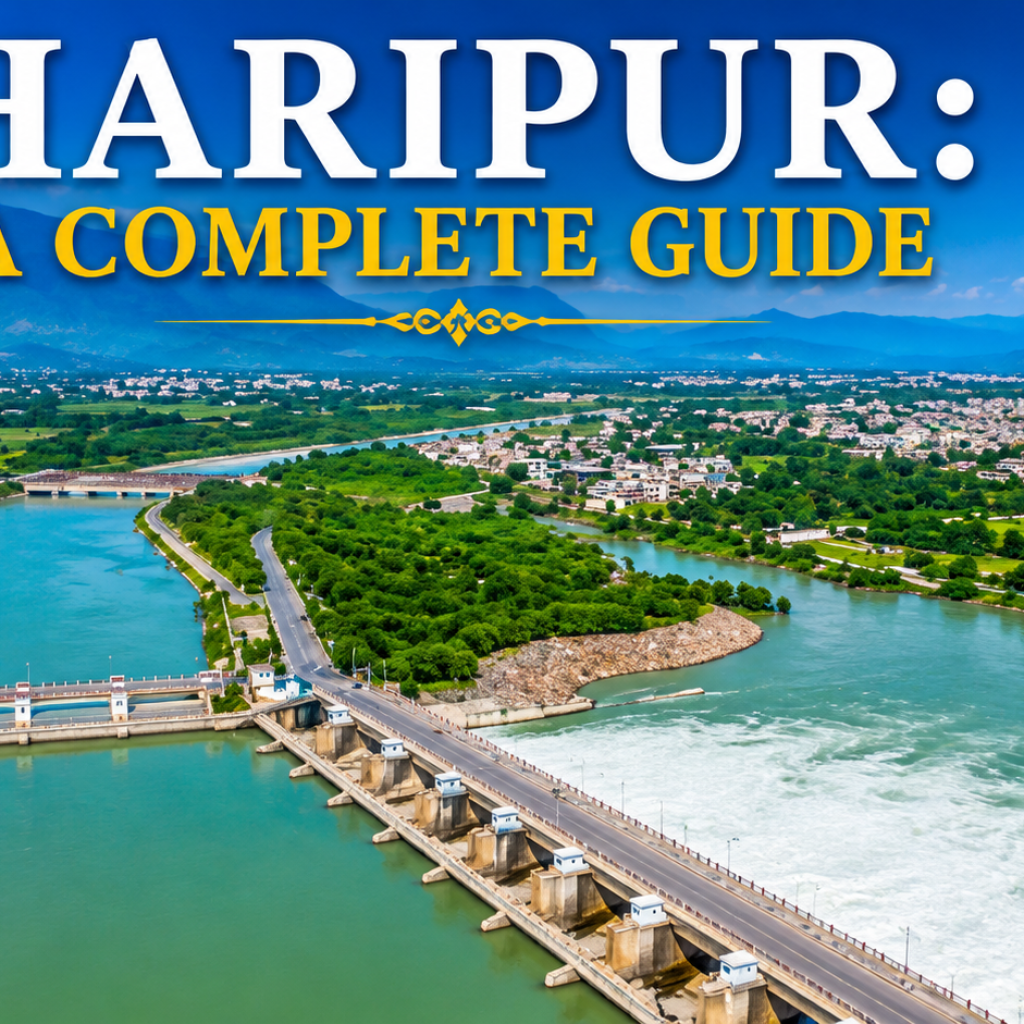
Haripur holds two great reservoirs. A mighty Tarbela Dam borders the district. Khanpur Dam rises on the Haro River. These waters serve the wider country.
Khanpur Lake is a beloved retreat. Its clear water gathers among green hills. Boating and picnics draw many visitors. It supplies water to Islamabad and Rawalpindi.
Tarbela ranks among the great dams of earth. Its waters border the western district. This vast reservoir feeds farms far away. Power flows from it across the land.
Industry has grown fast in Haripur. A great industrial estate at Hattar spreads nearby. Factories make fertiliser, chemicals and goods. This growth drives the local economy.
Visiting Haripur
Come in spring or autumn. Summers stay mild in the hilly plain. Winters turn cool and crisp. Green, clear seasons suit a visit best.
Reach the district with ease. Good roads link it to Islamabad and Abbottabad. A short drive brings the traveller here. It makes a fine stop on the way north.
Explore the heritage and the hills. Bhamala Stupa rewards those who love history. Old forts recall the Sikh age. A day can take in several sites.
Enjoy the lakes and the country. Khanpur Lake offers boating and picnics. Waterfalls hide in the nearby hills. Bring time for both history and scenery.
Frequently asked questions
Who founded Haripur? Haripur was founded in 1822 by Hari Singh Nalwa a famous general and commander in chief in the army of the Sikh ruler Maharaja Ranjit Singh. Granted land in the Hazara area as a reward for his service, Nalwa built a walled town in the heart of the Haripur plain. It was centred on the fort of Harkishangarh, ringed by thick walls and a deep trench. A name, Haripur, means the town of Hari after its founder. It served as the headquarters of the Hazara area until the British took control around the middle of the 19th century. Steady growth followed thereafter.
What is the Bhamala Stupa? A Bhamala Stupa near Khanpur in the Haripur district is an ancient Buddhist stupa and monastery complex, dating to roughly the 2nd to 4th centuries. A fine example of Gandhara Buddhist architecture, it is known for its distinctive form and its many treasures. Diggers found hundreds of artefacts and a large reclining Buddha statue there. Designated a national heritage site, it reflects the deep Buddhist roots of the area, when this part of Gandhara was a centre of learning and worship. For visitors the site offers a striking glimpse into the ancient past of the Hazara country.
What dams are in Haripur? Haripur district holds two of the most important water reservoirs in the country the Tarbela Dam and the Khanpur Dam. A great Tarbela Dam, on the Indus River, borders the district and ranks among the largest earth filled dams on earth, feeding farms and power stations far beyond the area. A Khanpur Dam, on the Haro River, gathers the waters of Khanpur Lake. This lake supplies drinking water to Islamabad and Rawalpindi and waters farms nearby. Both reservoirs are also popular for boating, fishing and picnics, making them favourite escapes for visitors and locals alike.
Why is Haripur important economically? Haripur is an important district for both farming and industry, giving it one of the strongest economies in the Hazara area. Fertile hilly plains yield good harvests of crops. This district is also a growing centre of industry above all the Hattar Industrial Estate, home to factories making fertiliser, chemicals and other goods. Nearby stand the Tarbela and Khanpur dams adding further importance, supplying water and power to the wider country. Haripur also ranks highly for education and human development adding to its standing among the districts of the province.
When is the best time to visit Haripur? A best time to visit Haripur is in spring from around March to April. Autumn from October to November, is also mild, when the country is green and pleasant. Summers in the hilly plain are generally milder than on the lowland plains, though still warm, while winters are cool and crisp. Spring brings fresh growth and blossom to the fields and hills, while autumn offers clear, comfortable days for sightseeing. Cooler months suit visits to the ancient ruins the forts and the lakes of the district.
Gateway to Hazara
Haripur is the green gateway to the Hazara hills. This pleasant town rests in a hilly plain near the capital. A Sikh general founded it as a walled fortress town. Buddhist ruins and great dams crown its heritage and country. Farms, factories and lakes fill its busy district. Few towns blend such history, industry and natural beauty.
You may come to Haripur for the history the dams or the hills. This district rewards the visit either way. You can explore the ancient Buddhist ruins of Bhamala. You can boat on the clear water of Khanpur Lake. You can trace the old Sikh fort in the town. Come to Haripur and discover the gateway to Hazara. This is the green heart of the hills.