Chitral: A Complete Guide
Chitral is the remote mountain capital of the far Hindu Kush. This old town rests on the bank of the Chitral River. Mighty Tirich Mir towers above it the highest peak of the range. A royal fort and a marble mosque crown its heritage. This town opens the way to the famous Kalash valleys. This guide covers Chitral for the curious traveller. It explains the setting the history the heritage the valleys and how to visit.
This guide offers a general overview. Details and figures vary between sources.
Quick answer: Chitral is a town in the far north-west of Khyber Pakhtunkhwa, set on the west bank of the Chitral River at around 1,494 metres. It rests at the foot of Tirich Mir. Long the seat of a princely state ruled by the Mehtar, it holds the historic Chitral Fort and elegant Shahi Masjid. This town is the gateway to the indigenous Kalash valleys and to the high Hindu Kush. A tunnel now keeps it open through the winter. Summer is the finest season.
About Chitral
Chitral is a town in the far north-west of Khyber Pakhtunkhwa. It is located on the west bank of the Chitral River. A height of around 1,494 metres cools its air. Tirich Mir towers high above the town.
A grand, remote setting marks the town. High mountains hem the town on every side. Tirich Mir rises as the greatest of them all. This peak crowns the whole Hindu Kush range.
A hard geography long kept it apart. Steep passes guarded the town for centuries. A Lowari Pass rises to the south. A Shandur Pass climbs away to the north.
A great river runs through the country. Chitral waters flow down from the high mountains. Green fields line its banks in places. Its waters shape life across the valley.
History of Chitral
Chitral carries a long and royal story. A princely state ruled these valleys for ages. A Katur dynasty held sway here. Its ruler bore the title of Mehtar.
A famous siege marked the town in 1895. British and local forces clashed at the fort. This siege drew the notice of the wider world. It sealed the fate of the mountain state.
This state joined Pakistan in 1947. It kept its own rule for some years more. Full merger came in 1969. Chitral then became a district of the province.
Royal heritage lingers in the town. A ceremonial Mehtar still keeps old customs. Forts and palaces recall the days of kings. Tradition runs deep across the valley.
Heritage and attractions in Chitral
Chitral holds fine heritage and scenery. Old forts and mosques recall its royal past. A museum gathers the treasures of the valley. History and mountain views meet in the town.
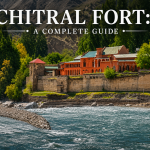
A great landmark rises by the river the Chitral Fort. This royal fortress rests on the river bank. Its walls recall the siege of 1895. A ceremonial Mehtar still lives here.
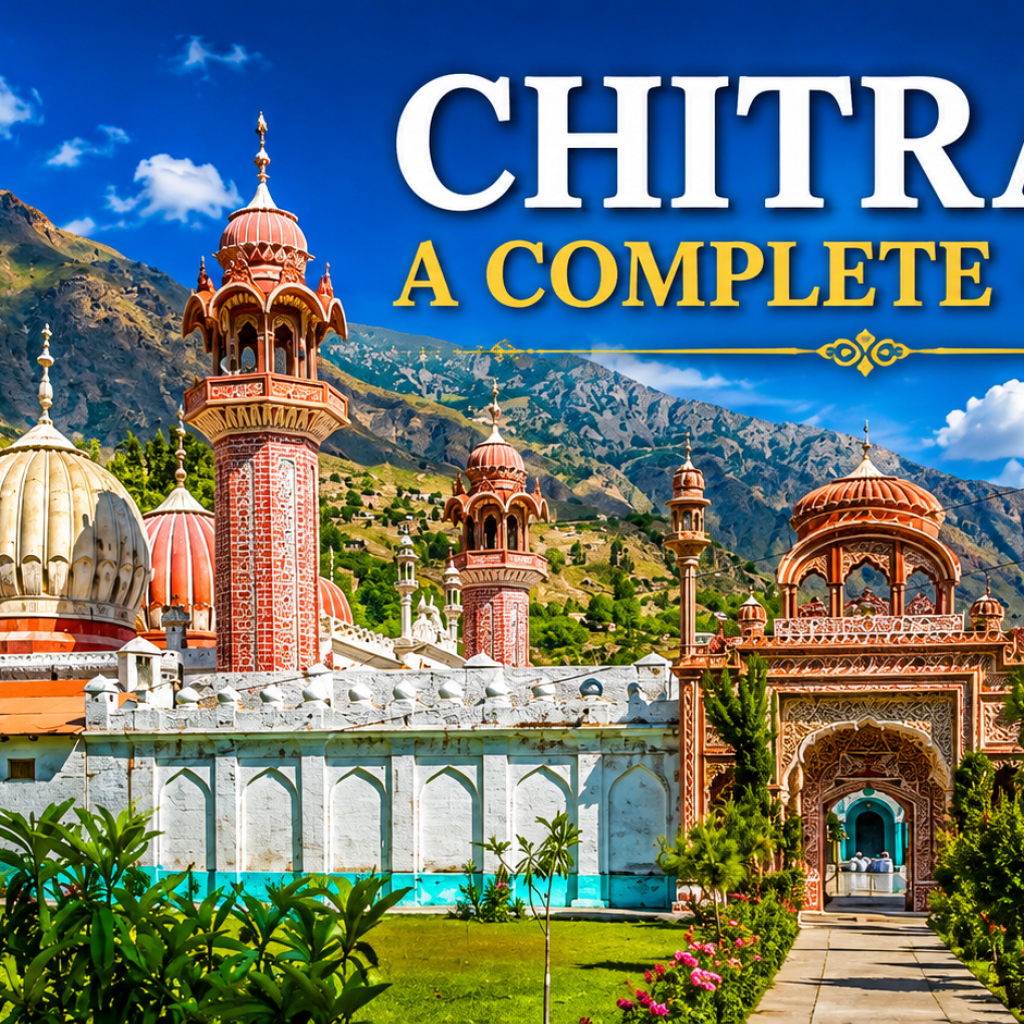
A royal mosque rises close beside the fort. Mehtar Shuja-ul-Mulk built it in 1924. White marble and soft pink domes adorn it. It shines against the dark Hindu Kush.
A fine museum tells the story of the valley. Its galleries hold coins, weapons and old attire. A Kalash section shows the culture of the valleys. A visit here rewards the curious traveller.
Valleys and the mountains in Chitral
Chitral opens the way to famous valleys. Kalash country is a short drive off. Tirich Mir towers over the whole country. High passes lead on to distant lands.
These valleys hold an ancient culture. A distinct people keep old customs alive. Their festivals fill the year with colour and song. Their heritage draws visitors from afar.
Tirich Mir crowns the Hindu Kush. It rises to over seven thousand metres. Climbers come to attempt its great height. Its snows loom over the town below.
Wild country rings the valley too. Chitral Gol National Park shelters the markhor. Birmoghlasht holds a ruined summer palace. Garam Chashma offers warm mountain springs.
Visiting Chitral
Come in summer for the finest weather. Warm days reward the long journey here. Spring and autumn bring mild, clear skies. Winter shuts many high passes with snow.
Reach the town by road or air. A great tunnel at Lowari keeps the road open all year. Short flights link Chitral to Peshawar. Mountain weather can delay the planes.
See the fort and the mosque. A royal fort recalls the age of the Mehtars. This mosque rewards a quiet visit. A museum sets the scene for the valleys.
Use the town as a base. Kalash country waits within reach. Tirich Mir looms for the mountain lover. Bring time to explore the wider country.
Frequently asked questions
Why is Chitral famous? Chitral is famous as a remote and beautiful mountain town in the far north-west of Khyber Pakhtunkhwa. It was long the seat of a princely state ruled by the Mehtar. Set on the Chitral River at the foot of Tirich Mir the highest peak of the Hindu Kush, it is known for its dramatic scenery. Its royal heritage shows in the historic fort and mosque. Above all, Chitral is celebrated as the gateway to the indigenous Kalash valleys, home to a distinct people with a unique and ancient culture. Chitral also draws mountaineers heading for the great peaks of the Hindu Kush.
What is the Chitral Fort? A historic royal fortress the Chitral Fort or Shahi Qila, rests on the bank of the river in the heart of the town. Built by the Katur dynasty that ruled the mountain state, it served as the seat of the Mehtar. Its walls are closely tied to the famous Siege of Chitral in 1895. Today the fort remains private property and the residence of the ceremonial Mehtar, so visitors usually need permission to enter. Its massive walls and towers stand as a striking reminder of the royal past of the valley.
What is the Shahi Masjid in Chitral? A royal mosque the Shahi Masjid, is one of the finest landmarks of Chitral, set on the bank of the river next to the Chitral Fort. It was commissioned in 1924 by Mehtar Shuja-ul-Mulk a ruler of the mountain state. This mosque is known for its beautiful white marble and soft pinkish domes. This mosque forms a striking sight against the dark backdrop of the Hindu Kush, blending fine craftsmanship with the aristocratic heritage of the town. It serves both as a place of worship and as a symbol of the rich history of Chitral.
How do you reach Chitral? Chitral can be reached both by road and by air, though its remote mountain setting has long made the journey a challenge. By road the town is linked to the rest of the country through the Lowari Tunnel. Since its opening this has kept the route open even in winter, when the high Lowari Pass would once be closed by snow. Short flights also connect Chitral to Peshawar, taking under an hour, though mountain weather can delay them. A Shandur Pass to the north offers another road route in the warmer months, towards Gilgit.
When is the best time to visit Chitral? A best time to visit Chitral is in summer from around May to September, when the weather is warm and the high passes and valleys are open. This is the season for exploring the Kalash valleys attending their festivals and travelling into the mountains. It is also the best time for those hoping to see or climb the great peaks. Spring and autumn bring mild, clear days, while winter is cold with snow closing many of the higher routes. Summer remains the classic season for a journey to this remote mountain town.
Mountain capital of the Hindu Kush
Chitral is the remote mountain capital of the Hindu Kush. This old town rests on the river beneath Tirich Mir. A royal fort and a marble mosque crown its heritage. These valleys open a window on an ancient culture. High peaks and passes ring the whole country. Few towns hold such beauty and history together.
You may come to Chitral for the mountains the history or the valleys. This town rewards the visit either way. You can stand before the fort of the old Mehtars. You can admire the marble of the Shahi Masjid. You can set off from here into the Kalash valleys. Come to Chitral and discover the capital of the Hindu Kush. This is the mountain heart of the north.