Chiniot Woodwork: A Complete Guide
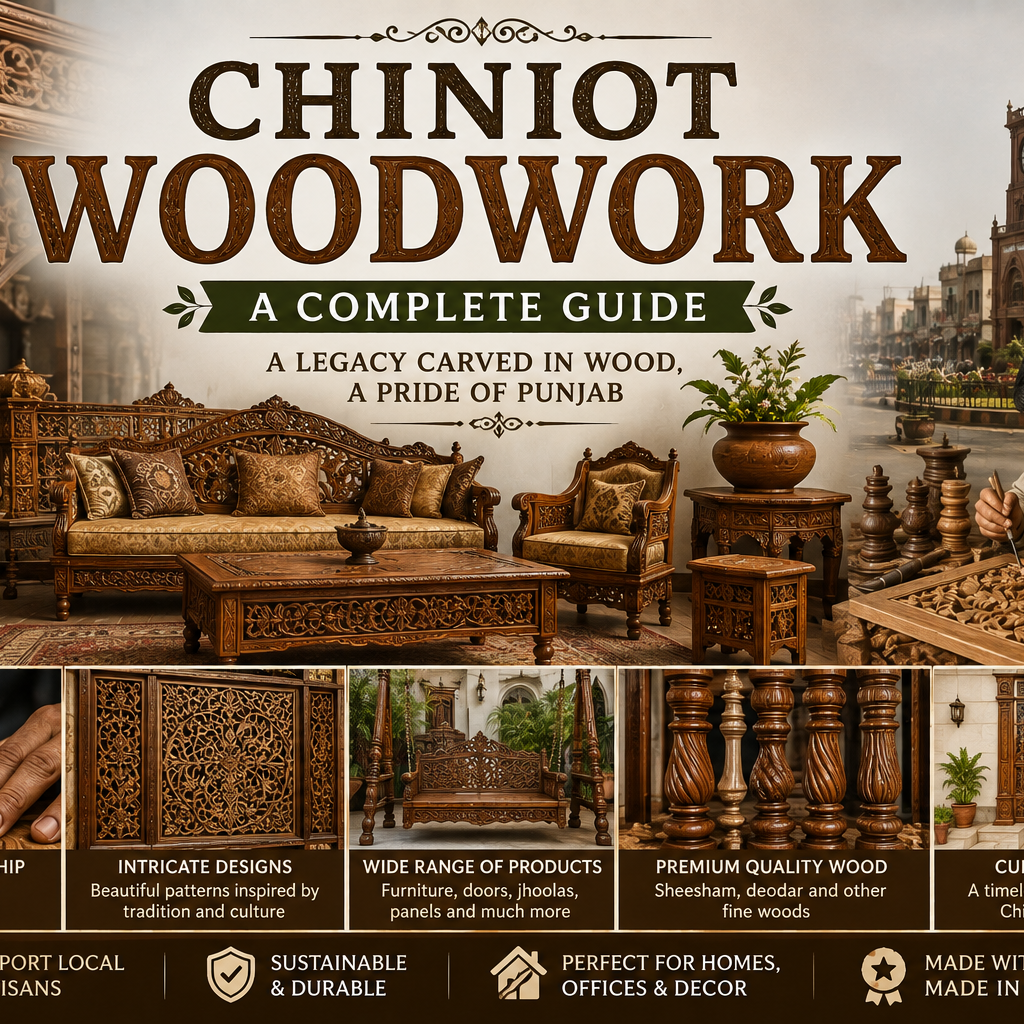
Chiniot woodwork is the crowning glory of craft in central Punjab. This ancient town is famed as the furniture capital of the country. Master carvers shape sheesham wood into beds, tables and screens. Fine carving and brass inlay mark the finest pieces. Chiniot furniture graces homes and palaces around the world. This guide covers Chiniot woodwork for the curious traveller. It explains the roots the wood the techniques the great buildings and where to find it.
This guide offers a general overview. Details and figures vary between sources.
Quick answer: Chiniot woodwork is a centuries old craft from the town of Chiniot on the Chenab River in central Punjab, famed as the furniture capital of Pakistan. Master craftsmen carve sheesham and teak into beds, tables, wardrobes and screens adorned with fine carving and brass inlay. This craft dates to the Mughal age, when Chiniot artisans worked on great monuments. Thousands of workshops fill the town today. Chiniot is its great home. Its furniture reaches buyers worldwide.
Roots of the craft
Chiniot woodwork is an ancient craft. This town has carved wood for centuries. Its artisans have long won lasting fame. Skill has passed down the generations here.
Chiniot rises on the Chenab River. Good timber and trade routes met here. This helped the craft grow rich and strong. Many cultures shaped its designs over time.
A Mughal age raised the craft high. Royal patrons prized the fine carving and Chiniot artisans decorated palaces and mansions. The fame of Chiniot artisans of woodwork spread across the subcontinent and beyond.
Master builders left a lasting mark. Chiniot masons worked on the Taj Mahal in Agra. They also raised the Wazir Khan Mosque in Lahore. Such work sealed the fame of the town.
Wood
Sheesham is the great wood of Chiniot. This hardwood is strong and richly grained. Carvers prize it for its lasting beauty. Most fine furniture starts with sheesham.
This wood suits deep carving well. Its firm grain holds a sharp cut. Craftsmen work fine detail into its surface. Time and care draw out its beauty.
Teak joins the craft too. This wood adds strength and a warm tone. Some pieces blend teak with sheesham. Both woods reward the skilled hand.
Good timber is found close at hand. Forests and trade brought wood to the town. This ready supply fed the craft. Chiniot grew rich on its woodwork.
Techniques of woodworks
Chiniot woodwork rests on many skills. Carving is the first and greatest of them. Craftsmen cut fine patterns into the wood. Flowers, vines and geometry fill the surface.
Joinery holds each piece together. Craftsmen fit wood to wood with care. Traditional joints lock the parts in place. This gives the furniture its lasting strength.
Inlay adds a jewelled touch. Artisans set brass or copper into the wood. Fine metal lines trace floral and geometric designs. Old pieces once used ivory in this way.
Embossing lifts the design in relief. Craftsmen raise patterns above the surface. This gives a rich, three dimensional effect. Light and shadow play across the carving.
Inlay designs follow old patterns. A central medallion often anchors the work. Laced borders and corner tughras frame it. Some tabletops show a whole carpet design in wood.
Each piece takes patient work. A craftsman first measures and cuts the timber. Rough shaping forms the frame of the piece. Carving and inlay may take weeks or months.
Great wooden buildings
Chiniot is a town of wooden marvels. Carved doors and balconies line the old streets. Fine woodwork adorns the old houses. This whole town shows off the craft.
Umar Hayat Palace is the great jewel. This five storey wooden mansion is a marvel. Fine carving and inlay cover its face. Few wooden buildings in South Asia rival it.
A tragic tale clings to the palace. Legend ties its building to family sorrow. This story lends the place an air of mystery. Visitors come to see its beauty and its legend.
A Shahi Masjid is another treasure. Wazir Saadullah Khan built this grand mosque. He also oversaw the Jama Masjid in Delhi. So the two share a kindred style.
Furniture and the industry
Chiniot furniture fills homes across the country. Beds, tables and wardrobes come from its workshops. Sofa sets and cabinets carry its carving. Jewellery boxes and screens show finer work.
This craft is a great industry today. Thousands of workshops fill the town. They meet most of the furniture demand of the country. Chiniot furniture reaches markets around the world.
Carpenters gather in one quarter. Mohalla Tarkhanan holds many inlay experts. Here the finest craftsmen work side by side. This quarter forms the heart of the craft.
Chiniot rivals the great furniture makers. Its carving matches that of famous foreign names. Yet its sheesham pieces last longer and cost less. This blend of beauty and worth wins buyers.
Frequently asked questions
Why is Chiniot famous for woodwork? Chiniot is famous as the furniture capital of Pakistan, renowned for its centuries old tradition of fine woodwork and carving. Set on the Chenab River in central Punjab the town has been a great centre of the craft since the Mughal age. Its artisans decorated palaces and mansions. Its masons worked on monuments such as the Taj Mahal in Agra and the Wazir Khan Mosque in Lahore. Today, thousands of workshops in Chiniot produce beds, tables, wardrobes and other furniture adorned with intricate carving and brass inlay. These are sold across Pakistan and exported around the world.
What wood is used in Chiniot furniture? A main wood in Chiniot furniture is sheesham also known as rosewood a strong and richly grained hardwood prized for its durability and beauty. Its firm grain holds a sharp, detailed cut, making it ideal for the fine carving for which Chiniot is famous. Teak is also used adding strength and a warm tone. Some pieces blend the two woods. These hardwoods make Chiniot furniture both beautiful and long lasting. They are a large part of why the craft has earned such a strong reputation at home and abroad.
What techniques are used in Chiniot woodwork? Chiniot woodwork brings together several traditional skills. Most famous is hand carving, in which craftsmen cut intricate floral, vine and geometric patterns into the wood. Joinery is another key skill, with wood fitted to wood using traditional joints that give the furniture its strength. Inlay work sets fine lines of brass or copper into the surface to form detailed designs, with older pieces sometimes using ivory. Embossing lifts patterns in relief for a three dimensional effect adding further richness. This turns plain furniture into a work of art.
What is Umar Hayat Palace? Umar Hayat Palace also known as Umar Hayat Mahal, is a five storey wooden mansion in Chiniot, considered one of the most beautiful wooden buildings in South Asia. Its face and interior are covered with the finest carving and inlay, standing as a monument to the skill of the local woodcarvers. A tragic family story is linked to its building, lending the place an air of mystery that adds to its fame. For visitors the palace is both a showcase of Chiniot craftsmanship and one of the great sights of the town, drawing those who admire fine woodwork and architecture.
Where can you buy Chiniot furniture? A best place to buy Chiniot furniture is Chiniot itself. Thousands of workshops and showrooms offer everything from beds and wardrobes to carved sofa sets and jewellery boxes. In the old town, visitors can watch craftsmen carve and inlay wood by hand then choose pieces made to traditional designs. Chiniot furniture is also sold in showrooms in Lahore, Faisalabad and other cities across Pakistan as well as exported to many countries. Buying directly from the workshops of Chiniot supports the artisans and ensures authentic, handcrafted work made in the traditional way.
Furniture capital of Punjab
Chiniot woodwork is the pride of the furniture capital of Punjab. This ancient craft has carved the Chenab town for centuries. Master hands shape sheesham into beds, tables and screens. Carving, inlay and embossing adorn the finest pieces. Chiniot furniture graces homes and palaces around the world. Few towns carry such a legacy in wood.
You may come to Chiniot for the furniture the carving or the history. This craft rewards the eye either way. You can watch the artisans carve the rich sheesham. You can marvel at the wooden palace of Umar Hayat. You can carry home a carved piece of Chiniot. Come to the town and discover its woodwork. This is the furniture capital of Punjab.