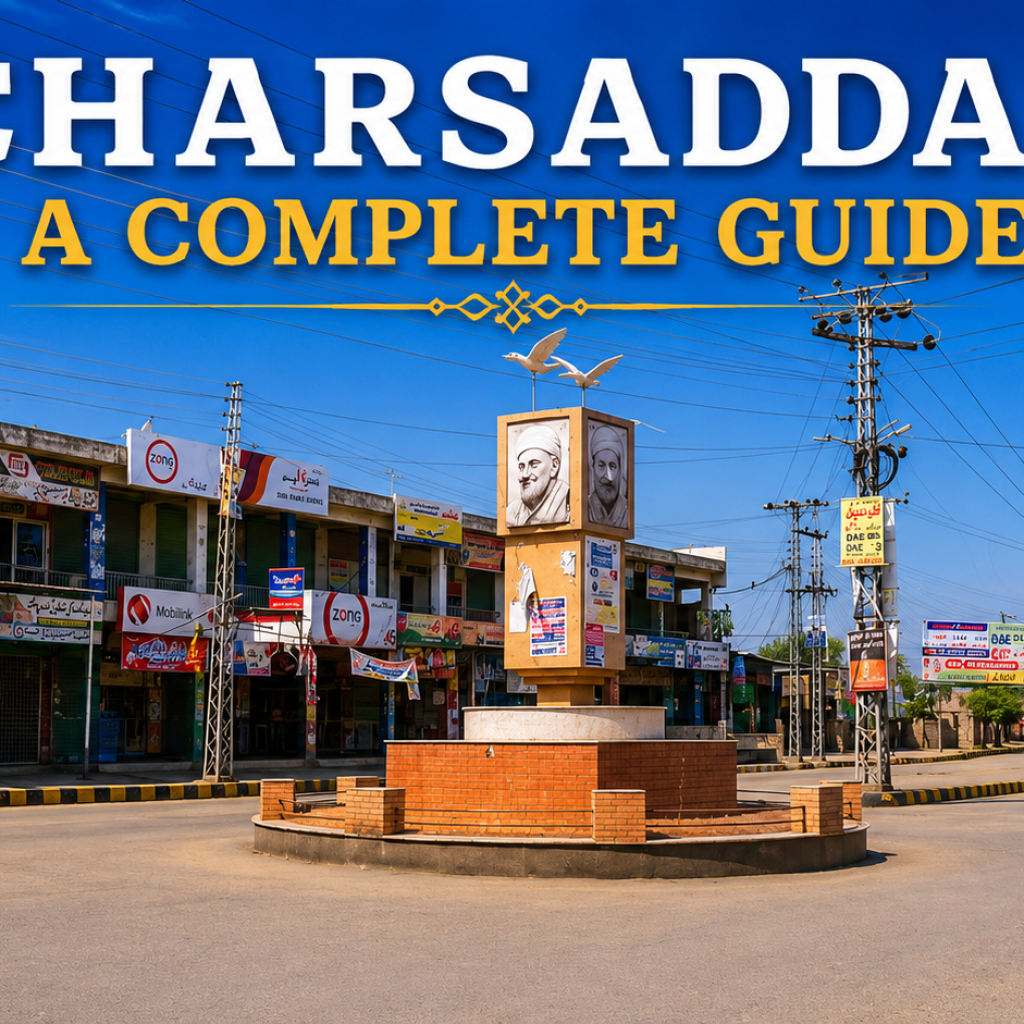
Charsadda: A Complete Guide
Charsadda is the ancient lotus city of Khyber Pakhtunkhwa. This fertile district rests near the meeting of the Swat and Kabul rivers. It holds the ruins of Pushkalavati a first capital of Gandhara. Alexander the Great once seized this old city. Rich fields of sugarcane fill the country around. This guide covers Charsadda for the curious traveller. It explains the setting the history the ancient sites the farming and how to visit.
This guide offers a general overview. Details and figures vary between sources.
Quick answer: Charsadda is a fertile district of central Khyber Pakhtunkhwa, set near the confluence of the Swat and Kabul rivers, some 29 kilometres from Peshawar. It is famous as the site of ancient Pushkalavati an early capital of the Gandhara kingdom, marked today by the great Bala Hisar mound. This area holds many Gandhara ruins and a deep, layered history. A rich farming district, Charsadda is known above all for its sugarcane. Spring and autumn are the finest seasons.
About Charsadda
Charsadda is a district of central Khyber Pakhtunkhwa. It is located a short way north east of Peshawar. Fertile plains spread across the country. Two great rivers water the land.
A fine setting shapes the character of the area. Charsadda rests near the meeting of the Swat and Kabul rivers. Rich alluvial soil fills the plains. Farms and orchards cover the fertile land.
A great position marked it in ancient days. Old trade routes crossed here between east and west. Two rivers guarded the city on its flanks. This place drew settlers and rulers alike.
Farming shapes daily life today. Sugarcane fills the fields for miles. Wheat, maize and tobacco grow here too. Fruit and vegetables ripen in great plenty.
History of Charsadda
Charsadda carries a very ancient story. This area formed the heart of old Gandhara. People settled here thousands of years ago. Deep history rests beneath the mounds.
Pushkalavati rose as a great capital. Its name means the lotus city in Sanskrit. It served as an early seat of Gandhara. Few cities in South Asia claim such age.
Persians and Greeks left their mark here. Some hold that Persians fortified the city first. Alexander the Great seized it in ancient times. He advanced on it from the Swat Valley.
Empire after empire ruled the area. Mauryans, Greeks and Kushans held it in turn. Mughals and the British followed after. Each age added a layer to the story.
Ancient sites in Charsadda
Charsadda holds a wealth of ancient sites. Mounds and ruins dot the district. They recall the golden age of Gandhara. Diggers have studied them for many years.
A great treasure crowns the Bala Hisar mound. This high mound marks the core of Pushkalavati. It rises above the plains near the rivers. Layers of settlement fill its depths.
Scholars have long dug at this mound. General Cunningham named it as Pushkalavati. Marshall and Wheeler later dug here in turn. Their work revealed the layers of the past.
More sites ring the old capital. Shaikhan Dheri marks a later Greek city. Palatu Dheri holds the base of a stupa. Ancient coins have surfaced across the area.
Fine finds have come from these mounds. Coins bear the names of Greek and Kushan kings. Terracotta figures and pottery fill the record. Museums now hold many of these treasures.
Farming and attractions in Charsadda
Charsadda is a rich farming district. Its fertile plains yield great harvests. Sugarcane is the pride of the fields. Mills turn the cane into sugar and syrup.
A wealth of crops fills the land. Wheat and maize grow in the plains. Tobacco adds another cash crop. Orchards give fruit through the seasons.
Old buildings grace the towns. Havelis show fine woodwork and carving. Mughal and colonial touches mark the walls. Craftsmanship recalls the wealth of past ages.
Scenic spots reward the visitor too. A barrage the Munda Headworks, spans the Swat River. A shrine honours the saint Yousaf Baba. Shabqadar Fort recalls the colonial age.
Visiting Charsadda
Come in spring or autumn. Summers grow hot on the plains. Winters turn cool and pleasant. Mild seasons suit a visit best.
Reach the district with ease. Good roads link it to Peshawar close by. A short drive brings the traveller here. Local transport serves the towns well.
Explore the ancient mounds. Bala Hisar rewards those who love history. Nearby dheris add more ruins to see. A day can take in several sites.
Enjoy the country and its crafts. River headworks offer pleasant views. Old havelis reward a slow walk. Bring time for both history and scenery.
Frequently asked questions
Why is Charsadda historically important? Charsadda is historically important as the site of ancient Pushkalavati, one of the earliest capitals of the Gandhara kingdom and among the oldest urban centres in South Asia. Set near the confluence of the Swat and Kabul rivers the city stood at a crossroads of ancient trade routes, drawing settlers, traders and rulers over many centuries. It was captured by Alexander the Great during his campaign in the area. Later it was ruled in turn by the Mauryans, Greeks, Kushans, Mughals and British. A great Bala Hisar mound preserves the layered remains of this deep and remarkable past.
What is the Bala Hisar mound? A Bala Hisar mound near Charsadda marks the core of ancient Pushkalavati the early capital of Gandhara. Rising high above the surrounding plains near the rivers, it holds many layers of settlement with the earliest occupation reaching back over three thousand years. Scholars have studied it for well over a century from General Cunningham, who identified it as Pushkalavati, to later excavations by Sir John Marshall and Sir Mortimer Wheeler. Their careful digging has slowly revealed the long story of the city, making Bala Hisar one of the key Gandhara sites of the country.
What does the name Pushkalavati mean? Pushkalavati is an ancient name drawn from Sanskrit, usually taken to mean the lotus city or city of the lotus. This name reflects the deep roots of the city in the pre Islamic history of the area, when it served as a great capital of the Gandhara kingdom. Mentioned in old Hindu and Buddhist texts, Pushkalavati was a centre of trade, learning and governance for many centuries. Today the name lives on through the ruins around Charsadda above all the Bala Hisar mound. These preserve the memory of the ancient lotus city and its long history.
What is Charsadda famous for producing? Charsadda is famous above all for sugarcane the great crop of the district and a mainstay of the local economy, feeding sugar mills across the area. Fertile alluvial plains, watered by the Swat and Kabul rivers also yield wheat, maize and tobacco in good measure. This district is well known for its rich harvests of fruit and vegetables from citrus and melons to potatoes, tomatoes and many others. This strong farming base has long shaped the life and economy of Charsadda, supporting markets, mills and trade across the wider country.
When is the best time to visit Charsadda? A best time to visit Charsadda is in spring from around March to April. Autumn from October to November, is also mild and comfortable for sightseeing. Summers on the plains can be very hot, making the middle of the day tiring, while winters are generally cool and pleasant. Spring brings green fields and fresh growth to the country adding to the beauty of the ancient sites. Cooler months suit visits to the mounds, ruins and river headworks as well as travelling around the wider district.
Lotus city of Gandhara
Charsadda is the ancient lotus city of Gandhara. This fertile district rests near the meeting of two great rivers. Bala Hisar preserves the core of old Pushkalavati. Alexander himself once seized this ancient city. Rich fields of sugarcane fill the plains around. Few districts hold such deep and layered history.
You may come to Charsadda for the history the mounds or the farms. This district rewards the visit either way. You can climb the great mound of Bala Hisar. You can trace the ruins of the old lotus city. You can wander the rich fields of sugarcane. Come to Charsadda and discover the lotus city of Gandhara. This is the ancient heart of the valley.