Butkara Stupa and the Buddhist Sites of Swat: A Complete Guide
Swat was once a great heartland of the Buddhist faith. This green valley bore the ancient name of Uddiyana. Stupas, monasteries and rock carvings still dot its country. A great shrine the Butkara Stupa, crowns this rich heritage. Monks and pilgrims filled the valley for a thousand years. This guide covers the Buddhist sites of Swat for the curious traveller. It explains the history the Butkara Stupa the other sites the finds and how to visit.
This guide offers a general overview. Details and figures vary between sources.
Quick answer: Swat, known in ancient times as Uddiyana, was one of the great centres of Buddhism. Its golden age spanned the 2nd century BCE to the 8th century CE. This valley holds many stupas, monasteries and rock carvings from the Gandhara age above all the great Butkara Stupa near Saidu Sharif. Other famous sites include the Amluk Dara stupa and the Jahanabad rock carved Buddha. Many lie within reach of Mingora and Saidu Sharif. Spring and autumn are the finest seasons.
About Buddhist Swat
Swat holds a deep and ancient Buddhist past. It was known long ago as Uddiyana. Buddhist texts revered it as a holy land. Monks and pilgrims flocked here for centuries.
A great valley shaped this heritage. Green hills and a broad river fill the country. Fertile land drew settlers from early times. Peace and beauty suited the life of monks.
A great faith flourished here for a thousand years. Buddhism took root by the third century before Christ. It thrived until around the eighth century after. Stupas and monasteries rose across the valley.
Swat ranks among the easiest places to see this heritage. Many sites lie near Mingora and Saidu Sharif. Some rest within a short walk of the towns. Visitors of every faith are welcome here.
Butkara Stupa
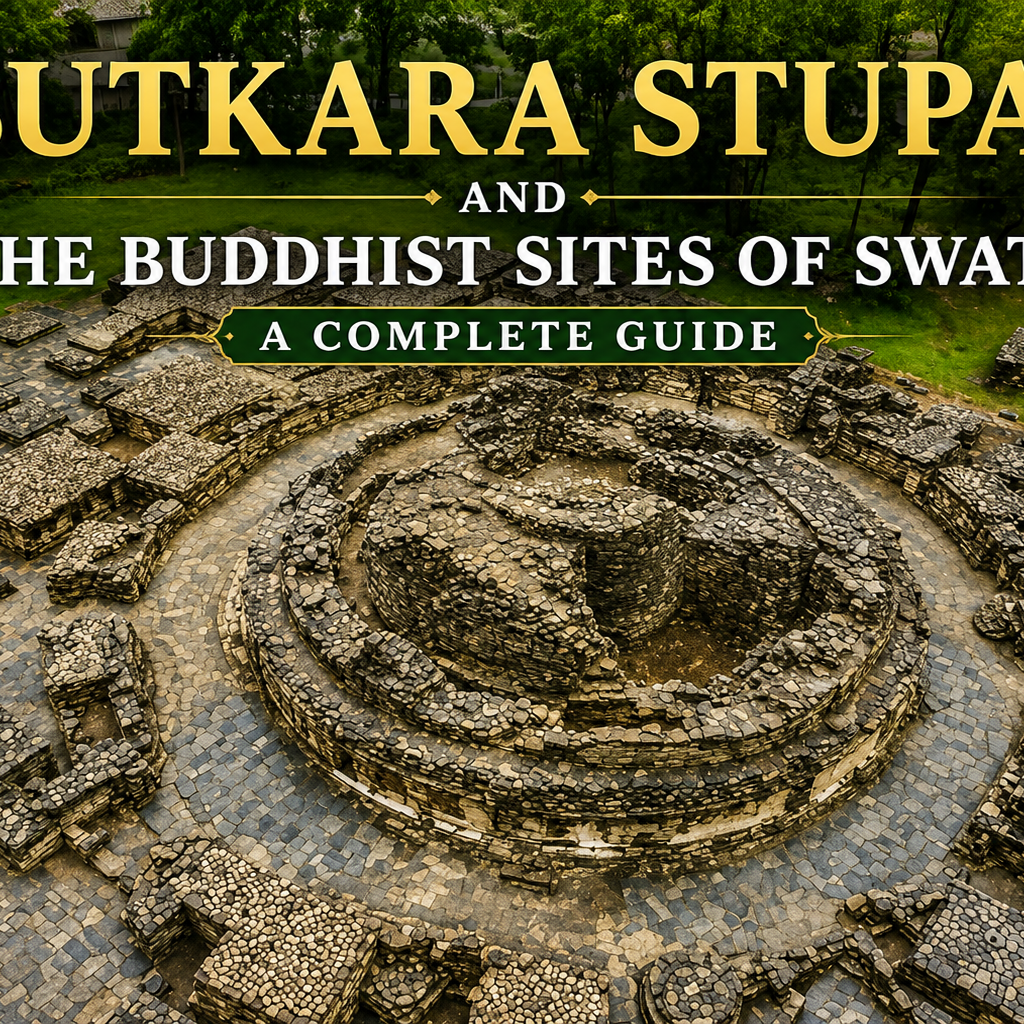
A jewel of Buddhist Swat rises near Saidu Sharif the Butkara Stupa. This great shrine ranks among the oldest stupas in the valley. Pilgrims came here to worship for ages.
An ancient origin marks the great stupa. Builders raised it around the third century before Christ. Legend ties its founding to the emperor Ashoka. He is said to have spread the relics of the Buddha.
This shrine grew through many ages. Builders rebuilt and enlarged it over centuries. Some 272 small stupas came to ring the shrine. A monastery and other halls rose nearby.
Italian scholars unearthed the great site. They dug here with Pakistani teams from 1956. Layers of stupas and carvings came to light. Their work revealed a thousand years of faith.
Other sites
Swat holds many more Buddhist treasures. Stupas and carvings dot the whole valley. Each recalls the golden age of the faith. Travellers can trace them across the country.
Amluk Dara holds one of the largest stupas. Kushan builders raised it in the first century. Its great dome rises among green fields. Huge fallen stones lie where they dropped.
A wonder of rock art rises at Jahanabad. Carvers cut this seated Buddha into a cliff. It rises around seven metres in height. This figure ranks among the great rock Buddhas of the area.
More sites reward the keen traveller. Shingardar raises a great domed stupa by the road. Saidu Sharif holds a stupa and monastery. Barikot marks an ancient walled town.
Finds and the Swat Museum
Ancient sites of Swat have yielded many treasures. Diggers found statues among the ruins. Carved panels and coins came to light too. These works reveal the art of Gandhara.
Fine carvings filled the ancient shrines. Green stone panels showed the life of the Buddha. Scenes of his birth and teaching survive. Skilled hands worked them long ago.
A fine museum guards many of these finds. It rests at Saidu Sharif near Mingora. Its galleries display the treasures of Butkara. Visitors see there what once adorned the shrines.
Coins and relics deepen the story. Maurya coins mark the age of the stupas. Old inscriptions bear the Kharosthi script. Each small find adds to the record.
Visiting the Buddhist sites of Swat
Come in spring or autumn. Summers stay pleasant in the valley. Winters turn cold with snow on the heights. Green, clear seasons suit a visit best.
Base yourself at Mingora or Saidu Sharif. Most sites lie within easy reach of these towns. A short drive links them together. Local guides add depth to the history.
See the great sites first. Butkara rewards those who love ancient faith. A fine museum sets the scene for the ruins. A half day takes in the main sites.
Explore further with more time. Amluk Dara and Jahanabad lie a little further off. Rock carvings hide across the valley. Bring good shoes for the rougher paths.
Frequently asked questions
Why was Swat important to Buddhism? Swat, known in ancient times as Uddiyana, was one of the great heartlands of Buddhism, especially of the Mahayana tradition. Its golden age ran from around the 2nd century BCE to the 8th century CE. A green valley revered in Buddhist texts as a holy land, it served as a centre for scholars artists and pilgrims from across the ancient world. Over the centuries, thousands of stupas, monasteries and rock carvings rose across the valley, making it a spiritual and cultural hub of the Gandhara civilisation. Today the many surviving sites make Swat one of the finest places to experience this ancient heritage.
What is the Butkara Stupa? A great shrine the Butkara Stupa or Butkara I, is one of the oldest and most important in the Swat Valley, set near the town of Saidu Sharif. It is thought to have been founded around the 3rd century BCE, in the age of the Mauryan emperor Ashoka. This ruler is said to have spread the relics of the Buddha among many stupas. Rebuilt and enlarged over the centuries the great shrine came to be ringed by some 272 smaller votive stupas along with a monastery and other buildings. Excavated by Italian and Pakistani teams from the 1950s, it reveals a thousand years of Buddhist devotion.
What is the Jahanabad Buddha? A large seated figure of the Buddha the Jahanabad Buddha, is carved into a rock face near Manglawar in the Swat Valley. Dating to around the 7th century CE, it rises roughly seven metres tall. This figure is one of the largest rock carved Buddhas in the area a fine example of Gandhara rock art. This figure was damaged some years ago but has since been partly restored. It remains a striking symbol of the Buddhist heritage of Swat. Set on a hillside above the fields, it rewards those who make the short climb to see it.
What can you see at the Swat Museum? A fine museum at Saidu Sharif, near Mingora, is the best place to see the treasures found at the Buddhist sites of the valley. Its galleries display fine Gandhara sculptures, including carved panels showing scenes from the life of the Buddha, many of them recovered from the Butkara Stupa nearby. A wider collection also holds coins, inscriptions, terracotta figures and other objects that tell the story of ancient Swat from the Mauryan age onward. A visit to the museum makes an ideal introduction to the Buddhist ruins, helping visitors picture how the shrines once looked.
When is the best time to visit the Buddhist sites of Swat? A best time to visit the Buddhist sites of Swat is in spring from around March to May. Autumn from September to October, is also fine, when the valley is green and the weather mild. Summers are pleasant in the valley and draw many visitors escaping the heat of the plains, while winters can be cold with snow on the higher ground. Most of the main sites, including Butkara and the Swat Museum, lie within easy reach of Mingora and Saidu Sharif, so a focused half day covers them well. A full day allows time for the rock carvings and further sites.
Holy valley of Uddiyana
Swat is the ancient holy valley of Uddiyana. This green country was a great heartland of the faith. A great shrine crowns its rich Buddhist heritage. Stupas, carvings and monasteries dot the whole valley. Museums guard the treasures unearthed from the ruins. Few valleys on earth hold such deep Buddhist history.
You may come to Swat for the history the stupas or the art. This valley rewards the visit either way. You can stand before the ancient Butkara Stupa. You can gaze up at the rock Buddha of Jahanabad. You can trace the finds in the Swat Museum. Come to Swat and discover the holy valley of Uddiyana. This is the Buddhist heart of the north.