Bannu: A Complete Guide
Bannu is the fertile oasis city of the southern frontier. This old town rests on a green plain among dry hills. A great river the Kurram, waters its rich fields and orchards. Ancient mounds recall settlements thousands of years old. A famous weekly fair fills its bustling bazaars. This guide covers Bannu for the curious traveller. It explains the setting the history the culture the nature and how to visit.
This guide offers a general overview. Details and figures vary between sources.
Quick answer: Bannu is the capital of Bannu Division in southern Khyber Pakhtunkhwa, set on the Kurram River at the centre of a fertile plain, some 198 kilometres south of Peshawar. One of the oldest inhabited areas of the province, it holds ancient sites such as the Akra Mounds and Sheri Khan Tarakai. Founded as a British base in 1848, it is home to the Banuchi tribe and famed for its cloth weaving and its weekly Jumma fair. Farming drives its economy. Spring and autumn are the finest seasons.
About Bannu
Bannu is a city of southern Khyber Pakhtunkhwa. It is located on the banks of the Kurram River. A fertile plain surrounds the town on all sides. Low, dry hills ring the green basin.
A striking contrast marks the setting. Rugged mountains hem in the fertile plain. Green fields and orchards fill the centre. This oasis rises green against the dry hills.
Rivers water the rich land. Kurram and Tochi waters cross the plain. They flow down from the Waziristan hills. Their waters feed the farms of Bannu.
A great route ran through the plain. Old trade paths crossed here for ages. Travellers passed between the hills and the plains. This position gave Bannu long importance.
History of Bannu
Bannu carries an ancient and layered story. People have lived here for thousands of years. Prehistoric villages rose on this plain. Bannu ranks among the oldest homes of the province.
Ancient mounds hold the deepest past. Sheri Khan Tarakai marks a very early village. Nearby the Akra Mounds cover a great old town. Iron Age traders linked it to Central Asia.
Old empires touched this fertile plain. Graeco Bactrian and Gandhara traces remain. Coins and pottery tell of distant ages. Legend even names the plain in old texts.
A great name marks the old texts. Ancient Zoroastrian writings call the plain Varana. They rank it among sixteen perfect lands. Old tales tie it to a legendary king.
A British base founded the modern town. Herbert Edwardes set up a base here in 1848. It bore other names in its early years. Bannu became its name in 1903.
Culture and the people of Bannu
Pashtun culture has a long-standing tradition in Bannu. The core of the city comprises the Banuchi tribe. Their unique dialect of Pashto language is their defining feature. Their cultural practices influence the local way of life.
Hospitality is an integral aspect of the local culture. The guests are treated with respect and food. Festivals and traditional music are the highlights of the local culture.
The markets buzz with activity. Textiles and crafts are available at the stalls. The local cuisine lingers in the air. Crowds throng the local markets.
A famous fair marks the week. This Jumma fair draws crowds each Friday. Traders bring goods from far around. This gathering is a landmark of Bannu life.
Economy and nature
Farming drives the economy of Bannu. Fertile fields yield wheat and sugarcane. Orchards give fruit in the rich soil. Two rivers feed this green bounty.
Industry adds to the trade. Cloth weaving is a great local craft. Cotton mills and sugar mills are working here along with leather and machinery come from the workshops.
This land holds hidden riches too. Salt and alum lie in the ground. Oil and gas fields dot the area. These resources add to the local wealth.
Baran Dam offers a pleasant escape. A lake gathers behind the great dam. Boating and picnics draw day trippers. Green banks reward a restful visit.
A great scheme waters the plain. Kurram Garhi headworks tame the river flow. Canals spread the water to the fields. This project brings power and flood control too.
Visiting Bannu
Come in spring or autumn. Summers grow hot on the plain. Winters turn cool and pleasant. Mild seasons suit a visit best.
Reach the city with ease. A busy Indus Highway runs through the town. Roads and rail link it to Peshawar. A local airport serves the district too.
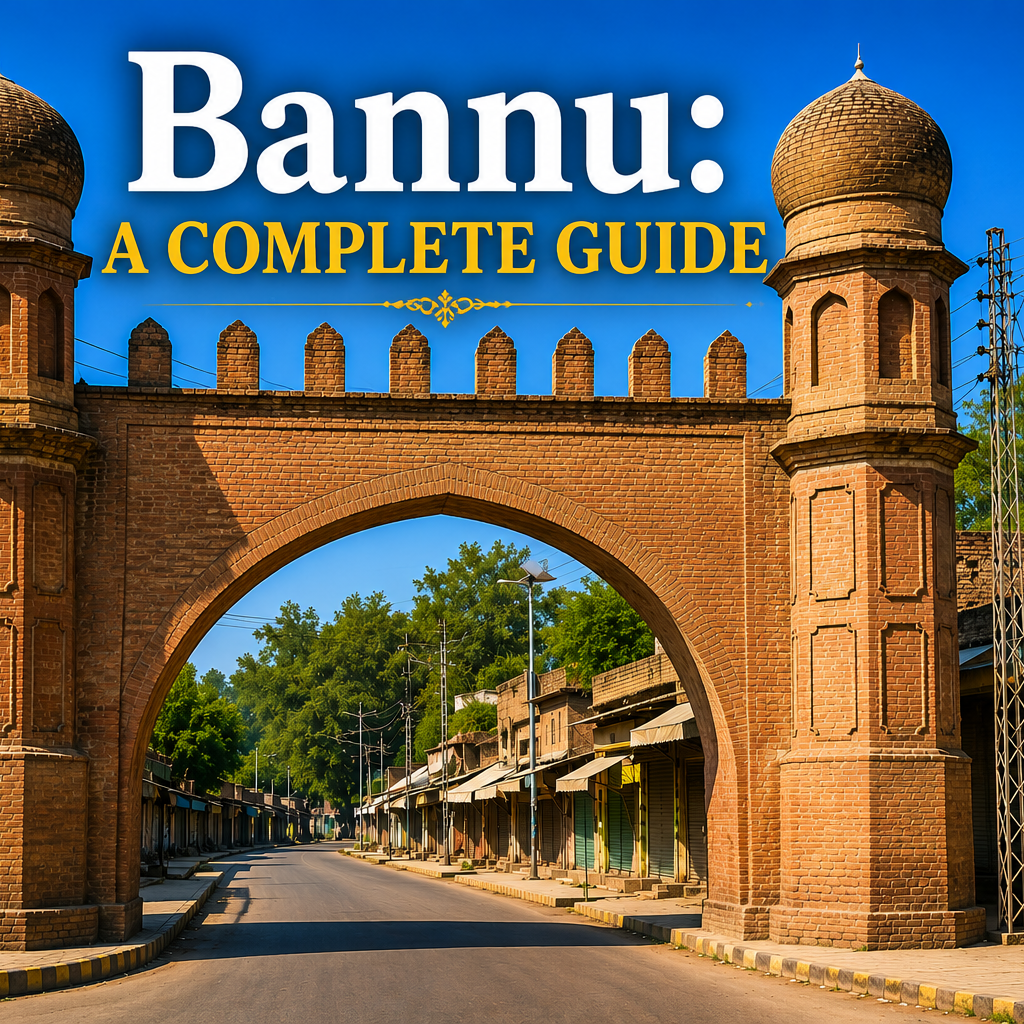
Explore the bazaars and the fair. A Friday visit catches the great Jumma fair. Markets brim with cloth and crafts. A morning walk takes in the old town.
Enjoy the country nearby. Baran Dam offers boating and picnics. Ancient mounds reward the keen traveller. Bring time for both history and scenery.
Frequently asked questions
Why is Bannu important? Bannu is the capital of Bannu Division and a major city of southern Khyber Pakhtunkhwa, set on the Kurram River at the heart of a fertile plain. It has long been important for its farming with rich fields yielding wheat, sugarcane and fruit. Its industries centre above all on cloth weaving and the making of cotton fabrics. Set on the Indus Highway, it also serves as a commercial hub for the surrounding country. Beyond trade, Bannu holds a deep history reaching back thousands of years along with a strong Pashtun culture centred on the Banuchi tribe.
How old is Bannu? Bannu is one of the oldest inhabited areas of Khyber Pakhtunkhwa with roots reaching back into prehistoric times. Ancient village sites such as Sheri Khan Tarakai, one of the oldest known settlements in the area, were occupied thousands of years ago. Nearby the Akra Mounds mark a large old town that flourished in the Iron Age and traded with Central Asia. This plain also carries traces of the Graeco Bactrian and Gandhara worlds. It appears under an ancient name in old sacred texts. A modern town, by contrast, was founded much later as a British base in 1848.
Who founded the modern city of Bannu? A modern city of Bannu was founded in 1848 by Lieutenant Herbert Edwardes, later Sir Herbert Edwardes as a British military base guarding the frontier. In its early years the town bore other names, first Dalipnagar and later Edwardesabad after its founder, before finally taking the name Bannu in 1903. It grew at the centre of the fertile plain, on the routes that had long linked the hills to the plains of the subcontinent. This military and strategic role shaped its early growth, while farming and trade sustained it over the years.
What is Bannu famous for producing? Bannu is famous above all for its cloth weaving and the manufacture of cotton fabrics a craft that has long been central to the local economy. It is also known for its sugar mills along with the making of machinery, equipment and leather goods, giving it a mix of craft and industry. Farming remains the foundation of the area with the fertile plain producing wheat, sugarcane and fruit. This land also holds minerals such as salt and alum along with oil and gas fields adding further to the wealth of the district.
When is the best time to visit Bannu? A best time to visit Bannu is in spring from around March to May. Autumn from September to November, is also mild and pleasant for sightseeing. Summers on the plain can be very hot, making the middle of the day tiring, while winters are generally cool and comfortable. Spring brings green fields and blossom to the plain adding to its beauty as an oasis among the dry hills. A Friday visit allows travellers to see the famous weekly Jumma fair, one of the great sights of the city.
Oasis of the frontier
Bannu is the green oasis of the southern frontier. This old town rests on a fertile plain among dry hills. Its Kurram River waters the fields and orchards. Ancient mounds recall settlements thousands of years old. A famous fair and busy bazaars fill its days. Few towns bloom so green amid such rugged country.
You may come to Bannu for the history the bazaars or the farms. This city rewards the visit either way. You can explore the ancient mounds of Akra nearby. You can browse the crafts of the great Jumma fair. You can rest by the calm water of Baran Dam. Come to Bannu and discover the oasis of the frontier. This is the green heart of the south.