Wagah Border Lahore: The Flag Lowering Ceremony
The Wagah Border is located around 24 kilometres east of Lahore on the Grand Trunk Road. It is the main crossing point on the border between Pakistan and India. The Wagah Border is famous for its daily flag lowering ceremony which is held every evening before sunset. Soldiers of the Pakistan Rangers and the Indian Border Security Force perform a coordinated parade at the gate. Thousands of spectators gather on both sides to watch the spectacle. For anyone getting to know Lahore, a trip to the Wagah Border is one of the most memorable experiences the region offers.
This guide explains what the Wagah Border is, its history, the daily ceremony and how to visit from Lahore. It covers both the border crossing itself and the famous parade held there.
The Wagah Border
The Wagah Border is a crossing point on the international border between Pakistan and India. It is situated on the Grand Trunk Road, around 24 kilometres from the centre of Lahore. The Wagah Border takes its name from the village of Wagah. This village lies close to the line drawn at the partition of British India in 1947. The crossing connects Lahore in Pakistan with Amritsar in India.
The Wagah Border serves several roles. It is one of the main road crossings between the two countries. For a long period it was the only road link between them. The crossing has also been used for limited cross border trade, with the gate opening for set hours to allow goods to pass. The border is an army outpost, guarded by the forces of both countries.
The Wagah Border is best known as the site of a daily ceremony. The flag lowering ceremony, often called the Beating Retreat ceremony, takes place at the gate each evening before sunset. It has been held daily since 1959, by agreement between the two countries. The ceremony marks the closing of the international gate and the lowering of the two national flags for the night. It has become a major tourist attraction.
The Wagah border is highly symbolic for the two countries. It symbolizes their common past and the historical division of the two countries. The border ceremony represents the spirit of discipline and pride among the forces of the two countries. Thousands of people, not only from their respective nations but also foreigners visit this site in order to see one of the most famous international borders in the world.
Quick answer: The Wagah Border is the main crossing on the Pakistan–India border, located around 24 kilometres east of Lahore on the Grand Trunk Road. It is famous for its daily flag lowering ceremony, held each evening before sunset since 1959, performed by the Pakistan Rangers and the Indian Border Security Force. Entry is free.
History of Wagah border
The history of the Wagah Border begins with the partition of British India. The British rule of the subcontinent ended in 1947. The land was divided into two countries, Pakistan and India. A boundary line, known as the Radcliffe Line, was drawn to separate them. The village of Wagah lay close to this line. The Wagah Border crossing came into being at that point.
The crossing witnessed the great migration of the partition. Vast numbers of people moved across the border in both directions in 1947. The Wagah crossing was one of the main transit points for this migration. This gives the border a poignant place in the history of both countries. It marks a moment that reshaped the region.
The daily ceremony began some years later. The flag lowering ceremony was started in 1959. It was agreed by the governments of both countries. Since then it has been performed every evening without interruption on most days. The forces of the two countries, the Pakistan Rangers and the Indian Border Security Force, have jointly carried out the ceremony for decades. It has become a lasting tradition at the border.
The character of the ceremony has evolved over time. The parade was for many years marked by an aggressive and competitive style, with the soldiers of each side seeking to outdo the other. Steps were later taken to make the ceremony less hostile. The aspects of the display were softened to include a handshake and a friendlier tone. This reflected a wish to present the ceremony as a shared tradition as well as a display of national pride.
Flag lowering ceremony at Wagaha Border
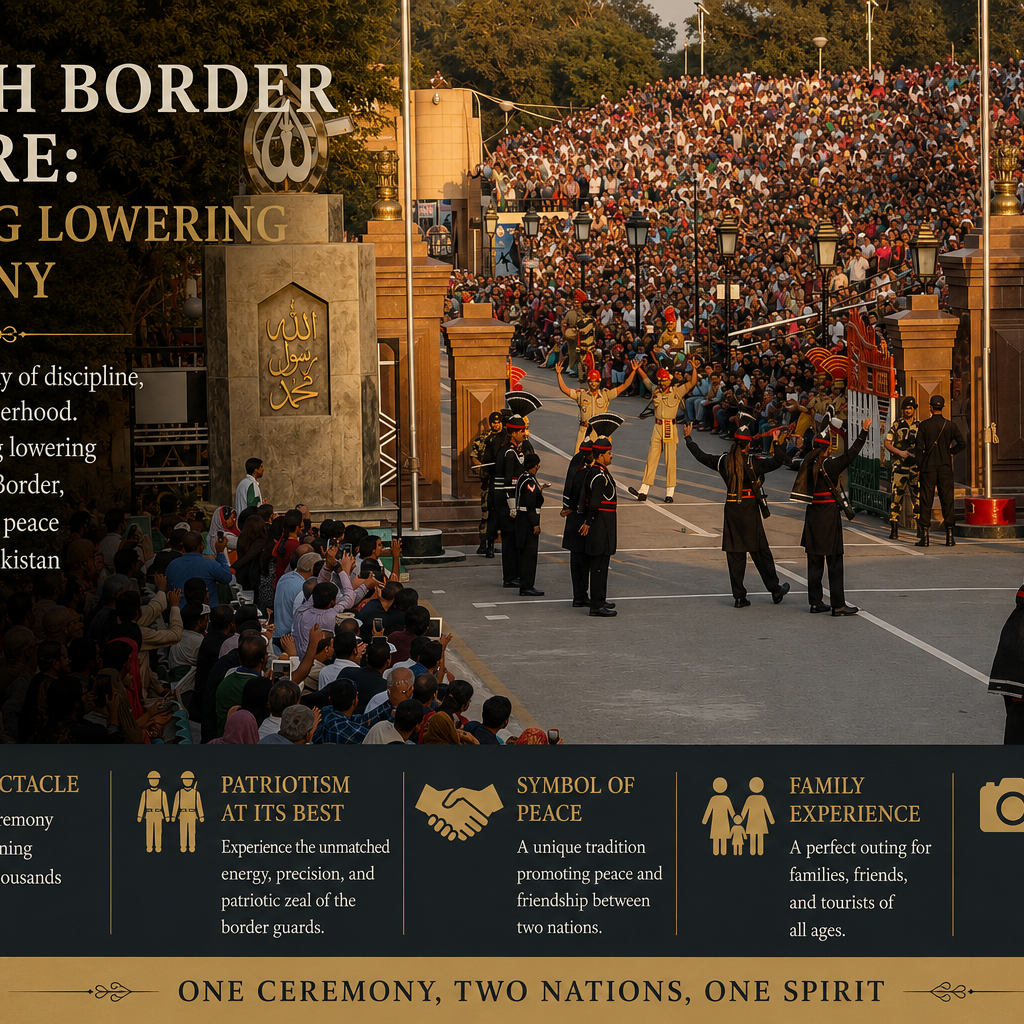
The flag lowering ceremony is the great highlight of the Wagah Border. It is a daily military ritual full of energy, colour and pageantry. The Wagah Border ceremony draws large crowds who fill the stands on both sides of the gate. It is one of the most striking displays of its kind anywhere.
The ceremony follows a set sequence each evening. It begins with the playing of patriotic songs and the gathering of the crowd, who chant slogans and wave flags. Specially selected soldiers and trained for this parade then march towards the gate. They wear ceremonial uniforms with distinctive fan shaped headdresses. They perform a series of high kicks, sharp stamps and rapid drill movements. These moves are performed with great precision and showmanship.
The heart of the ceremony is the lowering of the flags. As the sun sets, the iron gates at the border are opened. The soldiers of both countries face each other across the line. Both national flags are brought down at the same time in perfect coordination. Both flags are then neatly folded and removed. A soldier on each side offers a quick handshake. Finally, both gates are closed for the day.
The entire atmosphere of the ceremony is charged. The crowds cheer, clap for the soldiers, and sing their patriotic tunes. The entire ceremony lasts for about 30 to 45 minutes. The ceremony is a mix of a disciplined and serious army ritual with entertainment for the masses.
Location and significance
The Wagah Border is located at the Grand Trunk Road which runs through the region in South Asia. This road links Lahore to Amritsar and extends in both directions. The Wagah Border is found in the Wagah region which falls under the jurisdiction of the Lahore district. This has enabled the border region to be easily accessible from the city, making it a popular weekend destination.
The region plays a very significant role in the area. It is considered to be one of the most crucial crossing points between the two countries as well as a point where the history of the two neighboring nations converges. It has been made into a point of national pride as people get together there to exhibit their patriotism.
It also serves as a major tourist destination for Lahore. This adds to the appeal of Lahore as a destination and brings activity to the eastern edge of the city. The Wagah Border ceremony has become one of the experiences most associated with a visit to the region.
The Wagah Border is part of what makes Lahore a city of memorable experiences. It offers a powerful and emotional spectacle unlike anything else in the area. For anyone getting to know Lahore, the border and its ceremony are among the sights that leave the deepest impression. They capture a chapter of the history of the region and a living tradition that continues each evening.
Visiting the Wagah Border from Lahore
The Wagah Border is one of the most rewarding day trips from Lahore. The flag lowering ceremony is a free public spectacle that draws large crowds. A visit takes some planning to make the most of the experience.
The ceremony is held every evening before sunset. The timing changes with the season. It generally starts at around 4:15 in the afternoon in the winter months and around 5:15 in the summer. It is best to arrive at least one to two hours early, as the stands fill quickly and the gates may close once the venue is full. Entry to the ceremony is free, with seating on a first come basis. It is worth arriving early to get a good seat in the public stands.
The Wagah Border is reached from central Lahore in around 45 minutes to an hour by road, along the Grand Trunk Road. It is accessible by car, taxi or ride hailing service. Hiring a car with a driver is a convenient option. Parking facilities can be found near the venue. The venue is also a highly secured place; therefore, visitors need to undergo strict security checks. Large bags and objects are not permitted in the ceremony area; hence, it would be wise to have light luggage.
The best time to visit the venue is from October to March, when the weather is cooler since it is an outdoor venue. It is wise to check the current status before travelling, as the ceremony can be affected by the political situation and security conditions between the two countries. Visitors should follow the instructions of the security personnel and be prepared for large crowds. A trip to the border combines the ceremony with the experience of the drive out to the edge of the city.
Places near the Wagah Border
The Wagah Border is located within reach of several places on the eastern side of Lahore. This helps visitors plan a fuller trip. The Grand Trunk Road connects the border to the city and to the wider region. The Jallo Park, a large wildlife and nature park, lies along the route between the city and the border.
The centre of Lahore, with the Walled City, the Lahore Fort and the Badshahi Mosque, lies around 24 kilometres to the west. The Shalimar Gardens, the great Mughal gardens, are on the eastern side of the city on the way to the border. The DHA and Cantonment areas lie between the city and the border. For those combining attractions, the border pairs well with the Shalimar Gardens and the Jallo Park on the eastern side of the city. These connections make the border an easy addition to a day out east of Lahore.
Frequently asked questions
Where is the Wagah Border located? The Wagah Border is located around 24 kilometres east of the centre of Lahore, on the Grand Trunk Road, at the international border between Pakistan and India. It connects Lahore with Amritsar in India and is reached in around 45 minutes to an hour by road.
What is the Wagah Border ceremony? The Wagah Border ceremony is a daily flag lowering ritual, often called the Beating Retreat ceremony. It is performed each evening before sunset by the Pakistan Rangers and the Indian Border Security Force. It features a parade, high kicks, drill movements and the coordinated lowering of the two national flags.
When did the ceremony begin? The flag lowering ceremony began in 1959, by agreement between the governments of the two countries. It has been performed daily since then. The forces of both countries have jointly carried it out for decades. It has become a lasting tradition at the border.
What time is the Wagah Border ceremony? The Wagah Border ceremony is held every evening before sunset. It generally starts at around 4:15 in the afternoon in winter and around 5:15 in summer. It is best to arrive at least one to two hours early, as the stands fill quickly.
Is there an entry fee for the ceremony? No. Entry to the Wagah Border ceremony is free for all visitors, both local and from abroad. Seating in the public stands is on a first come basis. It is worth arriving early to get a good seat, as the venue can fill up well before the ceremony begins.
How do you get to the Wagah Border from Lahore? The Wagah Border is reached from central Lahore in around 45 minutes to an hour by road, along the Grand Trunk Road. It is accessible by car, taxi or ride hailing service. Hiring a car with a driver is a convenient option. Parking is available near the venue.
The Wagah Border is one of the most memorable places to visit from Lahore and a site of deep historical and symbolic meaning and it is located around 24 kilometres east of the city on the Grand Trunk Road, it is the main crossing point between Pakistan and India. Its daily flag lowering ceremony, held each evening before sunset since 1959, has become one of the most famous spectacles in the region.
The ceremony brings together the discipline of a military parade and the energy of a great public event. Members of the Pakistan Rangers and the Indian Border Security Force conduct their joint exercise in front of crowds of excited spectators, culminating in the lowering of both flags and the shutting of the gates at the end of the day. The border serves as a symbol of the history which the two nations have in common as well as that which separates them. The ceremony which occurs at the border is an age-old tradition which attracts tourists not only from within the nation but also outside of it. No matter your reason for going to see the Wagah Border, it is a must-see experience when visiting Lahore.