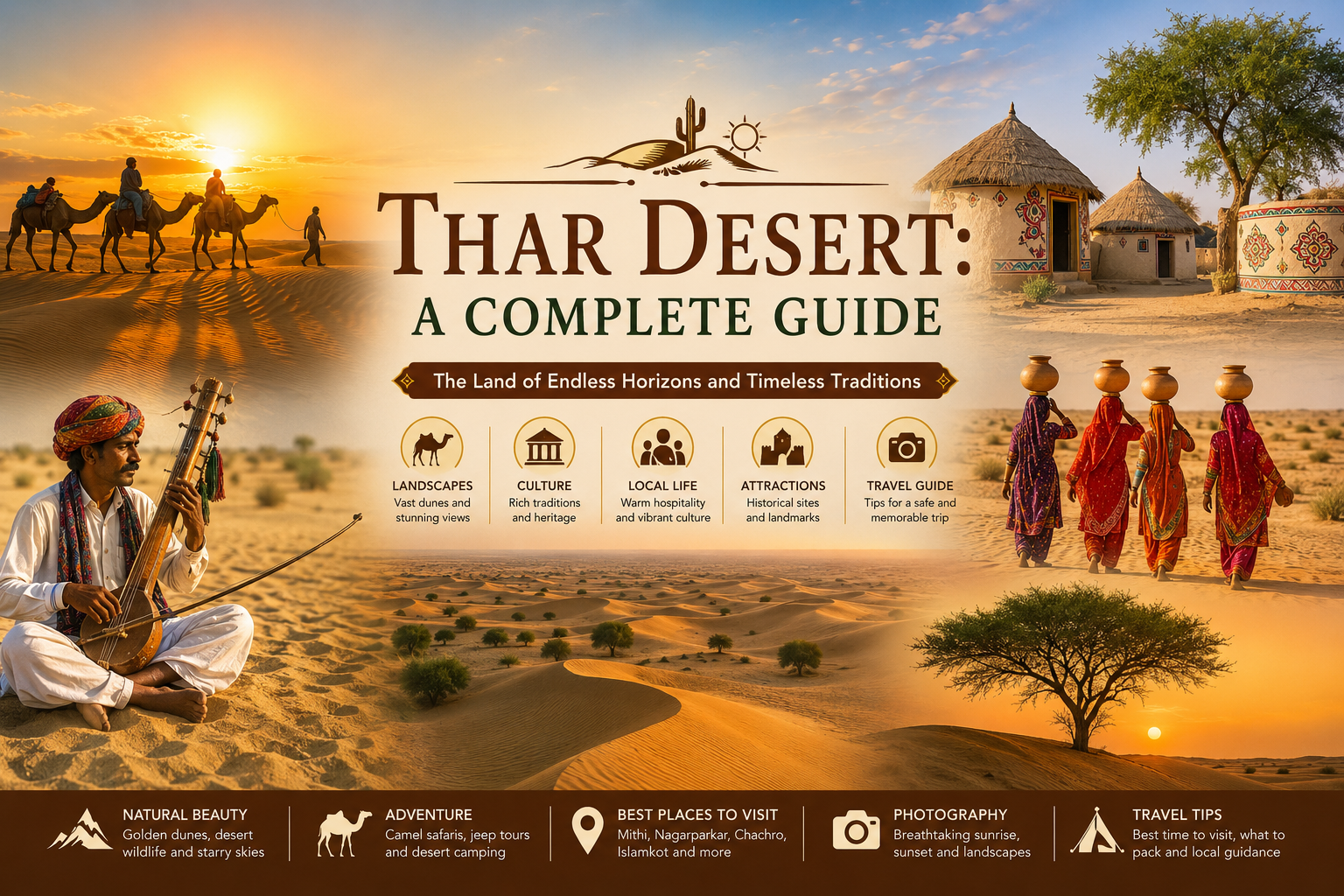
Thar Desert: A Complete Guide
Thar is one of the most surprising deserts on earth. It turns green after the monsoon rains. Peacocks call from the dunes and the villages. Hindu and Muslim communities live side by side across it. Its people have adapted to the harshest conditions for centuries. This guide covers Thar Desert of Sindh for the curious traveller. It explains the geography the seasons the wildlife the people and how to visit.
This guide offers a general overview. Sources give differing figures for the size of the desert.
Quick answer: Thar Desert spreads across south east Sindh and into India. It is the largest desert in the country. Around 85 per cent of it lies in India and 15 per cent in Pakistan. The Sindh portion centres on Tharparkar district. The desert turns green after the summer monsoon. It is famous for its peacocks, its dunes and its Thari culture. Mithi is the main town. Winter is the best season to visit.
About Thar Desert
Thar is a vast arid region. It spreads across the border between the two countries. Most of it lies in India. The rest reaches into Sindh and Punjab. This makes it the largest desert in the country.
The Sindh portion centres on Tharparkar. The name means the land across the desert. The district covers a great expanse of sand and scrub. Its own dedicated guide to Mithi and Tharparkar covers the region.
The desert is a distinct ecoregion. Scientists classify it as a unique ecological zone. Its climate, soils and wildlife set it apart. It deserves conservation attention in its own right.
The dunes are always moving. Wind shifts the sand constantly. Some dunes travel across the land over time. This restlessness has long discouraged permanent building in places.
Geography of Thar Desert
The desert lies at the edge of the plains. The Indus plain lies to the west and north west. The Rann of Kutch lies to the south. The Aravalli Hills lie away to the north east in India.
Sand dunes cover much of the land. They rise and fall across the whole expanse. Their height varies widely. Sandy plains stretch between them.
Rocky outcrops break the sand. Low hills and mesas rise in places. The Karoonjhar Mountains stand at the southern edge. Its own dedicated guide covers that range.
Seasonal water gathers after rain. Temporary marshes appear in the hollows. Small ponds form in the low ground. These vanish again as the dry season returns.
Climate and the seasons in Thar Desert
The climate is arid and extreme. Rainfall is low and unreliable. It falls mainly in the summer monsoon. Most of it comes between July and September.
Summer is fierce. Temperatures can approach fifty degrees. The heat makes travel very hard. Few visitors come in these months.
Winter is cold at night. Days are mild and pleasant. Nights can approach freezing. Fog settles in some months.
The monsoon transforms the desert. The rains bring a sudden green. Flowers cover the sand. Temporary marshes fill with water. This greening is the great wonder of Thar.
The best time follows the rains. Autumn brings the green desert. Winter brings comfortable weather. Together they make the finest season to visit.
Wildlife of Thar Desert
The desert supports surprising life. Its plants and animals adapt to the dry conditions. The variety is greater than many expect. Thar rewards the patient naturalist.
The peacock is the emblem of Thar. Wild peafowl roam the villages and dunes. Few places in the country hold them in such numbers. Their calls carry across the desert at dawn.
Mammals survive the harsh land. The desert fox and the Indian wolf both live here. The chinkara gazelle grazes the scrub. The desert cat hunts at night.
Birds fill the desert air. Sandgrouse gather at the water. Larks and falcons patrol the sky. Vultures ride the thermals. Migratory birds visit the seasonal lakes.
The plants are hardy. Acacia and the khejri tree provide shade and forage. Thorny shrubs cover the ground. These xeric plants hold the ecosystem together.
People and the culture of Thar
Thari have adapted over centuries. The people of the desert have learned to live with little water. They herd, farm and craft. Their resilience defines the culture.
Communities in Thar desert share the land in harmony. Hindu and Muslim families live side by side. They share festivals and public spaces. The dedicated guide to Mithi covers this coexistence.
Livelihoods follow the seasons. Herders keep goats, camels and sheep. Farmers grow millet in the wet pockets. Craftspeople weave and embroider.
Water shapes daily life. Traditional wells and tanks store the rain. Rainwater harvesting is a lifeline. Over extraction now threatens the shallow aquifers.
The villages hold to tradition. Round thatched huts dot the sand. Bright embroidery and crafts fill the homes. Warm hospitality greets the visitor.
Changing Thar Desert
Development is reaching Thar. Coal reserves lie beneath Tharparkar. Large energy projects have begun. These bring income and environmental risk together.
Greening has altered some areas. Canals and irrigation have spread in places. New farmland has appeared. This has altered some of the natural grassland habitats.
Conservation matters here. The desert is a fragile ecoregion. Its wildlife faces growing pressure. Careful stewardship is needed for its future.
Visiting Thar
Mithi is the base for the desert. The town lies in the heart of Tharparkar. Karachi is around six hours away by road. Hyderabad is around four hours away.
Come after the monsoon. Autumn brings the green desert. Winter brings comfortable weather. These seasons are far kinder than the summer heat.
Travel with local knowledge. A sturdy vehicle suits the desert tracks. A local guide helps a great deal. Some routes need care after rain.
See the surrounding sites. Umerkot Fort lies at the edge of the desert. The Karoonjhar Mountains rise at Nagarparkar. Each has its own dedicated guide.
Respect the communities. The desert villages are homes, not attractions. Ask before taking photographs. Support local crafts and guides where you can.
Frequently asked questions
Where is Thar Desert? Thar Desert spreads across the border between Pakistan and India. Around 85 per cent lies in India, mostly in Rajasthan. The remaining 15 per cent lies in Pakistan, in Sindh and Punjab. The Sindh portion centres on Tharparkar district in the south east of the province. Mithi is the main town. Karachi is around six hours away by road and Hyderabad around four.
Why does Thar Desert turn green? Thar receives most of its rain in the summer monsoon, between July and September. The rains bring a sudden transformation. Flowers cover the sand and temporary marshes fill with water. This greening sets Thar apart from many deserts. The effect is strongest in autumn, just after the rains. It is one of the great sights of the region.
What wildlife lives in Thar Desert? Thar supports a surprising range of life. The peacock is its emblem and roams the villages and dunes in good numbers. Mammals include the desert fox the Indian wolf the chinkara gazelle and the desert cat. Birds include sandgrouse, larks, falcons and vultures. Migratory birds visit the seasonal lakes. Acacia and the khejri tree are the characteristic plants.
When is the best time to visit Thar Desert? The best time falls after the monsoon, in autumn and winter. Autumn brings the green desert and its flowers. Winter brings comfortable days, though nights can be cold. Summer temperatures can approach fifty degrees and make travel very hard. Plan a visit between roughly October and February for the finest weather and scenery.
Who are Thari people? Thari are the communities of Thar Desert. They have adapted to life with very little water over many centuries. They herd goats, camels and sheep. They farm millet in the wet pockets. They practise weaving and embroidery too. Hindu and Muslim families live side by side and share many customs. Their resilience, hospitality and crafts define the culture of the desert.
Green desert of the south east
Thar is a desert that defies expectation. It turns green when the rains come. It fills with the calls of peacocks. It holds villages where two faiths share the same festivals. Its people have made a home in one of the harshest places on earth. Few places in the country carry such surprise.
You may come to Thar for the green desert the peacocks or the culture. The region rewards the visit either way. You can watch the desert turn green after the rains. You can hear the peafowl call at dawn. You can meet the communities who have thrived here for centuries. Come after the monsoon and travel with a local guide. Thar is a desert unlike any other in the country.