Sufi Shrines of Sindh: A Complete Guide
Sindh is the land of Sufi shrines. Its saints came from Persia, Baghdad and the local soil. Its poets wrote in Sindhi, Persian and Siraiki. Its shrines fill with drums, song and devotion every evening. People of many faiths gather at these tombs. This guide surveys the Sufi shrines of Sindh. It explains the traditions the great shrines the rituals and how to visit them respectfully.
This guide offers a general overview of a very rich tradition. Individual shrines have their own dedicated guides.
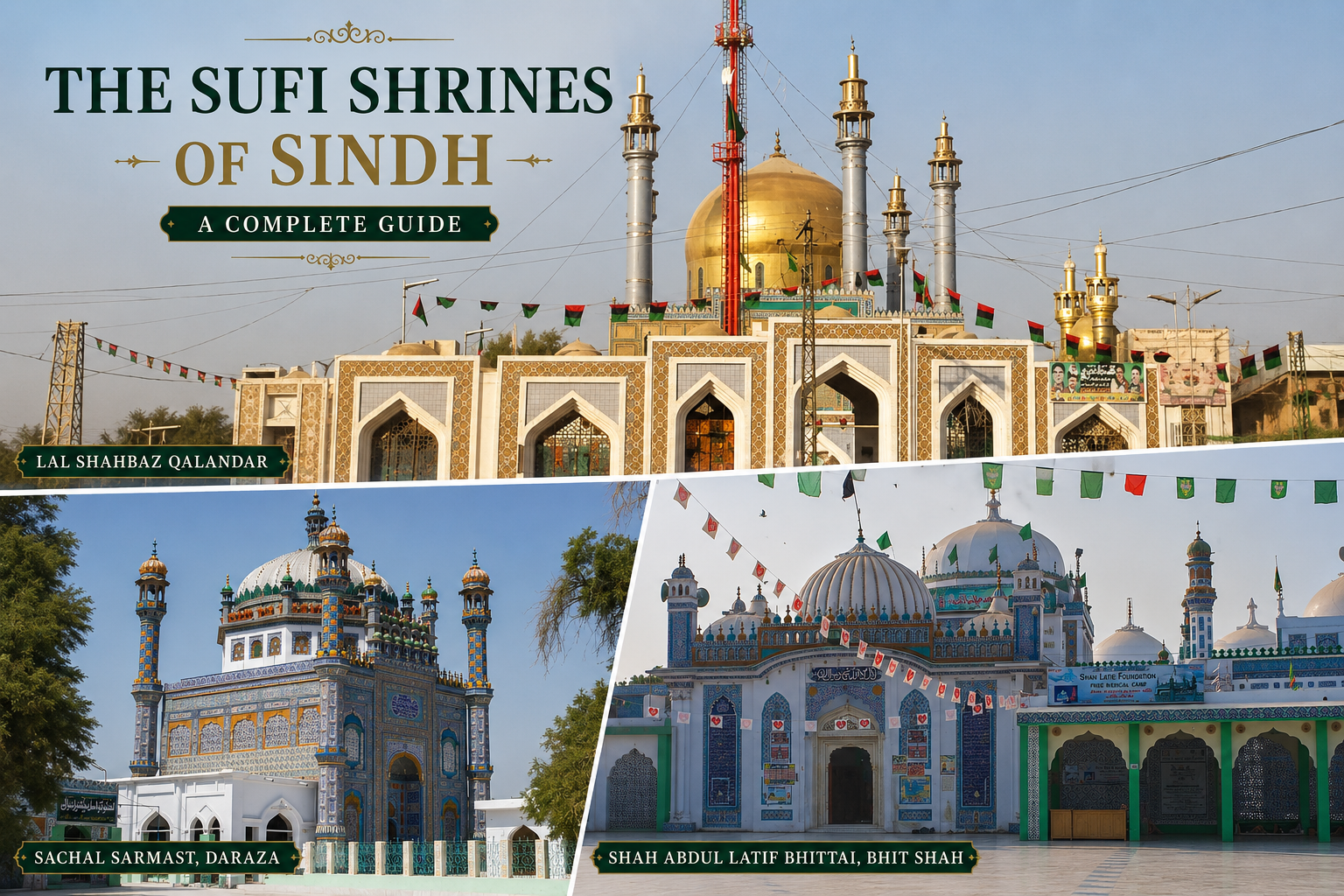
Quick answer: Sindh holds many of the most revered Sufi shrines in the country. The shrine of Lal Shahbaz Qalandar at Sehwan is the most famous. Shah Abdul Latif Bhittai rests at Bhit Shah. Sachal Sarmast rests at Daraza near Khairpur. Other major shrines lie at Bhit, Rohri, Matiari and across the province. Devotees mark each with an annual Urs. The dhamaal, qawwali and folk singing are central to the tradition.
Why Sindh became a land of shrines
Sufism took deep root in Sindh. The province lay on the routes between Persia, Central Asia and India. Wandering mystics passed through for centuries. Many settled and taught. Their tombs became centres of devotion.
The message reached ordinary people. Sufi teachers spoke in local languages. They used folk tales and familiar images. They welcomed people of every background. This accessibility gave the tradition enormous reach.
The rulers supported the shrines. Kalhora and Talpur rulers built and repaired tombs. They endowed shrines with land and income. This patronage preserved many buildings that survive today.
Lal Shahbaz Qalandar at Sehwan
Sehwan holds the most famous shrine. Lal Shahbaz Qalandar settled there in the 13th century. He came from far away and made Sindh his home. His tomb draws pilgrims all year round.
The shrine is a great complex. Blue and white glazed tiles cover its surfaces. Silver and gold work decorates the doors. Rulers expanded it from 1356 onwards.
The dhamaal defines the experience. Great kettle drums beat before the shrine each evening. Devotees dance until they reach a trance like state. Its own dedicated guide covers the saint and the shrine.
Shah Abdul Latif Bhittai at Bhit Shah
Bhit Shah holds the shrine of the greatest Sindhi poet. Shah Abdul Latif Bhittai died in 1752. Mian Ghulam Shah Kalhoro built his tomb. Blue and white tiles cover the complex.
The music is the heart of this shrine. Faqirs sing the Shah Jo Risalo every night. They perform the verse in its proper musical modes. This tradition has continued for generations. Its own dedicated guide covers the poet and the town.
Sachal Sarmast at Daraza
Daraza holds the shrine of the boldest Sufi poet. Sachal Sarmast died around 1827. Mir Rustam Khan Talpur built his tomb. Later patrons covered it in glazed tiles.
The poet wrote in seven languages. He sang of the unity of all existence. He challenged religious orthodoxy openly. Its own dedicated guide covers his life and verse.
Other great shrines
Many other shrines fill the province. Sindh holds hundreds of tombs of saints and mystics. Some draw great crowds. Others serve their own villages quietly.
Rohri and Sukkur hold important tombs. The Sateen Jo Aastan lies near Rohri. Sadh Belo occupies an island in the Indus. The dedicated guide to Sukkur covers these sites.
Matiari and Hala are centres of devotion. Both towns lie near Bhit Shah. Makhdoom Nooh rests at Hala. That saint is linked in legend to the Shah Jahan Mosque at Thatta.
Makli holds the tombs of saints and kings together. The great necropolis outside Thatta covers ten square kilometres. Sufi saints rest there alongside rulers. Its own dedicated guide covers the site.
Rituals and the music
The Urs is the central festival. The word marks the anniversary of the death of a saint. Devotees treat it as a union with the divine. Every major shrine holds one each year.
The dhamaal belongs to certain shrines. Devotees dance to the beat of great drums. The rhythm builds through the evening. Sehwan is the most famous place to see it.
Qawwali and folk singing fill the shrines. Groups of singers perform devotional verse. They use the harmonium the tabla and local instruments. The poetry of Bhittai and Sachal features often.
Devotees make offerings and vows. Many bring cloth for the tomb. Others distribute food to the poor. These practices are central to shrine culture.
Shared devotion
The shrines welcome many communities. Hindus and Muslims both visit certain tombs. Some saints are revered across religious lines. This shared devotion has a long history in Sindh.
The Sufi message stressed unity. The great poets wrote against division by creed. They argued for the inner path over outward form. This teaching shaped the culture of the province.
Sindh is often called the land of Sufis. The description reflects this heritage. Music, poetry and tolerance run through it.
Visiting the shrines in Sindh
Dress modestly at every shrine. Cover your arms and legs. Women usually cover their heads. Remove your shoes before entering the tomb chamber.
Follow the guidance of the attendants. Each shrine has its own customs. Ask before taking photographs. Some areas may be restricted.
Evening is usually the best time. The drums and the singing begin after sunset. The atmosphere deepens through the night. This is when the shrines come alive.
Plan around the Urs dates. The festivals follow the Islamic calendar. Their dates move through the solar year. Crowds are enormous during an Urs. Check the dates before you travel.
Frequently asked questions
What are the most important Sufi shrines in Sindh? The shrine of Lal Shahbaz Qalandar at Sehwan is the most famous. Shah Abdul Latif Bhittai rests at Bhit Shah in the Matiari district. Sachal Sarmast rests at Daraza near Khairpur. Makhdoom Nooh rests at Hala. The Makli Necropolis outside Thatta holds many saints alongside rulers. Sadh Belo and the Sateen Jo Aastan lie near Sukkur and Rohri.
What is an Urs? An Urs marks the anniversary of the death of a Sufi saint. The word carries the sense of a union with the divine. Devotees treat the day as a celebration rather than a mourning. Every major shrine holds one each year. Pilgrims gather in great numbers. Singers perform devotional verse through the nights. The dates follow the Islamic calendar and move through the solar year.
What is the dhamaal? The dhamaal is an ecstatic devotional dance performed at certain Sufi shrines. Large kettle drums set the rhythm. Devotees dance as the beat builds through the evening. Many enter a trance like state. The shrine of Lal Shahbaz Qalandar at Sehwan is the most famous place to see it. Men and women both take part there.
Why is Sindh called the land of Sufis? Sindh has one of the deepest Sufi traditions in South Asia. Mystics travelled through the province for centuries and many settled there. Their teaching reached ordinary people in local languages. The great Sindhi poets were Sufis. Their verse shaped the culture. Hundreds of shrines fill the province. Music, poetry and religious tolerance run through the whole tradition.
How should I behave when visiting a Sufi shrine? Dress modestly and cover your arms and legs. Women usually cover their heads. Remove your shoes before entering the tomb chamber. Follow the guidance of the attendants. Ask before taking photographs, since some areas may be restricted. Evening is usually the best time to visit. Behave quietly and respectfully as these are active places of worship.
Land of the saints
Sindh carries a Sufi heritage of extraordinary depth. Its saints came from Persia, Baghdad and its own villages. Its poets wrote in seven languages between them. Its shrines fill with drums and song every evening. Its devotees come from many faiths and every background. The tradition has shaped the whole culture of the province.
You may visit Sehwan for the dhamaal or Bhit Shah for the singing. You may go to Daraza for the boldest verse in Sindhi. You may find quieter shrines in villages across the province. The dedicated guides cover each of the great sites. Come in the evening, dress respectfully and listen. The shrines of Sindh will tell you what the province believes.