Sindhi Weddings: A Complete Guide
A Sindhi wedding is a feast of colour, music and tradition. It runs over many days of ceremony and celebration. Folk songs called lada fill the nights with joy. Henna, turmeric and flowers mark the rituals. The whole community joins the dancing and the feasting. This guide covers Sindhi weddings for the curious traveller. It explains the customs the ceremonies the songs the food and the shared heritage.
This guide offers a general overview. Customs vary between communities, regions and families.
Quick answer: A Sindhi wedding is a multi day celebration full of music, dance and ritual. Sindh is mainly Muslim, so the nikah is the central ceremony for most families. Many folk customs are shared across Sindhi Muslim and Hindu communities. These include the lada songs the mehndi and the saanth turmeric ritual. The Sindhi Hindu tradition adds its own religious ceremonies. Feasting, dancing and community are at the heart of every Sindhi wedding.
About Sindhi weddings
A Sindhi wedding is a grand affair. It runs over several days. Many ceremonies and functions fill the calendar. Music and dance run through them all. The whole community takes part.
Sindhis love to celebrate. They are known for their warmth and energy. Their weddings are lavish and joyful. Feasting and dancing never seem to stop. This spirit defines the occasion.
The customs run deep. Many date back centuries. Some predate the religious divisions of the region. This makes them shared cultural traditions. They belong to all Sindhis.
Sindhi wedding unites two families. It draws in the whole neighbourhood. Everyone sings, dances and feasts together. This togetherness is the heart of it.
Shared folk traditions
Many customs are shared across communities. Sindhi Muslims and Hindus share much of the wedding tradition. The folk elements cross religious lines. They form a common Sindhi heritage. This sharing is a striking feature.
The lada songs are central. These are traditional Sindhi wedding songs. Women sing them through the celebrations. Some are devotional and some are humorous. Many gently tease the bride and groom.
The songs fill the nights. Both families hold lada gatherings. Women beat the dholak and the thali. Everyone joins the singing and dancing. These nights are full of fun.
The mehndi is a joyful ceremony. The family gathers around the bride. They apply henna to her hands and feet. The designs are elaborate and beautiful. The women sing and dance throughout.
The saanth is a cleansing ritual. Families apply oil and turmeric to the couple. Seven married women often lead it. It resembles the haldi of other regions. It is held at both homes.
Muslim Sindhi wedding
The nikah is the central ceremony. Sindh is mainly Muslim. For most families the nikah is the heart of the wedding. It is the Islamic marriage contract. An officiant conducts it before witnesses.
The events build over days. The mehndi and lada nights come first. The nikah and the baraat follow. The walima reception completes the wedding. Each event has its own character.
The baraat is a great procession. The groom travels to the wedding with his party. Music and dancing accompany him. The energy is famous. The baraat is a joyful spectacle.
The walima is the final feast. The groom's family hosts it. They welcome both families and the community. A great meal marks the union. This reception closes the celebrations.
Hindu Sindhi wedding
The Hindu tradition adds its own rites. The Sindhi Hindu community holds distinct ceremonies. A priest conducts the religious rituals. These differ from the Muslim customs. They form their own rich tradition.
Several rituals mark the occasion. The Dev Bithana installs a deity at the home. The Berana Satsang offers prayers to Jhulelal. The Navgrahi puja honours the nine planets. These are held around the wedding.
Jhulelal has a special place. He is a revered figure for Sindhi Hindus. Devotional songs to him fill the ceremonies. Some families take a procession to his temple. This devotion is central to the tradition.
The shared customs remain. The lada, mehndi and saanth appear here too. The two traditions share these folk elements. This common ground is a mark of Sindhi culture.
Food and the feasting
Feasting is central to the wedding. No Sindhi celebration is complete without it. Great meals mark every event. The food is generous and rich. The dedicated guide to Sindhi cuisine covers the dishes.
The dishes vary by community. Muslim weddings feature meat dishes and biryani. The dedicated guide to Sindhi biryani covers that dish. Hindu weddings often serve vegetarian food. Both are lavish and delicious.
Sweets mark the joy. Traditional Sindhi sweets appear throughout. Families exchange them as gifts. They mark every happy occasion. They are part of the celebration.
The feasting brings people together. Shared meals unite the families and whole community eats together. This is a large part of the joy. Food and togetherness go hand in hand.
Dress and the celebration
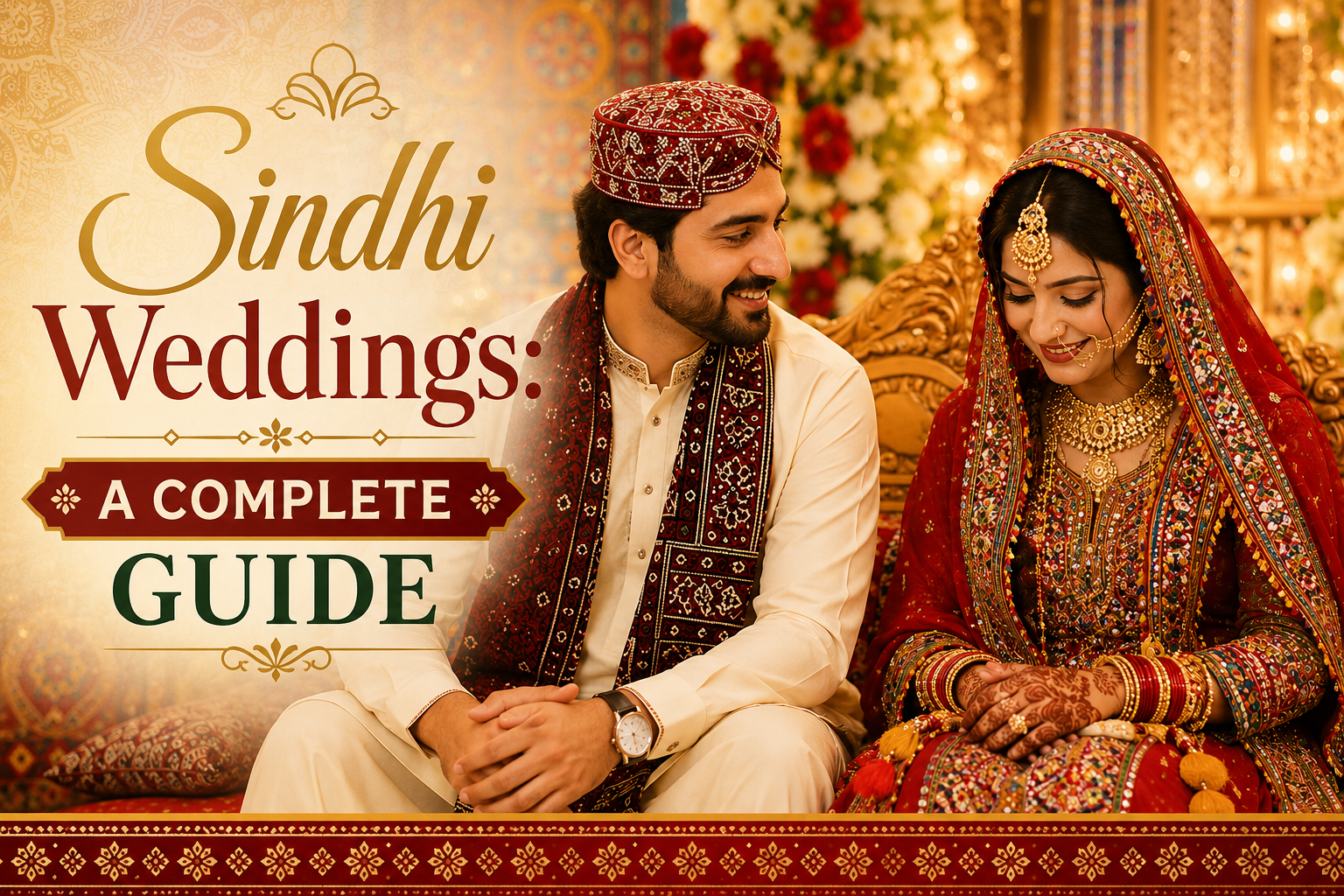
Bride wears rich attire in bright colours and fine embroidery in Sindhi wedding. Gold jewellery adorns her. Floral ornaments complete the look. She is the centre of the celebration.
Traditional craft features in the dress. Mirror work and embroidery decorate the attire. The dedicated guide to the craft towns covers this work. These crafts add to the splendour. They reflect the heritage of the province.
The dancing never stops. Sindhis are famous for their love of dance. The chej is a traditional Sindhi dance. Everyone joins in through the nights. The energy is unforgettable.
The celebration is for everyone in family. A Sindhi wedding welcomes the whole community. Young and old take part. The joy is shared by all. This inclusiveness is its great charm.
Frequently asked questions
What happens at a Sindhi wedding? A Sindhi wedding runs over several days of ceremony and celebration. It includes music, dance, feasting and ritual. Sindh is mainly Muslim, so the nikah is the central ceremony for most families. The mehndi and lada song nights come first, followed by the baraat procession and the walima reception. Many folk customs, such as the lada songs and the saanth turmeric ritual are shared across communities.
What are lada songs? Lada are traditional Sindhi wedding songs. Women sing them through the celebrations at both the bride's and the groom's homes. Some are devotional and some are humorous, with many gently teasing the bride the groom and their families. Women beat the dholak and the thali as accompaniment. Everyone joins the singing and dancing. The lada nights are among the most joyful parts of the wedding.
What is the saanth ceremony? Saanth is a cleansing ritual held at both the bride's and the groom's homes. Families apply oil and turmeric paste to the couple. Seven married women often lead the ritual. It is meant to purify and to bring a glow before the wedding. It resembles the haldi ceremony of other regions. It is one of the folk customs shared across Sindhi Muslim and Hindu communities.
How do Muslim and Hindu Sindhi weddings differ? Sindh is mainly Muslim. For most families the nikah is the central ceremony. The baraat and the walima follow it. The Sindhi Hindu community holds its own religious rituals. A priest conducts these, such as the Dev Bithana and prayers to Jhulelal. Both traditions share many folk customs, including the lada songs the mehndi and the saanth. This shared heritage is a mark of the common Sindhi culture.
What food is served at a Sindhi wedding? Feasting is central to every Sindhi wedding. Muslim weddings feature meat dishes and the famous Sindhi biryani. Hindu weddings often serve vegetarian food. Both are generous and lavish. Traditional Sindhi sweets appear throughout the celebrations and are exchanged as gifts. Shared meals unite the two families and the whole community. The feasting is a large part of the joy.
Celebration of a people
A Sindhi wedding is the celebration of a whole people. It fills days and nights with music, dance and feasting. Its lada songs carry joy and gentle humour. Its henna and turmeric mark the ancient rituals. Its shared customs unite Muslim and Hindu Sindhis alike. Few celebrations are so warm and so full of life.
You may witness a Sindhi wedding as a guest or a curious traveller. The celebration will win you over either way. You can hear the lada songs fill the night. You can watch the mehndi take shape on the bride. You can join the dancing and the feasting. A Sindhi wedding is the warmth of the province made visible.