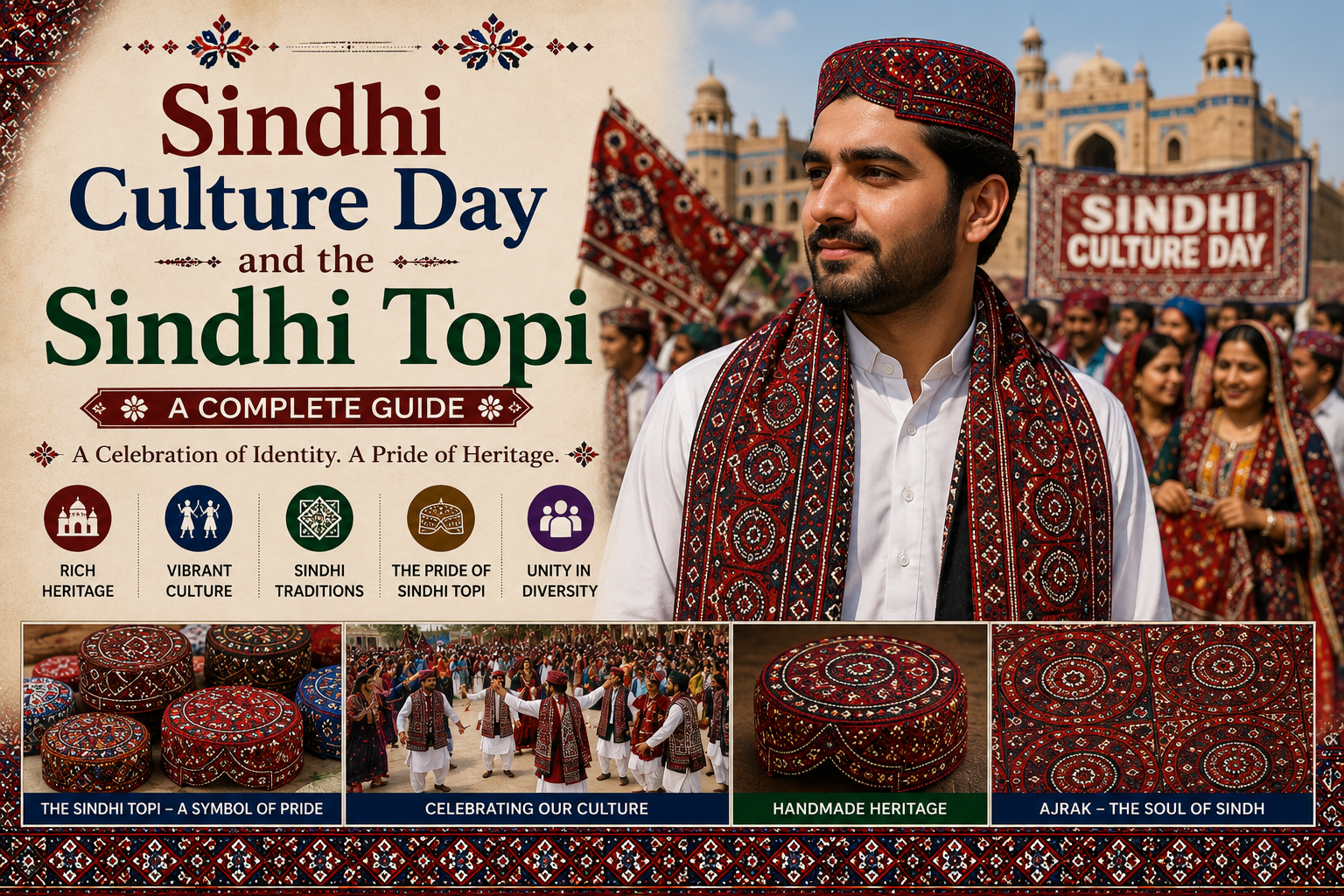
Sindhi Culture Day and the Sindhi Topi: A Complete Guide
Sindhi Culture Day is the great festival of Sindhi identity. It fills the streets with music, colour and pride each December. People wear the Ajrak and the Sindhi topi across the province and the world. The day began as a response to an insult and grew into a celebration. It now links the modern Sindhi people to their ancient past. This guide covers Sindhi Culture Day and the topi for the curious traveller. It explains the day, its history the cap and how it is celebrated.
This guide offers a general overview. Accounts of the origin of the topi vary between sources.
Quick answer: Sindhi Culture Day falls on the first Sunday of December. Sindhis call it Aekta jo Ddihaarro the Day of Unity. It celebrates the culture and identity of Sindh. People wear the Ajrak cloth and the embroidered Sindhi topi. The day began on 6 December 2009 as Sindhi Topi Day. It arose in response to remarks that mocked the cap. It is now marked across Sindh and the global diaspora.
About Sindhi Culture Day
The day celebrates Sindhi identity. It honours the culture, heritage and history of Sindh. People mark it with great enthusiasm. It has become the national day of the Sindhi people.
It falls on the first Sunday of December. The date returns each year. Sindhis observe it across the province. The diaspora marks it around the world.
The day carries a name of unity. Sindhis call it Aekta jo Ddihaarro. That phrase means the Day of Unity. This name captures the spirit of the occasion.
The colours are maroon, red and black. These match the Ajrak cloth. People wear them across the day. The whole province takes on these tones.
History of the day
The day began in 2009. A television host had mocked a public figure for wearing the Sindhi topi. The remarks caused great offence. The Sindhi people responded with pride.
The first observance came that December. It fell on 6 December 2009. People first called it Sindhi Topi Day. It honoured the cap and the wider culture.
A media figure launched the call. The head of a Sindhi news channel announced the day. The Sindhi people embraced it at once. The response was overwhelming across the province.
The response made history. Tens of thousands took to the streets. People bought topis in huge numbers. Shops sold out of the cap. This show of feeling turned an insult into a celebration.
The day was renamed the next year. Organisers changed it to Sindhi Cultural Day. The new name better reflected its purpose. It had grown beyond the cap alone.
The day keeps growing. It is now compared to Eid or Holi in its scale. Sindhis mark it in the Middle East, Europe and North America. It has become a truly global festival.
Sindhi topi
The topi is a traditional cap. Men across Sindh wear it. It is made of cotton and wool. Fine embroidery and mirror work decorate it.
The cap has a distinct shape. A section is cut away at the front. This leaves the forehead clear. The shape is unmistakable.
The decoration is intricate. Craftspeople embroider the cap by hand. They set small mirrors into the cloth. They stitch geometric patterns across it. Each cap takes real skill to make.
The origins are debated. Some accounts trace the cap deep into Sindhi tradition. Others link its form to a 19th century origin. The sources do not agree.
The cap is a mark of identity. It signals pride in Sindhi culture. Men wear it at weddings and festivals. It carries deep meaning for the community.
Ajrak and the attire
The Ajrak is the other great symbol. This block printed cloth pairs with the topi. Its own dedicated guide covers the craft. Together they form the traditional attire.
Men wear the Ajrak as a shawl. They drape it over the shoulder. They may wind it as a turban too. The topi completes the look.
Women wear their own traditional dress. The cholo and the paro are traditional garments. Ajrak printed clothes are popular too. Bright embroidery decorates the attire.
People exchange Ajrak and topis as gifts. This giving marks the day. It reinforces the bonds of the community. It is a gesture of unity and respect.
Celebrations in Sindh
The day fills with music and colour. Folk musicians perform across the province. Singers carry the poetry of the great Sindhi poets. The music lasts through the day.
Rallies move through the cities. A famous rally starts at the Karachi Press Club. It passes near the Sindh Assembly. Crowds fill the streets in Ajrak and topi.
Landmarks are dressed in Ajrak. Buildings and monuments carry the cloth. The whole province takes on its colours. This display is a striking sight.
Exhibitions and events fill the calendar. Arts councils host cultural programmes. Competitions reward the finest Ajrak and topi. Food stalls and dances complete the day.
The diaspora joins in. Sindhis abroad hold their own gatherings. Communities mark the day in many countries. The festival unites Sindhis across the world.
Frequently asked questions
When is Sindhi Culture Day? Sindhi Culture Day falls on the first Sunday of December each year. Sindhis call it Aekta jo Ddihaarro the Day of Unity. It celebrates the culture, heritage and identity of Sindh. People mark it across the province and around the world. The first observance was held on 6 December 2009. It has since grown into the national day of the Sindhi people.
How did Sindhi Culture Day start? The day began in 2009 in response to an insult. A television host had mocked a public figure for wearing the Sindhi topi. The remarks caused great offence among the Sindhi people. They responded with a show of pride. The first observance came on 6 December 2009 as Sindhi Topi Day. Tens of thousands took to the streets and shops sold out of caps. The day was renamed Sindhi Cultural Day the following year.
What is the Sindhi topi? The Sindhi topi is a traditional cap worn by men across Sindh. It is made of cotton and wool. Craftspeople decorate it with fine embroidery and small mirrors set into the cloth. It has a distinct shape, with a section cut away at the front. The cap is a mark of Sindhi pride and identity. Men wear it at weddings, festivals and on Sindhi Culture Day. Accounts of its origin vary.
What do people wear on Sindhi Culture Day? People wear the two great symbols of Sindhi culture. Men wear the Ajrak a block printed cloth as a shawl or turban. They pair it with the embroidered Sindhi topi. Women wear traditional dress such as the cholo and paro. Some wear Ajrak printed clothes with embroidery instead. People also exchange Ajrak and topis as gifts. This giving reinforces the bonds of the community.
How is Sindhi Culture Day celebrated? The day fills with music, colour and pride. Folk musicians perform and singers carry the poetry of the great Sindhi poets. Rallies move through the cities, with a famous one starting at the Karachi Press Club. Landmarks are draped in Ajrak. Arts councils host exhibitions and competitions for the finest Ajrak and topi. The diaspora holds gatherings in many countries, uniting Sindhis across the world.
Day the province wears its heart
Sindhi Culture Day is the day the province wears its heart in the open. It fills the streets with the crimson of Ajrak and the mirror work of the topi. It began when an insult stirred a whole people to pride. It grew into a festival to rival the great holidays. It ties the Sindhi of today to the ancient cities of the Indus. Few days carry such feeling.
You may witness the day in Karachi, in a village or in the diaspora abroad. The festival will move you either way. You can join the rally from the Karachi Press Club. You can watch the folk musicians perform through the day. You can receive an Ajrak or a topi as a gift of respect. Wear the crimson and the mirror work with pride. Sindhi Culture Day is the province speaking its name aloud.