Sindhi Cuisine: A Complete Guide
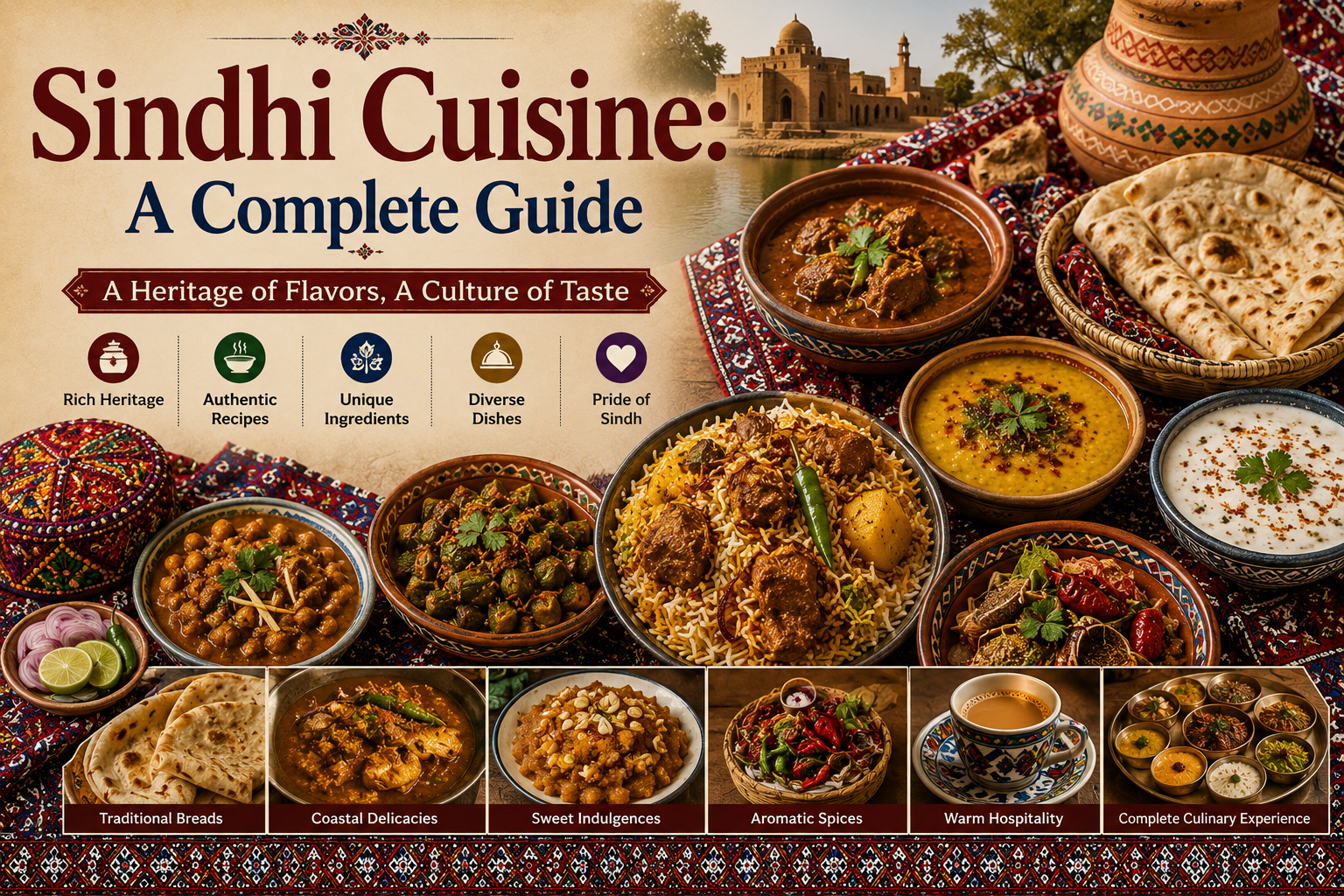
Sindhi cuisine is one of the great food traditions of South Asia. It draws on the fertile plains of the Indus and the fish of its river. It balances tangy, spicy and sweet in a single meal. Its roots reach back to the Harappan age and beyond. Simple home cooking joins rich festive dishes. This guide covers Sindhi cuisine for the curious traveller. It explains the staples the signature dishes the sweets and the food culture.
This guide offers a general overview. Recipes and names vary between families and regions.
Quick answer: Sindhi cuisine is the food tradition of the Sindhi people. It centres on wheat flatbreads, rice, lentils and vegetable curries. Signature dishes include Sindhi curry, sai bhaji and koki. The palla fish of the Indus is a great delicacy. The cuisine balances tangy, spicy and sweet flavours. Dried pomegranate and tamarind give the sourness. A daily meal often pairs one gravy dish with one dry dish, with papad and pickle alongside.
About Sindhi cuisine
Sindhi cuisine reflects the land. The fertile Indus plains grow wheat, rice and vegetables. The river yields fish. The Thar desert adds its own ingredients. The Arabian Sea lies close by. Each has shaped the food.
The cuisine has ancient roots. It evolved along the Indus over thousands of years. Some trace its origins to the Harappan age. Arab, Mughal, Gujarati and Rajasthani influences followed. This long history gives it real depth.
The flavours are distinctive. The cuisine balances tangy, spicy and sweet. Dried pomegranate seeds give a sour note. Tamarind adds tartness too. This balance sets Sindhi food apart.
The daily meal has a pattern. It often pairs one gravy dish with one dry dish. Papad and pickle sit alongside. Sindhis call a meal a maani. This simple structure defines home cooking.
Staples
Wheat flatbreads are a mainstay. Sindhis eat several kinds. The koki is the most famous. Cooks make it from wheat flour with onions and spices. They toast it twice for its texture.
The dodo is another bread. Cooks make it from millet or sorghum. They often add garlic and green chilli. It suits the hearty dishes of the region.
Rice is central to the cuisine. Sindhis eat it with curry and lentils. Bhuga chawal is a favourite. Cooks make it with caramelised onions and spices. It pairs with many dishes.
Lentils appear in many meals. Dal is an everyday staple. It comes in many forms. Some dishes combine several kinds of lentil. This gives them a rich and earthy taste.
Signature dishes
Sindhi curry is a defining dish. Cooks make it from gram flour and vegetables. It uses okra, drumsticks and cluster beans. Tamarind or tomato gives the sourness. It differs from the Punjabi kadhi. That version uses yoghurt.
Sai bhaji is a beloved dish. The name means green vegetables. Cooks slow cook spinach with lentils and vegetables. They add greens such as fenugreek, dill and sorrel. It is nourishing and full of flavour.
The two often pair with rice. Sindhi curry goes with steamed rice and papad. Sai bhaji goes with bhuga chawal. These combinations are much loved comfort food. Many families eat them on a Sunday.
Aloo tuk is a favourite side. Cooks fry potato slices twice. They spice them with red chilli and dried mango powder. The result is crisp outside and soft within. It accompanies dal and rice.
Bhee is a Sindhi speciality. This is the stem of the lotus plant. Cooks pair it with potato. It has a crunchy texture. It absorbs the spices beautifully.
Fish and the meat
The palla fish is a great delicacy. It swims up the Indus against the current. It has a strong bond with the river. Sindhis prize it above other fish. It is one of the treasures of the cuisine.
Cooks prepare fish in many ways. They fry it and they curry it. They grill it over coals too. The fish of the Indus and the sea both feature.
Meat dishes suit festive tables. Slow cooked mutton is a favourite. Cooks flavour it with onions, tomatoes and spices. They often use ghee for depth. These dishes mark special occasions.
The desert adds its own dishes. The people of Tharparkar cook with sangri. This is the bean of a desert tree. It makes hearty dishes in the dry region. The dedicated guide to the Thar covers the area.
Breakfasts and snacks
Dal pakwan is a famous breakfast. Cooks pair soft lentils with crisp fried bread. A mint and coriander chutney completes it. This is a signature morning dish.
Koki serves as breakfast too. Sindhis eat it with papad or curd. Tea often accompanies it. This is an everyday morning meal.
Pakoras are a popular snack. Cooks make them from gram flour. They fry them twice for extra crunch. Festivals bring them out in number.
Papad and pickle complete the meal. Sindhi papad comes in several kinds. Pickles use mango, lemon, chilli and more. Sindhis ferment them in oil or water. They add zest to any meal.
Sweets in Sindh
Sindhi sweets are distinctive. Cooks make some unusual ones. Singhar ji mithai is a famous example. It uses unsalted gram flour strings with condensed milk. It sounds odd but tastes wonderful.
Nut sweets are popular too. Cooks make pralines from pistachios and almonds. Other sweets combine pistachio with condensed milk. These are rich festive treats.
Sweet breads mark occasions. Mitho lolo is a sweet flatbread. Sindhis serve it with milk or buttermilk. It appears on religious occasions. It is given to the poor as a blessing.
Vermicelli is a festive dessert. Sindhis sweeten it, sometimes with milk. Muslim Sindhis serve it on Eid. It is a much loved end to a celebration.
Frequently asked questions
What is Sindhi cuisine known for? Sindhi cuisine is known for its balance of tangy, spicy and sweet flavours. It centres on wheat flatbreads, rice, lentils and vegetable curries. Signature dishes include Sindhi curry, sai bhaji and koki. The palla fish of the Indus is a great delicacy. Dried pomegranate seeds and tamarind give the food its characteristic sourness. A daily meal usually pairs one gravy dish with one dry dish, served with papad and pickle.
What is the difference between Sindhi curry and Punjabi kadhi? Both are made with gram flour. They differ in a key way. Sindhi curry gets its sourness from tamarind or tomato. The Punjabi kadhi uses yoghurt or buttermilk instead. Sindhi curry is loaded with vegetables such as okra, drumsticks and cluster beans. It is served hot with steamed rice and papad. Many Sindhi families enjoy it as a Sunday comfort meal.
What is sai bhaji? Sai bhaji is one of the most loved Sindhi dishes. The name means green vegetables. Cooks slow cook spinach with lentils and other vegetables. They add greens such as fenugreek, dill and sorrel. The dish is nourishing and full of flavour. It is usually served with bhuga chawal. That dish is rice cooked with caramelised onions. Together they form a classic Sindhi combination.
What is palla fish? Palla is a fish of the Indus and a great delicacy in Sindhi cuisine. It swims upstream against the powerful currents of the river. It has a strong bond with Sindh and its great river. Sindhis prize it above other fish. Cooks fry it, curry it or grill it over coals. It is considered one of the treasures of the regional table.
What are famous Sindhi breakfasts? Dal pakwan is the most famous Sindhi breakfast. It pairs soft lentils with crisp fried bread and a mint and coriander chutney. Koki is another everyday breakfast a thick spiced flatbread eaten with papad, curd or tea. Both are simple home style dishes with unforgettable flavour. They are enjoyed across Sindh and among the wider Sindhi community.
Taste of the Sindhi Cuisine
Sindhi cuisine is the taste of the land along the Indus. It grows from the wheat and rice of the fertile plains. It draws the palla fish from the great river. It balances the tangy the spicy and the sweet in every meal. It reaches back through Mughal and Arab kitchens to the Harappan age. Few cuisines carry such history in such simple food.
You may come to Sindhi food for the curry the fish or the sweets. The cuisine rewards the appetite either way. You can scoop soft dal with crisp pakwan at breakfast. You can pair Sindhi curry with rice and papad at noon. You can end with the unusual sweetness of singhar ji mithai. Sit down to a Sindhi maani and taste the plains of the Indus.