Sindhi Biryani: A Complete Guide
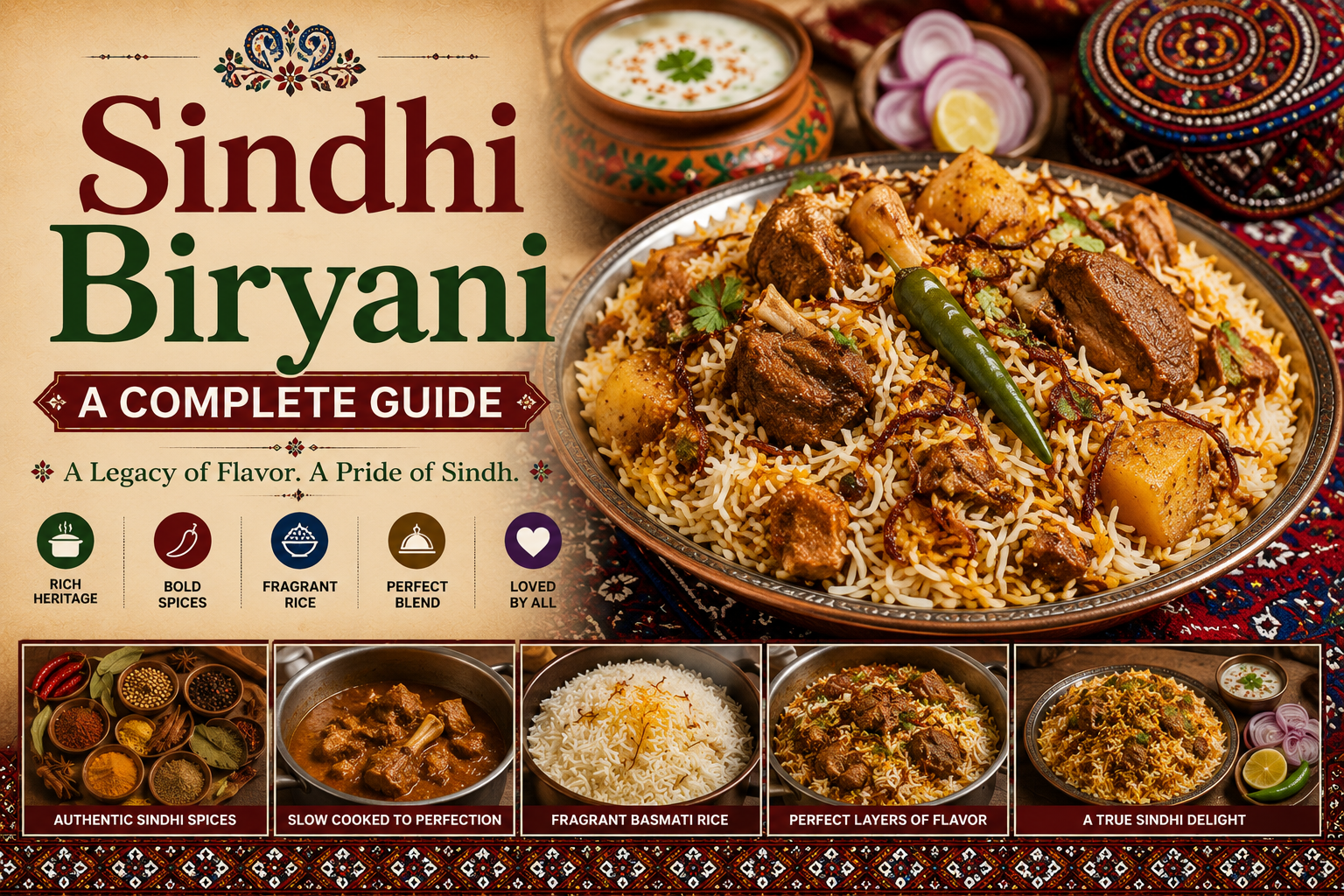
Sindhi biryani is one of the great rice dishes of South Asia. It is famous for its fiery heat and its tangy edge. Potatoes and dried plums set it apart from every other biryani. Cooks layer marinated meat with fragrant rice and cook it slowly. It has become a beloved dish across Pakistan and beyond. This guide covers Sindhi biryani for the curious traveller. It explains the history, the flavour, the ingredients, the method and where to find it.
This guide offers a general overview. Recipes vary between families and cooks.
Quick answer: Sindhi biryani is a layered rice dish from Sindh. It is closely tied to the city of Karachi. It is known for its bold, spicy, tangy and slightly sweet flavour. Potatoes and dried plums set it apart from other biryanis. Cooks marinate the meat in yoghurt, tomatoes and spices. They layer it with parboiled basmati rice. They finish it slowly by the dum method. It is one of the most popular dishes in the country.
About Sindhi biryani
Sindhi biryani is a layered rice dish. Cooks arrange meat and rice in alternating layers. They cook it slowly in a sealed pot. This layering is central to the dish. It gives the biryani its structure.
It is tied to Karachi. The dish is especially associated with the city. Karachi became a hub for it in the 20th century. Its own dedicated guide covers the city. The biryani spread from there across the country.
It is loved across the region. Sindhi biryani is one of the most popular dishes in Pakistan. It appears at weddings and roadside stalls alike. It is served at grand feasts and humble meals. Few dishes cross so many settings.
History of Sindhi Biryani
Biryani has Persian roots. The dish is believed to have begun in Persia. The word traces to Persian terms for fried rice. Traders and rulers carried it east.
The Mughals perfected the recipe. Their royal kitchen was responsible for developing it. They popularized the dish across the subcontinent through their rule. Every area created its own variation.
Sindhi biryani is a result of all these influences. The Persians combined with the Mughals and Sindhis to create this dish. Some say that the dish is inspired by the Awadhi recipe.
Potatoes joined the dish later. The vegetable reached the subcontinent in the 16th century. It became a fixture of the biryani in time. Today it is one of the defining ingredients.
The dish spread with migration. The partition of 1947 moved many people. Sindhi communities carried the dish to new cities. Karachi became a great centre for it. The biryani reached India too.
What makes Sindhi Biryani distinctive
The flavour is the great mark. Sindhi biryani is spicy, sour and slightly sweet. Few dishes balance these so boldly. This combination is its signature.
Dried plums set it apart. Cooks add aloo bukhara to the dish. These dried plums bring a sweet and tangy note. This is the ingredient most tied to Sindhi biryani.
Potatoes are another hallmark. Cooks fry them and layer them in. They add an earthy comfort to the dish. They balance the bold spice.
The sourness comes from several sources. Yoghurt, tomatoes and dried plums all add it. Lemon juice sometimes joins them. This tang is a defining quality.
It uses many spices. The masala is rich and complex. Star anise, cardamom and cloves bring aroma. Chillies and garam masala bring the heat. This depth of spice is essential.
Ingredients for Biryani
Rice forms the base. Cooks use basmati rice. Parboiled or sella rice works well. It gives fluffy, separate grains. This is the foundation of the dish.
The meat is marinated. Cooks use mutton, chicken or beef. They marinate it in yoghurt, tomatoes and spices. An hour or more lets the flavours seep in. This step is crucial.
The aromatics build the flavour. Caramelised onions bring sweetness. Fresh mint and coriander bring freshness. Green chillies bring heat. These layer through the dish.
The finishing touches matter. Saffron soaked in milk adds colour and aroma. Some cooks add a little food colour. Fried onions and boiled eggs garnish the top. These complete the biryani.
Techniques to Cook Biryani
Marination comes first. Cooks coat the meat in the spiced yoghurt. They let it rest for an hour or more. This tenderises the meat and builds flavour.
The gravy is cooked slowly. Cooks brown the meat with onions and tomatoes. They cook it until tender and juicy. The slow cooking is key to the texture.
The rice is parboiled separately. Cooks boil it with whole spices. They cook it only part way. It finishes later with the meat.
The layering builds the dish. Cooks alternate meat and rice in the pot. They scatter fried onions, mint and coriander between the layers. The potatoes and plums go in too.
The dum finishes it. Cooks seal the pot and cook it on a low heat. The steam blends the flavours. Done well, this yields a fluffy biryani with a crisp bottom.
Where to find Sindhi biryani
Karachi is the home of the dish. The city offers it everywhere. Famous biryani houses serve it daily. It is the natural place to taste it.
It appears across Sindh. Restaurants and homes make it throughout the province. Weddings feature it as a centrepiece. Roadside stalls serve it too.
It is found across the country. Sindhi biryani is popular well beyond Sindh. Eateries serve it in every city. Commercial spice mixes make it at home.
Look for the signs of the real thing. True Sindhi biryani has potatoes and dried plums. It carries a bold, tangy heat. The layers show distinct rice and meat. These mark an authentic dish.
Frequently asked questions
What makes Sindhi biryani different from other biryanis? Sindhi biryani is known for its bold, spicy, sour and slightly sweet flavour. Its most distinctive ingredients are potatoes and dried plums, known as aloo bukhara. The sourness comes from yoghurt, tomatoes and the dried plums. This tangy, fiery profile sets it apart from milder styles such as the Lucknowi. It is also closely tied to the city of Karachi, where it became especially popular.
What are the key ingredients in Sindhi biryani? The base is basmati rice, preferably parboiled for fluffy grains. The meat is usually mutton, chicken or beef, marinated in yoghurt, tomatoes and spices. Potatoes and dried plums are the signature additions. Caramelised onions, fresh mint, coriander and green chillies build the flavour. The spice mix includes star anise, cardamom, cloves and garam masala. Saffron, fried onions and boiled eggs often finish the dish.
Why does Sindhi biryani have potatoes? Potatoes are one of the defining ingredients of Sindhi biryani. Potatoes add comfort that balances the bold spices. Cooks usually fry them before layering them in. The vegetable reached the subcontinent in the 16th century and became a fixture of the dish over time. Today the potato is considered an essential part of an authentic Sindhi biryani.
What are aloo bukhara in Sindhi biryani? Aloo bukhara are dried plums. They are the ingredient most closely tied to Sindhi biryani. Cooks add them to the layers, where they bring bursts of sweet and tangy flavour. This balances the heat of the chillies and spices. The dried plums give the dish part of its distinctive sour and slightly sweet character. Few other biryanis use them.
Where does Sindhi biryani come from? Sindhi biryani originates from the Sindh province of Pakistan. It grew from a fusion of Persian and Mughal cooking with local Sindhi tastes. Biryani itself is believed to have begun in Persia and spread through the Mughal kitchens. The dish became especially associated with Karachi in the 20th century. Migration after 1947 carried it to new cities in Pakistan and India.
Pride of the Sindhi table
Sindhi biryani is the pride of the Sindhi table. It carries a heat and a tang found in no other version. It hides sweet plums and earthy potatoes among its spiced rice. It grew from Persian and Mughal kitchens into a dish all its own. It now feeds wedding halls and roadside stalls across the country. Few dishes are loved so widely.
You may come to Sindhi biryani for the spice, the tang or the sheer comfort of it. The dish rewards the appetite either way. You can seek out a famous biryani house in Karachi. You can taste the plums and potatoes among the fragrant rice. You can feel the heat balanced by the sweet and the sour. Order a plate and taste why Sindh is so proud of it.