Sahiwal: A Complete Guide
Sahiwal is a green and orderly city in the heart of Punjab. It gave its name to one of the finest dairy cattle breeds in the world. It grew from a colonial railway town called Montgomery into a great farming hub. It lies a short drive from the ancient ruins of Harappa. Its cotton, wheat and dairy feed much of the country. This guide covers Sahiwal for the curious traveller. It explains the history the cattle and farming the sights the property scene and how to visit.
This guide offers a general overview. Figures for the population vary between sources.
Quick answer: Sahiwal is a city in central Punjab around 180 kilometres south west of Lahore, on the road and rail line to Multan. It was founded in 1865 as Montgomery a colonial railway town. It was renamed Sahiwal in the 1960s. It lies in the fertile plain between the Ravi and Sutlej rivers. It is world famous for the Sahiwal breed of dairy cattle that originated here. It is a great cotton, wheat and dairy centre. The ancient ruins of Harappa lie close by. Winter is the best time to visit.
About Sahiwal
Sahiwal is a prosperous farming city in central Punjab. It lies around 180 kilometres south west of Lahore, on the line to Multan. It is known as one of the greenest and most orderly cities in the province. It blends a colonial past with a rich agricultural present.
The setting is the fertile canal plain. The city lies between the Ravi and Sutlej rivers, watered by the Lower Bari Doab Canal. This rich alluvial soil makes the district a great farming region. Cotton, wheat and sugarcane fill the surrounding fields.
This ancient is ancient and nearby ruins of Harappa mark one of the great cities of the Indus Valley Civilisation. The area has been settled since prehistoric times. This deep heritage gives the district a special significance.
History of Sahiwal
Modern city began with the railway. The British founded it in 1865 as a station on the Lahore to Multan line. They named it Montgomery after Sir Robert Montgomery the Lieutenant Governor of Punjab. It became a municipality in 1867.
Canals transformed the region. The Lower Bari Doab Canal system was built in the early 20th century. It turned arid land into fertile fields, making Sahiwal a leading centre for wheat and cotton. This agricultural revolution shaped the modern district.
City was renamed after independence. It took the name Sahiwal in the 1960s after the Sahi clan of the area. The old name Montgomery slowly passed into history. The city grew into a divisional headquarters.
Roots run far deeper, though. The nearby city of Harappa flourished around 2600 BCE. It was a great urban centre of the Indus Valley Civilisation. Its dedicated guide covers the ancient site in detail.
Cattle and the farming in Sahiwal
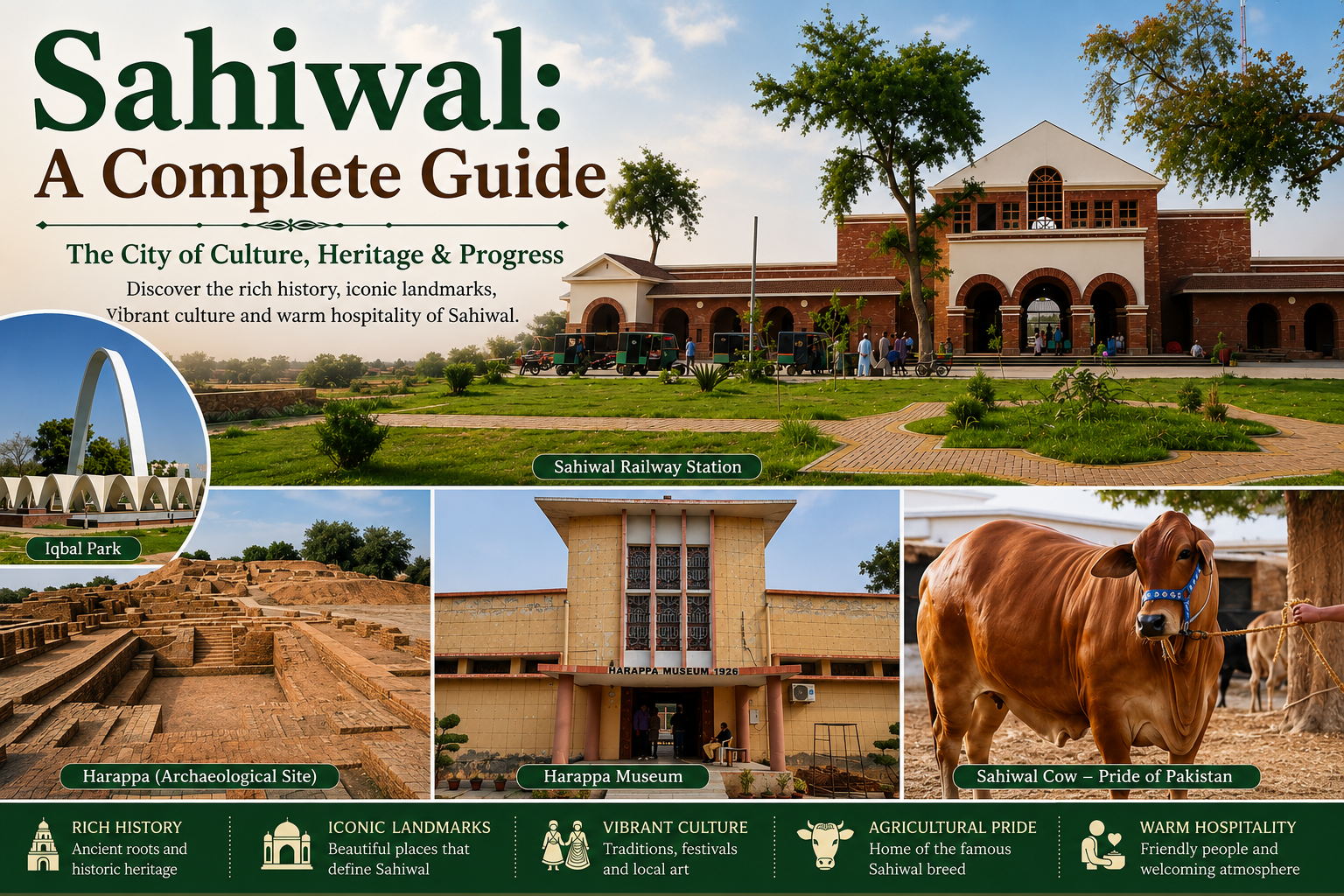
Sahiwal is world famous for its cattle. The Sahiwal breed of dairy cattle originated in this dry region of Punjab. It is one of the finest zebu dairy breeds, known for its high milk yield and hardiness. The city takes its fame directly from this proud breed.
Breed has travelled the world. Herdsmen once kept the cattle in large herds across the plains. The breed was later taken to Australia and beyond in the 1950s. It is now found throughout the tropics for its heat tolerance and disease resistance.
Farming drives the whole economy. The fertile plains grow cotton, wheat, sugarcane and oilseeds. Cotton is the great cash crop, feeding ginning factories across the district. Dairy and livestock add further to the agricultural wealth.
Industry follows the farm. Cotton ginning, textile weaving and food processing all operate here. Dairy plants, oil mills and flour mills add to the mix. Lacquered woodwork is a traditional craft of the city.
Sights in Sahiwal
Harappa is the great draw. This ancient city lies around 24 kilometres from Sahiwal. It preserves the ruins and a museum of the Indus Valley Civilisation. Its dedicated guide covers the site in full.
The cattle markets are a spectacle. Sahiwal holds some of the largest livestock markets in the country. The Chichawatni market nearby is among the biggest. They showcase the famous cattle of the region.
Parks and forest offer green escapes. Canal Park in the city is a favourite family spot. The Chichawatni Reserved Forest is one of the largest planted forests in the country. Both suit a relaxed day out.
Railway station is a landmark. The colonial era station lies on the Karachi to Peshawar line. It was handsomely redeveloped in recent years. It reflects the railway origins of the city.
Property market in Sahiwal
Property market is steady and growing. The farming wealth and the link to Lahore support it. New housing schemes ring the city. Demand rises with the growth of the district.
Location is a great asset. Sahiwal lies on the main road and rail line between Lahore and Multan. A coal power complex nearby has drawn investment. This connectivity lifts the property market.
Property choice is varied. The old city offers heritage and trade. New schemes offer modern living. The rural fringe offers agricultural land. Each suits a different buyer.
Visiting Sahiwal
Come in winter. The plains are hot in summer. The winter months from November to February are the finest season. The weather is cool and pleasant then.
Visit Harappa. The ancient ruins are the great highlight. The site and museum reward a half day trip. Its dedicated guide covers the visit in detail.
See the cattle and the parks. The livestock markets are a lively spectacle. Canal Park and the Chichawatni forest offer green escapes. These suit a relaxed family outing.
Explore the wider region. Pakpattan and its famous shrine lie to the south west. Okara lies to the north east. The dedicated guides cover them in detail.
Frequently asked questions
What is Sahiwal famous for? Sahiwal is world famous for the Sahiwal breed of dairy cattle. This breed originated in the region and takes its name from the city. It is one of the finest zebu dairy breeds, known for its high milk yield, hardiness and heat tolerance. It is now found throughout the tropics. The city is also a great centre for cotton, wheat and dairy farming. The ancient ruins of Harappa lie close by adding deep historical significance.
Why was Sahiwal called Montgomery? Sahiwal was founded in 1865 as a railway town on the Lahore to Multan line and named Montgomery after Sir Robert Montgomery the Lieutenant Governor of Punjab at the time. It became a municipality in 1867 and served as the headquarters of the Montgomery District. The city was renamed Sahiwal in the 1960s after the Sahi clan native to the area. The old colonial name slowly passed into history.
What is the Sahiwal cattle breed? The Sahiwal is a breed of zebu dairy cattle that originated in the dry Punjab region around Sahiwal. It is one of the finest dairy breeds, known for its high milk yield, medium to large size, reddish brown coat and distinctive hump. Herdsmen once kept the cattle in large herds across the plains. The breed was later taken to Australia and other countries in the 1950s and is now valued throughout the tropics for its hardiness.
Is Harappa near Sahiwal? Yes the ancient ruins of Harappa lie around 24 kilometres south west of Sahiwal city. Harappa was a great urban centre of the Indus Valley Civilisation, flourishing around 2600 BCE. The site preserves the ruins of a well planned Bronze Age city along with a museum displaying artefacts from the excavations. It is one of the most significant archaeological sites in the country and a major draw for visitors to the Sahiwal region.
When is the best time to visit Sahiwal? The best time to visit Sahiwal is winter, from November to February, when the weather is cool and pleasant. The plains are hot in summer. Winter suits a visit to the ancient ruins of Harappa the lively cattle markets and the green Canal Park. The nearby Chichawatni Reserved Forest also rewards a day trip. The city itself is known as one of the greenest and most orderly in the province.
Green heart of the cotton belt
Sahiwal is the green and orderly heart of the cotton belt. It grew from a colonial railway halt into a great farming city. It gave the world one of its finest dairy breeds. It guards the ancient ruins of Harappa on its doorstep. It fills the country with cotton, wheat and milk. Few cities wear their farming wealth so gracefully.
You may come to Sahiwal for the ancient ruins the cattle or the calm. The city rewards the visit either way. You can walk the streets of Harappa where a lost civilisation once thrived. You can see the famous cattle at the great livestock markets. You can rest by the water at Canal Park. Come in winter and explore the cotton belt. Sahiwal is the green heart of central Punjab.