Sadhu Bela Temple, Sukkur: A Complete Guide
Sadhu Bela is one of the most remarkable religious sites in Sindh. It occupies a wooded island in the middle of the Indus. A young ascetic settled there in 1823 and never left. His followers built a complex of white marble temples around his sacred fire. Pilgrims still cross the water by boat to reach it. This guide covers Sadhu Bela for the curious traveller. It explains the history the Udasi tradition the temples and how to visit.
This guide offers a general overview. Accounts of the early life of the founder differ between sources.
Quick answer: Sadhu Bela is an island temple complex in the Indus near Sukkur. The name means the woods of the sage. Baba Bankhandi Maharaj founded it in 1823. He was an Udasi ascetic who arrived as a teenager. The island was previously called Menak Parbat. Later followers built the marble temples from 1899. The complex holds several temples a library and gardens. Visitors reach it by boat from Sukkur.
About Sadhu Bela
The complex occupies an island. Sadhu Bela lies in the Indus between Sukkur and Rohri. The site spreads across two connected islands. Water surrounds it on every side. This setting gives the place its extraordinary character.
The name honours the founder. Sadhu Bela means the woods of the sage. Some render it as the hermitage of the monk. The island carried an older name of Menak Parbat. That name belonged to it before 1823.
The site is a major pilgrimage centre. Hindus travel here from across the country. Pilgrims come from India too. The complex ranks among the most important Udasi centres in the region.
Baba Bankhandi Maharaj
A young ascetic founded the site. Baba Bankhandi Maharaj arrived in 1823. He was then around fifteen years old. Accounts of his origins differ. Some place his birth in Nepal. Others name a place near Delhi.
He came to a trading city. Sukkur was then a busy hub on the Indus. Merchants and travellers passed through constantly. The young seeker chose the quiet island instead.
He settled on the forested island. The place was a clump of trees when he arrived. He liked it enough to stay. He set up his dhuni there. That word names the sacred fire of an ascetic.
He lived there in solitude. Local people came to know him as the sage of the woods. Followers gathered around him over the years. He remained on the island until his death. Tradition says he was around sixty.
A dream is part of the story. Tradition holds that he saw the goddess Annapurna. She is revered as the deity of grain and nourishment. This vision shaped the devotional life of the site.
Udasi tradition
The Udasis form a distinct tradition. Sri Chand founded the movement. He was the elder son of Guru Nanak. That connection links the tradition to the Sikh faith.
The Udasis live as ascetics. They renounce property and marriage. They practise yoga and meditation. They recite prescribed texts daily. This discipline defines the order.
The tradition bridges two faiths. Udasis revere the Guru Granth Sahib. They also worship Hindu deities. This blend makes the tradition genuinely syncretic. Sadhu Bela reflects that character throughout.
A line of successors leads the site. The head of the establishment is called the gaddi nasheen. Each successor is chosen carefully. Candidates must be honest, dedicated and celibate. The line has continued since the founder.
Architecture of Temples of Sadhu Bela
Building began late in the century. Sant Harnam Das started the construction. He was the eighth successor to the founder. The work began in 1899.
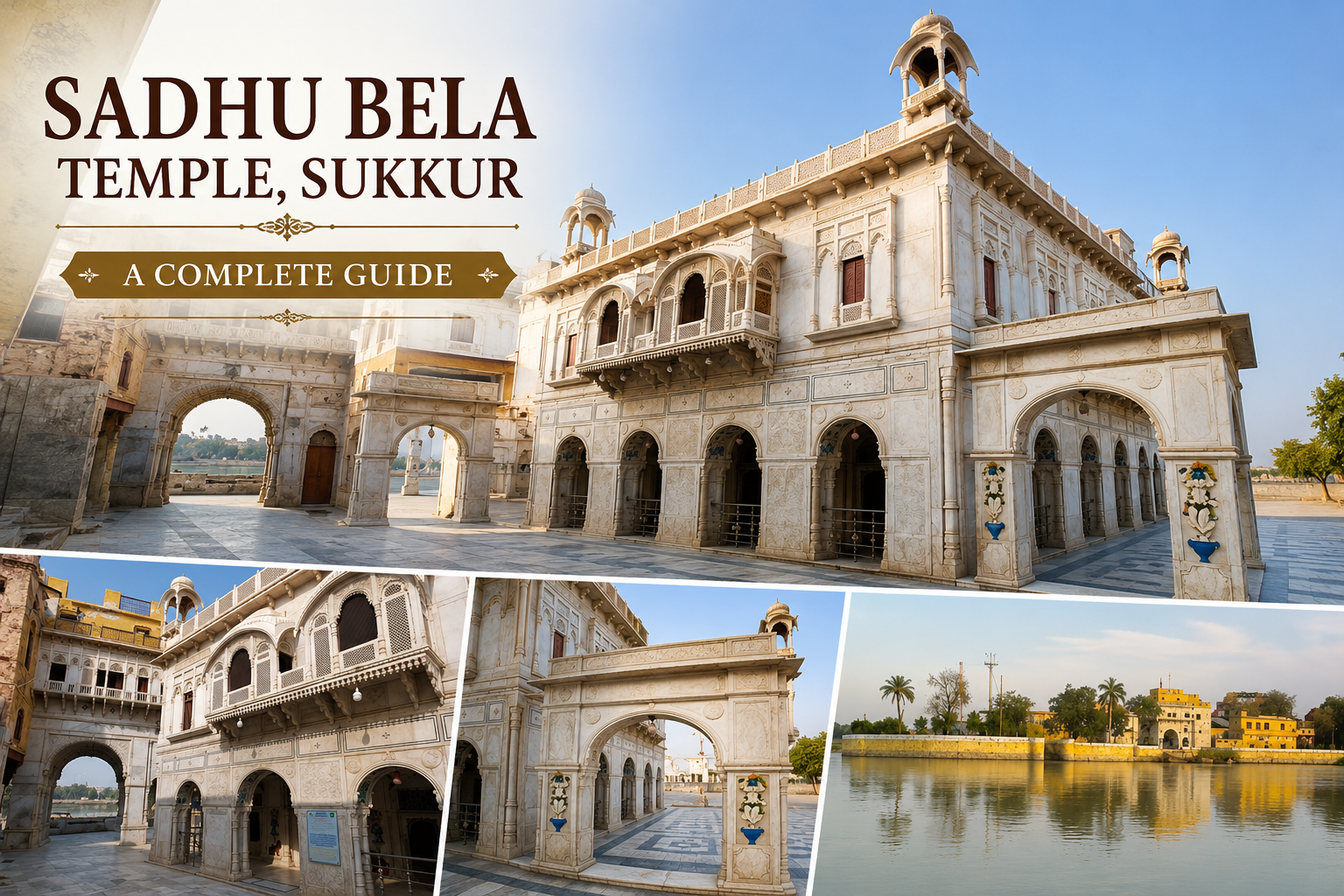
White marble defines the complex. Craftsmen used it extensively across the buildings. The marble catches the light beautifully. Visitors often remark on how it glitters above the water.
The carving is exquisite. Marble jharokas project from the walls. These are enclosed overhanging balconies. Relief panels cover the surfaces. Some depict scenes from the Udasi tradition.
The complex is large and varied. It holds several temples in all. A library serves the community. Gardens fill the open ground. Dining halls and residential quarters house monks and pilgrims.
Several styles meet here. Hindu, Sikh and colonial elements blend across the buildings. Colourful frescoes decorate some interiors. Wooden balconies add to the effect.
Festival of Sadhu Bela
The Mela honours the founder. Devotees gather for the anniversary of his death. The festival runs over several days. It usually falls in the middle of the year.
The crowds arrive by boat. Pilgrims come from across Sindh and beyond. Chants carry across the water from the bank. Organisers distribute sweets, food and chilled milk.
Shivratri draws devotees too. This major Hindu festival is marked at the complex. Worshippers fill the temples. The island becomes very busy on these days.
Visiting Sadhu Bela
You reach the island by boat. Boats leave from the bank at Sukkur. The crossing is short. Many visitors describe it as the finest part of the trip.
Seek permission in advance. The temple administration manages access. Visitors usually need to arrange a visit beforehand. Contact the administration or a local guide first.
Combine it with Sukkur. The city holds the great barrage and the Lansdowne Bridge. Its own dedicated guide covers those landmarks. The dolphin viewpoint lies nearby too.
Come in the cooler months. The season from autumn to early spring is best. Summer temperatures climb very high. Late afternoon light suits the marble beautifully.
Visit respectfully. This is an active place of worship. Dress modestly and remove your shoes where required. Follow the guidance of the attendants throughout.
Frequently asked questions
What is Sadhu Bela? Sadhu Bela is an island temple complex in the Indus near Sukkur in Sindh. The name means the woods of the sage. Baba Bankhandi Maharaj founded it in 1823 when he settled on the forested island. It is a major centre of the Udasi tradition. The complex holds several white marble temples a library, gardens and quarters for monks and pilgrims. Visitors reach it by boat.
Who founded Sadhu Bela? Baba Bankhandi Maharaj founded Sadhu Bela in 1823. He was an Udasi ascetic who arrived at around fifteen years of age. Accounts of his origins differ, with some sources placing his birth in Nepal and others near Delhi. He settled alone on the forested island then called Menak Parbat. He set up his sacred fire there and became known as the sage of the woods.
What is the Udasi tradition? The Udasis form an ascetic tradition founded by Sri Chand the elder son of Guru Nanak. That connection links it to the Sikh faith. Udasis renounce property and marriage. They practise yoga and meditation and recite prescribed texts. They revere the Guru Granth Sahib and also worship Hindu deities. This blend makes the tradition genuinely syncretic.
How do you get to Sadhu Bela? You reach Sadhu Bela by boat from the bank at Sukkur. Boats leave from near Bunder Road. The crossing is short and forms part of the experience. The temple administration manages access to the island. Visitors usually need to arrange permission beforehand. Contact the administration or a local guide before you travel.
When is the best time to visit Sadhu Bela? The cooler months from autumn to early spring are the best time. Summer temperatures in the region climb above forty degrees. That heat makes a visit uncomfortable. Late afternoon light suits the white marble particularly well. The complex is busiest during the Mela for the founder and at Shivratri.
Island of the sage
Sadhu Bela is a place unlike any other in Sindh. A teenage ascetic crossed the country and stopped on a wooded island. He lit a fire there and stayed for the rest of his life. His followers raised white marble temples around the spot. Their carved balconies now glitter above the water of the Indus.
You may come to Sadhu Bela for the architecture the tradition or the river crossing. The island rewards the visit either way. You can take the short boat ride from Sukkur. You can look at the marble jharokas and the relief panels. You can walk the gardens between the temples. Arrange permission first and come in the cooler months. Few places carry the calm of this island in the middle of the great river.