Ralli Quilts of Sindh: A Complete Guide
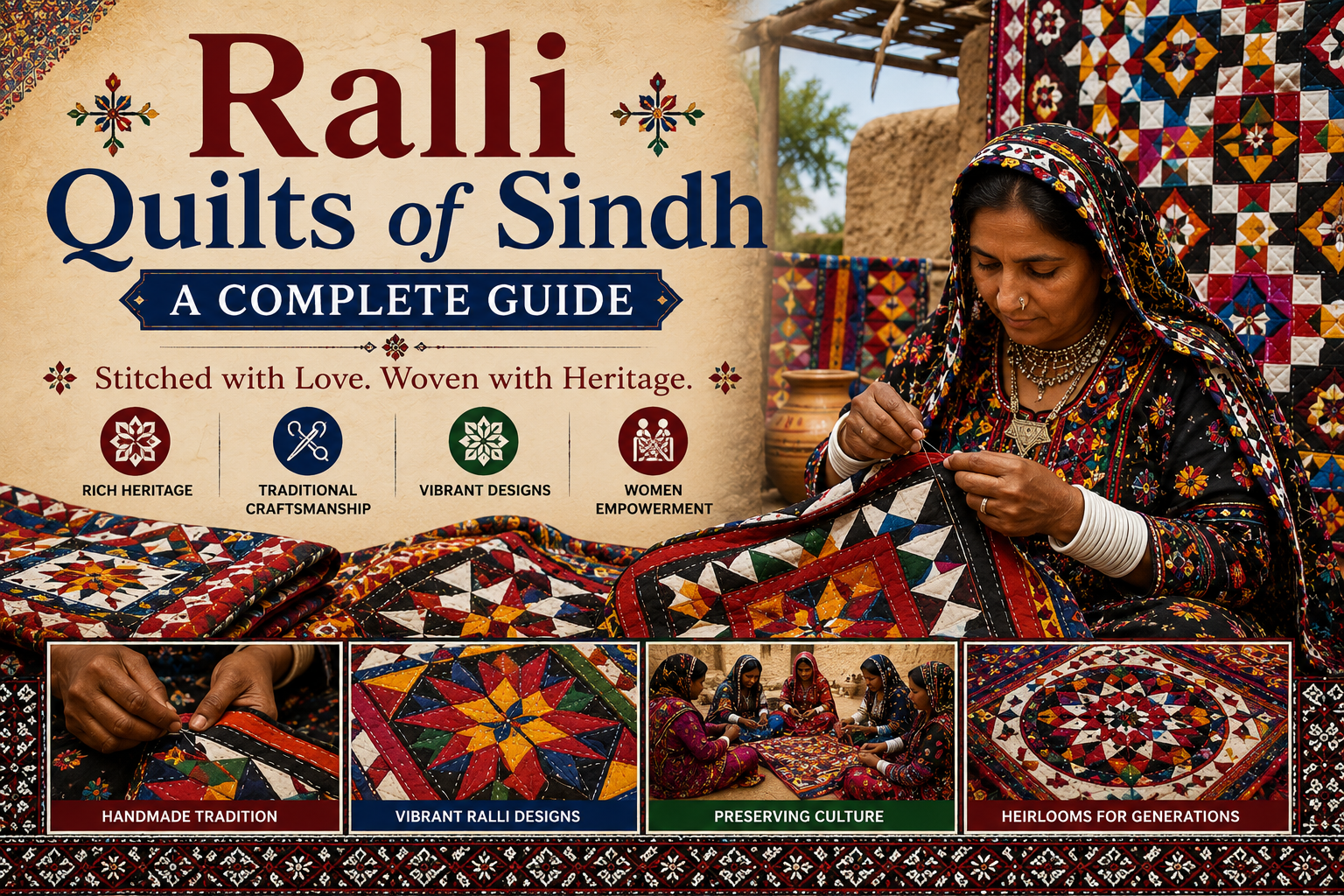
Ralli quilts are among the most beautiful textiles of Sindh. Women stitch them by hand across the villages of the province. They join scraps of cloth into bold geometric patterns. They pass the craft from mother to daughter across generations. Each quilt carries the story of the woman who made it. This guide covers Ralli quilts for the curious traveller. It explains the history the techniques the patterns the colours and the social life of the craft.
This guide offers a general overview. Names and methods vary between regions and families.
Quick answer: Ralli quilts are hand stitched patchwork textiles from Sindh. Women make them in the rural villages of the province. The name comes from a local word meaning to mix or connect. Makers join scraps of cloth into bold geometric designs. The three main types are patchwork appliqué and embroidered quilts. They traditionally use seven colours. Rallis serve as bedding, dowry pieces and treasured gifts. Tharparkar is a famous centre of the craft.
About Ralli quilts
Ralli quilts are hand stitched textiles. Women make them across rural Sindh. They combine patchwork appliqué and embroidery. The results are bold and geometric. They are as useful as they are beautiful.
The name means to mix or connect. It comes from a local word. Some say ralanna or rulanna. This suits a craft that joins scraps into a whole. The name is spelt several ways.
The craft is very old. Patchwork traditions in the region reach back millennia. Some link them to the textiles of the Indus Valley. The Ralli took its distinct form in Sindh. The craft has deep roots.
The quilts serve many uses. Families use them as bedding and covers. They form part of a dowry. They serve as gifts of honour. Each has its place in daily life.
Women behind the craft ship
Women make the quilts. The craft belongs to the women of Sindh. They learn it from their mothers and grandmothers. They pass it to their daughters in turn. This chain runs across generations.
It is a cottage industry. Ralli making earns income for rural women. They work at it alongside their other labour. Farming, housework and craft fill their days. The quilts bring a real source of earning.
The work is often shared. Women gather to make the quilts together. They share stories as they stitch and exchange ideas and designs. This social side is central to the craft.
The craft builds community. Ralli making strengthens the bonds between women. It fosters pride and independence. It gives the makers a voice. This role reaches beyond the cloth itself.
Techniques of Ralli making
There are three main types. Makers use patchwork appliqué and embroidery. Each gives a different effect. Each reflects the region and family of the maker.
Patchwork joins cut pieces. Makers tear cloth into squares and triangles. They stitch these into repeating patterns. Diamonds, stars and concentric squares result. This is the tukrin style.
Appliqué cuts and layers shapes. Makers fold the cloth and cut shapes into it. The method resembles cutting paper snowflakes. They stitch these onto a background. This is the tuk style.
Embroidery stitches the pattern. Makers work motifs onto solid cloth. Mirror work often joins the stitching. This gives a textured surface. It is less common but very rich.
The layering is fundamental. Makers stitch old fabric into layers first. They add the bright patches on top. These hide the worn cloth beneath. This gives the quilt its strength.
A diagonal placement marks the style. Makers often set similar blocks on the diagonal. This is a signature of Ralli patterning. It gives the quilts their distinctive rhythm.
Recycling tradition
Ralli began as recycling. The craft reuses old and worn cloth. Makers join scraps into something new. This resourceful spirit is at its heart.
Old Ajrak often features. Makers use worn pieces of the block printed cloth. Its own dedicated guide covers Ajrak. Other old garments serve too. Nothing goes to waste.
The backing adds strength. Makers line the quilt underneath. Plain cotton or old Ajrak serves. This gives the quilt durability. It adds depth to the finished piece.
The tradition is eco conscious. Ralli making reduces textile waste. It breathes new life into old cloth. This sustainable spirit is much admired today.
Colours and the patterns
The quilts use seven colours. Tradition calls for a set palette. White, red, black and yellow feature. Orange, blue and purple complete it. Makers call these Satrangi quilts.
The patterns carry meaning. The designs often hold symbolic weight. They reflect the natural world. They express the culture of the region. Each carries the mark of its maker.
There is great variety. Makers bring individual expression to the patterns. They play freely with the colour. This spontaneity yields endless variation. No two quilts are quite alike.
Special quilts carry embellishment. Wedding and gift quilts are richly decorated. Mirrors, tassels and shells adorn them. Embroidery adds further detail. These are the finest pieces.
Place of Ralli in society
Rallis are precious in a dowry. A bride brings them to her marriage. More Ralli pieces bring more respect. This role gives them great social value. They are treasured possessions.
They serve as heirlooms and families keep the finest quilts for years. They pass them down the generations. Each carries memories and stories. They hold the heritage of a family.
Tharparkar is a famous centre. The women of the desert district are renowned for the craft. The dedicated guide to the Thar covers the region. Khairpur, Umerkot and Badin make fine Rallis too.
The craft is reaching the world. Ralli quilts now gain international acclaim. Exhibitions have shown them abroad. Organisations link rural makers to wider markets. This helps sustain the tradition.
Frequently asked questions
What is a Ralli quilt? A Ralli quilt is a hand stitched patchwork textile from Sindh. Women make them across the rural villages of the province. The name comes from a local word meaning to mix or connect. Makers join scraps of cloth into bold geometric patterns. The quilts combine patchwork appliqué and embroidery. They serve as bedding, dowry pieces and treasured gifts. Each carries the creativity and story of the woman who made it.
How are Ralli quilts made? Ralli quilts are made by hand through several techniques. The three main types are patchwork appliqué and embroidered quilts. Makers first stitch old fabric into layers. They then add bright patches on top to hide the worn cloth. In patchwork they join cut squares and triangles into patterns. In appliqué they fold and cut shapes to stitch onto a background. A single quilt can take weeks or months to complete.
What do the colours of a Ralli quilt mean? Ralli quilts traditionally use seven colours. These are white, red, black, yellow, orange, blue and purple. Makers call these Satrangi quilts. The patterns and colours often carry symbolic meaning. They reflect the natural world and the culture of the region. There is great individual expression too, so the traditional patterns appear in endless variation. No two quilts are quite the same.
Why are Ralli quilts important to Sindhi women? Ralli quilting is an income generation activity for women in rural parts of Sindh. This craft is taught by the mother and grandmother to their daughters. The women usually get together to make these quilts while exchanging stories. This helps build social relationships and provides a feeling of pride and independence. The Rallis also hold great importance in dowry. The more the Rallis, the greater the status of the bride.
Where are Ralli quilts made? Ralli quilts are made across rural Sindh and neighbouring regions. Tharparkar is especially famous for the craft. The desert women there have long practised it. Khairpur, Umerkot, Badin and Hala also produce fine quilts. Travellers can find colourful unstitched Rallis for sale along the roads of interior Sindh. Organisations now link rural makers directly to markets to help sustain the tradition.
Cloth that women weave together
Ralli quilts are the cloth that women weave together in Sindh. They turn worn scraps into bold and glowing patterns. They carry seven colours and countless designs. They pass from mother to daughter across the generations. They fill dowries and warm homes across the province. Each holds the story and the spirit of its maker.
You may come to Ralli quilts as a collector a traveller or a lover of craft. The quilts reward the interest either way. You can find them for sale along the roads of interior Sindh. You can watch the women of Tharparkar stitch the patches together. You can take home a Satrangi quilt of seven colours. Each one carries the creativity of the women of Sindh.