Pakistan Monument Islamabad: A Guide to the National Landmark
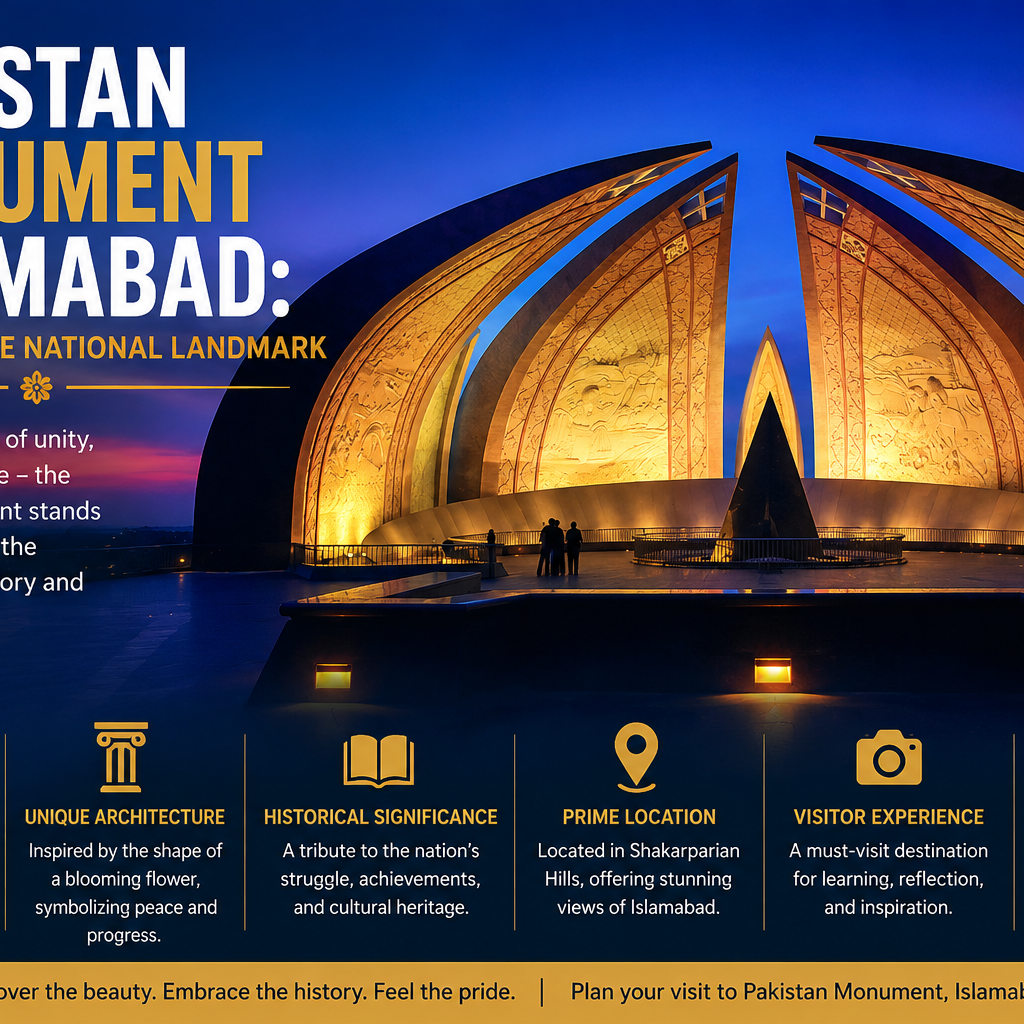
The Pakistan Monument is situated on the Shakarparian Hills in Islamabad. Its granite petals opening like a giant flower over the city. Built to honour those who gave their lives for the country, it has become one of the capital's most recognised landmarks and a symbol of national unity.
This article explains the history of the Pakistan Monument, its meaningful design and the area around it. For anyone getting to know Islamabad, whether as a visitor, a resident or someone interested in property nearby, the monument is one of the defining features of the capital and a good place to understand the city's character.
Pakistan Monument
The Pakistan Monument is a national monument and heritage site on the western part of the Shakarparian Hills in Islamabad. It was built to symbolise the unity of the Pakistani people and to honour those who sacrificed their lives for the country's independence.
The monument is shaped like a blooming flower, with granite petals rising over a central platform. Its elevated position on the hills makes it visible from across the Islamabad and Rawalpindi area and it has become a popular destination for both local and foreign visitors. Alongside the main structure is situated the Pakistan Monument Museum which tells the story of the country's creation.
The design was chosen through a national competition organised in the early 2000s. From a large number of submissions, the design by the architect Arif Masoud was selected and approved in 2003. Construction began in 2004 and the monument was completed in 2006, with its inauguration held in March 2007.
Covering an area of around 2.8 hectares, the monument combines a modern structure with meaning rooted in the country's history and culture. Now a days it has become one of the most visited and photographed sites in Islamabad and a place of national significance.
Quick answer: The Pakistan Monument is a national landmark and heritage museum on the Shakarparian Hills in Islamabad. Shaped like a flower with granite petals, it was designed by Arif Masoud, completed in 2006 and inaugurated in 2007 to symbolise national unity.
The history of the Pakistan Monument
The idea for a national monument in Islamabad took shape in the early 2000s. The government wanted a symbol that would represent the strength, unity and dedication of the Pakistani people and stand as an icon of an independent nation.
To find the right design, the Pakistan Council of Architects and Town Planners organised a national competition. Architects from across the country submitted proposals and a shortlist was drawn up. The winning design, by Arif Masoud, was selected and approved in 2003, chosen for the way it captured the theme of unity.
The foundation stone was laid in 2004 and construction on the rocky ground of the Shakarparian Hills began. The work took about two years, involving the careful shaping of granite and marble and the monument was completed in 2006. The formal inauguration took place on 23 March 2007, a date tied to national commemoration.
Since its opening, the monument has become a fixture of national life. It hosts visitors daily, features in educational trips and national celebrations and has grown into one of the capital's leading attractions. Its history, though recent, is closely linked to how modern Islamabad presents itself as a national capital.
The design and meaning of the monument
The design of the Pakistan Monument is rich with meaning which is a large part of its appeal. The petal shaped structure draws on the muqarnas of Mughal architecture, reworked with modern technology into something new. The architect described the aim as learning from history without staying trapped in it.
The monument has seven petals in total. The four large petals represent the four major cultures of Pakistan, the Punjabi, the Sindhi, the Baloch and the Pakhtun. The three smaller petals represent the minorities and the territories, including Azad Kashmir and Gilgit Baltistan. Though each petal stands independently, they all converge over the central platform, expressing the idea of unity in diversity.
Seen from the air, the arrangement forms a star at the centre with a crescent shaped by the surrounding walls, echoing the star and crescent of the national flag. This clever design ties the monument directly to the symbols of the country.
The petals are built of granite, projecting in a cantilevered form that ranks among the largest of its kind in Asia. Their inner walls carry detailed murals depicting landmarks and figures from the country's history, including sites such as the Lahore Fort, the Badshahi Mosque, Minar e Pakistan and the Khyber Pass, along with images of founding figures. These artworks took an enormous number of hours to complete.
Other features add to the meaning. Pillars near the monument carry the words Faith, Unity and Discipline in both Urdu and English. A wall bears the hand impressions of the many designers, engineers and workers who built it, honouring their contribution. A crescent on the hills carries quotations and poetry from national figures. Together, these details make the monument a layered tribute rather than a simple structure.
The Pakistan Monument Museum
Next to the main monument stands the Pakistan Monument Museum and the two are connected by a large open plaza. The museum adds a historical and educational dimension to a visit.
The museum tells the story of the creation of Pakistan and the events that led to independence. It includes exhibits, artefacts and displays and is known for housing a wax museum that depicts important moments and figures from the Pakistan Movement. This makes it one of the more engaging museums in the capital, especially for those interested in the country's history.
The wider complex also includes facilities such as a reference library, an audio visual archive and an auditorium. For visitors, the combination of the monument and the museum means a single trip covers both the symbolic and the historical sides of the country's story which is why many people set aside time for both.
Places near the Pakistan Monument
The Pakistan Monument is situated in a central and scenic part of Islamabad and the area around it holds many of the capital's important places. This setting adds to the appeal of the surrounding sectors and makes the monument easy to combine with other vi is situated.
The monument shares the Shakarparian Hills with other attractions. The Lok Virsa Museum, a well known heritage museum sometimes called the Shakarparian Museum, is situated nearby, making the area a hub for cultural sites. The green spaces and gardens of the Shakarparian area offer pleasant walking and viewpoints over the city.
The elevated nature of the monument provides a great view of Islamabad, featuring the distant Faisal Mosque and the Margalla Hills on the horizon. The monument’s centrality means that it is located at the center of the capital city.
Access is straightforward. The monument connects to central Islamabad and to major routes such as the Srinagar Highway, with the Zero Point interchange nearby linking it to the wider road network. This makes it reachable from across the twin cities and close to the government and commercial areas of the capital.
For those looking at the area more broadly, the sectors of Islamabad that lie near Shakarparian and the city centre benefit from this central position. Proximity to national landmarks, cultural sites and good road links adds to the character and appeal of the surrounding neighbourhoods and the monument is one of the features that helps define this part of the capital.
Visiting the Pakistan Monument
The Pakistan Monument is one of the top places to visit in Islamabad and it draws a steady flow of visitors every day. It offers architecture, history and views in one location.
Visitors can walk among the granite petals, view the murals inside them and take in the meaning of the design. The viewing terrace offers a wide view over Islamabad which is one of the best in the city. The adjoining museum adds the historical side of the visit. Landscaped gardens surround the site, making it a pleasant place to spend time.
The whole monument is outdoors, so the weather matters. The cooler months and clear days are the most comfortable and many visitors find the late afternoon and sunset especially rewarding, when the light catches the granite petals. Timings and any entry details can vary with the season and events, so it is worth checking before a visit. Comfortable footwear helps, given the steps and the hilly setting.
A visit to the Pakistan Monument combines a national symbol, a museum of the country's history and panoramic views of the capital which is why it features on almost every list of things to do in Islamabad.
Quick answer: The Pakistan Monument welcomes visitors daily. Walking among the flowers, seeing the murals and enjoying the view of Islamabad from the terrace and visiting the museum are all possible for you to do. The cooler season and afternoon times suit the best here.
Why the Pakistan Monument matters to Islamabad
Beyond its role as a tourist attraction, the Pakistan Monument holds a special place in the identity of Islamabad and the country. It is one of the images most associated with the capital, representing the nation to visitors and appearing widely in photographs.
For the city, the monument anchors the cultural and scenic Shakarparian area, alongside museums and green spaces. Landmarks of this kind shape how an area is seen and add to its standing and the monument is among the foremost examples in Islamabad. Due to its geographical importance and status, it serves as an iconic landmark of Islamabad.
The monument itself has another tourist attraction due to which Islamabad becomes more popular among tourists. The architectural value, historical background and picturesque view make it a landmark of which citizens are proud. For anyone getting to know the capital, the Pakistan Monument is one of the essential stops.
Frequently asked questions
Where is the Pakistan Monument located? The Pakistan Monument stands on the western part of the Shakarparian Hills in Islamabad. Its elevated position makes it visible from across the Islamabad and Rawalpindi area and it lies close to the city centre.
Who designed the Pakistan Monument and when was it built? It was designed by the architect Arif Masoud, whose design won a national competition and was approved in 2003. Construction began in 2004, the monument was completed in 2006 and it was inaugurated in March 2007.
What do the petals of the Pakistan Monument represent? The four large petals represent the four major cultures of Pakistan: Punjabi, Sindhi, Baloch and Pakhtun. The three smaller petals represent the minorities and territories, including Azad Kashmir and Gilgit Baltistan. Together they express national unity.
What is inside the Pakistan Monument Museum? The museum tells the story of the creation of Pakistan and the independence movement through exhibits and artefacts. It is known for its wax museum depicting important events and figures and the complex also includes a library and auditorium.
What places are near the Pakistan Monument? The Lok Virsa Museum and the green spaces of Shakarparian are nearby and the site offers views of the Faisal Mosque and the Margalla Hills. It connects easily to central Islamabad via the Srinagar Highway and the Zero Point interchange.
When is the best time to visit the Pakistan Monument? The cooler months and clear days are the most comfortable, since the monument is outdoors. Late afternoon and sunset are popular for the light on the granite petals.
Conclusion
The Pakistan Monument is more than a tourist attraction. It is a national symbol, a work of meaningful design and one of the defining landmarks of Islamabad. Its flower shaped granite petals, each carrying its own meaning, come together to express the unity of the country, while the adjoining museum tells the story of how the nation was born.
For those getting to know Islamabad, the monument anchors the scenic and cultural Shakarparian area and offers some of the best views in the capital. Its blend of history, symbolism and setting makes it a place worth understanding but not just seeing. The Pakistan Monument is one of the most important landmarks of Islamabad and a lasting symbol of the nation it represents whether you visit for the architecture, the museum or the panorama over the city.