Okara: A Complete Guide
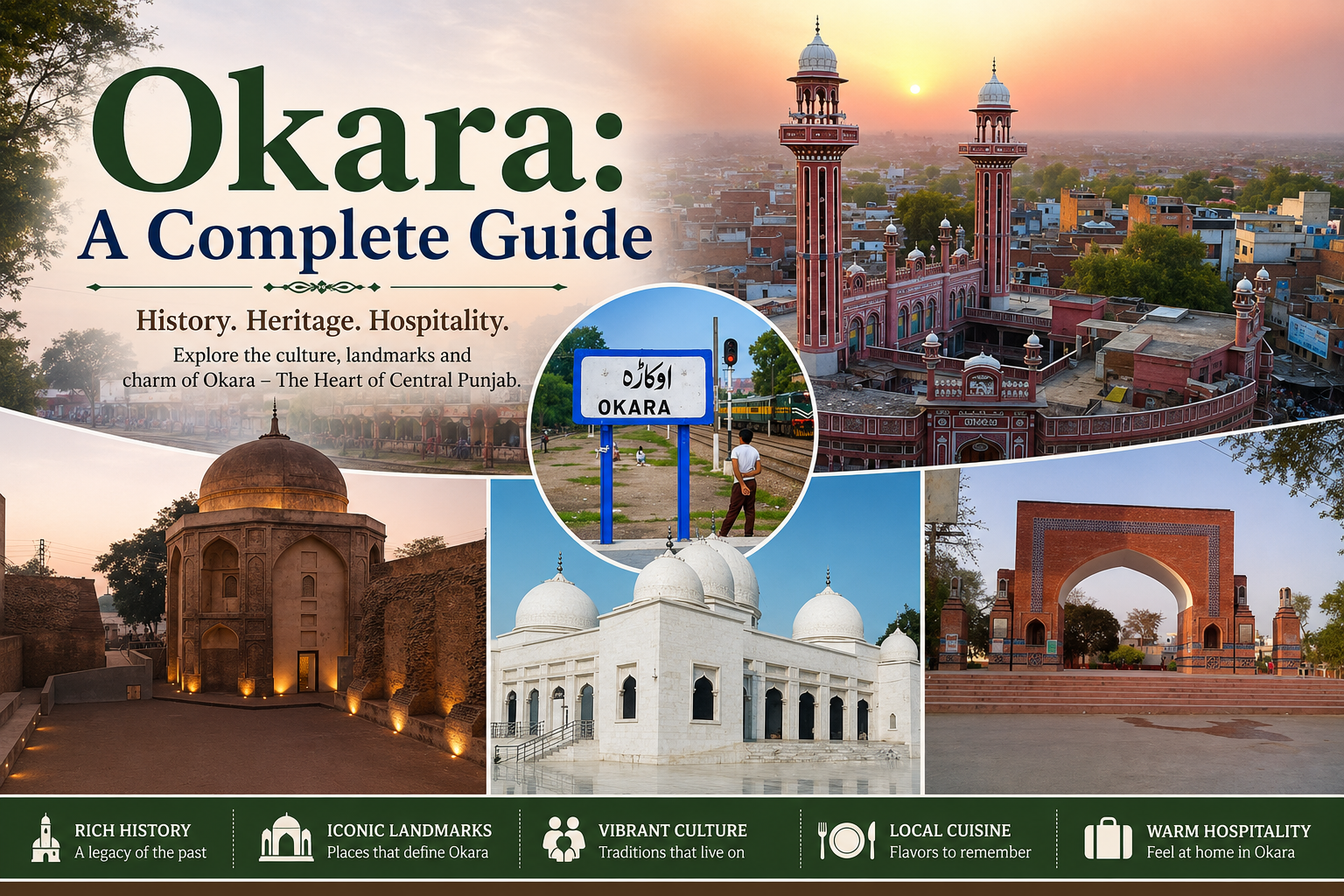
Okara is a green and orderly farming city in central Punjab. It is home to the largest military dairy farms in Asia, famous for their cheese. It was laid out by the British in six neat blocks a marvel of planned design in its day. It lies on the Grand Trunk Road between Lahore and Sahiwal. Its cotton, potatoes and dairy feed much of the country. This guide covers Okara for the curious traveller. It explains the history the farming and dairy the sights the property scene and how to visit.
This guide offers a general overview. Figures for the population vary between sources.
Quick answer: Okara is a city in central Punjab around 100 kilometres south west of Lahore, on the Grand Trunk Road to Multan. It was built by the British in six planned blocks and grew around the railway from the 1890s. It became a district in 1982. It is famous for its military dairy farms the largest in Asia. It is also known for the Neeli Ravi and Sahiwal buffaloes. It is a great cotton, potato and dairy centre. Depalpur Fort and the shrine of Hujra Shah Muqeem lie nearby. Winter is the best time to visit.
About Okara
Okara is a prosperous farming city in central Punjab. It lies around 100 kilometres south west of Lahore, on the road to Sahiwal and Multan. It is known as one of the greenest cities in the province. It blends a planned colonial past with a rich agricultural present.
The setting is the fertile canal plain. The city lies in the Neeli Bar region, watered by the canals of the Ravi. This rich soil makes the district a great farming region. Cotton, wheat, potatoes and sugarcane fill the surrounding fields.
Name of Okara comes from a tree. Okara takes its name from the Okaan a wild plant that once covered the area in dense jungle. The British cleared this jungle to build the city. The name still recalls the wild land that came before.
History in Okara
Modern city began with the railway. The British built it on jungle land cleared of its Okaan trees. The railway reached Okara in the 1890s and linked it to Lahore and Sahiwal. This spurred trade and drove the growth of the town.
Layout was a marvel of planning. The British laid out the city in six blocks of identical houses. Such careful town planning had rarely been seen before. The neat grid still shapes the old core.
Canals transformed the land. Irrigation turned the dry plain into fertile fields. Okara became a leading centre for cotton, wheat and potatoes. This agricultural wealth built the modern city.
It became a district in 1982. Okara was carved out of the old Montgomery District that year. It grew to three subdivisions, Okara, Renala Khurd and Depalpur. This gave the city its modern administrative shape.
Dairy and farming in Okara
Okara is the dairy heart of the country. It is home to the largest military dairy farms in Asia. These farms are famous across the country for their cheese. They are a great centre for dairy production and research.
Buffaloes are world renowned. The district is famous for the Neeli Ravi and Sahiwal buffaloes. The Livestock Production Research Institute near Bahadar Nagar is a vast government farm. It breeds and studies the finest dairy animals.
Farming drives the whole economy. The fertile plains grow cotton, wheat, potatoes and sugarcane. Okara holds some of the largest cold storage capacity in Asia. This supports its huge potato and produce trade.
Industry follows the farm. Cotton ginning, textile mills and hosiery all operate here. Carpet and grain mills add to the mix. Food and dairy processing round out the economy.
Sights in Okara
Depalpur Fort is the great historical draw. This ancient fortified town lies to the south west of Okara. It dates back many centuries, older than the Lahore Fort. It served as an important town in the days of Timur and the Mughals.
Shrine of Hujra Shah Muqeem draws pilgrims. This Sufi shrine honours Shah Muqeem Gilani a saint of the Qadiri order. His annual Urs in mid March fills the town with devotees. It is a major site of pilgrimage in the district.
Region holds layered heritage. The Gurdwara Bhuman Shah reflects the Sikh past of the area. Satghara is an ancient archaeological mound near the city. These sites recall the many peoples who lived here.
Parks and farms offer green escapes. The dairy farms and research centres draw the curious. Small gardens and paved avenues fill the planned city. Okara is a pleasant place for a relaxed day.
Property market in Okara
Property market is steady and growing. The farming wealth and the link to Lahore support it. New housing schemes ring the city. Demand rises with the growth of the district.
Location is a great asset. Okara lies on the main road and rail line between Lahore and Sahiwal. The Grand Trunk Road runs through it. This connectivity lifts the property market.
Property choice is varied. The old planned city offers heritage and trade. New schemes offer modern living. The rural fringe offers rich agricultural land. Each suits a different buyer.
Visiting Okara
Come in winter. The plains are hot in summer. The winter months from November to February are the finest season. The weather is cool and pleasant then.
See Depalpur Fort. The ancient fortified town is the great highlight. It rewards a half day trip from the city. The old walls still convey its long history.
Visit the shrine and the farms. The shrine of Hujra Shah Muqeem is a place of devotion. The famous dairy farms draw the curious. Both give a sense of the character of the district.
Explore the wider region. Sahiwal and Harappa lie to the south west. Kasur lies to the east. The dedicated guides cover them in detail.
Frequently asked questions
What is Okara famous for? Okara is famous for its agriculture and dairy. It is home to the largest military dairy farms in Asia, well known across the country for their cheese. It is also known for the Neeli Ravi and Sahiwal buffaloes. It is a great centre for cotton, wheat and potatoes, holding some of the largest cold storage capacity in Asia. It is also a marvel of British town planning, laid out in six neat blocks. It lies close to the ancient Depalpur Fort.
Why was Okara built in blocks? Okara was built by the British on jungle land cleared of its Okaan trees. They laid it out in six blocks of identically sized and shaped houses. Such careful and uniform town planning had rarely been seen before in the region. The railway reached the city in the 1890s. It drove the growth of the town and linked it to Lahore and Sahiwal. The neat grid of the old planned city still shapes its core today.
What is the meaning of the name Okara? The name Okara comes from the Okaan a wild plant or tree that once covered the area in dense jungle. Before the British cleared the land to build the city the region was covered by these trees and known for saltpetre production. The name still recalls the wild land that existed before the modern city was built. Okara became the headquarters of its own district, carved from the old Montgomery District, in 1982.
What is there to see near Okara? Okara has several notable sights nearby. Depalpur Fort is an ancient fortified town to the south west, older than the Lahore Fort and important in the days of Timur and the Mughals. The shrine of Hujra Shah Muqeem honours a Sufi saint of the Qadiri order and draws pilgrims for its annual Urs in mid March. The Gurdwara Bhuman Shah and the ancient mound of Satghara add further historical interest to the district.
When is the best time to visit Okara? The best time to visit Okara is winter, from November to February, when the weather is cool and pleasant. The plains are hot in summer. Winter suits a visit to Depalpur Fort the shrine of Hujra Shah Muqeem and the famous dairy farms. The city itself is known as one of the greenest and most orderly in the province, with small gardens and paved avenues that make for a pleasant stroll.
Green dairy city of Punjab
Okara is the green and orderly dairy city of central Punjab. It rose from cleared jungle into a marvel of planned design. It raises the buffaloes and makes the cheese that feed the country. It guards the ancient fort of Depalpur on its doorstep. It fills the land with cotton, potatoes and milk. Few cities wear their farming wealth so neatly.
You may come to Okara for the dairy farms the ancient fort or the calm. The city rewards the visit either way. You can tour the great military dairy farms of Asia. You can walk the old walls of Depalpur Fort. You can rest in the small gardens of the planned city. Come in winter and explore the green heart of Punjab. Okara is the dairy city of the plains.