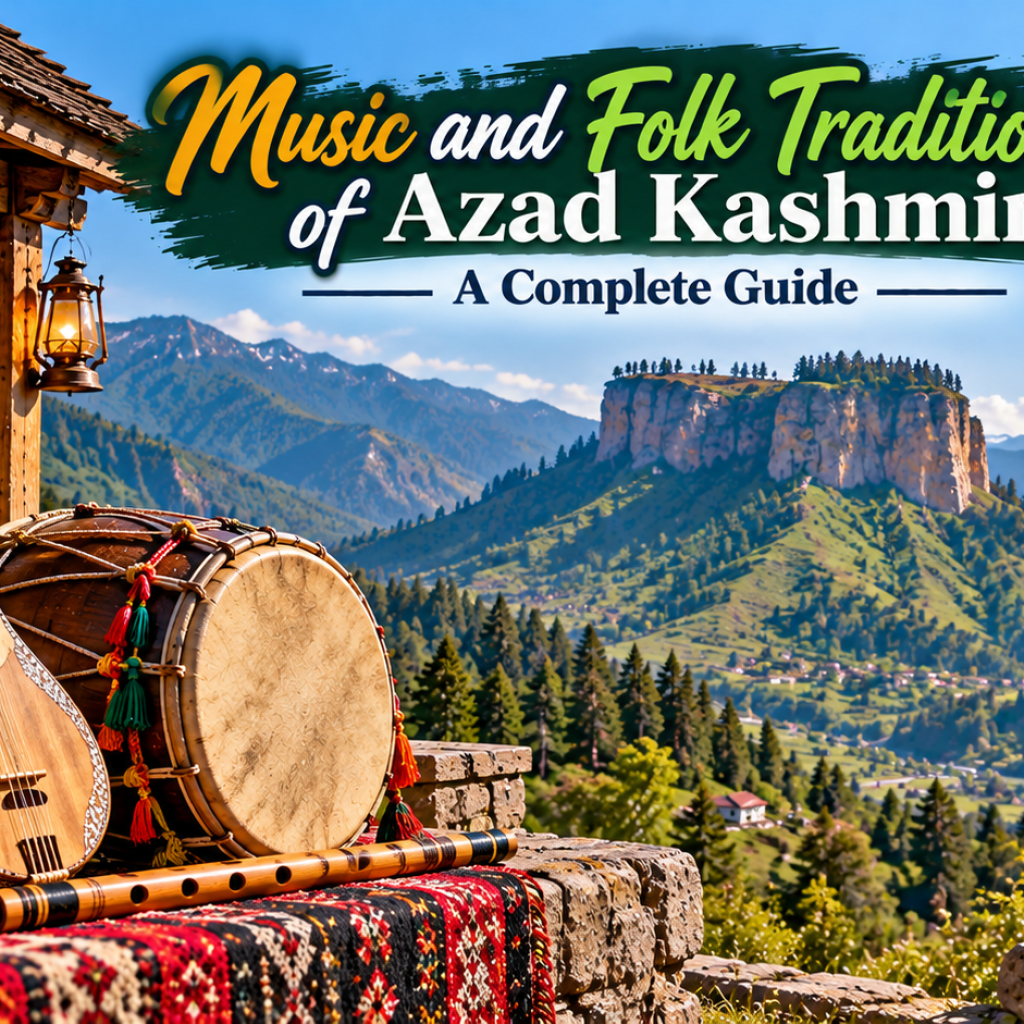
Music and Folk Traditions of Azad Kashmir: A Complete Guide
Music and folk traditions form a joyful part of the culture of Azad Kashmir. Songs and dances fill the weddings, festivals and harvests of the land. Santoor, rabab and tumbaknari sound across the valleys. Sufi verse, love songs and folk tales flow through the music. Rouf and Wanwun bring people together in swaying dance. This guide covers the music and folk traditions of Azad Kashmir for the curious traveller. It explains the tradition the instruments the genres the dances and today.
This guide offers a general overview. Details and figures vary between sources.
Quick answer: Azad Kashmir has a strong music history, common with the rest of Kashmir and based on Pahari and Kashmiri folk traditions. Love, nature and devotion themes fill weddings, festive occasions and harvest celebrations through music. Santoor, rabab, tumbaknari drum and harmonium are traditional musical instruments used. The classical music genre is Sufiana Kalam while Chakri music is an ensemble genre of folk music. Other forms of Kashmiri folk music are Rouf and Wanwun which are songs and dances performed by women during celebrations. There is also satirical music called Ladishah and Bhand folk theater music.
Kashmir: A land of music and song
A land of music and song azad Kashmir loves melody. Songs fill the feasts. Dances mark the joy. So music shapes the culture.
A joyful sound marks the land. Weddings ring with song. Festivals call for music. So melody fills the days.
A rich theme marks the songs. Love and nature inspire them. Sufi faith runs through them. So the music holds deep meaning.
A shared heritage marks the tradition. Pahari and Kashmiri songs blend. Old tunes pass down the years. So the music lives on.
Traditional instruments
Traditional instruments give the music its soul. Strings ring out sweetly. Drums drive the beat. So the sound comes alive.
A stringed santoor marks the music. Many strings cross its frame. Light hammers strike the notes. So the santoor leads the tune.
A warm rabab marks the sound. A plectrum plucks the strings. Its mellow tone stirs the heart. So the rabab moves the soul.
A clay drum marks the beat. People call it the tumbaknari. No feast is complete without it. So the drum drives the joy.
Sufiana Kalam and Chakri
Sufiana Kalam and Chakri lead the classic genres. One lifts the soul. One cheers the gathering. So both enrich the culture.
A classic music marks Sufiana Kalam. It follows its own maqam. A santoor leads the tune. So the music soothes the spirit.
A mystic aim marks Sufiana Kalam. It came from Iran long ago. Sufi mystics loved it. So the songs turn to the divine.
A folk joy marks Chakri. Singers gather in a group. A rabab and noot join in. So the music lifts the crowd.
Rouf, Wanwun and dance
Rouf, Wanwun and dance bring people together. Rows of women sway. Voices rise in song. So the dance marks the joy.
A group dance marks Rouf. Women stand in facing rows. They sway forward and back. So the dance flows as one.
A wedding song marks Wanwun. Rouf takes this name at marriage. Voices ring through the night. So the songs bless the union.
A festive step marks the dance. Feasts and fairs call for it. Song and movement blend. So the joy spreads wide.
Ladishah and folk theatre
Ladishah and folk theatre add wit to the tradition. Sharp songs make people laugh. Plays mock daily life. So humour joins the music.
A satirical song marks Ladishah. Singers roam from village to village. They compose on the spot. So the songs catch the times.
A harvest time marks Ladishah. Singers perform at the season. They comment on local life. So the songs speak the truth.
A folk play marks Bhand Pather. Actors mix drama and music. Wit pokes at social life. So the theatre both teaches and amuses.
Poetry, weddings and today
Poetry, weddings and today shape the living tradition. Sufi verse fills the songs. Weddings ring with music. So the heritage endures.
A rich verse marks the music. Sufi poetry stirs the songs. Old lines are sung aloud. So the words live on.
A wedding music marks the joy. Wanwun blesses the marriage. Families sing through the night. So the songs mark the day.
A living heritage marks today. Elders keep the old forms. Efforts guard the fading songs. So the music carries on.
Frequently asked questions
What kind of music is traditional in Azad Kashmir? Azad Kashmir shares in the rich musical heritage of the wider Kashmir, shaped by both Pahari and Kashmiri folk traditions. A central thread, music runs through daily life, especially at weddings, festivals and harvest times with songs that celebrate love, nature, folklore and Sufi devotion. A broad heritage, it includes classical forms such as Sufiana Kalam, lively folk ensembles like Chakri, plus the women's song and dance forms Rouf and Wanwun performed at celebrations. There is also satirical singing known as Ladishah and folk theatre called Bhand Pather. Together these forms make music a joyful and meaningful part of Kashmiri culture.
What instruments are used in Kashmiri music? Kashmiri music uses a range of beautiful traditional instruments, each adding its own character to the sound. A famous lead the santoor is a stringed instrument played by striking its many strings with small hammers, central to classical Sufiana music. A mellow voice the rabab is a warm toned string instrument played with a plectrum. A clay drum called the tumbaknari provides rhythm and counts as essential at any celebration. Other instruments include the noot a clay pot percussion instrument along with the sarangi, harmonium and various drums. Together these instruments create the distinctive and soulful sound of Kashmiri music.
What is Sufiana Kalam? Sufiana Kalam is the classical music of Kashmir a refined and spiritual tradition long loved by Sufi mystics. It is built on its own system of melodic modes, known as maqam, performed traditionally with instruments such as the santoor, saz and sitar. A devotional art the music aims to lift the soul from everyday concerns towards the divine with lyrics that often draw on Sufi poetry. Believed to have arrived from Iran several centuries ago, Sufiana Kalam has deep roots in Kashmiri culture. A related dance form, Hafiz Nagma, features a dancer performing to this soulful music.
What are Rouf and Wanwun? Two of the most widely enjoyed folk dances in Kashmir are Rouf and Wanwun, which are commonly done by women at marriage ceremonies and other festive occasions. Rouf involves a group of women standing opposite each other and swaying gently while dancing to a beautiful song sung by all of them. If these dances are done at marriage ceremonies, they are referred to as Wanwun and are sung at the ceremony in order to celebrate the wedding couple for several hours after that. Both these dances are very joyful and community oriented.
What is Ladishah? Ladishah is a unique and much loved form of satirical folk singing from Kashmir, known for its humour and sharp social comment. A roving art the singers traditionally travel from village to village, especially around the harvest season, composing their verses on the spot about local life. A sharp tongue the songs touch on social, cultural and everyday matters, often with great wit, poking gentle fun while reflecting real truths about the community. Accompanied by simple rhythm, Ladishah is both entertaining and thought provoking, serving as a kind of living commentary on society. It remains one of the most distinctive and cherished parts of the Kashmiri folk music tradition.
Living melody of Kashmir
Music and folk traditions are the living melody at the heart of Kashmiri culture. Songs and dances fill the weddings, festivals and harvests of the land. Santoor, rabab and tumbaknari sound across the valleys. Sufi verse, love songs and folk tales flow through the music. Rouf and Wanwun bring people together in swaying dance. Few cultures hold so joyful a musical heritage as this one.
You may come for the music the dance or the poetry. This living melody rewards the curious traveller. You can hear the santoor and rabab in a soulful Sufiana tune. You can watch rows of women sway through a graceful Rouf. You can laugh along with the sharp wit of a Ladishah song. Come to know the music and folk traditions of Azad Kashmir. This is the living melody of Kashmir.