Mandi Bahauddin: A Complete Guide
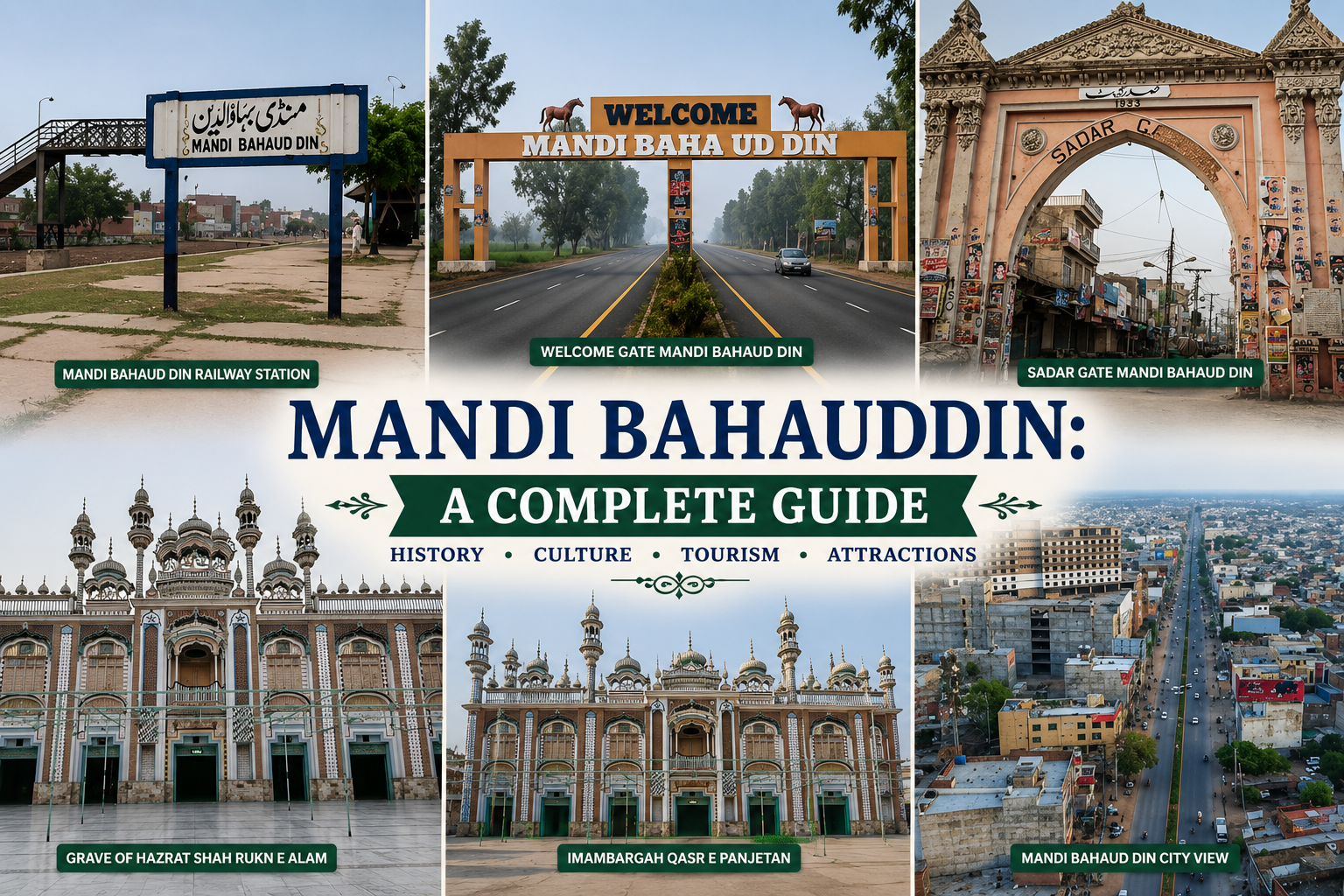
Mandi Bahauddin is a thriving market town in the heart of the Chaj Doab. It rests on the fertile plain between the Jhelum and Chenab rivers. It grew from a small village into a great grain market when the canals arrived. It rests near the field where Alexander the Great fought his famous battle. It anchors a district rich in wheat, rice and sugarcane. This guide covers Mandi Bahauddin for the curious traveller. It explains the history the rivers the markets the sights the property scene and how to visit.
This guide offers a general overview. Figures for the population vary between sources.
Quick answer: Mandi Bahauddin is a city and district in central Punjab around 190 kilometres from Lahore, between the Jhelum and Chenab rivers. It grew from a village called Chak 51 into a great grain market after the Rasul Headworks were built around 1901. It took the name Mandi, meaning market, with Bahauddin honouring a Sufi saint. It became a district in 1993, with three tehsils: Mandi Bahauddin, Phalia and Malakwal. It is a rich agricultural area in the Chaj Doab. Winter is the best time to visit.
About Mandi Bahauddin
Mandi Bahauddin is a historic market city in central Punjab. It is located in the Chaj Doab between the Jhelum and Chenab rivers. It is the capital of its district in the Gujrat Division. It blends a farming heritage with a busy commercial life.
A flat alluvial plain forms the district. Jhelum flows to the north and Chenab to the south. This doab makes the land very fertile. Wheat, rice and sugarcane fill the surrounding fields.
This area is known as the Chaj Doab. It is also called the Gondal Bar. Jatt clans such as the Gondal and Warraich are prominent. Farming shapes the life of the whole district.
This district holds three tehsils. These are Mandi Bahauddin, Phalia and Malakwal. Rich rivers frame the district on two sides. Canals water the land across the area.
History of Mandi Bahauddin
Ancient roots reach deep. Alexander the Great fought the Battle of Hydaspes nearby in 326 BCE. He defeated the local ruler Raja Porus at Mong. This field is located on the Jhelum near the Mandi Bahauddin.
Its name has two parts. Mandi means market in the local tongue. Bahauddin honours a Sufi saint whose shrine is located nearby. A village called Pindi Bahauddin gave the second part.
Canals made the modern town. Rasul Headworks were built on the Jhelum around 1901. A small village called Chak 51 began to grow. It became a flourishing grain market with the new water.
Another great battle marks the area. British and Sikh forces clashed at Chillianwala in 1849. This was an indecisive battle of the Second Anglo Sikh War. Both sides claimed victory in the end.
Mandi Bahauddin rose in status. It became a subdivision in 1962. It was made a district in 1993. It grew into a great commercial centre.
Rivers and markets in Mandi Bahauddin
Mandi Bahauddin is a great grain market. Its markets are famous across the area. Grain, vegetables and livestock all trade here. These markets are the beating heart of the town.
Rasul Barrage is a great work. It is located on the Jhelum near Mong. It irrigates vast lands in the district and beyond. It also generates power for the area.
Farming drives the economy. Fertile plains grow wheat, rice and sugarcane. Sugar mills process the local crop. Livestock farming adds to the wealth of the district.
A local craft adds colour. Artisans here make colourful wooden bed legs. This trade is a distinctive industry of the town. Skilled hands keep the craft alive.
Sights in Mandi Bahauddin
Rasul Barrage draws visitors. This great barrage is located on the Jhelum. Its pond area is a fine spot for fishing. Rest houses line the canal banks nearby.
Mong recalls Alexander. This village is located on the Jhelum near the district. It marks the site of the Battle of Hydaspes. It is a place of great historical interest.
Chillianwala holds a battle memorial. This village recalls the Anglo Sikh war. A monument marks the famous battle. It is a window on the colonial past.
Shrine of Haji Nosha Ganj Baksh draws devotees. It is located at Ranmal Sharif in Phalia. It honours a saint of the Qadiri order. It is a centre of local devotion.
Property market of Mandi Bahauddin
Property here is steady. Grain and farming wealth support the market. New housing schemes ring the city. Demand rises with the growth of the district.
Location shapes the market. Mandi Bahauddin is located near the M 2 motorway. Road links reach Gujrat and Sargodha. This access lifts the property market.
Buyers find a varied choice. An old city offers heritage and trade. New schemes offer modern living. A rural fringe offers agricultural land. Each suits a different buyer.
This district keeps developing. Farming and sugar industry underpin the economy. New roads improve access to the area. This supports the property market.
Visiting Mandi Bahauddin
Come in winter. Summers here are very hot. Winter months from November to February are the finest season. Weather is mild and pleasant then.
Visit Rasul Barrage. This great barrage is a fine highlight. Its pond area suits fishing and picnics. Canal rest houses lie nearby.
See the historic battlefields. Mong recalls Alexander and Raja Porus. Chillianwala marks the Anglo Sikh war. Both reward the history lover.
Explore the grain markets. These busy markets are a lively spectacle. They show the wealth of the district at work. A visit reveals the heart of the local economy.
Frequently asked questions
How did Mandi Bahauddin get its name? Mandi Bahauddin takes its name from two sources. Mandi means market added because the town became a flourishing grain market after the Rasul Headworks were built around 1901. Bahauddin honours a Sufi saint whose mausoleum stood in the old village of Pindi Bahauddin, now part of the town. Before this the settlement was a small village known simply as Chak 51. It became a district headquarters in 1993.
What is the Chaj Doab? Chaj Doab is the fertile alluvial plain between the Jhelum and Chenab rivers. Mandi Bahauddin forms its central portion. This name combines the first letters of the two rivers, Chenab and Jhelum. It is also known as the Gondal Bar after the high concentration of the Gondal clan in the area. This position between two great rivers makes the land very fertile, supporting rich cultivation of wheat, rice and sugarcane across the district.
What is the historical importance of Mandi Bahauddin? Mandi Bahauddin is closely linked to two famous battles. One famous battle was fought nearby in 326 BCE. In the Battle of Hydaspes alexander the Great defeated the local ruler Raja Porus at the village of Mong on the Jhelum. Battle of Chillianwala, fought in 1849 during the Second Anglo Sikh War, took place in the Chillianwala area of the district. It was an indecisive clash between the Sikh Empire and the East India Company. Both sites draw those interested in history.
What is Rasul Barrage? Rasul Barrage is a barrage on the Jhelum River, on the boundary between Jhelum and Mandi Bahauddin districts around 72 kilometres downstream of the Mangla Dam. Original headworks were built by the British around 1901. A new structure was completed in 1968. It irrigates vast lands in the Mandi Bahauddin and Sargodha districts and helps control flooding. A small hydropower station at Rasul also generates electricity. Its pond area is popular for fishing.
When is the best time to visit Mandi Bahauddin? Winter, from November to February, is the best time to visit Mandi Bahauddin, when the weather is mild and pleasant. Summers here are very hot. Winter suits a visit to Rasul Barrage and its pond area the historic battlefields at Mong and Chillianwala, plus the busy grain markets of the town. A shrine of Haji Nosha Ganj Baksh at Ranmal Sharif in Phalia is another site of interest in the cooler months.
Market town of the Chaj Doab
Mandi Bahauddin is the great market town of the Chaj Doab. It rose from a small village when the canals brought their water. It trades the grain of the fertile land between two rivers. It rests near the field where Alexander won his famous battle. It draws its wealth from wheat, rice and sugarcane. Few towns grew so fast from field to market.
You may come to Mandi Bahauddin for the markets the rivers or the history. This city rewards the visit either way. You can watch the grain trade at the busy markets. You can stand at Mong where Alexander fought Raja Porus. You can rest by the waters of Rasul Barrage. Come in winter and explore the market town. Mandi Bahauddin is the heart of the doab.