Lok Virsa Museum Islamabad: Guide to the Heritage Museum
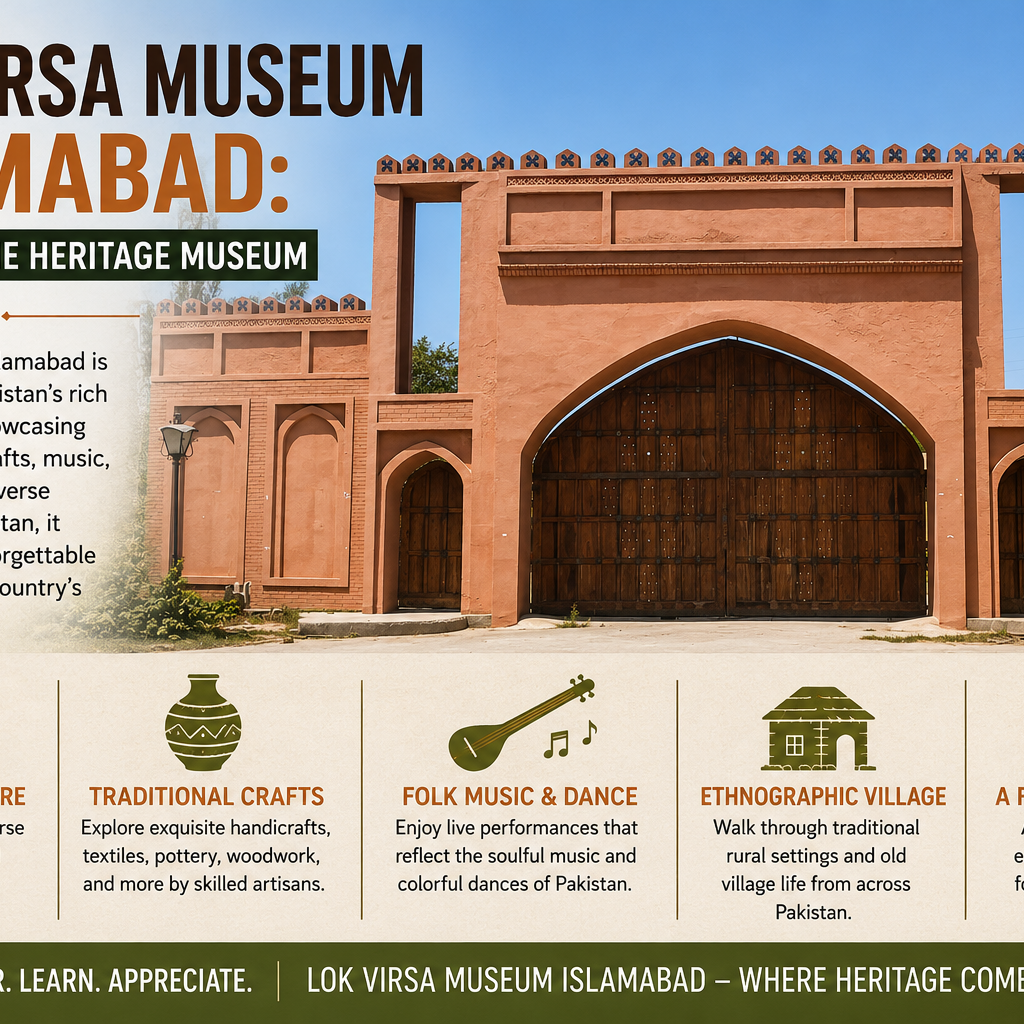
The Lok Virsa Museum is situated in the Shakarparian Hills of Islamabad, a place dedicated to the folk culture and traditions of Pakistan. It is the largest museum in the country, holding the crafts, costumes, music and everyday heritage of communities from every province and region. For anyone wanting to understand the cultural roots of Pakistan, it is one of the essential places to visit in the capital.
This article explains what the Lok Virsa Museum is, its history, what it holds and the area around it. Written for anyone getting to know Islamabad, it covers both the museum itself and its setting in the scenic and cultural Shakarparian area.
Lok Virsa Museum
The Lok Virsa Museum, officially the Heritage Museum, is a museum of history and culture in the Shakarparian Hills of Islamabad. Its name comes from the words for folk and heritage and the museum is devoted to the living cultures and traditions of the people of Pakistan.
The museum is run by the National Institute of Folk and Traditional Heritage which carries the name Lok Virsa. It is also known by other names, including the Pakistan National Museum of Ethnology and the Folk Heritage Museum. Whatever the name, its purpose is the same: to collect, preserve and display the folk and traditional heritage of the country.
Covering an area of around 60,000 square feet, the Lok Virsa Museum is the largest museum in Pakistan. It includes several exhibit halls and an outdoor museum, along with a library and a media centre. The complex is designed to hold and display a wide range of cultural material, from crafts and costumes to music and images.
The museum is often called the museum for the people of Pakistan, reflecting its focus on the ordinary communities and craftspeople who carry the country's traditions. Its position in the Shakarparian Hills, close to other major landmarks, makes it a central part of the cultural side of the capital.
Quick answer: The Lok Virsa Museum or Heritage Museum, in the Shakarparian Hills of Islamabad is the largest museum in Pakistan. Run by the National Institute of Folk and Traditional Heritage, it displays the folk culture, crafts and traditions of communities from across the country.
History of the Lok Virsa Museum
The story of Lok Virsa began with a clear purpose: to protect the folk heritage of Pakistan at a time when traditional culture risked being overlooked. The institution was set up to document, preserve and promote the country's living traditions before they faded.
Lok Virsa, the National Institute of Folk and Traditional Heritage, opened in 1974. The folk heritage museum side of its work developed over the following years, with a Folk Art Museum established in the early 1980s. This grew and changed over time and after an extensive renovation the museum was expanded and renamed, growing into the large ethnology museum seen today.
In 2002, Lok Virsa became an autonomous institute following a legal ordinance which strengthened its role as a national cultural body. The complex continued to grow, with further additions over the years, including galleries dedicated to particular themes. The nearby Pakistan Monument Museum, also administered by Lok Virsa, was established in 2010, extending the institution's reach.
Over its decades of work, Lok Virsa has grown from an idea into the country's premier institution for folk and traditional heritage. Its museum has become one of the largest collections of cultural material in Pakistan and a leading destination for heritage tourism in the capital.
What the museum holds
The heart of the Lok Virsa Museum is its collection which spread across several large halls tells the story of Pakistan's regional cultures. Walking through the museum is like travelling across the country, from the mountains of the north to the plains of the south, all under one roof.
The main collection is the ethnological display which showcases the diversity of the country's provinces and regions. Visitors can see traditional costumes, jewellery and textiles, along with woodwork, metalwork, pottery and other crafts. The embroidery done in the costumes, along with the intricate mirror works and craftsmanship from various places, is one of the attractions that you would love to see there.
The Museum of Fine Arts is famous for its life size dioramas. These displays help visitors picture the daily life and customs behind the objects, bringing the crafts and traditions to life. Traditional architectural features are also displayed, showing skills such as fresco, mirror work, marble inlay and tile and mosaic work.
Beyond the objects, the museum preserves the intangible heritage of the country. It has galleries covering themes such as the Sufi saints and shrines and its media centre holds a large archive of recordings focused on traditional music and cultural heritage. Lok Virsa has produced many cultural documentaries and audio recordings and is one of the largest publishers of traditional music and culture in the country.
The complex also includes the Heritage Library which holds tens of thousands of books, journals, manuscripts and field reports on folklore, ethnology, cultural anthropology, art history and crafts. The library serves students, researchers and the general public. A sales centre offers books, recordings and handmade crafts, allowing visitors to take home a piece of the heritage they have seen.
Lok Mela festival
One of the highlights of Lok Virsa's calendar is the annual Lok Mela, a national folk festival held on the museum grounds. For many visitors, this is the best time to experience the museum and everything it is situated for.
During the Lok Mela, artisans from across the country gather at the museum to display and sell their work. The festival brings the crafts and traditions of the museum's collection to life, with living demonstrations, folk music performances, food stalls and stalls selling handmade goods. It turns the museum grounds into a gathering of the country's folk culture, drawing large crowds over its run.
The festival captures the purpose of Lok Virsa not just to preserve heritage behind glass but to keep living traditions active and shared. For visitors who time their trip to coincide with the Lok Mela, the museum offers not only its permanent displays but also a direct encounter with the artisans and performers who carry the country's traditions forward.
Places near the Lok Virsa Museum
The Lok Virsa Museum is situated in the Shakarparian Hills, one of the most scenic and cultural parts of Islamabad. The area around it holds several of the capital's important places which makes the museum easy to combine with other viis situated and adds to the appeal of the surrounding area.
The museum shares the Shakarparian area with the Pakistan Monument, the national landmark on the hills which is within walking distance. The Pakistan Monument Museum, also run by Lok Virsa, is situated alongside it. The green spaces and viewpoints of Shakarparian, including the Rose and Jasmine Garden nearby, make the whole area a pleasant place to spend time, with panoramic views over the city.
The museum is located on Garden Avenue which connects to the Islamabad Expressway through the Shakarparian interchange and links through to the Murree Road on the other side of the hills. This makes it easy to reach from across the capital and the twin cities. Ample parking is available and ride hailing services make access straightforward.
Beyond the immediate area, the central sectors of Islamabad, with their markets, offices, hospitals, schools and services, are within reach. Landmarks such as the Faisal Mosque, the Centaurus mall and the government district of the Red Zone are all part of the same central area of the capital. This central, scenic setting is part of why the Shakarparian area and the nearby sectors are valued and the museum is one of the cultural features that gives this part of the capital its character.
Visiting the Lok Virsa Museum
The Lok Virsa Museum is one of the top places to visit in Islamabad, offering an accessible and family friendly cultural experience. It is well suited to tourists, families and school trips alike.
The museum is generally open from Tuesday to Sunday, from morning until early evening and is usually closed on Mondays for maintenance. Entry fees are modest with lower rates for local visitors and discounts for students. It is worth checking the current timings and rates before a visit, as these can change around public holidays and festivals.
Given the size of the complex, visitors should allow a few hours to explore both the indoor halls and the outdoor areas. Comfortable shoes help, since the complex is spread out and involves a fair amount of walking. Photography is generally allowed in most areas. The museum offers parking, restrooms, seating and a prayer area and during festivals food stalls become available. Much of the complex is accessible for visitors.
The cooler months, roughly from October to March, are the most comfortable time to visit, since the pleasant weather makes exploring both the museum and the surrounding Shakarparian area more enjoyable. Combining the museum with the nearby Pakistan Monument makes for a full cultural day out in the capital.
Quick answer: The Lok Virsa Museum is generally open Tuesday to Sunday, from morning to early evening and closed on Mondays. Entry fees are modest with discounts for students as well. Allow a few hours to explore, wear comfortable shoes and visit in the cooler months for the best experience.
Frequently asked questions
Where is the Lok Virsa Museum located? The museum is in the Shakarparian Hills of Islamabad, on Garden Avenue, close to the Pakistan Monument. It connects to the Islamabad Expressway through the Shakarparian interchange and is easy to reach from all across the capital.
What is the Lok Virsa Museum known for? It is the largest museum in Pakistan, dedicated to the folk culture and traditions of the country. It displays crafts, costumes, jewellery, textiles, pottery and life size dioramas of rural life, along with a media archive of traditional music and a heritage library.
Who runs the Lok Virsa Museum? The museum is run by the National Institute of Folk and Traditional Heritage, known as Lok Virsa. The institute also administers the nearby Pakistan Monument Museum and works to document and preserve the country's cultural heritage.
What is the Lok Mela? The Lok Mela is an annual national folk festival held on the museum grounds. Artisans from across the country gather to display and sell their work, with living craft demonstrations, folk music and food stalls, making it one of the best times to visit.
When is the museum open and what does it cost? The museum is generally open Tuesday to Sunday, from morning to early evening and closed on Mondays. Timings and rates can change in different months of year and festivals, so it is worth checking beforehand.
What places are near the Lok Virsa Museum? The Pakistan Monument, the Pakistan Monument Museum and the green spaces and viewpoints of Shakarparian are all nearby. The central sectors of Islamabad, the Faisal Mosque, the Centaurus and the Red Zone are within reach of the area.
The Lok Virsa Museum is one of the cultural treasures of Islamabad. As the largest museum in Pakistan, dedicated to the folk heritage of the country, it holds the crafts, costumes, music and traditions of communities from every corner of the nation, preserved and shared in one place in the Shakarparian Hills.
For those getting to know Islamabad, the museum offers a journey across the cultures of Pakistan without leaving the capital and its setting in the scenic Shakarparian area, close to the Pakistan Monument, makes it easy to combine with a wider day out. Its annual Lok Mela brings the country's living traditions to life and its library and media archive preserve the heritage for future generations. Whether you visit to explore the exhibits, to attend the festival or to understand the cultural roots of the country, the Lok Virsa Museum remains one of the essential landmarks of Islamabad and a lasting home for the heritage of the people of Pakistan.