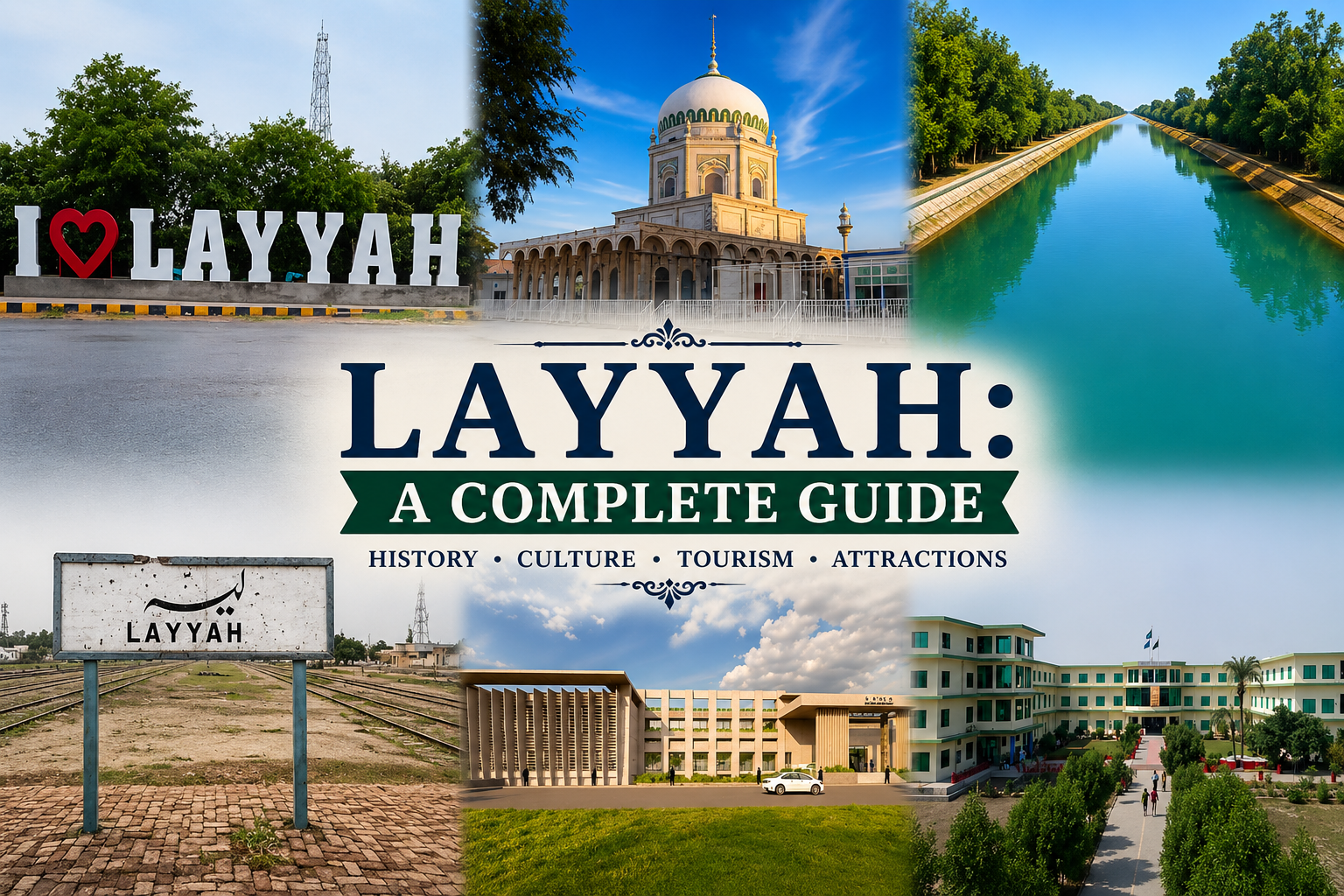
Layyah: A Complete Guide
Layyah is a green agricultural district on the banks of the Indus. It rests on the left bank of the mighty river in southern Punjab. It was founded by a Baloch chieftain more than four centuries ago. It edges the golden dunes of the great Thal Desert. Its cotton, wheat and sugarcane feed much of the region. This guide covers Layyah for the curious traveller. It explains the history the geography the farming the sights the property scene and how to visit.
This guide offers a general overview. Figures for the population vary between sources.
Quick answer: Layyah is a city and district in southern Punjab, on the left bank of the Indus River around 394 kilometres south west of Lahore. It was founded around 1550 by Kamal Khan a Mirani Baloch chieftain. It became a district in 1982, with three tehsils: Layyah, Karor Lal Esan and Chaubara. It is a great agricultural region, growing cotton, wheat, sugarcane and gram. It edges the Thal Desert and is known for the shrine of Lal Esan at Karor. Winter is the best time to visit.
About Layyah
Layyah is a historic city in southern Punjab. It is located on the left bank of the Indus River. It is the capital of its district in the Dera Ghazi Khan Division. It blends fertile farmland with desert scenery.
The setting is a fertile plain. The district forms a block of land between the Indus and the Chenab. It is located in the Sindh Sagar Doab. The land is flat, with no hills or mountains.
The Thal Desert edges the district. The great desert forms the northern boundary. Sand dunes rise in steep cliffs along the edge. The rest of the district is verdant farmland.
The people speak Saraiki. More than ninety per cent speak this language. Urdu and Punjabi are also widely spoken. The population blends Baloch arain and Jat communities.
History of Layyah
The city has old roots. Layyah was founded around 1550. Kamal Khan a Mirani Baloch chieftain, established it. He was a descendant of the founder of Dera Ghazi Khan.
The name has river origins. The name is believed to come from the word Leiah. This referred to early settlements along the riverbanks. The old spelling was long used in records.
The region lay on old trade routes. Medieval routes along the Indus passed through here. They linked Multan to the ports of Punjab and Sindh. Grain, textiles and spices moved along the river.
The Durrani and Sikh eras followed. The Afghan Durranis ruled the region for a time. The forces of Ranjit Singh later took it. Mud forts from this age still survive.
It became a district in 1982. Layyah had been a tehsil of Muzaffargarh since 1909. It was upgraded to a district in that year. It grew to three tehsils in its modern shape.
Farming and economy in Layyah
Agriculture is the heart of the district. More than half the people work the land. The fertile plains support rich farming. Livestock breeding adds to the rural economy.
The crops are varied. Cotton, wheat, sugarcane and gram lead the fields. Citrus, mangoes and dates grow here too. These crops feed much of the region.
Irrigation is a lifeline. The Thal Canal draws water from the Jinnah Barrage. Smaller distributaries branch across the district. This network waters the arable land.
The Indus shapes the economy. The river flows along the western boundary. It nourishes the fertile riverside tracts. It has long been the lifeblood of the district.
Sights in Layyah
The shrine of Lal Esan is a great draw. It rises near Karor Lal Esan town. It honours Lal Esan an ancestor of the Multan saint Bahauddin Zakariya. Its annual festival in September draws many pilgrims.
The mud forts recall the past. The forts of Karor, Chaubara and Nawankot survive. They date from the age of Ranjit Singh. They mark the layered history of the district.
The Thal Desert is a fine sight. The sand dunes shift with the wind near Chaubara. The desert sunset is a splendid spectacle. Its own dedicated guide covers the desert in detail.
The Indus riverbanks are serene. The river flows along the western edge. Parks and gardens line the banks. These offer good recreation for families.
Property market in Layyah
The property market is steady. The farming wealth supports it. New housing schemes ring the city. Demand rises with the growth of the district.
The location shapes the market. Layyah is connected by road to Multan and beyond. Canals and the river frame the district. This access lifts the property market.
The property choice is varied. The old city offers heritage and trade. New schemes offer modern living. The rural fringe offers agricultural land. Each suits a different buyer.
The district keeps developing. Farming underpins the local economy. New roads and towns spread across the area. This supports the property market.
Visiting Layyah
Come in winter. The desert makes summer extremely hot. The winter months from November to February are the finest season. The weather is cool and pleasant then.
Visit the shrine of Lal Esan. This is a great spiritual draw at Karor. The annual festival in September is a lively time. The shrine is a centre of local devotion.
Explore the Thal Desert. The golden dunes shift near Chaubara. The desert sunset is a splendid sight. The dedicated guide covers the desert.
Enjoy the river and parks. The Indus flows along the western edge. The parks and gardens offer green escapes. The riverside is a peaceful retreat.
Frequently asked questions
What is Layyah famous for? Layyah is famous as a rich agricultural district on the banks of the Indus River, known for its cotton, wheat, sugarcane and gram. It also produces citrus, mangoes and dates. The district edges the golden dunes of the great Thal Desert, offering splendid desert scenery and sunsets near Chaubara. It is well known for the shrine of Lal Esan at Karor Lal Esan. This honours an ancestor of the Multan saint Bahauddin Zakariya and holds a large annual festival.
Who founded Layyah? Layyah was founded around 1550 by Kamal Khan a Mirani Baloch chieftain who was a descendant of Ghazi Khan the founder of Dera Ghazi Khan. The name of the city is believed to come from the word Leiah, referring to early settlements along the riverbanks. The city was long an important settlement on the medieval trade routes that ran along the Indus, linking Multan to the ports of Punjab and Sindh.
Where is the shrine of Lal Esan? The shrine of Lal Esan is located near the town of Karor Lal Esan around 17 kilometres from Layyah city. It honours Lal Esan, who was the grandfather of the great Multan saint Bahauddin Zakariya. According to tradition the town takes its name from a devotional feat associated with the saint as the word karor means ten million. The shrine holds a large annual festival in September, drawing pilgrims from the surrounding areas.
What crops are grown in Layyah? Layyah is a predominantly agricultural district, with more than half its people working the land. The main crops are cotton, wheat, sugarcane and gram along with guar seed and various pulses. The district also produces mangoes, watermelons, melons, citrus and dates. Farming is supported by irrigation from the Thal Canal, drawing water from the Jinnah Barrage as well as by the fertile riverside tracts along the Indus.
When is the best time to visit Layyah? The best time to visit Layyah is winter, from November to February, when the weather is cool and pleasant. The district edges the Thal Desert and is extremely hot in summer, with June temperatures reaching well above forty degrees. Winter suits a visit to the shrine of Lal Esan at Karor. It is ideal for the golden dunes of the Thal Desert near Chaubara and the green banks of the Indus.
Green district on the Indus river
Layyah is the green district on the left bank of the Indus. It gathers fertile farmland and golden desert in one place. It ripens the cotton, wheat and sugarcane of the south. It shelters the revered shrine of Lal Esan at Karor. It guards the old mud forts of a bygone age. Few districts blend the field and the dune so gently.
You may come to Layyah for the shrine the desert or the river. The district rewards the visit either way. You can bow at the shrine of Lal Esan at Karor. You can watch the sun set over the dunes of the Thal. You can rest by the green banks of the mighty Indus. Come in winter and explore the green district. Layyah is the farmland by the river.