Lahore Museum: A Guide to the Oldest Museum in the Country
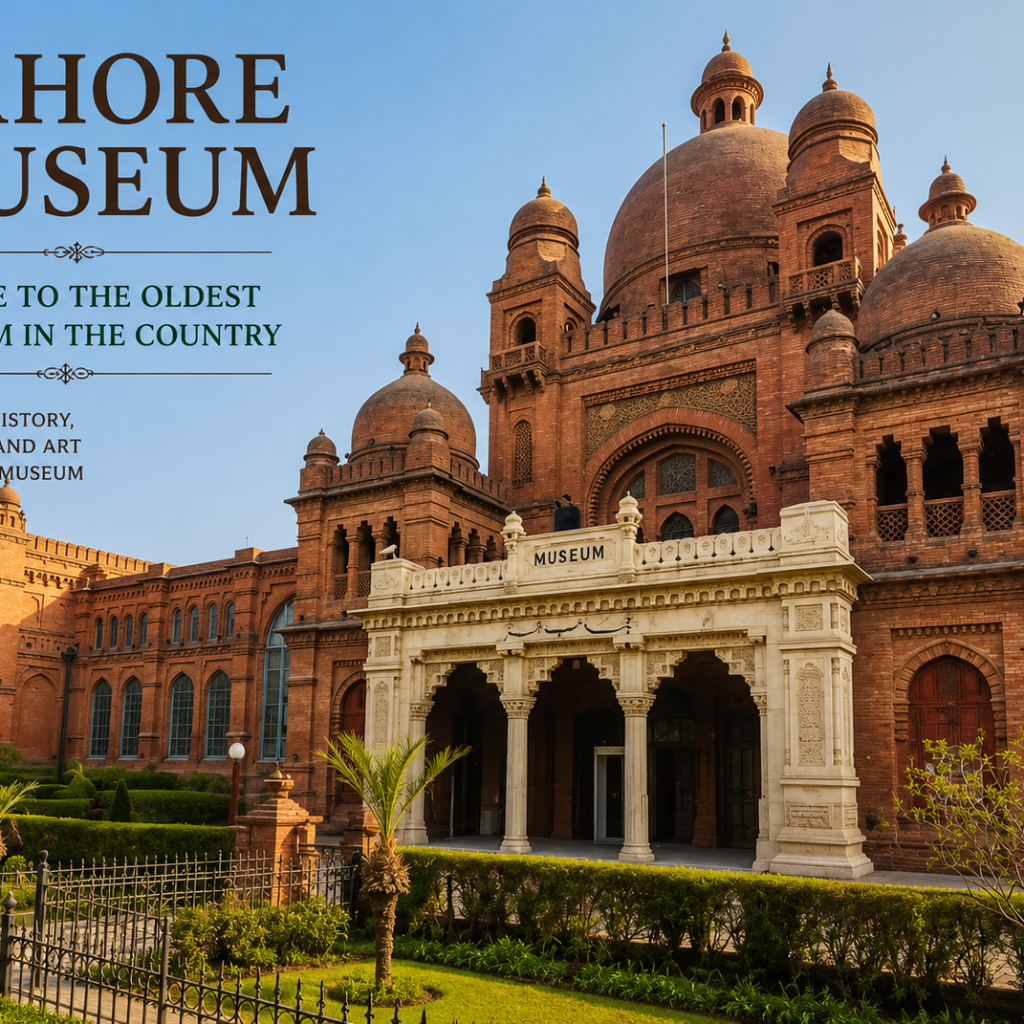
The Lahore Museum is located on The Mall in the heart of Lahore. It is the largest and one of the oldest museums in the Pakistan. The British founded it in 1865 and moved it to its present building in 1894. A grand red brick building in the Indo Saracenic style houses its collections. These range from ancient Gandhara sculpture to Mughal paintings, coins and manuscripts. Locals call it the Ajaib Ghar, meaning the Wonder House. For anyone getting to know Lahore, it is an essential window into the history of the region.
This guide explains what the Lahore Museum is, its history, its collections and its setting on The Mall. It covers both the museum itself and the famous cannon that stands in front of it.
The Lahore Museum
The Lahore Museum is a public museum on The Mall in Lahore. It is the largest museum in the country and one of the most visited. The British founded it in 1865 at a smaller location. They opened it at its present building in 1894 during the colonial period. The grand building was designed in the Indo Saracenic style, a blend of European and local architectural traditions.
The museum holds a vast collection. Reports put the permanent collection at around 60,000 artefacts. Only a fraction of these are on display at any time. The objects represent the ancient and modern heritage of the region. They cover Islamic, Buddhist, Sikh, Hindu and Jain histories. The collection ranges from the Stone Age to the modern era across a series of galleries.
The museum is best known for its Buddhist art. It houses an extensive collection from the ancient Indo Greek and Gandhara kingdoms. This Gandhara sculpture is among the finest anywhere. The museum also holds important relics from the Indus Valley Civilisation, along with collections from the Mughal Empire, the Sikh Empire and the British period. Coins, miniatures, manuscripts, carpets and paintings fill its galleries.
Locals have long called the museum the Ajaib Ghar. This means the Wonder House. The name reflects the sense of wonder its collections inspire. Lahore museum stands as the foremost institution of its kind in the country.
Quick answer: The Lahore Museum is the largest and oldest major museum in the country. The museum stands is the foremost institution of its kind in the country. Lahore museum preserves the deep and varied history of the subcontinent for visitors and scholars.
History of the Lahore museum
The Lahore Museum grew out of the Punjab Exhibition of 1864. This grand display of regional arts, crafts and artefacts proved so successful that it sparked the idea for a permanent museum. The museum was formally established in 1865. It was first housed in a smaller building on The Mall, on the site of the present Tollinton Market.
The collections grew quickly. The original building soon proved too small. The Golden Jubilee of Queen Victoria in 1887 provided the occasion for a new home. It was decided to build a grand new museum to mark the jubilee. A public fund was raised for the purpose. The new building was conceived as a blend of European and local architecture.
The design of the new building brought together notable figures. Bhai Ram Singh, a celebrated local architect, prepared the design along with John Lockwood Kipling. Ganga Ram, the executive engineer often called the father of Lahore, oversaw the construction. John Lockwood Kipling served as one of the earliest curators of the museum. He was the father of the famous author Rudyard Kipling. Prince Albert Victor, the grandson of Queen Victoria, laid the foundation stone on 3 February 1890. The building was completed in 1894. The entire collection was then moved from the old building to the new one. The old building became the Tollinton Market.
The museum continued to grow through the following decades. By the end of the nineteenth century it had notable additions in Gandhara sculpture, stone inscriptions, fine arts and coins. The partition of 1947 divided several valuable collections between the two new countries. Steps were taken afterwards to give the museum a new shape. This process of development has continued to the present day. The museum remains a living institution, adding to and caring for its collections.
Collections and galleries
The Lahore Museum holds one of the richest collections in the region. Its galleries cover the full sweep of history from the earliest times to the modern era. The collection is organised into a series of galleries, each devoted to a period or theme.
The Gandhara gallery is the highlight for many visitors. It holds an outstanding collection of Buddhist sculpture from the ancient Gandhara civilisation. The sculptures show realistic drapery, muscular figures and wavy hair that reflect the Greek influence. The most celebrated object is the Fasting Buddha. The sculpture of schist of the second or third century portrays Buddha in the form of an ascetic, extremely thin. The highly detailed image of veins, ribs, and bones testifies to the superb skills of the sculptors of Gandhara. It is one of the most prized objects in the museum and draws visitors from across the world.
The museum holds much more beyond the Gandhara art. The Indus Valley gallery displays relics from one of the oldest urban civilisations in the world, including material linked to Harappa. The Mughal and Sikh galleries hold paintings, coins, arms and artefacts from those empires. The museum is known for its Mughal and Pahari miniature paintings. Manuscripts, illustrated Qurans, carpets, textiles and a large collection of coins fill further galleries. The museum also holds the only complete set of the postage stamps of the country.
The building itself holds a notable work of modern art. The ceiling of the entrance hall once featured a large mural called The Evolution of Mankind. The Pakistani artist Sadequain painted it in 1973 across dozens of panels. Weather and termite damage harmed the mural over the years. It was taken down for restoration. This blend of ancient and modern art adds to the richness of a visit.
Zamzama Gun and the Kipling connection
One of the most famous sights at the Lahore Museum stands not inside but directly in front of it. The Zamzama Gun sits on a platform on The Mall facing the museum. This large cannon is one of the best known objects in the city. It has a long and dramatic history of its own.
The Zamzama Gun is a large bore cannon cast in the mid eighteenth century in Lahore. It was made under the orders of the Afghan ruler Ahmad Shah Durrani. The gun changed hands many times over the following decades. It was captured, seized and fought over by different rulers across Punjab. It became a symbol of power in the region. An old proverb held that whoever held the Zamzama held Punjab. Ranjit Singh, the founder of the Sikh Empire, eventually took the gun and used it in several battles.
The gun and the museum both feature in a famous work of literature. The novel Kim by Rudyard Kipling opens with its young hero sitting astride the Zamzama Gun in front of the museum. Kipling describes the museum as the Ajaib Gher. This name means the Wonder House. This scene made both the gun and the museum famous around the world. The gun is often called Kim's Gun as a result. Rudyard Kipling had a personal link to the museum, as his father John Lockwood Kipling served as one of its first curators.
The Zamzama Gun draws visitors in its own right. It stands amid the traffic of The Mall opposite the museum. Together the gun and the museum form one of the most recognisable sights in Lahore. A visit to one naturally includes the other. The pairing captures the layered history of the city, from Mughal and Afghan rule to the Sikh Empire and the British period.
Setting on The Mall
The Lahore Museum stands on The Mall, the grand avenue of British era Lahore. This was the heart of the colonial city. The Mall is lined with fine buildings from the British period. The museum sits among them as one of the most important. Its red brick Indo Saracenic building stands out among the colonial structures of the avenue.
The setting places the museum within a rich concentration of landmarks. The National College of Arts, formerly the Mayo School of Arts where John Lockwood Kipling taught, stands next to the museum. The University of the Punjab old campus, the General Post Office and other grand colonial buildings line The Mall nearby. The Lahore High Court, another landmark of the colonial city, stands along the same avenue. Together these buildings form a heritage corridor of British era Lahore.
The area is central and easy to reach. The Mall connects the museum to the wider city. Anarkali Bazaar, one of the oldest markets in the city, lies close by. The Walled City with the Lahore Fort and the Badshahi Mosque lies a short distance to the north. This central position makes the museum easy to combine with the other landmarks of the city on a heritage tour.
The museum and The Mall are part of what gives Lahore its character as a city of history. The colonial era avenue complements the Mughal heritage of the Walled City. Together they tell the story of the different ages of the city.
Visiting the Lahore Museum
The Lahore Museum is one of the most rewarding places to visit in Lahore. It offers a journey through the history of the region in one grand building. It suits families, students, history lovers and anyone curious about the past.
The museum opens to visitors on most days of the week. It typically closes on one day, often Friday or a public holiday, so it is worth checking current timings before a visit. The entry ticket is modest, with a higher rate for foreign visitors. The museum has many galleries across its floors. Visitors should allow a couple of hours to see the main collections properly. Photography rules can vary, so it is worth checking on arrival.
The museum is reached easily from across the city by car, taxi, ride hailing service or the Metro Bus. The Metro Bus runs along a nearby route. It sits on The Mall in central Lahore. Parking is available in the area, though the central location can be busy. The Zamzama Gun stands directly in front of the museum and is free to see from the roadside.
The cooler months from around October to March offer the most comfortable time to visit, though the museum is enjoyable year round as an indoor attraction. The Fasting Buddha, the Gandhara gallery, the Mughal miniatures and the Indus Valley relics are the highlights for most visitors. A visit combines well with a walk along The Mall and the nearby heritage buildings. Visitors are asked to respect the collections and follow the rules of the museum.
Places near the Lahore Museum
The Lahore Museum sits within reach of many landmarks and useful places in central Lahore. This helps visitors plan a fuller trip. The Zamzama Gun stands directly in front of the museum. The National College of Arts, the General Post Office and the University of the Punjab old campus line The Mall nearby. The Lahore High Court stands along the same avenue.
Anarkali Bazaar, one of the oldest markets in the city, lies close by for shopping and food. The Walled City with the Lahore Fort and the Badshahi Mosque lies a short drive to the north. Data Darbar, the shrine of Data Ganj Bakhsh, is also within reach. Mayo Hospital, Sir Ganga Ram Hospital and the King Edward Medical University serve the central area. The Government College University stands nearby in the historic heart of the city. These landmarks make the museum an easy addition to a tour of central Lahore.
Frequently asked questions
Where is the Lahore Museum located? The Lahore Museum stands on The Mall in central Lahore. This is the grand avenue of the British era city. The museum is easily reached from across the city and sits near Anarkali Bazaar and the other colonial landmarks of The Mall.
When was the Lahore Museum founded? The British founded the Lahore Museum in 1865 at a smaller location. Its present building was opened in 1894. The foundation stone of the new building was laid in 1890 by Prince Albert Victor, the grandson of Queen Victoria.
What is the most famous object in the museum? The Fasting Buddha is the most celebrated object. This schist sculpture from the Gandhara period depicts Siddhartha as an emaciated ascetic. Its detailed rendering of veins, ribs and bones makes it one of the finest works of Gandhara art anywhere.
What is the Zamzama Gun? The Zamzama Gun is a large cannon that stands in front of the museum on The Mall. It was cast in the mid eighteenth century in Lahore. The novel Kim by Rudyard Kipling made it famous, so it is often called Kim's Gun.
What can you see at the Lahore Museum? The museum holds Gandhara Buddhist sculpture, Indus Valley relics, Mughal and Pahari miniature paintings, Sikh and British era artefacts, coins, manuscripts, illustrated Qurans, carpets and textiles. It also holds the only complete set of the postage stamps of the country.
What are the opening hours and entry fee? The museum opens on most days of the week, usually closing on one day such as Friday, so it is worth checking current timings. The entry ticket is modest, with a higher rate for foreign visitors. Visitors should allow a couple of hours to see the collections.
The Lahore Museum is one of the great cultural landmarks of Lahore and the foremost museum in the country. The British founded it in 1865 and opened its grand red brick building in 1894. Its galleries hold a remarkable collection that ranges from the Indus Valley Civilisation and the Buddhist art of Gandhara to the Mughal, Sikh and British periods. The Fasting Buddha alone draws visitors from across the world.
The museum offers a journey through the deep and varied history of the region in one building. Its setting on The Mall places it among the fine colonial buildings of the city, close to the markets and the Mughal heritage of the Walled City. The Zamzama Gun in front of it, made famous by the novel Kim, adds to its fame. Whether you visit the Lahore Museum for its Gandhara sculpture, its Mughal miniatures, its Indus Valley relics or simply the grandeur of its building, it remains an essential landmark of Lahore and a treasure house of the history of the region.