Khushab: A Complete Guide
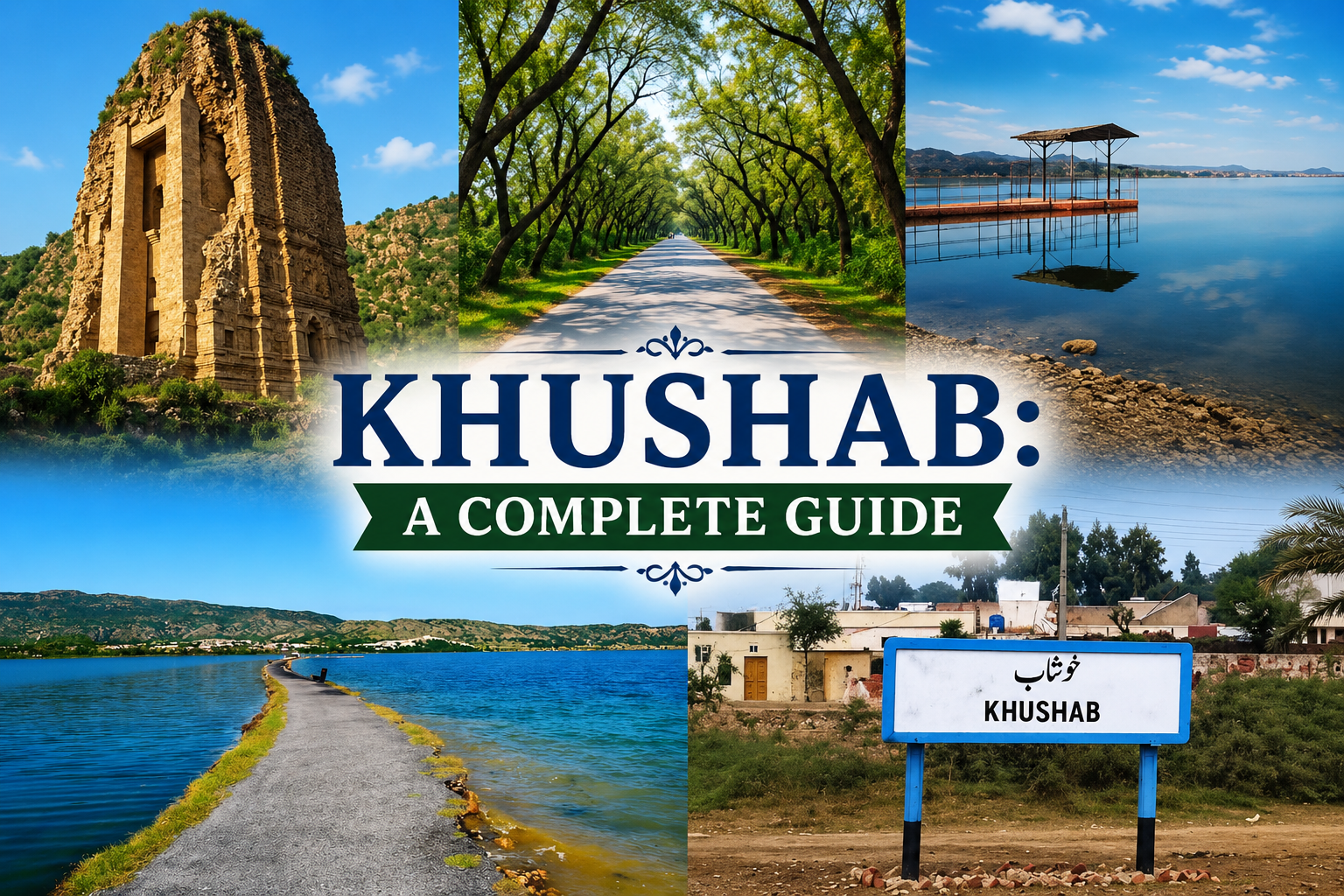
Khushab is a district of astonishing variety in north west Punjab. It holds rivers, fertile plains, desert, lakes and rolling hills all at once. It cradles the beautiful Soon Valley, one of the loveliest places in the province. It rises to Sakesar the highest peak of the Salt Range. It is located on the right bank of the Jhelum River. This guide covers Khushab for the curious traveller. It explains the history the geography the Soon Valley the sights the property scene and how to visit.
This guide offers a general overview. Figures for the population vary between sources.
Quick answer: Khushab is a district in north west Punjab, on the right bank of the Jhelum River, between Sargodha and Mianwali. Khushab town is the historic centre, while Jauharabad has been the district capital since 1953. It is famous for its diverse terrain, from the Thal Desert to the Salt Range. Its greatest draw is the scenic Soon Valley, with lakes such as Uchhali and Khabikki and the peak of Sakesar. It is known for its sweets the patisa and dhoda. Winter is the best time to visit.
About Khushab
Khushab is a historic district in north west Punjab. It is located on the right bank of the Jhelum River. It is set between the districts of Sargodha and Mianwali. It is famous for its remarkably varied terrain.
The setting has every kind of scenery. The district holds mountains, valleys, lakes and waterfalls. It also holds fertile plains, deserts and a river. Few districts pack such variety into one place.
The land meets the great desert. The Thal Desert covers part of the district. It stretches across the Sindh Sagar Doab between the rivers. Gram is cultivated in the sandy dunes.
The people are diverse. Most speak Punjabi, Saraiki, Urdu and Mewati. The society blends rural and urban ways of life. The Awan tribe has a long presence in the hills.
History of Khushab
The town has an old trading past. Khushab was the headquarters of the Shahpur district under the British. It was a thriving centre of commerce. It shipped cotton, wool and ghee to Multan and Sukkur.
The wheat trade was famous. The Salt Range grew a wheat prized for export. This grain was sent to Karachi for shipping abroad. The trade brought prosperity to the district.
The capital later moved. Jauharabad became the district capital in 1953. It was built as a planned urban centre. It rose amid a largely agricultural region.
The Awan tribe settled the hills. They came to the region with the saint Qutab Shah. They settled in the Soon Valley long ago. Their heritage remains strong in the area.
Soon Valley in Khushab
The Soon Valley is the great treasure. It runs across the north west of the district. It stretches from Padhrar village to Sakesar. It is one of the most beautiful places in the province.
The valley is lush and scenic. It holds lakes, waterfalls, jungles and natural pools. High hills and green farms fill it. Its own dedicated guide covers the valley in detail.
The lakes are a great draw. Uchhali, Khabikki and Jahlar are the three famous lakes. They form part of a protected wetland complex. They draw birdwatchers and picnickers alike.
The gardens and resorts welcome visitors. Kanhatti Garden is the largest forest in the district. Sodhi Garden and Daip are popular resorts. These spots reward a relaxed day out.
Sights in Khushab
Sakesar is the crowning peak. It is the highest mountain in the Salt Range. It rises to over 1,500 metres above the valley. It offers cool air and sweeping views.
The Amb Temples crown the mountain. This ancient Hindu temple complex is set on Sakesar. It dates to the age of the Hindu Shahi empire. Its own dedicated guide covers the Salt Range heritage.
The lakes reward the traveller. Uchhali Lake is located at the foot of Sakesar. Its saltwater surface mirrors the hills. It is a fine spot for a day trip.
The deserts and forests add variety. The Thal Desert offers dunes and open scenery. Forest reserves protect the wildlife of the district. The Punjab urial and chinkara roam the hills.
Economy and property in Khushab
The economy rests on agriculture. The fertile plains grow wheat and other crops. The Thal grows gram in its sandy dunes. Farming supports much of the district.
The minerals are an asset. The Salt Range holds coal, salt and gypsum. These are mined across the district. This mineral wealth adds to the economy.
The property market is steady. The farming wealth and the tourism support it. New housing schemes ring the towns. Demand rises with the growth of the district.
The location aids the market. Khushab is connected by road to Sargodha and Mianwali. Rail links serve the district. This connectivity lifts the property market.
Visiting Khushab
Come in the cooler months. The plains are hot in summer. The autumn and spring seasons are the finest. The Soon Valley is pleasant for much of the year.
Explore the Soon Valley. This scenic valley is the great highlight. The lakes, hills and gardens await. The dedicated guide covers the valley.
Climb to Sakesar. The highest peak of the Salt Range rewards the visitor. The Amb Temples crown the mountain. The views stretch across the valley.
See the lakes and deserts. Uchhali and Khabikki lakes are serene and scenic. The Thal Desert offers a different scene. The variety is the great charm of Khushab.
Frequently asked questions
What is Khushab famous for? Khushab is famous for its remarkably diverse terrain, holding mountains, valleys, lakes, waterfalls, fertile plains, desert and a river all within one district. Its greatest draw is the scenic Soon Valley, with its lakes of Uchhali, Khabikki and Jahlar and the peak of Sakesar the highest point of the Salt Range. The district also holds the ancient Amb Temples on Sakesar. It is well known for its traditional sweets the patisa and the sweet dhoda.
What is the Soon Valley? The Soon Valley also called the Soon Sakesar Valley, is a scenic valley in the north west of Khushab District. It runs from the village of Padhrar to Sakesar the highest peak of the Salt Range, stretching for many kilometres. It is renowned for its lush greenery, high hills, waterfalls and natural pools. Its three famous lakes, Uchhali, Khabikki and Jahlar, form a protected wetland complex of international importance and draw many birdwatchers and holidaymakers.
What is Sakesar? Sakesar is the highest mountain in the Salt Range, rising to around 1,525 metres in the north west of Khushab District. It rises on the fringes of the Soon Valley, with the Uchhali Lake just below it. In the colonial era, it served as a cool summer headquarters for the deputy commissioners of several districts. The mountain is also the site of the ancient Amb Temples a Hindu temple complex dating back to the era of the Hindu Shahi empire.
What lakes are in Khushab? Khushab is home to three renowned lakes in the Soon Valley: Uchhali, Khabikki and Jahlar. Together they form the Uchhali Complex a protected wetland of international importance under the Ramsar Convention. Uchhali Lake is located at the foot of Sakesar and is a saltwater lake with a picturesque setting. Khabikki is a saltwater lake in the southern Salt Range around two kilometres long. These lakes are popular spots for birdwatching, picnics and scenic day trips.
When is the best time to visit Khushab? The best time to visit Khushab is the cooler months of autumn and spring, when the weather is most pleasant. The plains are hot in summer, though the Soon Valley at a higher elevation, stays pleasant for much of the year. These seasons are ideal for exploring the Soon Valley, climbing to Sakesar and the Amb Temples along with the scenic lakes of Uchhali and Khabikki. The variety of terrain makes the district rewarding to explore.
Valley of many scenes
Khushab is the district of many scenes in one. It gathers river, plain, desert, lake and mountain within its borders. It cradles the green beauty of the Soon Valley in its hills. It rises to the peak of Sakesar and the ancient temples of Amb. It draws birdwatchers to the still waters of Uchhali and Khabikki. Few districts offer such variety to the traveller.
You may come to Khushab for the valley the lakes or the hills. The district rewards the visit either way. You can wander the green beauty of the Soon Valley. You can climb to Sakesar for the sweeping views. You can rest by the saltwater lakes at the foot of the mountains. Come in the cooler months and explore the many scenes of Khushab. Khushab is the valley of every scene.