Keenjhar Lake: A Complete Guide
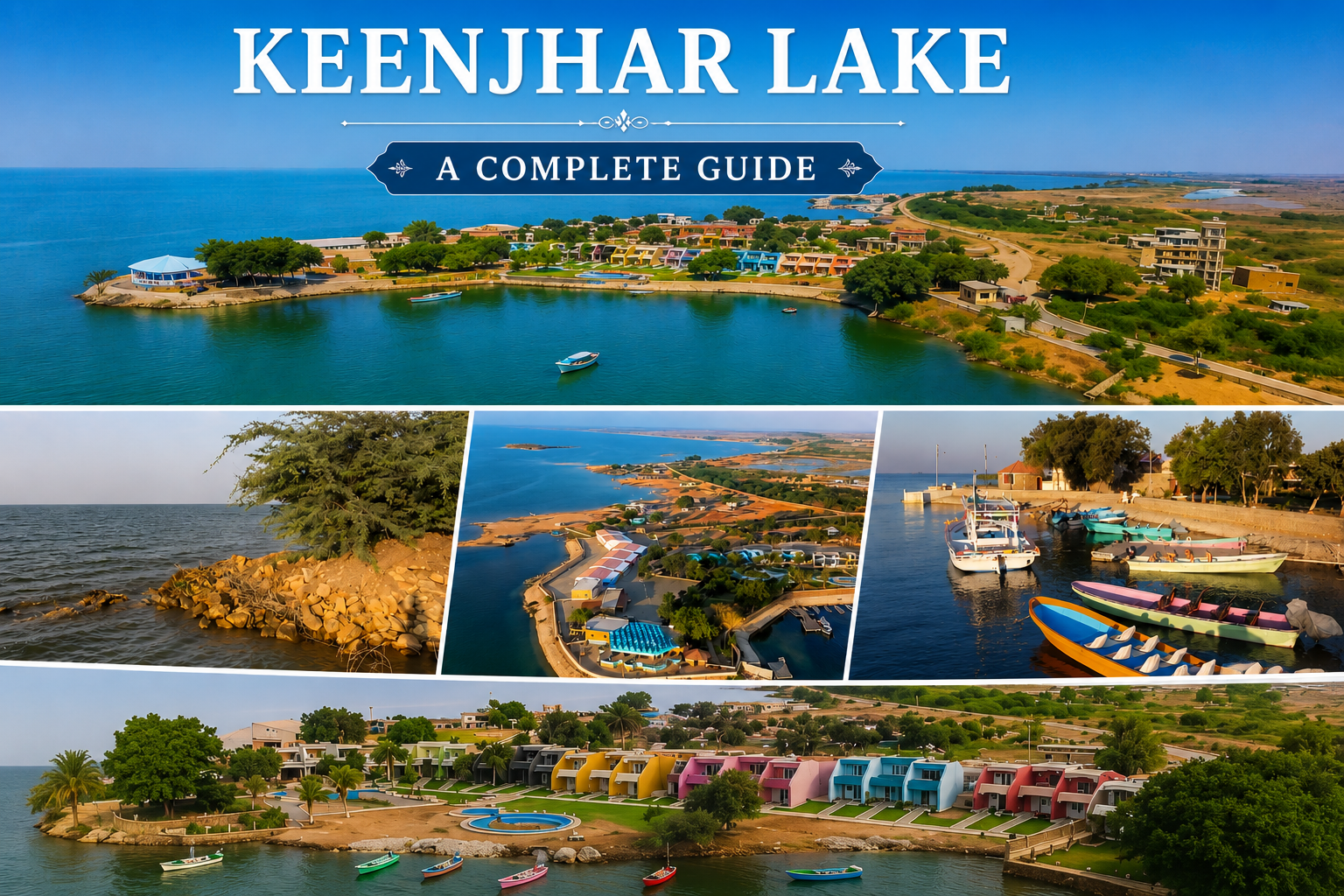
Keenjhar Lake is one of the great freshwater lakes of the country. It spreads across the Thatta district in a broad sheet of blue. It supplies most of the drinking water for Karachi. Migratory birds arrive in their thousands each winter. A shrine in the middle of the water marks a famous love story. This guide covers Keenjhar Lake for the curious traveller. It explains the lake the legend the wildlife and how to visit.
This guide offers a general overview. Sources give slightly different figures for the size of the lake.
Quick answer: Keenjhar Lake lies in the Thatta district of Sindh. Locals also call it Kalri Lake. Karachi lies around 122 kilometres to the south west. The lake runs roughly 24 kilometres long and 6 kilometres wide. It supplies most of the drinking water for Karachi. It became a Ramsar wetland in 1976. The shrine of Noori lies in the middle of the water. Winter is the best season for birds.
About Keenjhar Lake
The lake is very large. Keenjhar runs around twenty four kilometres in length. It reaches roughly six kilometres across at its widest. Its depth reaches around eight metres. It covers over thirteen thousand hectares.
Two lakes became one. Local accounts describe two separate bodies of water. They overflowed and joined during the monsoon. Engineers later built a bund between them. That work merged them into the present lake.
A canal feeds it now. The Kalri Baghar Feeder brings water from the Indus. This makes Keenjhar a managed reservoir. It was once a seasonally fed lake. The change came with the canal system of the colonial era.
The lake carries two names. Keenjhar is the common form. Kalri is the older regional name. Both remain in use today.
Water supply from Keenjhar Lake
The lake serves millions of people. Keenjhar supplies most of the drinking water for Karachi. Thatta district draws on it too. Over twenty million people depend on this water.
The role goes back centuries. Thatta was once among the great cities of the subcontinent. That city needed a reliable water source. Keenjhar provided it. The dedicated guide to Thatta covers the town.
The lake supports farming too. Its water irrigates land across the district. This dual role makes it enormously important. Few lakes carry such responsibility.
Legend of Noori and Jam Tamachi
A love story belongs to this lake. Noori was a fisherwoman of the Mohana community. Jam Tamachi was a Samma king. He saw her on the water and fell in love.
The king married the fisherwoman. He raised her above the other women of his court. He honoured her for her humility rather than her birth. The story became a parable about worth and grace.
Her shrine occupies the lake. A tomb marks her grave in the middle of the water. Rising levels left it surrounded. Visitors reach it by boat.
The poet made the tale immortal. Shah Abdul Latif Bhittai wove the story into his verse. Noori is one of his Seven Queens. The dedicated guide to the poet covers the collection.
Birds and the wildlife at Keenjhar Lake
The lake is a Ramsar site. It received that international designation in 1976. The status recognises its value as a wetland. It also functions as a wildlife sanctuary.
Winter brings vast numbers of birds. Migratory flocks arrive from the north. Ducks and geese come in great numbers. Flamingos, herons and egrets join them. Cormorants, ibises, terns, coots and gulls arrive too.
The birdwatching is exceptional. Winter is by far the best season. Early morning offers the finest viewing. A local guide helps you find the best spots.
The lake holds many fish. Species include rohu, catla and mrigal. Common carp and silver carp live here too. Prawns are found in the shallows. Local fishermen work the water daily.
Conservation work continues. An information and protection centre operates at the lake. Environmental groups monitor the water and the wildlife. Pressure from visitors and pollution remains a concern.
Things to do at Keenjhar Lake
Boating is the main activity. Motorboats carry visitors across the water. Some run out to the shrine of Noori. Smaller craft are available too.
Swimming draws many visitors. People swim from the shore in the shallows. Take local advice on where it is safe. Currents and depth vary across the lake.
Fishing is popular. Both locals and visitors fish the water. Several species reward the patient. Equipment can usually be arranged locally.
Picnics fill the weekends. Families come from Karachi and Hyderabad. The shores grow busy on holidays. Weekdays are far quieter.
Camping is possible. Designated spots lie along the shores. Some visitors stay overnight for the birds. Arrange this in advance.
Visiting Keenjhar Lake
The lake lies near Thatta. Keenjhar is around 122 kilometres from Karachi. The drive takes two to three hours. Thatta town lies a short distance away.
Combine it with the Thatta heritage. Makli Necropolis and the Shah Jahan Mosque lie nearby. Each has its own dedicated guide. Many visitors see all three in a single day.
Accommodation is available. A resort and a rest house operate at the lake. The provincial tourism body manages them. Book ahead at busy times.
Winter is the best season. The months from November to February are ideal. The weather is pleasant then. The migratory birds are present too. Summer heat can be severe.
Avoid the weekend crowds. Saturdays and Sundays draw large numbers. Public holidays are busier still. Weekdays offer a far calmer experience.
Frequently asked questions
Where is Keenjhar Lake? Keenjhar Lake lies in the Thatta district of Sindh. Locals also call it Kalri Lake. Karachi is around 122 kilometres to the south west. The drive takes two to three hours. Thatta town lies a short distance from the lake. Makli Necropolis and the Shah Jahan Mosque both lie nearby. Many visitors combine all three in one trip.
How big is Keenjhar Lake? Keenjhar runs around twenty four kilometres in length. It reaches roughly six kilometres across at its widest point. Its maximum depth is around eight metres. It covers over thirteen thousand hectares in total. Sources give slightly different figures. It is often described as the second largest freshwater lake in the country.
What is the story of Noori and Jam Tamachi? Noori was a fisherwoman of the Mohana community. Jam Tamachi was a Samma king who saw her on the lake and fell in love. He married her and raised her above the other women of his court. He honoured her for her humility rather than her birth. Shah Abdul Latif Bhittai wove the tale into his poetry. Noori is one of his Seven Queens. Her shrine lies in the middle of the lake.
What birds can you see at Keenjhar Lake? Keenjhar is a Ramsar wetland and an important winter refuge for migratory birds. Ducks and geese arrive in great numbers. Flamingos, herons and egrets are common. Cormorants, ibises, terns, coots and gulls join them. Winter is by far the best season for birdwatching. Early morning offers the finest viewing. A local guide helps you find the best spots.
What can you do at Keenjhar Lake? Boating is the main activity. Motorboats run out towards the shrine of Noori. Swimming is popular in the shallows, though you should take local advice on safe spots. Fishing draws both locals and visitors. Families picnic along the shores, especially at weekends. Camping is possible at designated spots. A resort and rest house offer accommodation.
Lake that feeds a city
Keenjhar Lake is one of the most important places in Sindh. It waters a city of twenty million people. It shelters thousands of birds through the winter. It holds a shrine to a fisherwoman who became a queen. It draws families from Karachi every weekend. Few lakes carry so many roles at once.
You may come to Keenjhar for the birds the boating or the legend. The lake rewards the visit either way. You can take a boat out towards the shrine of Noori. You can watch flamingos gather in the winter shallows. You can picnic on the shore as the light goes. Come on a weekday in winter for the calmest experience. This broad sheet of water has served Sindh for a very long time.