Kashmiri Wazwan and Its Dishes: A Complete Guide
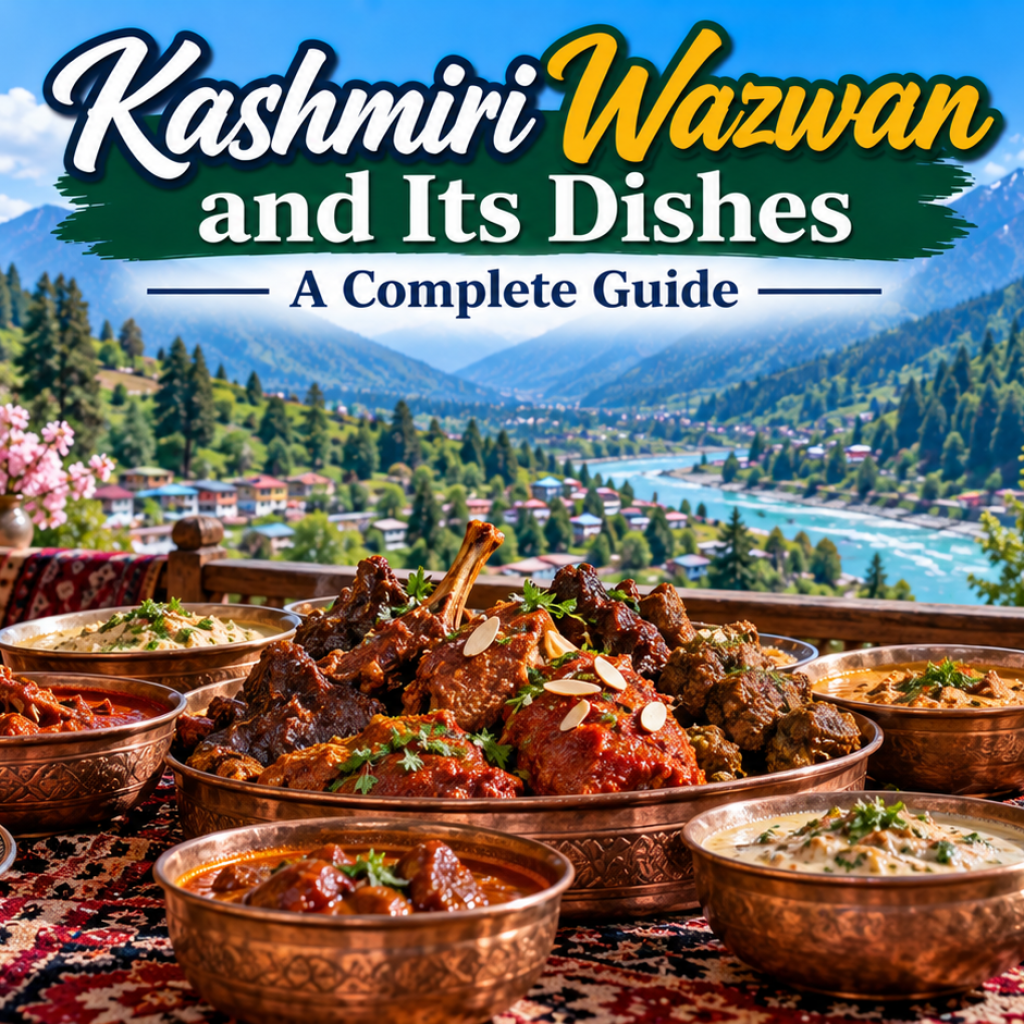
Wazwan is the crowning glory of Kashmiri cuisine and hospitality. A grand feast of many courses honours the greatest occasions in Kashmir. Master cooks called wazas prepare the meal with rare skill. Guests share a great copper platter in groups of four. Gushtaba the velvet meatball, marks the end of the feast. This guide covers Kashmiri Wazwan and its dishes for the curious traveller. It explains the feast the name the cooks the serving the dishes and the finale.
This guide offers a general overview. Details and figures vary between sources.
Quick answer: Wazwan is the grand, multi course ceremonial feast of Kashmir, regarded as the height of its cuisine and hospitality, cherished across Azad Kashmir. It can feature up to thirty six courses, most of them meat, cooked overnight by master chefs called wazas. Guests sit in groups of four and share a large engraved copper platter called a trami, eating rice with rich dishes such as tabak maaz, rista and rogan josh. A soft finale the velvety gushtaba traditionally marks the end of the meal. A feast of skill and community, Wazwan is central to weddings and celebrations.
Wazwan: A grand feast of Kashmir
A grand feast of Kashmir, Wazwan crowns every great event. Many courses fill the meal. Skilled cooks prepare it. So the feast honours the guest.
A great banquet marks the Wazwan. Many rich courses appear. Meat dishes lead the way. So the feast overwhelms with plenty.
A grand occasion marks the feast. Weddings call for the Wazwan. Celebrations demand it too. So the meal marks the great days.
A point of pride marks the tradition. Kashmiris hold it dear. It shows their warm welcome. So the feast honours all guests.
What Wazwan means
What Wazwan means starts with the Kashmiri words. Two words form the name. Together they name the feast. So the title tells its trade.
A simple root marks the name. Waz means cook in Kashmiri. Wan means shop as well. So the name joins the two.
A cooking art marks the feast. That name points to the craft. It honours the skill of cooking. So the name fits the tradition.
A proud craft marks the meal. Kashmiris treasure the art. It rises at the heart of feasts. So the tradition earns its name.
Cooks and the cooking
Cooks and the cooking form the soul of Wazwan. A master leads the work. Wood fires cook the food. So great skill shapes the feast.
A master cook marks the feast. People call the chef a waza. A head waza guides the rest. So skill leads the kitchen.
A wood fire marks the cooking. Huge copper pots hold the food. Slow heat draws out the flavour. So the fire shapes the meal.
An overnight labour marks the work. Cooks toil through the night. Careful timing guides each dish. So patience crowns the craft.
Serving the trami
Serving the trami follows an old ritual. Hands are washed first. A great platter arrives. So the meal begins with care.
A hand wash marks the start. A basin passes around the guests. Attendants pour the water. So the meal opens with ritual.
A copper platter marks the feast. People call it the trami. Four guests share each one. So the meal draws them close.
A set order marks the courses. Rice fills the centre first. Dishes follow in fixed turn. So tradition guides the meal.
Dishes of the feast
Dishes of the feast delight in a set order. Kebabs open the meal. Rich curries follow on. So the courses build in turn.
A first course marks the kebabs. Tabak maaz brings crisp ribs. Seekh kebabs join the plate. So the meal starts strong.
A rich curry marks the middle. Rista brings red meatballs. Rogan josh glows deep red. So the mains fill the platter.
A milky dish marks aab gosht. Lamb cooks in a pale gravy. Fennel and cardamom flavour it. So the dish soothes the palate.
Gushtaba and the finale
Gushtaba and the finale close the great feast. A velvet ball ends the meat. Its gravy runs pale and smooth. So the meal reaches its peak.
A velvet ball marks gushtaba. Minced mutton is pounded fine. A yogurt gravy holds it. So the dish crowns the feast.
A final course marks the custom. Gushtaba ends the meat dishes. No more meat then follows. So the ball signals the close.
A sweet end marks the meal. Desserts follow the gushtaba. Phirni pleases the guest. So the feast ends in sweetness.
Frequently asked questions
What is Wazwan? Wazwan is the grand, multi course ceremonial feast of Kashmir, considered the pinnacle of Kashmiri cuisine, culture and hospitality. Cherished across Kashmir, including Azad Kashmir, it is served on great occasions such as weddings. A vast spread the feast can include up to thirty six courses, most of them based on meat, especially lamb and mutton, cooked slowly overnight by master chefs. Far more than a meal, Wazwan is a ceremony and a display of craftsmanship. It reflects deep traditions of community and generosity. A shared platter carries the food, while the whole event brings families and guests together in a spirit of warmth and celebration.
Who cooks the Wazwan? Wazwan is made by experts who specialize in this cuisine called the wazas, who have acquired this skill after many years of practice and experience. In such experts, there is one who is considered a leader among all the rest; he is called the head waza. The preparation of such a feast needs many hours of preparation with great accuracy. It is a time-taking process that involves cooking over the wood fire in large copper vessels. Every dish needs precision and skill in its preparation. Every waza earns his name for making everything perfect from meat to gravies.
How is Wazwan served? Wazwan is served with rich ceremony and a strong sense of community. Before the meal, guests take part in a hand washing ritual with a portable basin passed around by attendants who pour water over the hands. A great dish arrives next a large, beautifully engraved copper platter called a trami, shared by a group of four guests and often kept warm under a lid. A mound of rice rests at the centre. Many dishes then follow in a set, traditional order, beginning with kebabs and moving through rich curries.
What are the main dishes of Wazwan? Wazwan features many dishes, mostly meat based, served in a traditional order. A fine opening the meal usually begins with kebabs. Tabak maaz brings twice cooked lamb ribs fried until crisp along with seekh kebabs of minced meat. These are followed by a series of rich curries. They include rista, meatballs in a red, saffron and fennel gravy along with the famous rogan josh a deep red lamb curry. Aab gosht, cooked in a milky gravy, plus other kormas also feature. A fixed close the meal traditionally ends with gushtaba. Some vegetarian dishes, such as dum aloo are served alongside the meat.
What is gushtaba and why is it served last? Gushtaba is one of the most prized dishes of Wazwan. Cooks pound mutton by hand into a fine paste, shape it into large, soft meatballs and cook it in a pale, creamy yogurt gravy flavoured with mint and cardamom. Preparing it is regarded as the height of a waza's skill as the delicate gravy must not break. By tradition, gushtaba is served as the final meat dish of the feast. Once a guest has eaten it, no more meat courses follow. In this way it acts as a kind of full stop to the meal, signalling that the main feast is complete before desserts.
Wazwan: Crowning feast of Kashmir
Wazwan is the crowning feast at the heart of Kashmiri culture. A grand meal of many courses honours the greatest occasions in Kashmir. Master cooks called wazas prepare it with rare skill. Guests share a great copper platter in groups of four. Gushtaba the velvet meatball, marks the end of the feast. Few culinary traditions match the grandeur of the Wazwan.
You may come for the feast the craft or the custom. This crowning feast rewards the curious traveller. You can taste the crisp tabak maaz and the deep red rogan josh. You can share a great copper trami with fellow guests. You can end the meal with the velvet gushtaba and sweet phirni. Come to know the Wazwan of Kashmir as cherished in Azad Kashmir. This is the crowning feast of Kashmir.