Kashmiri Tea Noon Chai and Kahwa: A Complete Guide
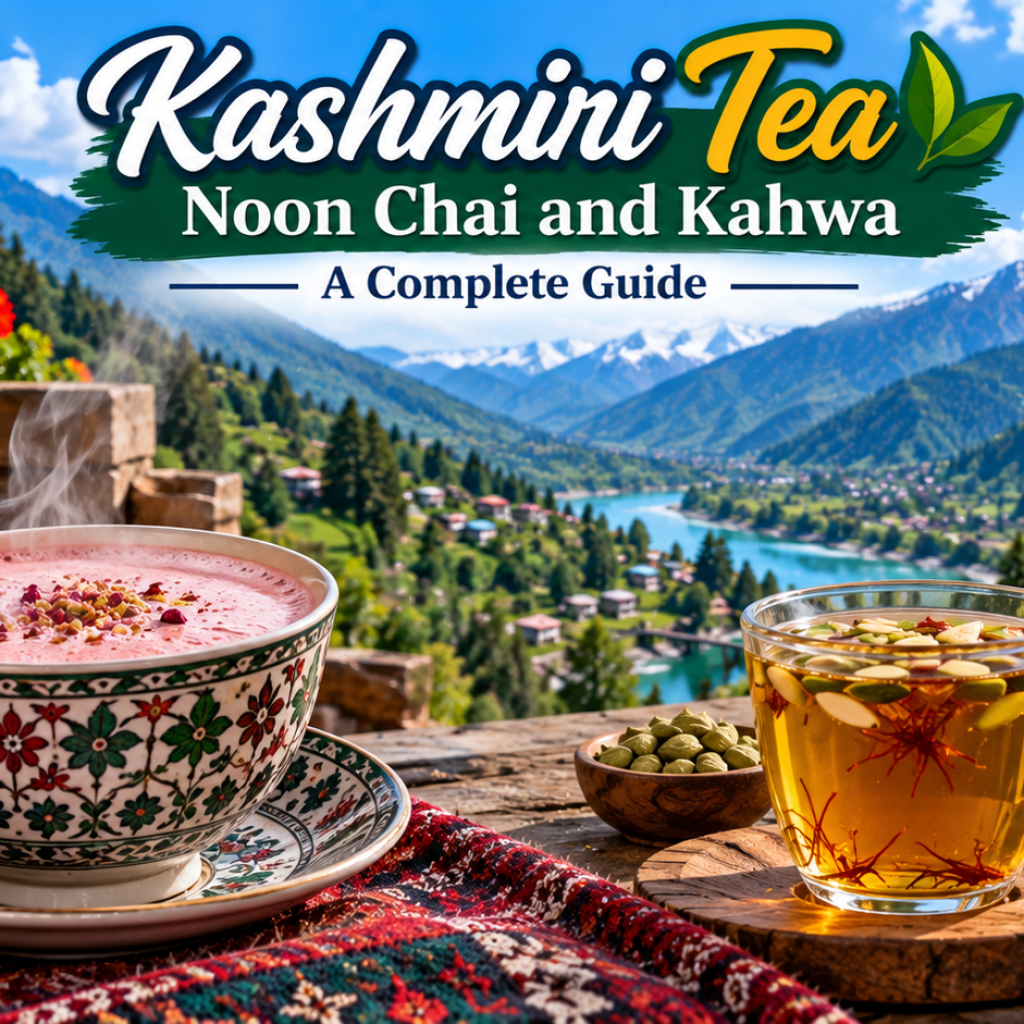
Tea is the warm heart of Kashmiri hospitality and daily life. Two famous teas, Noon Chai and Kahwa, cheer the cold mountain days. Noon Chai glows a soft pink and tastes savoury and creamy. Kahwa shines golden with saffron, spice and floating nuts. A copper samovar brews both teas in the old way. This guide covers Kashmiri tea for the curious traveller. It explains the culture the samovar, Noon Chai, Kahwa, hospitality and breads.
This guide offers a general overview. Details and figures vary between sources.
Quick answer: Kashmir is famous for two distinctive teas, both loved across Azad Kashmir. Noon Chai also called pink or salt tea is a savoury, creamy tea made from green tea leaves, baking soda, milk and a pinch of salt, turning a soft pink colour. It is a daily favourite, especially at breakfast with local breads. Kahwa is a fragrant green tea brightened with saffron, cardamom, cinnamon and almonds, subtly sweet and served on special occasions and to guests. Both are traditionally brewed in an engraved copper kettle called a samovar, expressing the warmth of Kashmiri hospitality.
Azad Kashmir: A land of tea lovers
A land of tea lovers, Kashmir treasures its brews. Tea warms the cold days. Every guest is offered a cup. So the drink shows welcome.
A daily ritual marks the tea. Mornings begin with a cup. Evenings call for another. So tea shapes the day.
A warm welcome marks the culture. Guests are always offered tea. Hospitality flows with it. So the cup shows kindness.
A cold climate marks the land. Mountain winters run long. Warm tea cheers the chill. So the drink suits the hills.
Tea in the samovar
Tea in the samovar brews the old way. A copper kettle holds the tea. Coals heat it from within. So the samovar shapes the brew.
A copper kettle marks the samovar. Fine engraving covers it. Kashmiris prize the vessel. So the pot adorns the home.
An inner chamber marks the design. Burning coals sit inside. They heat the tea around them. So the kettle warms itself.
A steady heat marks the brew. Slow warmth draws out the flavour. It never boils too hard. So the tea develops well.
Noon Chai the pink tea
Noon Chai the pink tea, starts the Kashmiri day. Salt gives it a savoury taste. A soft pink fills the cup. So the tea comforts and warms.
A pink colour marks Noon Chai. Green leaves brew with soda. Slow heat turns it pink. So the brew glows rosy.
A savoury taste marks the tea. Salt flavours it, not sugar. Milk makes it creamy. So the drink tastes rich.
A daily cup marks the morning. Breakfast calls for Noon Chai. Fresh breads go with it. So the tea starts the day.
Kahwa the saffron tea of Azad Kashmir
Kahwa the saffron tea, cheers the special days. Saffron and spice flavour it. Nuts float on the top. So the drink delights the guest.
A golden cup marks Kahwa. Green tea forms the base. Saffron lends its colour. So the tea shines warm.
A rich spice marks the brew. Cardamom and cinnamon flavour it. Rose petals sometimes join them. So the aroma fills the air.
A festive drink marks Kahwa. Guests receive it warmly. Feasts often end with it. So the tea honours the occasion.
Tea and hospitality of Azad Kashmir
Tea and hospitality go hand in hand in Kashmir. A cup greets every guest. Warmth flows with the tea. So the drink builds bonds.
A guest welcome marks the tea and visitors are offered a cup. Refusing feels unkind. So the tea seals the welcome.
A shared moment marks the cup and families gather over tea where talk flows with the warmth. So the drink draws people close.
A traditional value marks the brew. Kashmiris hold tea dear. It warms both body and heart. So the cup means much.
Breads and accompaniments
Breads and accompaniments complete the Kashmiri tea. Fresh breads pair with the brew. Nuts enrich the cup. So the tea feels complete.
A local bread marks the tea. Kulcha and sheermal go with it. Bakeries sell them fresh. So the bread suits the cup.
A rich nut marks the Kahwa. Almonds float on the top. Walnuts add their flavour. So the nuts enrich the drink.
A warm pairing marks the custom. Tea and bread come together. Guests enjoy them side by side. So the two make a meal.
Frequently asked questions
What is Noon Chai? Noon Chai is a traditional Kashmiri tea, famous for its distinctive soft pink colour and its savoury, salty taste, quite unlike the sweet teas found elsewhere. A telling name, Noon Chai draws on the Kashmiri word noon, meaning salt. It is made by slowly simmering special green tea leaves with a little baking soda to develop the pink colour. Milk and a pinch of salt follow, sometimes with a touch of cardamom. Creamy and warming, it is a daily favourite, especially at breakfast, usually enjoyed with local breads. Salt was traditionally valued for helping the body in the cold, high altitude climate.
What is Kahwa? Kahwa is a fragrant and delicate Kashmiri green tea, brightened with saffron and warm spices. People regard it as a drink for special occasions and honoured guests. It is made by brewing green tea with saffron, cardamom and cinnamon, sometimes a few rose petals then often topped with crushed almonds or walnuts. A fragrant brew the result is subtly sweet aromatic and golden, quite different from the savoury Noon Chai. Kahwa is often served at celebrations and after grand feasts such as the Wazwan, traditionally valued as a warming, comforting drink. Its gentle warmth and rich aroma make it a much loved part of Kashmiri hospitality.
What is a samovar? A samovar is the traditional copper kettle used to brew Kashmiri tea, considered essential to making both Noon Chai and Kahwa in the authentic way. Beautifully engraved with designs the samovar has a clever design with an inner chamber that holds burning coals to heat the tea slowly and steadily from within. This gentle, sustained heat is important as it allows the tea to develop its colour, flavour and aroma without boiling too fiercely. Long a treasured item in Kashmiri homes the samovar is both a practical vessel and a beautiful object, closely tied to the culture of tea and hospitality in the area.
Why is Kashmiri tea pink? A natural hue the famous pink colour of Noon Chai comes from the way it is prepared, rather than from any colouring. Special green tea leaves are simmered slowly with a small amount of baking soda. This raises the alkalinity and reacts with the air during brewing, turning the tea reddish maroon and then, once milk is added a soft pink. Long, gentle simmering and a little aeration help develop the colour fully. A splash of milk gives the final rosy, creamy appearance for which the tea is known. This natural process along with the salt is what makes Noon Chai so distinctive among the teas of the world.
When do Kashmiris drink these teas? Kashmiris enjoy their teas at different times and occasions, each with its own place in daily life. Noon Chai the pink salt tea is above all an everyday drink, most often enjoyed at breakfast with local breads, sometimes again in the afternoon. Kahwa, being more special and fragrant is typically served on festive occasions at celebrations and after large feasts as well as to welcome and honour guests. Both teas are closely tied to hospitality, so a cup is almost always offered to visitors. In the cold mountain climate, warm tea is a comfort enjoyed throughout the day all year round.
The warm cup of Kashmir
Tea is the warm cup at the heart of Kashmiri hospitality. Two famous teas, Noon Chai and Kahwa, cheer the cold mountain days. Noon Chai glows a soft pink and tastes savoury and creamy. Kahwa shines golden with saffron, spice and floating nuts. A copper samovar brews both teas in the old way. Few drinks express a culture as warmly as these two.
You may come for the pink tea the saffron brew or the welcome. This warm cup rewards the curious traveller. You can sip savoury pink Noon Chai with fresh local bread. You can enjoy fragrant Kahwa with saffron and floating almonds. You can share a cup from a fine engraved copper samovar. Come to know the teas of Kashmir as loved in Azad Kashmir. This is the warm cup of Kashmir.