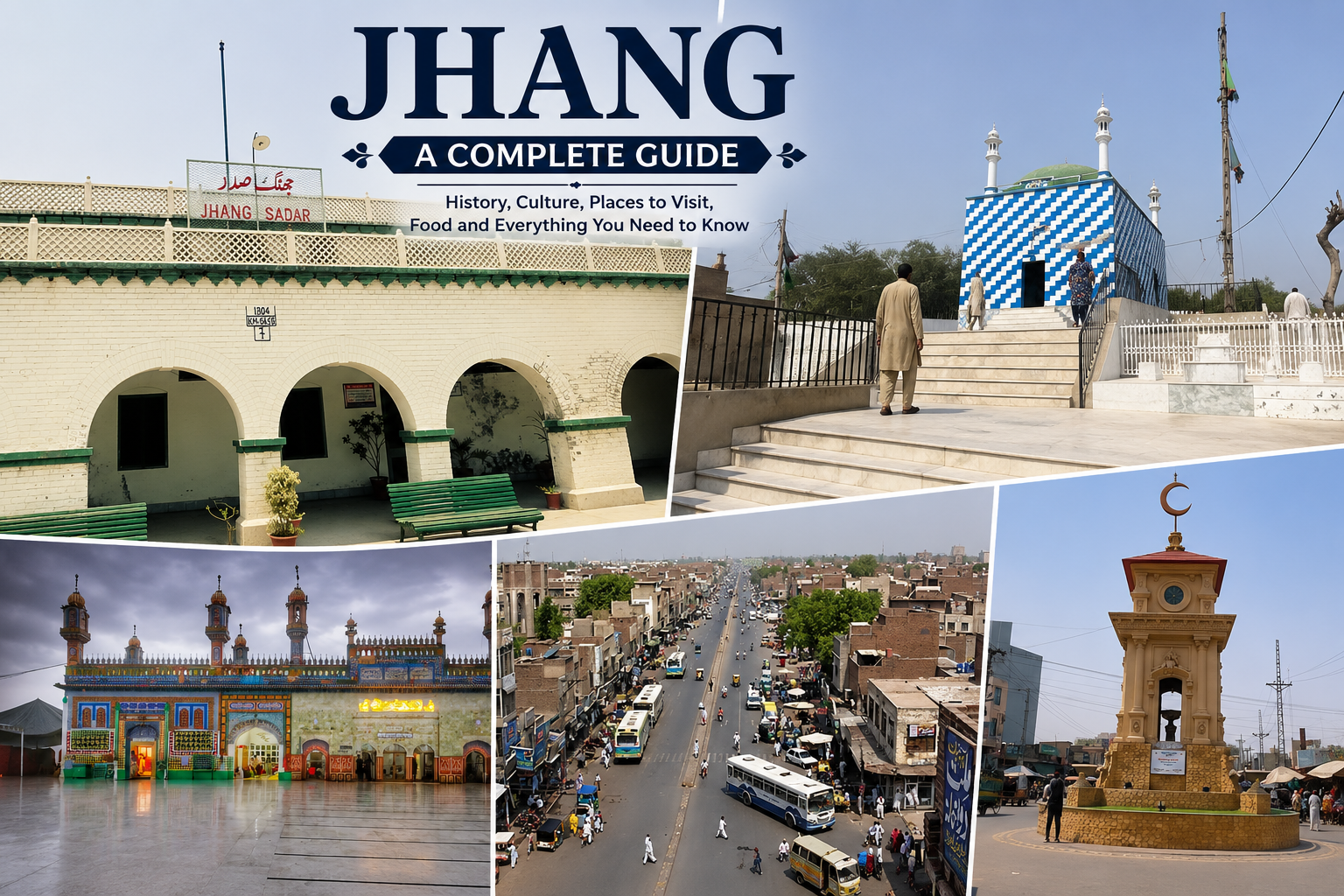
Jhang: A Complete Guide
Jhang is the city of the great love story of Heer and Ranjha. It lies on the eastern bank of the Chenab River in central Punjab. It was founded by the Sial tribe over seven centuries ago. It cradles the tomb of the legendary lovers a place of pilgrimage for couples. It gave the world a Nobel laureate in physics. This guide covers Jhang for the curious traveller. It explains the history the folklore the shrines the sights the property scene and how to visit.
This guide offers a general overview. Figures for the population vary between sources.
Quick answer: Jhang is a historic city in central Punjab, on the eastern bank of the Chenab River around 210 kilometres from Lahore. It was founded in 1288 by Rai Sial of the Sial tribe. It is famous as the setting of the Punjabi love legend of Heer and Ranjha, immortalised by the poet Waris Shah. It holds the tomb of the lovers and lies near great Sufi shrines. It is the birthplace of the Nobel laureate Dr Abdus Salam. Spring and winter are the best times to visit.
About Jhang
Jhang is a historic city in central Punjab. It lies on the eastern bank of the Chenab River. It is the capital of its district and a great cultural centre. It blends deep folklore with a rich Sufi heritage.
The setting lies between two rivers. The district is traversed by the Chenab and the Jhelum. The land near the rivers is fertile and green. The Thal desert stretches to the west.
The name has ancient roots. Jhang comes from a Sanskrit word for a forested or rough area. The same root gives the word jungle. The full name Jhang Sial means the land of the Sials.
The twin towns grew together. Jhang lay in the lowlands by the river. Maghiana rose on the higher ground above the valley. Together they formed the twin municipality of Jhang Maghiana.
History of Jhang
The city was founded by the Sials. Rai Sial of the Sial tribe founded it in 1288. His family ruled the region for a very long time. Their land stretched across much of central Punjab.
The roots run far deeper, though. Ancient mounds dot the district, especially in the south. The Shorkot ruins may mark a city taken by Alexander the Great. Old coins found there date to the Indo Scythian age.
The Sials held great power. Their territory reached across Chiniot, Kamalia and beyond. They even controlled parts of Bhakkar and Sargodha. This dynasty defined the early history of the region.
The British reshaped the district. They took the region and developed its administration. They formed the twin municipality of Jhang Maghiana in 1867. Chiniot was later carved from the district.
Folklore of Heer and Ranjha
Jhang is the home of Heer and Ranjha. This is the most famous tragic love story in Punjabi folklore. Heer belonged to the Sial tribe of Jhang. Ranjha was a shepherd from Takht Hazara.
The tale is one of doomed love. The two lovers were kept apart by family and society. Their story ends in death by poison and grief. It has become a symbol of romantic defiance across Punjab.
Waris Shah gave it eternal form. The great 18th century poet retold the tale in his epic Heer Ranjha. He is often called the Shakespeare of the Punjabi language. The dedicated guide to Punjabi literature covers his work.
The tomb draws pilgrims and lovers. The presumed tomb of the couple lies near the Chenab. It has become a place of pilgrimage, especially for couples. It remains a powerful symbol of the enduring legend.
Shrines and culture in Jhang
Jhang is rich in Sufi shrines. The district is famous for its saints and their tombs. The shrine of Sultan Bahu lies at Garh Maharaja. The dedicated guide to the shrine covers it in detail.
Other shrines dot the district. The shrine of Shah Jeewna honours another Sufi saint. Pilgrims come to these tombs throughout the year. This spiritual heritage runs deep in the region.
The city bred great minds. Jhang is the birthplace of Dr Abdus Salam the Nobel laureate in physics. The poet Majid Amjad a founder of modern Urdu poetry, was also from here. The city is proud of its intellectual heritage.
The crafts and food delight. Traditional khussa footwear and colourful pranda hair ornaments are made here. Local sweets and dahi bhalay are much loved. These traditions add to the culture of the city.
Economy and property of Jhang
The economy rests on agriculture. The fertile plains grow wheat and cotton. The Chenab Canal system waters the fields. Farming supports much of the district.
The industry follows the farm. A government blanket manufacturing centre operates here. Textile industries add to the base. Cotton and grain processing round out the economy.
The property market is steady. The farming wealth and the cultural draw support it. New housing schemes ring the city. Demand rises with the growth of the district.
The location aids the market. Jhang lies between Faisalabad and the western districts. Road and rail link it to the region. This connectivity lifts the property market.
Visiting Jhang
Come in spring or winter. The summers here are very hot. The spring, from mid February to mid April, is the finest season. The district turns green and picturesque then.
Visit the tomb of Heer Ranjha. This is the great cultural highlight. It draws couples and pilgrims alike. It is a powerful symbol of Punjabi folklore.
See the Sufi shrines. The shrine of Sultan Bahu lies at Garh Maharaja. The dedicated guide covers it in detail. These tombs are places of deep devotion.
Enjoy the river. The Trimmu Head lies where the Chenab and Jhelum meet. Boating on the Chenab is a pleasant pastime. The riverbanks are green in spring.
Frequently asked questions
Why is Jhang famous for Heer and Ranjha? Jhang is famous as the setting of the tragic love story of Heer and Ranjha the most beloved tale in Punjabi folklore. Heer belonged to the Sial tribe of Jhang, while Ranjha was a shepherd from Takht Hazara. Their doomed love, kept apart by family and society, ends in death. The 18th century poet Waris Shah immortalised the story in his epic Heer Ranjha. The presumed tomb of the lovers near the Chenab remains a place of pilgrimage.
Who founded Jhang? Jhang was founded in 1288 by Rai Sial a leader of the Sial tribe. His family and tribe ruled the region for a very long time, with their land stretching across Chiniot, Kamalia and parts of Bhakkar and Sargodha. The full historical name of the city is Jhang Sial, meaning the land of the Sials. The region is far older still, with ancient mounds such as the Shorkot ruins pointing to settlement since antiquity.
Which famous people are from Jhang? Jhang is the birthplace of Dr Abdus Salam the Nobel laureate in physics, one of the most celebrated scientists to come from the country. It is also the home of Majid Amjad a founder of modern Urdu poetry and a classic of Pakistani literature. The city is closely tied to the poet Waris Shah, who immortalised the local legend of Heer and Ranjha. This rich intellectual and literary heritage is a great source of local pride.
What is there to see in Jhang? The great cultural highlight of Jhang is the tomb of Heer and Ranjha a place of pilgrimage for couples and admirers of the legend. The shrine of Sultan Bahu at Garh Maharaja, honouring a 17th century Sufi saint, is another major draw. The shrine of Shah Jeewna adds further spiritual interest. The Trimmu Head, where the Chenab and Jhelum rivers meet, is another pleasant natural attraction along with the green riverbanks.
When is the best time to visit Jhang? The best time to visit Jhang is spring, from mid February to mid April, when the district turns green and picturesque. The summers here are very hot, so the cooler months are far more comfortable. Spring and winter suit a visit to the tomb of Heer Ranjha the Sufi shrines and the meeting of the rivers at Trimmu Head. Boating on the Chenab and walks along the green riverbanks are also pleasant in this season.
City of the great love story
Jhang is the city of the greatest love story of Punjab. It rests by the Chenab where Heer and Ranjha loved and died. It carries the verses of Waris Shah in its heart. It shelters the shrines of great Sufi saints across its district. It gave the world a Nobel laureate and a master poet. Few cities hold such romance and such devotion.
You may come to Jhang for the folklore the shrines or the river. The city rewards the visit either way. You can stand at the tomb of the legendary lovers. You can bow at the shrine of Sultan Bahu. You can watch the two rivers meet at Trimmu Head. Come in spring and feel the poetry of the place. Jhang is the city of the great love story.