Japanese Park and the Marghazar Zoo Area: A Guide for Families
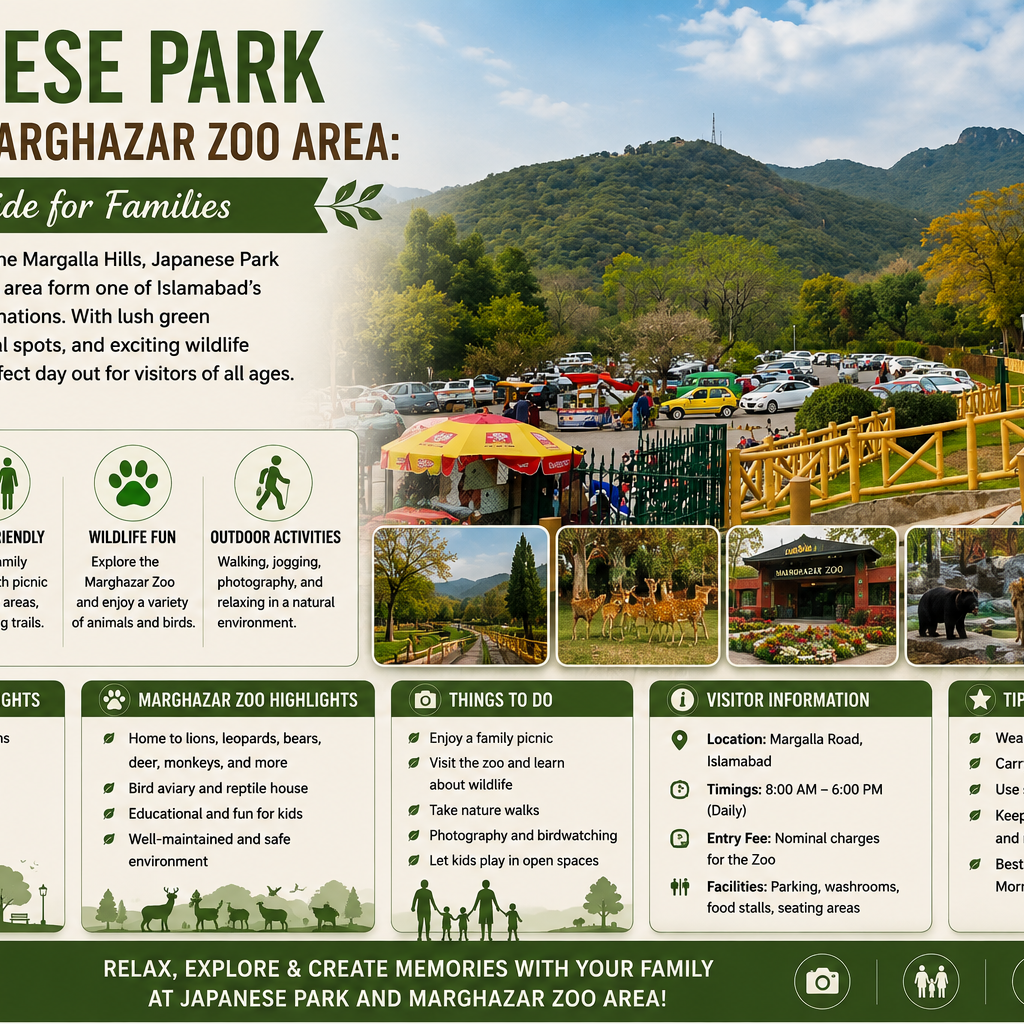
At the foot of the Margalla Hills, near the start of the road that climbs to Daman e Koh and Pir Sohawa, is situated a green recreational area long known to families in Islamabad. The Japanese Children's Park and the neighbouring grounds of the former Marghazar Zoo have been a familiar destination for generations, set against the backdrop of the hills. The area has changed in recent years and this guide explains what it is today, its history and what visitors should know.
This article covers the Japanese Park and the Marghazar Zoo area, its background, the important changes that have taken place and the setting at the base of the Margalla Hills. Written for anyone getting to know Islamabad, it gives an honest and up to date picture of this part of the capital.
The Japanese Park and Marghazar Zoo area
The area is situated at the base of the Margalla Hills, on Pir Sohawa Road, where the city meets the start of the climb into the hills. For many years, it brought together two neighbouring attractions: the Japanese Children's Park, a recreational park and the Marghazar Zoo, also known as the Islamabad Zoo.
The Japanese Children's Park is a well known park in Islamabad, popular with families and children. Its position at the foot of the hills, next to the start of the road up to Daman e Koh, made it a natural stop for those heading into the Margalla Hills and it has long drawn visitors at weekends.
The neighbouring Marghazar Zoo was, for decades, one of the capital's best known attractions. Opened in 1978, it sat on a large site at the foothills of the Margalla Hills and drew large numbers of visitors. However, the zoo closed permanently in December 2020, following a court ruling over the conditions in which its animals were kept. The site is now being redeveloped and it no longer operates as a traditional zoo.
Understanding this area today means understanding both the park that remains and the important change at the former zoo. Together, they form a green space at the edge of the city, tied closely to the Margalla Hills and the routes into them.
Quick answer: The Japanese Children's Park is situated at the foot of the Margalla Hills on Pir Sohawa Road, next to the former Marghazar Zoo. The zoo, opened in 1978, closed permanently in December 2020 after a court ruling over animal welfare and the site is being redeveloped into a wildlife and conservation facility.
History of the area
The history of this recreational area goes back to the earlier decades of Islamabad. As the capital developed, green spaces and family attractions were established at the foot of the Margalla Hills, taking advantage of the scenic setting where the city meets the hills.
The Marghazar Zoo opened in 1978, under the administration of the Capital Development Authority. It began as a refuge for local wildlife such as leopards, deer and gazelle found in the region, set on a large site at the foothills of the Margalla Hills. Over time, it grew and was combined with the neighbouring Japanese garden and park area and it came to house a wider range of animals. At its height, the zoo drew around a million visitors a year and it became a popular family destination in the capital, especially at weekends.
The Japanese Children's Park developed alongside the zoo as part of the same recreational area. Its name reflects the Japanese style garden features of the area and it became established as one of the well known parks of Islamabad, particularly for families with children.
For many years, the two attractions together, the park and the zoo, formed one of the main family outings in the capital, set against the green backdrop of the hills. This history is part of why the area remains familiar to so many residents of the twin cities, even as it has changed.
Closure of the Marghazar Zoo
The most important development in this area's recent history is the closure of the Marghazar Zoo. Over the years, the zoo faced growing concern over the conditions in which its animals were kept and a number of animals died at the facility, drawing criticism from the public and from animal welfare organisations.
The concerns came to a head through the courts. In 2020, following petitions and inspections, the Islamabad High Court ruled that the animals should be moved to sanctuaries, finding the conditions at the zoo inadequate. The most prominent case was that of Kaavan which was an Asian elephant who had been kept at the zoo for many years and had drawn international attention. Following the ruling, Kaavan was relocated to a sanctuary in Cambodia at the end of 2020, in a case that received worldwide coverage and support from international figures.
The remaining animals were also relocated, many to sanctuaries abroad, with the help of animal welfare organisations and the authorities. By December 2020, the last animals had left and the zoo closed permanently. Management of the site was transferred to the Islamabad Wildlife Management Board.
Since the closure, plans have been developed to transform the former zoo site. The authorities have discussed converting it into a modern wildlife rescue and conservation facility, moving away from the traditional zoo model towards one focused on the care of rescued animals and on education. Ideas such as conservation centres and new learning experiences have been part of the discussions. Visitors to the area should be aware that the traditional zoo no longer operates and that the site is in a period of change and redevelopment.
What families can do in the area today
With the zoo closed and under redevelopment, the recreational offering of this area has changed and visitors planning a trip should keep the current situation in mind. The Japanese Children's Park remains a green space at the foot of the hills and the area continues to serve as a gateway to the Margalla Hills.
The park and its surroundings offer greenery and open space at the base of the hills, in a scenic setting. Families have long valued the area for its position where the city meets the Margalla Hills and the fresh air and views that come with it. As with any public space undergoing change, it is worth checking the current status and facilities before planning a visit.
The area's greatest value today may be as a starting point for the Margalla Hills. Pir Sohawa Road which climbs to the Daman e Koh viewpoint and on to Pir Sohawa, begins near here and some of the popular hiking trails into the hills start from this base area. For families and visitors wanting to enjoy the hills, the viewpoints and the trails, this area serves as the gateway.
For a full family day out, the area can be combined with the wider attractions of the Margalla Hills. The Daman e Koh viewpoint, a short drive up the road, offers panoramic views of the city and is a well established family destination. Saidpur Village, with its heritage and restaurants, is also nearby. This makes the base of the hills a natural starting point for exploring the scenic northern edge of the capital.
Why this area matters to Islamabad
Beyond its role as a recreational spot, this area holds a particular place in the life of Islamabad, both for its history and for its setting at the foot of the Margalla Hills. For generations, it was one of the main family destinations in the capital and it remains familiar to many residents.
The story of the Marghazar Zoo also carries a wider significance. Closure of zoo to follow the court ruling marked a shift in how the capital approaches. Wildlife and animal welfare is being achieved through conservation and care rather than traditional captivity of animals. The planned transformation of the site into a wildlife and conservation facility reflects this change. It has become part of a broader conversation about the treatment of animals in the country.
For the surrounding area, the setting at the base of the Margalla Hills is a defining feature. This part of the capital, near the hills and the routes into them, is close to some of Islamabad's most prestigious northern sectors, such as the E and F series. Their proximity to the hills, the greenery and the scenic viewpoints adds to their appeal and the character of the northern part of the capital is shaped by this closeness to nature. For anyone drawn to a home near the hills and green space, this side of Islamabad has a particular appeal and the recreational areas at the foot of the Margalla Hills are part of what defines it.
Visiting the area
For anyone planning to visit this area, the most important point is to keep the current situation in mind, since the traditional zoo no longer operates and the site is being redeveloped. Checking the latest status of the park and any facilities before setting out is sensible.
The area is situated at the foot of the Margalla Hills, on Pir Sohawa Road, on the northern edge of central Islamabad. It is easily reached from the central sectors by car, taxi or ride hailing service and it lies close to the prestigious northern sectors of the capital. The location makes it a convenient starting point for a trip into the hills.
The cooler months, from around October to March, are the most comfortable time to visit the area and the hills beyond and the greenery is at its best after the monsoon rains. For families, the area is best thought of today as a gateway to the Margalla Hills and their viewpoints and trails, combined with the wider attractions of the northern edge of the capital, rather than as the zoo it once was. Combining a visit with Daman e Koh, the hiking trails or Saidpur Village makes for a full day out in the scenic part of the capital.
Quick answer: The area is situated at the foot of the Margalla Hills on Pir Sohawa Road, reachable from central Islamabad by car, taxi or ride hailing service. With the traditional zoo closed and under redevelopment, it is best seen today as a gateway to the hills, viewpoints and trails. Check the current status before visiting and the cooler months are ideal.
Frequently asked questions
Where is the Japanese Park and Marghazar Zoo area located? The area is situated at the foot of the Margalla Hills, on Pir Sohawa Road, on the northern edge of central Islamabad. It lies near the start of the road that climbs to the Daman e Koh viewpoint and Pir Sohawa, close to the prestigious northern sectors.
Is the Marghazar Zoo still open? No. The Marghazar Zoo is also known as the Islamabad Zoo. It is closed permanently in December 2020 by following a court ruling over the conditions in which its animals were kept. The animals were relocated to sanctuaries and the site is being redeveloped.
What happened to the animals at the zoo? Following the Islamabad High Court ruling in 2020, the animals were relocated to sanctuaries, many of them abroad, with the help of animal welfare organisations. The most famous case was Kaavan, an Asian elephant moved to a sanctuary in Cambodia in a case that drew international attention.
What is happening to the former zoo site? Management of the site was transferred to the Islamabad Wildlife Management Board and plans have been developed to transform it into a modern wildlife rescue and conservation facility, moving away from the traditional zoo model towards the care of rescued animals and education.
Can families still visit the area? The Japanese Children's Park and the green area at the foot of the hills remain and the area serves as a gateway to the Margalla Hills, their viewpoints and hiking trails. As the site is undergoing change, it is worth checking the current status and facilities before visiting.
What is near the area? The area is situated at the base of the Margalla Hills, near the start of Pir Sohawa Road. The Daman e Koh viewpoint, Pir Sohawa, the Margalla Hills hiking trails and Saidpur Village are all nearby, making it a starting point for exploring the northern edge of the capital.
The Japanese Park and the Marghazar Zoo area have long been part of family life in Islamabad, set against the green backdrop of the Margalla Hills. For decades, the park and the zoo together formed one of the capital's main family destinations, familiar to generations of residents of the twin cities.
The area has changed significantly in recent years. The closure of the Marghazar Zoo in 2020, following the court ruling and the relocation of its animals, marked an important shift and the site is now being redeveloped towards wildlife conservation and care. For those getting to know Islamabad today, the area is best understood as a green space and a gateway to the Margalla Hills, close to the viewpoints, trails and heritage of the northern edge of the capital. Its setting at the foot of the hills continues to shape the appeal of this scenic part of Islamabad and while its role has changed, it remains a familiar and meaningful part of the capital's story.