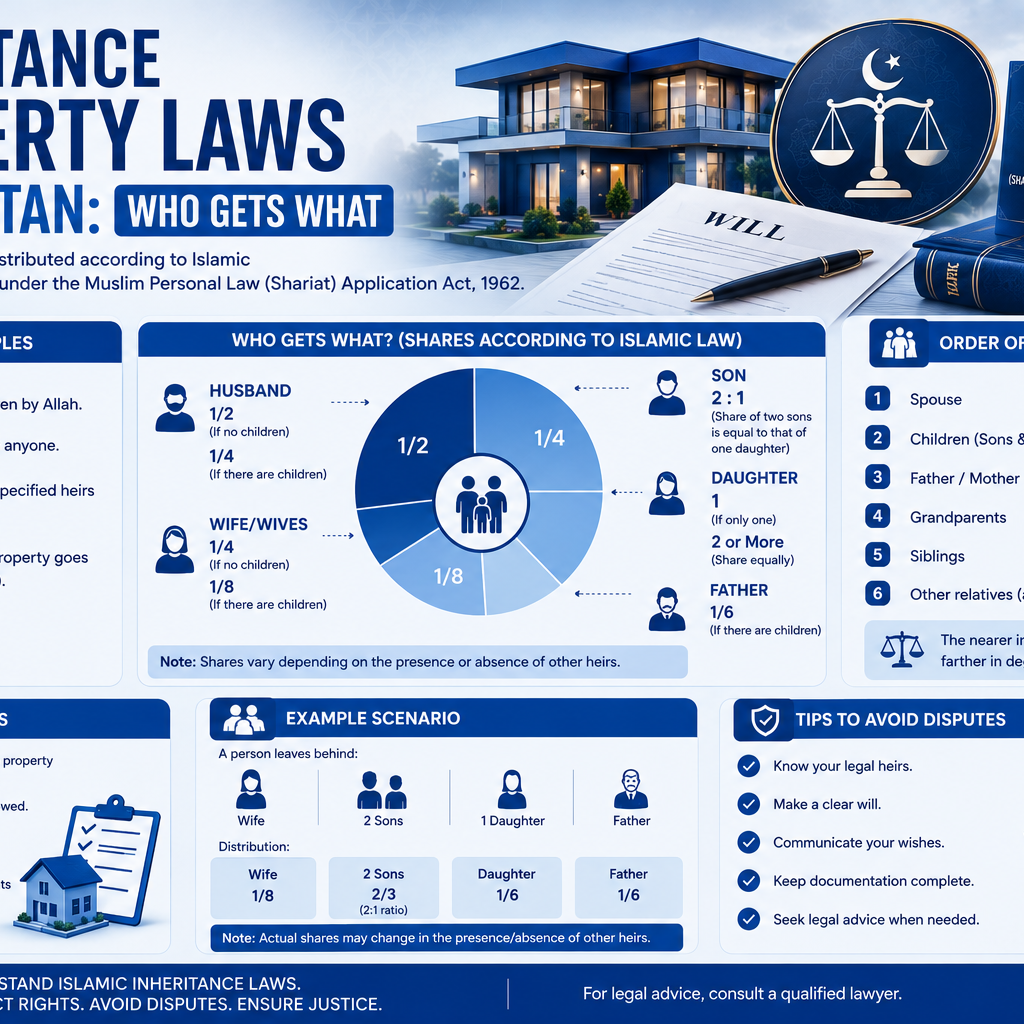
Inheritance Property Laws in Pakistan: Who Gets What
When a property owner dies, their property passes to their heirs. This sounds simple, but inheritance is one of the most common sources of property disputes in Pakistan. Families fall out, properties stay frozen for years and buyers get caught in conflicts they did not see coming.
Understanding the basics of inheritance helps everyone involved: heirs who need to know their rights, families trying to divide property fairly and buyers checking that a property is clean. This guide explains the general principles of inheritance in Pakistan in plain terms. It is an overview, not legal advice and any actual case deserves proper guidance from a qualified lawyer and, where relevant, a religious scholar.
Why inheritance matters in property
Inheritance touches property more than almost any other area of life. A large share of property in Pakistan changes hands through inheritance rather than sale.
When someone dies owning property, it must pass to their heirs and the ownership records updated to reflect this. Until that happens properly, the property can be difficult to sell, divide or manage. Disputes among heirs are common and they can tie up a property for years. Understanding inheritance helps divide property fairly and avoid conflict for families. For buyers, it helps confirm that an inherited property they are considering is being sold cleanly, with all heirs in agreement. Inheritance is a subject that affects nearly everyone in property eventually.
The basis of inheritance law
Inheritance in Pakistan is governed largely by religious personal law which sets out how property passes to heirs. For most of the population, this means inheritance follows Islamic principles.
These principles identify the heirs and their entitlements. These rules are elaborate and take into consideration various family situations by identifying different classes of heirs. As this law has been established according to personal and religious considerations, these rules become quite complicated and depend upon the nature of family situations. This is why general explanations can only go so far. For any real case, the precise division should be worked out with proper legal and religious guidance, since the details matter greatly and mistakes cause disputes.
Who counts as an heir
Inheritance law recognises a range of heirs, drawn from the close family of the deceased. Understanding the general categories helps you grasp how property is shared.
Heirs typically include the spouse, the children and the parents of the deceased, among others depending on the situation. Different family members fall into different categories and their entitlement depends on who survives the deceased and the makeup of the family. The law sets out how property is shared among these heirs according to their relationship. Because the categories and their interaction can be intricate, identifying all the rightful heirs in a particular case is itself an important task. Every legal heir has a claim and overlooking one is a frequent cause of later dispute.
How shares are determined
The shares that heirs receive are determined by the principles of inheritance law, based on the family relationships involved. This division is neither random nor arbitrary, but rather follows certain principles.
Various heirs have varying shares, depending on the particular combination of living relatives. The law has taken care of many possible situations, and that is why the result may differ from one case to another. Because of this complexity, working out the exact shares in a real situation requires careful application of the rules to the specific family. This is a task for someone with proper knowledge of inheritance law. The general point for everyone to understand is that each rightful heir is entitled to a defined share and the property should be divided accordingly.
Importance of including all heirs
Among other principles, one can single out the following that has practical significance: every rightful heir should be taken into account. It is here that most disagreements start.
When an estate is inherited by someone, there are several legitimate heirs having a part of the whole property. The problem appears when one of these heirs claims more rights and wants to exclude the other ones from their property share. For a fair division and for any sale of inherited property, every rightful heir must be recognised and their share respected. Excluding an heir, whether deliberately or by oversight, stores up serious trouble. Identifying and including all heirs is essential to handling inherited property properly and avoiding conflict.
Recording the inheritance
The inheritance should be correctly registered since after the death, the inheritance becomes the property of the heirs. The process of registering the property in the name of the heirs is necessary before the inheritance can be dealt with.
The registration of the property in the name of the heirs should be done either in the revenue record or the society’s record, depending on the type of property. This usually involves establishing who the legal heirs are and updating the record to show their ownership. A property where the inheritance has not been properly recorded remains in a kind of limbo, difficult to sell or divide. Completing this step correctly, with all heirs recognised, is what turns an inheritance into clear, recorded ownership that can then be managed or transferred.
Selling inherited property
Selling property that has been inherited brings particular requirements, because of the multiple heirs involved. Both sellers and buyers need to understand these.
For inherited property to be sold cleanly, all the rightful heirs must consent to the sale and take part. There is no one heir who could sell the entire property or even sell beyond what belongs to them without the approval of other co-heirs. This way, everyone’s rights are safeguarded and conflicts can be avoided. In case there are many heirs, it entails that all of them participate in the process and they share the money based on their shares. Skipping this leads to conflict and legal challenges.
Advice for buyers of inherited property
Buyers should approach inherited property with particular care, since it carries a higher risk of dispute. A few checks protect you.
Confirm that how the inheritance was recorded and that all legal heirs consent to the sale before buying inherited property. Ensure no heir is missing, excluded or unaware of the sale. Be cautious if one person claims to sell the whole property without involving the other heirs, since this is a common route to a dispute. Buying from a single heir without the others' consent can leave you part-owner with strangers, all entitled to a share. For inherited property especially, careful verification and legal advice are well worth the cost. A clean inheritance sale involves every heir.
Planning ahead to avoid disputes
Much inheritance conflict can be prevented by planning and clear handling while the owner is alive. Families benefit from thinking ahead.
An owner can help their heirs by keeping property records clear and in order, so that ownership is easy to establish after their death. Discussing matters pertaining to property inside the family will also help avoid surprises in future. Proper documentation and making sure that the ownership status is known will make the process of inheriting a lot easier. Although the issue of dying is not easy to handle, some foresight will help the heirs avoid problems that result due to lack of clarity regarding property issues. Clear records and honest communication are among the best gifts an owner can leave their family alongside the property itself.
The role of a will
A will can play a part in property matters, though within the framework of inheritance law. Understanding its place is useful.
Under the personal law that governs most inheritance in Pakistan, there are principles about how much of an estate a person can direct through a will and how the rest passes to heirs by the fixed shares. A will cannot simply override the entitlements of the legal heirs to their shares. Because the interaction between a will and inheritance law can be complex, anyone wishing to make arrangements for their property should seek proper legal and religious guidance. Done correctly, planning can bring clarity, but it must work within the rules of inheritance rather than against them. Proper advice ensures any arrangement is valid and avoids creating disputes.
Common inheritance disputes
Inheritance disputes follow familiar patterns and recognising them helps families and buyers alike. Awareness can prevent or resolve conflict.
Disputes often arise when one heir tries to take more than their share, when an heir is excluded, when the inheritance is not properly recorded or when property is sold without all heirs' consent. Disagreements over the division or over who counts as an heir, are also common. Many of these disputes could be avoided by recognising all heirs, applying the proper shares, recording the inheritance correctly and involving everyone in any sale. Where a dispute does arise, proper legal guidance is needed to resolve it according to the law. Prevention, through fair and correct handling, is far better than a long conflict.
The value of proper guidance
Given the complexity of inheritance, proper guidance is genuinely valuable. This is not a matter to handle casually or on assumption.
A qualified lawyer can identify the rightful heirs, determine the correct shares, guide the proper recording of the inheritance and help handle any sale or dispute according to the law. Where religious principles apply, guidance from a knowledgeable religious authority helps ensure the division is correct. The cost of this guidance is small against the value of property and the damage that disputes cause. For any real inheritance situation, especially one involving valuable property or a complex family, seeking proper advice early is one of the wisest steps you can take. It prevents costly mistakes and conflict.
Final thoughts
Inheritance is one of the most important and most disputed areas of property in Pakistan. When an owner dies, their property passes to their heirs according to inheritance law which for most people follows Islamic principles. These principles determine who the heirs are and the shares they receive, accounting for many family situations.
The key practical points are clear, even if the details are complex. Any sale of inherited property requires the consent of all heirs. Buyers should verify these things carefully before purchasing inherited property. Above all, because inheritance can be intricate and the stakes are high, any real case deserves proper guidance from a qualified lawyer and, where relevant, a religious authority. Handle inheritance fairly and correctly and you protect both family relationships and the property itself from the disputes that so often arise.