Indus River and the Blind Dolphin: A Complete Guide
The Indus is the great river of Sindh. It carried the first cities, fed the great barrages and shaped the whole province. It is also home to one of the rarest animals on earth. The Indus blind dolphin swims the muddy water and hunts without sight. Its numbers have recovered from near extinction. This guide covers the Indus River and its dolphin for the curious traveller. It explains the river the dolphin the threats and where to see it.
This guide offers a general overview. Figures for the river and the dolphin population vary between sources.
Quick answer: The Indus is one of the great rivers of the world. It runs over three thousand kilometres from Tibet to the Arabian Sea. It crosses the whole length of Sindh. The river is home to the Indus blind dolphin, known locally as the bulhan. This freshwater dolphin is nearly blind and hunts by sound. It is among the most endangered dolphins on earth. The largest population lives between the Guddu and Sukkur barrages.
The Indus River
The Indus is a truly great river. It runs over three thousand kilometres in length. It is among the longest rivers in Asia. It gives the whole region its name.
The river begins in Tibet. It rises in the mountains near Mount Kailash. It flows through Ladakh and into Pakistan. It crosses the Karakoram and the plains before the sea.
The river crosses all of Sindh. It enters the province in the north near Kashmore. It flows south past Sukkur and Hyderabad. It reaches the Arabian Sea through its delta.
Sindh takes its identity from the river. The name Sindh comes from the river itself. Locals call the river the Mehran. The whole province depends on its water.
Indus river and civilisation
The Indus shaped the earliest cities. Mohenjo daro rose on its banks four thousand years ago. The river fed the fields that fed the city. Its own dedicated guide covers that site.
The river carried trade for millennia. Boats moved goods up and down the water. Great ports rose at the delta. The dedicated guide to the ancient trade routes covers this history.
The barrages transformed the river. Engineers built the Sukkur Barrage in 1932. Others followed at Guddu and Kotri. The dedicated guide to the Sukkur Barrage covers that work.
The river still feeds the province. Its canals water millions of acres. Its water supplies the cities. Sindh could not exist without it.
Indus blind dolphin
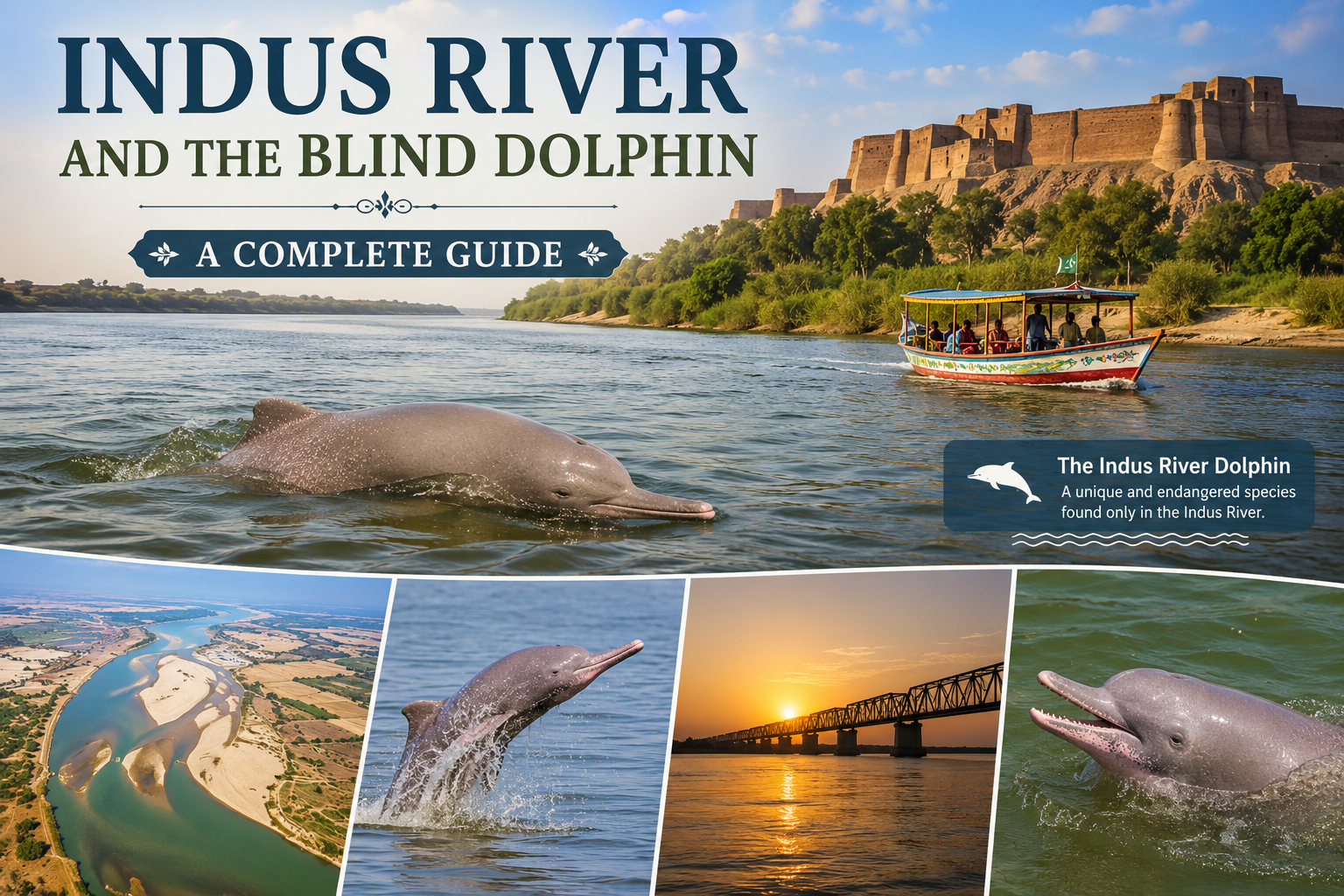
The dolphin is a freshwater mammal. It lives only in the Indus river system. Locals call it the bulhan. Scientists know it as a distinct subspecies.
The dolphin is nearly blind. Its eyes are tiny and lack a lens. They can sense light and direction only. The muddy river makes sight useless anyway.
It hunts by sound instead. Blind dolphin uses echolocation to find its prey. It sends out clicks and reads the echoes. This lets it hunt fish and shrimp in the dark water.
The body is well adapted. The dolphin has a long, narrow beak. A low hump replaces a true dorsal fin. It swims on its side at times. Its colour is grey brown, sometimes with a pinkish belly.
It is among the rarest dolphins on earth. The species is listed as endangered. It ranks among the most threatened cetaceans in the world. Few large animals are so rare.
Decline and recovery of blind Dolphins
The dolphin once ranged far. It swam from the delta to the Himalayan foothills. Its range covered thousands of kilometres of river. This was before the barrages.
The barrages fragmented the range. Dams and barrages split the river into sections. The dolphins could not pass them. The population broke into isolated groups.
Water extraction made it worse. Canals drew off much of the flow. Long stretches ran dry in the dry season. The dolphin lost much of its habitat below Sukkur.
Hunting once threatened it too. People hunted the dolphin for meat and oil. Traditional (desi) medicine used its body parts. A ban on hunting helped the recovery.
The population has recovered. Counts began in earnest in the 1970s. Numbers have risen steadily since then. Recent surveys suggest close to two thousand animals. This recovery is a rare conservation success.
Threats to blind Dolphins today
Barrages remain the main threat. They still block the movement of the dolphins. The isolated groups cannot mix. This limits their long term survival.
Fishing nets trap dolphins. The animals become entangled in gillnets. They often drown before they can escape. This is a major cause of death.
Canals strand the dolphins. Water diversions pull dolphins into irrigation channels. They cannot find their way back to the river. Rescue teams work to save them.
Pollution affects the water. Studies have found heavy metals in the dolphins. Pesticide residues appear in fish and dolphins alike. The long term effects remain under study.
Conservation and where to see blind Dolphins
A reserve protects the core habitat. Officials established a dolphin reserve in 1974. It covers the stretch between the Guddu and Sukkur barrages. This is the stronghold of the species.
Rescue teams save stranded dolphins. The wildlife department runs a rescue programme. A helpline lets communities report trapped animals. Teams return the dolphins to the main river.
The best place to see them is near Sukkur. The largest population lives between Guddu and Sukkur. Boat trips can be arranged locally. The dedicated guide to Sukkur covers the city.
Watch responsibly. Keep a respectful distance from the animals. Follow the guidance of local operators. Support the conservation groups that protect the species.
Frequently asked questions
What is the Indus blind dolphin? The Indus blind dolphin is a freshwater dolphin found only in the Indus river system. Locals call it the bulhan. It is nearly blind, with tiny eyes that sense only light and direction. The muddy river makes sight useless, so the dolphin hunts by echolocation instead. It is among the most endangered dolphins on earth. The largest population lives between the Guddu and Sukkur barrages in Sindh.
Why is the Indus dolphin blind? The Indus dolphin lives in the muddy water of the Indus, where sight is of little use. Over time its eyes became tiny and lost their lens. They can sense light and direction but cannot form images. The dolphin hunts instead by echolocation. It sends out clicks and reads the returning echoes to find fish and shrimp in the dark water.
How many Indus dolphins are left? The Indus dolphin has recovered from near extinction. Counts began in the 1970s and numbers have risen steadily. Recent surveys suggest close to two thousand animals. The largest population lives between the Guddu and Sukkur barrages in Sindh. Figures vary between surveys. The trend has been clearly upward. This recovery followed a ban on hunting and other conservation measures.
Why is the Indus dolphin endangered? The Indus dolphin faces several threats. Barrages have fragmented the river and isolated the dolphin into separate groups. Water extraction has dried up long stretches of its former habitat. The animals become entangled in fishing nets and drown. They are stranded in irrigation canals when water is diverted. Pollution and hunting added to the pressure in the past. The barrages and the fishing nets remain the main dangers.
Where can I see the Indus dolphin? The best place is the stretch of the Indus between the Guddu and Sukkur barrages in Sindh. This holds the largest population and is protected as a reserve since 1974. Boat trips can sometimes be arranged locally through operators or conservation groups. Sukkur is the natural base for a visit. Watch responsibly, keep a respectful distance and follow local guidance.
River and its blind hunter
The Indus is the lifeblood of Sindh. It carried the first cities and feeds the province to this day. It also shelters one of the rarest animals on earth. The blind dolphin has hunted its muddy water for millions of years. It nearly vanished within a single century. It has since climbed back from the edge.
You may come to the Indus for the river the barrages or the dolphin. The great river rewards the visit either way. You can stand on the Sukkur Barrage above the water. You can take a boat out in search of the bulhan. You can support the teams who rescue the stranded animals. The blind dolphin of the Indus is one of the true wonders of the province.