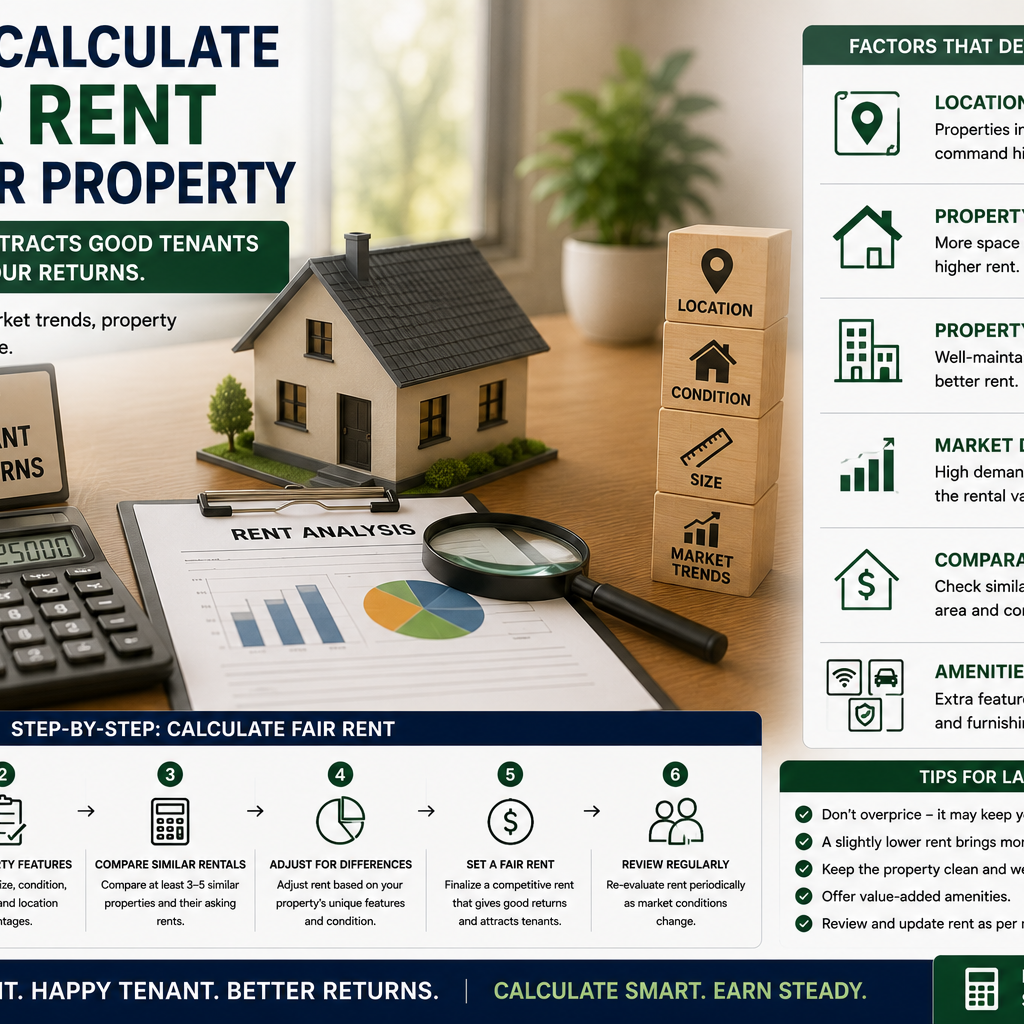
How to Calculate a Fair Rent for Your Property
Setting the rent is one of the first decisions a landlord makes and it carries more weight than it seems. Price it too high and the property sits empty, earning nothing. Price it too low and you give away income month after month.
A fair rent sits at the point where the property attracts good tenants quickly while earning you a sensible return. Finding that point takes a little research and honesty about what your property actually offers. This guide explains how to work out a rent that is fair to both you and your tenant.
Why the right rent matters
An empty property is a losing property. Every month it sits unrented, you earn nothing while still carrying the costs of ownership. An overpriced rent is the most common cause of a property staying empty.
At the same time, a rent set too low leaves money on the table for the whole length of the tenancy and raising it later can be difficult. The aim is to find the figure that fills the property quickly with a reliable tenant while reflecting its true value. Getting this right from the start saves you both lost income and the trouble of frequent vacancies.
Start with what similar properties rent for
The most reliable guide is what comparable properties in your area currently rent for. This tells you what tenants are actually willing to pay.
Look at properties similar to yours in size, type and location. A 5 marla house should be compared with other 5 marla houses nearby, not with larger or smaller ones or those in different areas. Check what these properties are advertised at and where you can, what they actually rent for, since asking rents and agreed rents sometimes differ. The closer your comparisons, the sharper your estimate.
Local property portals, dealers and people renting in your area can all help you build this picture. The more real examples you gather, the more confident your figure becomes.
Compare like with like
A fair rent rests on proper comparison. The properties you measure against must genuinely resemble yours.
Match the size first, then the location, ideally the same society, block or neighbourhood. After that, weigh the condition, the age and the specific features. A renovated, well maintained property commands more than a tired one of the same size in the same street. A furnished property usually rents for more than an unfurnished one. Compare carefully and adjust for the real differences between your property and the others.
Account for what makes your property different
No two properties are identical and the differences move the rent up or down. Be honest about both the strengths and the weaknesses.
Position matters. A property on a quieter street, near good schools, markets and transport, can command more. One on a noisy main road or far from amenities may earn less. Condition counts too. Fresh paint, working fittings and a clean, well kept property justify a higher rent. Damp, faults and neglect pull it down. Walk through your property as a tenant would and weigh these features the way they would, not the way an owner hopes.
Consider whether the property is furnished
Whether you rent the property furnished or unfurnished affects the rent significantly. Each option suits a different kind of tenant.
A furnished property usually commands a higher rent, since the tenant gets the use of furniture and fittings without buying their own. Furnished property attracts tenants who want convenience or staying for a shorter period. Unfurnished property goes for less rents but suits tenants settling for the long term who have their own furniture. Decide which option fits your property and your target tenant and price accordingly. Remember that furnishing also brings the cost and risk of wear on your items.
Factor in your costs and return
Rent should not be set purely on comparison. Consider what the property costs you and what return you want from it.
Think about any maintenance you cover, society charges you pay and the upkeep the property needs. A fair rent should comfortably cover these costs and leave a reasonable return for the capital tied up in the property. That said, you cannot set rent purely on your own needs. The market sets the ceiling and a rent far above what comparable properties fetch will simply leave your property empty. Balance your desired return against what the market will actually bear.
Read the local market mood
Rents rise and fall with demand, the economy and local factors. The same property can fetch different rents at different times.
In an area with strong demand and few available properties you can price more firmly. In a quieter market with many vacant properties you may need to be more competitive to attract a tenant. Pay attention to what is happening around you. Are properties in your area renting quickly or sitting empty? Is demand rising or softening? The answer shapes how confidently you can set your rent.
Decide on a small negotiation margin
Many tenants will try to negotiate, so a sensible landlord may build a small margin into the asking rent. The key word is small.
A modest margin gives room to settle while keeping the rent believable. A large margin, set far above market value, drives good tenants away before they make contact. Decide in advance both your asking rent and the lowest you will accept. Knowing your floor keeps you calm and firm in negotiation and stops you from either giving away too much or losing a good tenant over a small gap.
Watch how the market responds
Once you advertise, the response tells you whether your rent is right. This feedback is valuable, so read it honestly.
Plenty of enquiries and viewings suggest your rent is in the right range. Silence suggests it is too high, however much you dislike hearing it. Tenants vote with their attention and a lack of interest is a clear message. If the response is weak after a fair period, adjust the rent sooner rather than later. A timely correction fills the property. A stubborn wait only prolongs the vacancy and the lost income.
Think about the type of tenant you want
The rent you set influences the kind of tenant you attract. This is worth considering alongside the figure itself.
A fair, market level rent on a well kept property tends to attract reliable, settled tenants. An unusually low rent can attract a flood of enquiries, including some you would rather avoid and may signal that something is wrong with the property. The goal is not simply the highest rent or the fastest let, but a fair rent that brings a reliable tenant who will pay on time and stay. Weigh the figure with that aim in mind.
Plan for future rent increases
The rent agreement can state how rent will rise over the tenancy. Agreeing this at the outset, within what the law allows, protects both sides. The tenant knows what to expect and you keep the rent in line with the market over the years without conflict.
Understand the rent as a return on value
It helps to think of rent in relation to the value of the property. This gives you a sense of whether your rent is reasonable for what the property is worth.
A property's annual rent, set against its value, gives you a rough idea of the return it earns. In Pakistan, rental returns have often been modest compared with the capital value of property, which is one reason many investors focus on price growth rather than rental income. Knowing roughly what return your rent represents helps you judge whether it is fair and whether renting the property out makes sense for you. If the return feels very low, compare it with what similar properties achieve before assuming the rent must rise, since the market sets the limit.
Consider seasonal and local demand
Demand for rented property is not steady all year or across all areas. Recognising the pattern helps you time your letting and set the rent.
In some areas, demand rises at certain times, such as when families move before a school year or when workers relocate for jobs. Letting your property when demand is high can mean filling it faster and holding firmer on rent. Letting it during a quiet period may mean waiting longer or accepting a little less. You cannot always choose your timing, but where you can, advertising when demand in your area is strong gives you an advantage. Watch the local pattern before you set your rent and list the property.
Keep the rent competitive over time
Setting a fair rent once is not enough. Over the years, the market moves and a rent that was fair at the start can drift out of line.
Review your rent periodically against what comparable properties now achieve. If the market has risen, a sensible increase within what the law and your agreement allow keeps your return in line. If the market has softened, holding the rent steady may be wiser than pushing for an increase that drives a good tenant away. Keeping the rent competitive and fair over time protects both your income and your relationship with a reliable tenant, which is worth far more than squeezing the last rupee out of each year.
Avoid common rent setting mistakes
A few errors trip up landlords. The biggest is starting too high in the hope of bargaining down, which only leaves the property empty.
Others include setting rent on emotion or original cost rather than the market, ignoring the current demand, failing to compare like with like and refusing to adjust when interest is clearly weak. Some landlords also forget to account for the type of tenant a given rent attracts. Avoiding these errors is mostly a matter of staying honest about what your property is really worth in today's market.
Final thoughts
Calculating a fair rent is part research, part honesty and part judgement. Study what comparable properties rent for, compare like with like and adjust for what makes yours different. Consider whether to furnish, factor in your costs and desired return and read the local market mood.
Set a fair figure with a small margin for negotiation, then watch how tenants respond and be ready to adjust. A fair rent fills your property quickly with a reliable tenant and earns you a sensible return for years. The right rent is not the highest you can imagine, nor the lowest that fills the property overnight. It is the figure that balances good income with a good tenant and finding it is the surest path to a smooth, profitable tenancy.