Handicrafts of Azad Kashmir: A Complete Guide
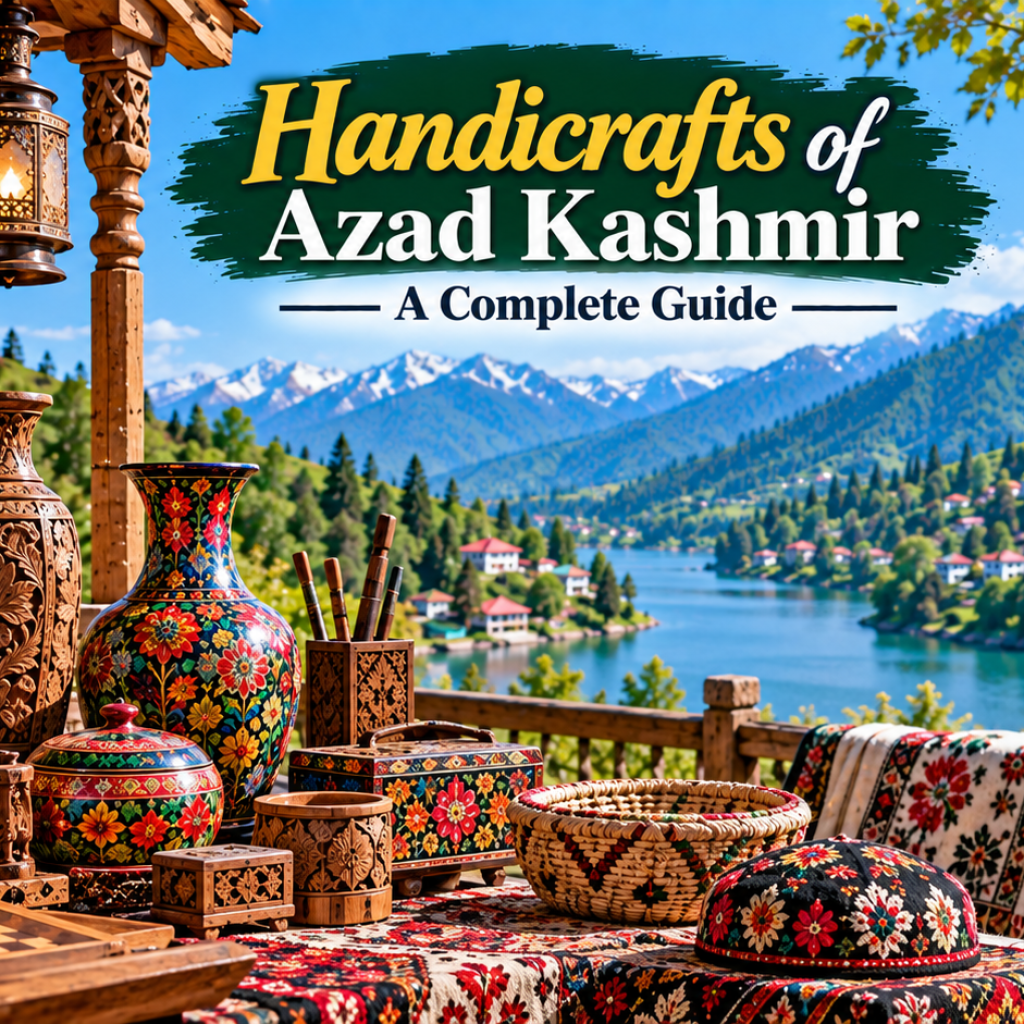
Handicrafts form a very proud part of the culture of Azad Kashmir and the larger Kashmir. The art of crafting wood, wool and paper has been around for centuries and the skillful craftsmen of the region have used their expertise to create beauty out of these materials. Shawls, woodworking and papier mache are some of the more popular forms of crafts. Embroidery work, carpets and metal goods also form an important part of this culture. This guide talks about the handicrafts of Azad Kashmir.
This guide offers a general overview. Details and figures vary between sources.
Quick answer: Kashmir is famous for its rich handicrafts with Azad Kashmir sharing in this proud tradition. Best known are the fine Pashmina and wool shawls, walnut wood carving and colourful papier mache all made by hand. Kashmiri artisans are also celebrated for their embroidery, such as sozni and tilla work along with hand knotted carpets, felted namda rugs and engraved copperware. These crafts are passed down through families and sold in the bazaars. A living heritage of skill and beauty the handicrafts make treasured souvenirs for visitors.
Handicrafts of Kashmir: A rich craft heritage
Kashmir has a rich history in craftsmanship. Artists produce high quality products. Skill is passed through the generations. Therefore, the crafts remain alive.
A long tradition is attached to the crafts. The artists produce manually. Skill is inherited from parents to children. Therefore, the tradition remains alive.
The crafts have a winter occupation tradition. In cold months, people stay at home. People get engaged in crafts. Therefore, winter favors the craft.
Source of livelihood defines the profession. Many artisans earn from the profession. Crafts sustain many families. Therefore, crafts sustain the people.
Shawls and fine wool
Shawls and fine wool lead the crafts of Kashmir. Soft wool warms the winter. Fine weaving wins wide fame. So the shawls stand supreme.
A famous shawl marks Kashmir. Pashmina wins world fame. Soft wool makes it prized. So the craft leads them all.
A fine weave marks the work. Artisans weave by hand. Looms shape each shawl. So the skill shows in every piece.
A rich border marks many shawls. Embroidery lines the edge. Fine thread adds beauty. So the work dazzles the eye.
Woodwork and papier mache
Woodwork and papier mache show great skill and colour. Walnut wood takes fine carving. Paper pulp turns to art. So both crafts delight the eye.
A carved wood marks the craft. Walnut takes fine detail. Artisans shape rich designs. So the wood becomes art.
A painted craft marks papier mache. Paper pulp forms the base. Bright designs cover the surface. So the objects glow with colour.
An old root marks papier mache. A saint brought it from Persia. It came long centuries ago. So the craft has deep roots.
Embroidery and needlework
Embroidery and needlework adorn the finest cloth. Fine thread lines the fabric. Skilled hands shape each design. So the work adds great beauty.
A fine stitch marks sozni. Silk thread forms the design. Needles trace rich patterns. So the work shows great care.
A golden thread marks tilla. Metal thread lifts the cloth. Bridal wear shines with it. So the craft suits grand dress.
A chain stitch marks crewel. Hooked needles form the loops. Bright wool fills the design. So the cloth wins colour.
Carpets, rugs and copper
Carpets, rugs and copper round out the crafts. Knotted carpets grace the floor. Felt rugs warm the home. So the crafts serve daily life.
A knotted carpet marks the craft. Artisans tie each knot. Rich designs fill the weave. So the carpets win fame.
A felt rug marks the namda. Wool is pressed to felt. Bright thread adds the pattern. So the rug warms the room.
A copper craft marks the metal. Trays and pots take shape. Fine engraving covers them. So the work serves the table.
Workshops and shopping
Workshops and shopping bring the crafts to the visitor. Artisans work in small units. Bazaars sell the finished goods. So the trade meets the traveller.
A craft workshop marks the trade. Artisans work in karkhanas. Skilled hands shape each piece. So the visitor sees the art.
A busy bazaar marks the towns. Shops display the crafts. Shawls and wood fill the stalls. So the buyer finds treasures.
A genuine piece marks the wise buy. Handmade goods hold true value. Machine copies lack the soul. So care rewards the shopper.
Frequently asked questions
What handicrafts is Kashmir famous for? Kashmir is famous for a wide range of exquisite handicrafts with Azad Kashmir sharing in this rich tradition. Most celebrated are the fine Pashmina and wool shawls, known worldwide for their softness and beauty. Walnut wood carving is another prized craft, producing beautiful furniture and decorative pieces. Colourful papier mache objects, hand painted with floral designs are also highly popular. Beyond these, Kashmiri artisans are renowned for their embroidery, including sozni and tilla work as well as hand knotted carpets, felted namda rugs and engraved copperware. Together these crafts reflect centuries of skill and are treasured both locally and around the world.
What makes Kashmiri handicrafts special? Kashmiri handicrafts are special because they combine centuries of tradition, remarkable skill and painstaking handwork, often passed down through generations of the same family. Each piece is made largely by hand, whether a shawl that takes months to weave and embroider or a walnut wood carving worked with fine chisels. A natural muse the designs frequently reflect the beauty of Kashmir with flowers, birds and paisley patterns appearing again and again. This blend of artistry, patience and heritage gives the crafts a beauty that machine made goods cannot match. Each piece becomes a small work of art in its own right.
Where did Kashmiri papier mache come from? Kashmiri papier mache has deep historical roots. Tradition holds that the craft was brought to Kashmir from Persia several centuries ago, in the fourteenth century. It is closely linked with a revered Muslim saint and scholar who travelled from Persia and helped introduce many arts and crafts to the area. A pulp based art the craft shapes paper into objects such as boxes, bowls, vases and trays. Artisans then hand paint them with intricate floral and paisley designs in bright colours. Over the centuries, Kashmiri artisans developed their own distinctive styles, making papier mache one of the most recognisable of all Kashmiri crafts.
Are Kashmiri crafts made in Azad Kashmir too? Yes the rich tradition of Kashmiri handicrafts is shared across the wider Kashmir. Artisans in Azad Kashmir practise many of these crafts too. Woodwork, embroidery, shawls and other traditional skills fill homes and workshops throughout the area, while the crafts are sold in local bazaars. Some of the finest and most specialised crafts have long been associated with particular towns and families, though the underlying heritage is common to Kashmiri culture as a whole. Visitors to Azad Kashmir can find beautiful handmade goods from shawls to wooden items, making them popular and meaningful souvenirs to take home.
How can visitors buy genuine Kashmiri handicrafts? Visitors wishing to buy genuine Kashmiri handicrafts should look for handmade pieces, ideally bought directly from artisans or reputable shops rather than mass market stalls. Genuine crafts, such as hand woven shawls or hand carved walnut wood, take great time and skill to make with their quality usually clear in the fineness of the work. Machine made copies exist, especially of popular items like shawls, so it is worth asking about how a piece was made. Buying from craft workshops or established bazaars, plus taking time to compare pieces, helps ensure that visitors take home a true example of Kashmiri artistry.
The living art of Kashmir
Handicrafts are the living art at the heart of Kashmiri culture. Skilled artisans have shaped wood, wool and paper into beauty for centuries. Shawls, woodwork and papier mache rank among the most famous crafts. Embroidery, carpets and copperware add to the rich tradition. Family workshops pass these fine skills down the generations. Few cultures hold so rich a craft heritage as this one.
You may come for the shawls the woodwork or the colour. This living art rewards the curious traveller. You can admire the fine Pashmina shawls woven by hand. You can watch artisans carve rich designs into walnut wood. You can browse the bright papier mache in the busy bazaars. Come to know the handicrafts of Azad Kashmir and their beauty. This is the living art of Kashmir.