Haleji Lake: A Complete Guide
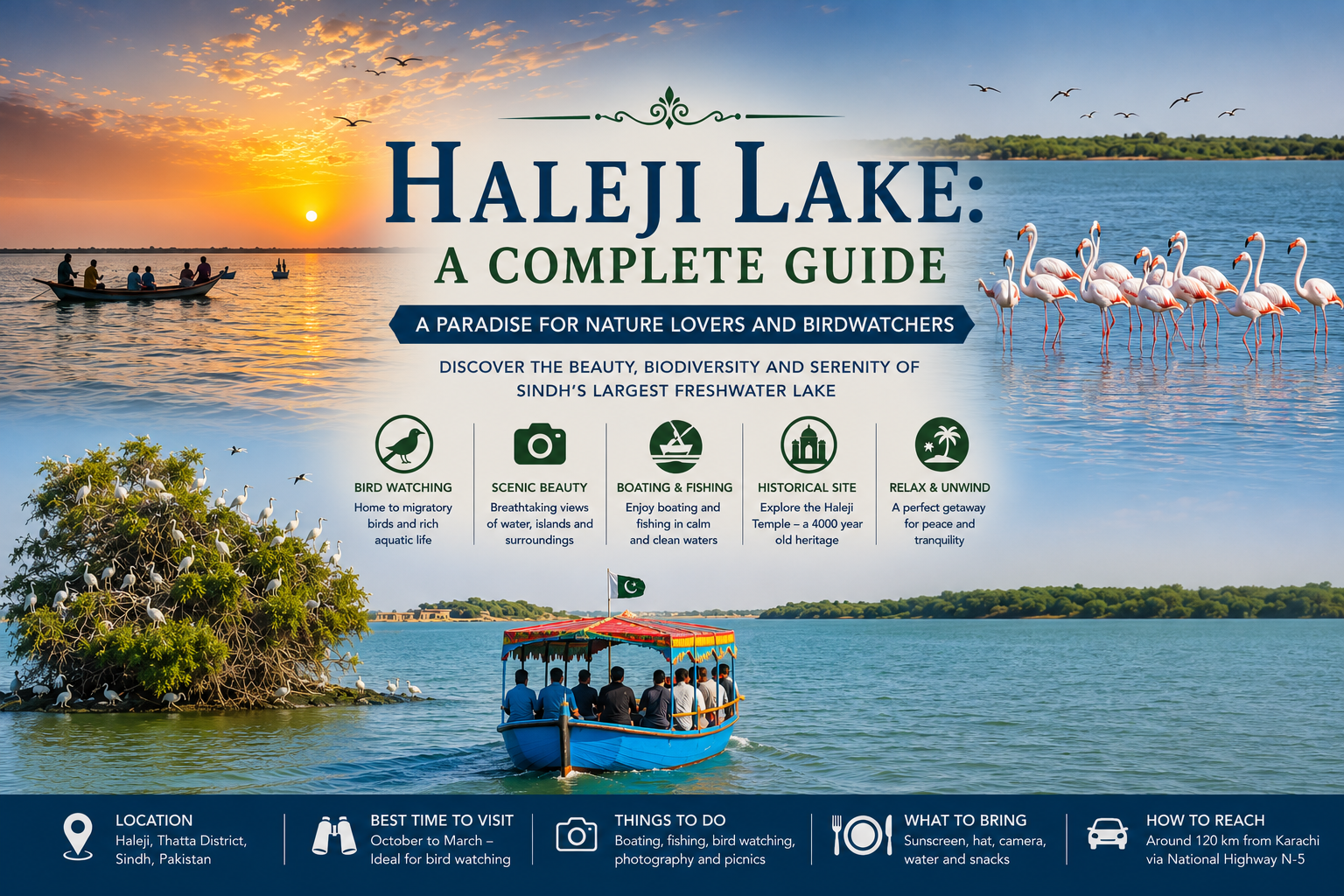
Haleji Lake is one of the great birdwatching sites of South Asia. It lies in the Thatta district within easy reach of Karachi. Over two hundred bird species have been recorded around its water. The lake began as a salt lagoon and became a wartime reservoir. Crocodiles, otters and elusive fishing cats live along its margins. This guide covers Haleji Lake for the curious traveller. It explains the history the birds the wildlife and how to visit.
This guide offers a general overview. Sources give differing figures for the size of the lake and the distance from Karachi.
Quick answer: Haleji Lake lies in the Thatta district of Sindh. Karachi is roughly eighty kilometres away. The drive takes around two hours. The lake was a salt lagoon until the Second World War. Engineers converted it into a freshwater reservoir by 1943. It became a Ramsar wetland in 1976. Around 223 bird species have been recorded here. Winter from November to February is the best season.
About Haleji Lake
The lake is a perennial freshwater body. Haleji holds water throughout the year. Marshes and brackish lagoons surround it. This mix of fresh and salt water suits a great range of birds.
The setting is green and sheltered. Trees line much of the shore. Reeds and rushes fill the shallows. Lotus covers parts of the surface. This vegetation gives the lake its colour.
Two islands rise from the water. Local names call one Pelican Island. The other is Cormorant Island. Birds rest and sun themselves on both. They are among the best viewing points.
The lake belongs to a wider system. Haleji connects with Hudero and Keenjhar nearby. Together they form a very large waterfowl habitat. The dedicated guide to Keenjhar covers that lake.
Wartime history of Haleji Lake
The lake began as a salt lagoon. Seasonal water collected in a natural depression. The result was brackish and shallow. It supported little in the way of settled life.
The Second World War changed everything. Large numbers of troops were stationed at Karachi. The city needed far more fresh water. Officials looked to Haleji for the answer.
Engineers transformed the lake. They drained the salt water from the depression. They built an embankment around it. They then fed it with fresh water through a canal from the Indus.
The work moved quickly. Crews completed the project within around two years. The lake became a freshwater reservoir by 1943. It has held fresh water ever since.
The reservoir still serves Karachi. Haleji remains part of the water supply for the city. This practical role runs alongside its ecological value.
Birds in Haleji Lake
The birdlife is exceptional. Around 223 species have been recorded around the lake. Many call it one of the largest bird sanctuaries in Asia. It ranks among the important wintering sites for waterfowl in Eurasia.
Winter brings the migrants. Birds arrive from as far as Siberia. They come between November and February. Thousands of waterfowl gather on the water.
Ducks dominate the winter flocks. Wigeon, shoveler, pintail and teal all arrive. Mallard and spot billed duck join them. Cotton teal are present too.
Waders and waterbirds fill the margins. Herons and egrets work the shallows. Jacanas walk across the lotus leaves. Purple moorhen and coot move through the reeds. Flamingos appear at times.
Birds of prey patrol the lake. Osprey hunt over the water. Pallas's fish eagle has been recorded here. Buzzards, harriers and falcons all pass through.
The lake is a breeding site too. Egrets and herons nest around the water. This makes Haleji valuable outside the migration season as well.
Wildlife in Haleji Lake
Crocodiles live in the lake. Marsh crocodiles inhabit the water and the banks. Local reports suggest a substantial population. Visitors should keep well clear of the edges in places.
Otters work the margins. They are shy and hard to spot. Early morning offers the best chance.
Fishing cats may survive here. This elusive wild cat is nocturnal and rarely seen. Conservation teams have used camera traps to look for it. Confirming its presence has proved difficult.
The vegetation supports the ecosystem. Reeds and rushes shelter nesting birds. Submerged plants feed the waterfowl. Lotus beds cover parts of the surface.
Conservation picture of Haleji Lake
The lake holds protected status. Officials declared it a wildlife sanctuary. It gained Ramsar designation in 1976. These protections recognise its international importance.
Pressures have grown over time. Funding for maintenance has been limited. Water quality and levels have fluctuated. Visitor pressure adds to the strain.
Some species have declined sharply. Long time birdwatchers report species once abundant now scarce. Grey headed swamphen numbers have fallen. Whistling teal were once far more common.
Conservation efforts continue. Wildlife authorities monitor the sanctuary. Environmental groups run surveys and camera trapping. The lake remains one of the important birding sites of the country.
Visiting Haleji Lake
The lake lies in the Thatta district. Karachi is roughly eighty kilometres away. Sources give the distance variously. The drive takes around two hours in light traffic.
Come between November and February. Winter brings the migratory birds. The weather is pleasant then too. Summer visits are hot and far less rewarding.
Start very early. Dawn is the best time for birds. Many birdwatchers leave Karachi before five in the morning. Sunrise over the lake is worth the effort alone.
Bring the right equipment. Binoculars are essential. A telescope helps for distant flocks. A field guide to the birds of the region is useful.
Combine it with the Thatta sites. Keenjhar Lake lies nearby. Makli Necropolis and the Shah Jahan Mosque are close too. Each has its own dedicated guide.
Take care near the water. Crocodiles live in the lake. Swimming is not advisable. Keep to the paths and viewing points.
Frequently asked questions
Where is Haleji Lake? Haleji Lake lies in the Thatta district of Sindh. Karachi is roughly eighty kilometres away, though sources give the distance variously. The drive takes around two hours in light traffic. The lake connects with Hudero and Keenjhar lakes nearby. Together they form one of the largest waterfowl habitats in the region. Many visitors combine Haleji with the heritage sites around Thatta.
Why is Haleji Lake famous for birds? Around 223 bird species have been recorded around Haleji Lake. Many describe it as one of the largest bird sanctuaries in Asia. It ranks among the important wintering sites for migratory waterfowl in Eurasia. Birds arrive from as far as Siberia between November and February. The mix of fresh and brackish water suits a great range of species. It is also a breeding site for egrets and herons.
How was Haleji Lake created? Haleji was originally a salt lagoon formed by seasonal water in a natural depression. Large numbers of troops were stationed at Karachi during the Second World War. The city needed far more fresh water. Engineers drained the salt water and built an embankment around the lake. They then fed it with fresh water through a canal from the Indus. The work was completed by 1943.
Are there crocodiles in Haleji Lake? Marsh crocodiles do live in Haleji Lake. Local reports suggest a substantial population inhabits the water and the banks. Visitors should keep well clear of the edges in places and follow local guidance. Swimming is not advisable. Otters also work the margins. Conservation teams have used camera traps to look for the elusive fishing cat.
When is the best time to visit Haleji Lake? The best time falls between November and February. Migratory birds are present then and the weather is pleasant. Dawn is the finest time of day for birdwatching. Many birdwatchers leave Karachi very early to arrive for sunrise. Summer visits are hot and far less rewarding. Bring binoculars and a field guide to make the most of the trip.
The lake the war made
Haleji is a lake with an unusual story. A salt lagoon became a freshwater reservoir to serve wartime troops. The engineers who drained it built one of the great bird refuges of the region by accident. Ducks now arrive from Siberia every winter. Ospreys hunt above the water. Crocodiles bask along the banks a short drive from a city of millions.
You may come to Haleji for the birds the wildlife or the quiet. The lake rewards an early start either way. You can watch the sun rise over the reeds. You can scan the flocks from the shore with binoculars. You can look for herons working the shallow margins. Come in winter and arrive at dawn. Few places so close to Karachi feel so far from it.