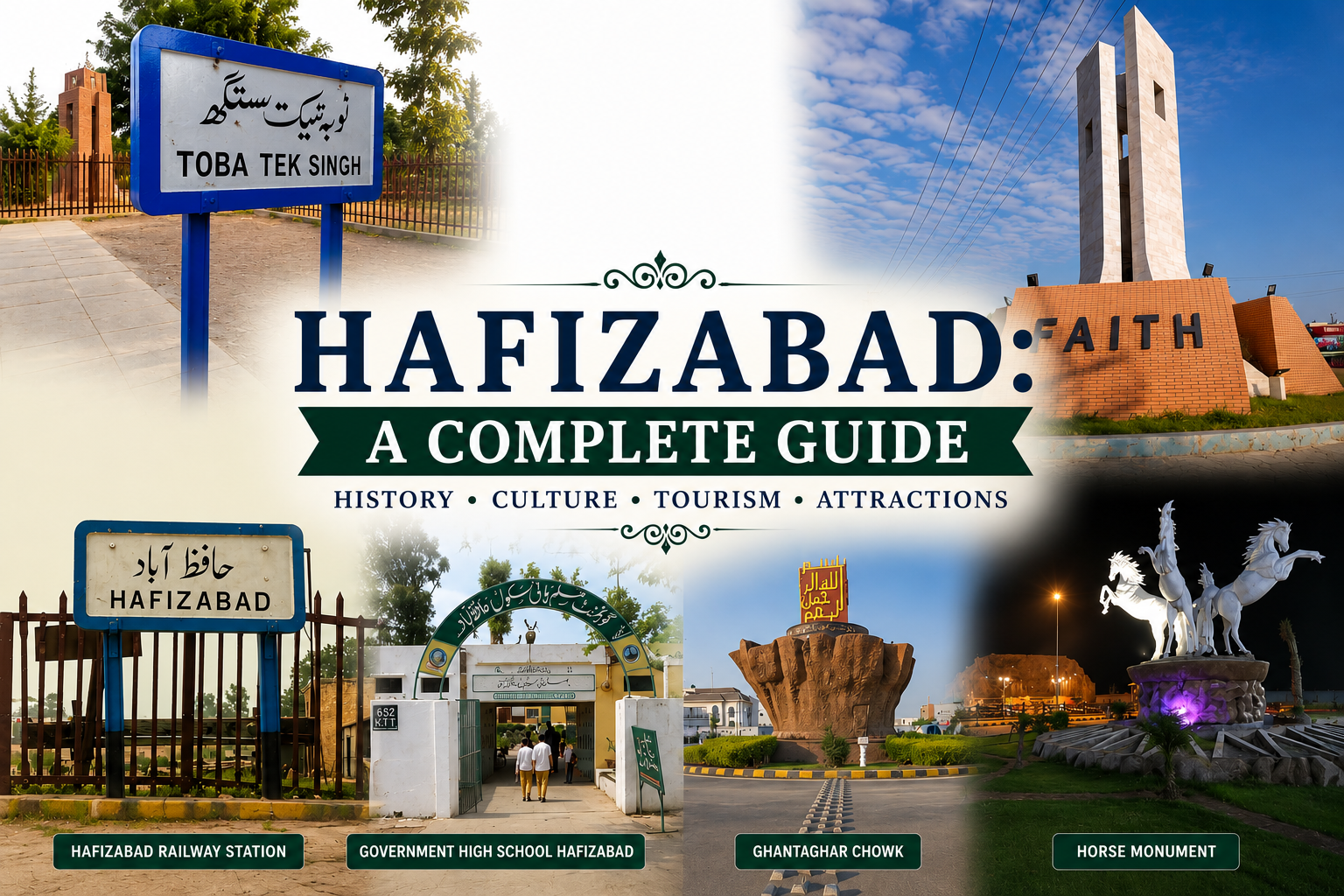
Hafizabad: A Complete Guide
Hafizabad is the rice capital of Punjab. It rests on the fertile plain east of the Chenab River. It grows some of the finest basmati rice in the world. It holds one of the biggest rice export markets in the country. It carries a history reaching back to the age of Alexander the Great. This guide covers Hafizabad for the curious traveller. It explains the history the rice economy the culture the sights the property scene and how to visit.
This guide offers a general overview. Figures for the population vary between sources.
Quick answer: Hafizabad is a city and district in central Punjab around 160 kilometres from Lahore, on the bank of the Chenab River. It was founded in the Mughal era and named after a dervish called Hafiz. It is famous above all for its rice, especially basmati. It holds one of the biggest rice export markets in the country. It is linked to the folk hero Dulla Bhatti of Pindi Bhattian. It is located on the M 2 motorway between Lahore and Islamabad. Winter is the best time to visit.
About Hafizabad
Hafizabad is a historic farming city in central Punjab. It is located on the fertile plain east of the Chenab River. It is the capital of its district in the Gujranwala Division. It blends a Mughal heritage with a rich farming present.
A flat alluvial plain forms the district. Chenab waters it along with the Lower Chenab Canal. Rich soil makes the district a great farming area. Rice, wheat and sugarcane fill the surrounding fields.
Its location is strategic. Hafizabad is located on the M 2 motorway between Lahore and Islamabad. It also connects to the M 3 towards Faisalabad and Multan. This access makes it a natural hub for trade.
This district holds two tehsils. These are Hafizabad and Pindi Bhattian. Punjabi is the dominant language of the area. Farming shapes the life of the whole district.
History of Hafizabad
Ancient roots reach deep. Alexander the Great crossed the Chenab here in 327 BCE. He passed through the well populated Sandal Bar area. This land has been settled since antiquity.
Its name honours a dervish. Hafizabad was founded during the reign of Akbar. Legend says it was named after a Sufi named Hafiz. He is said to have helped the emperor during a hunt.
Mughal patronage shaped the city. It became the centre of a local administrative unit. It served as a hub for tax collection and land management. This role stimulated the local economy.
Pindi Bhattian recalls a folk hero. This town was home to Dulla Bhatti a 16th century Rajput chieftain. He led a peasant revolt against the rule of Akbar. He remains a celebrated figure in Punjabi folklore.
British rule developed the district. Canals and railways reached the area. Rice and grain trade grew with the new links. Hafizabad became a great agricultural centre.
Rice economy of Hafizabad
Hafizabad is famous for rice. Basmati is the king of its crops. This fragrant, long grained rice is prized worldwide. It is the great pride of the district.
Many varieties are grown here. Basmati 385, Basmati 386 and Super Karnal all thrive. White Pearl Rice is a famous local brand. More than ten fine varieties grow in the district.
Its grain markets are vast. Markets at Hafizabad and Jalalpur Bhattian are among the biggest in the country. They serve as great rice export centres. Processed rice reaches the Middle East and beyond.
Other industry supports the economy. Rice and textile power loom mills operate here. Livestock farming is a major activity. Cattle, buffaloes, goats and poultry fill the district.
Sights and culture in Hafizabad
Shah Sharmast Shrine draws devotees. This shrine honours a saint of the Mughal era. Emperors Akbar and Jahangir are said to have visited him. It remains a place of local devotion.
Pindi Bhattian recalls Dulla Bhatti. This historic town celebrates the folk hero. His story lives on in Punjabi songs. It is a gentle link to the past of the area.
Chenab riverbanks are serene. This great river forms the north western boundary. Its banks offer scenic views and recreation. They are a peaceful escape from the town.
Handicrafts add local colour. Artisans make traditional wares across the district. Rural crafts include textiles and pottery. These skills survive in the villages.
Property market in Hafizabad
Property here is steady. Rice and grain wealth support the market. New housing schemes ring the city. Demand rises with the growth of the district.
Location is a great asset. Hafizabad is located on the M 2 motorway to Lahore and Islamabad. Rail and road links serve the district. This connectivity lifts the property market.
Buyers find a varied choice. An old city offers heritage and trade. New schemes offer modern living. A rural fringe offers agricultural land. Each suits a different buyer.
This district keeps developing. Rice and textile industry underpin the economy. This motorway draws trade to the area. This supports the property market.
Visiting Hafizabad
Come in winter. Summers here are very hot. Winter months from November to February are the finest season. Weather is mild and pleasant then.
See the grain markets. These great rice markets are a lively spectacle. They show the wealth of the district at work. A visit reveals the heart of the local economy.
Visit Pindi Bhattian. This historic town recalls Dulla Bhatti. His folk story is part of the area. It is a touching piece of local heritage.
Enjoy the Chenab which runs along the boundary of district Hafizabad. Its banks offer scenic views. A riverside walk is a peaceful retreat.
Frequently asked questions
Why is Hafizabad famous for rice? Hafizabad is famous as the rice capital of Punjab, growing some of the finest basmati in the world. Basmati, prized for its unique aroma and long, slender grains, is often called the king of rice. More than ten high quality varieties grow in the district, including Basmati 385, Basmati 386 and Super Karnal along with the famous White Pearl Rice brand. Grain markets at Hafizabad and Jalalpur Bhattian are among the biggest rice export centres in the country.
How did Hafizabad get its name? The origin of Hafizabad dates back to the time of Mughals under the rule of Emperor Akbar. The name comes from a Muslim dervish or Sufi saint by the name of Hafiz. The reason behind naming the city is that according to legend, Hafiz helped the emperor in a hunting trip. The city immediately became the capital of the district for administration and taxation purposes. Along with being fertile and having good agriculture, the city has a significant position commercially too.
Who was Dulla Bhatti? Dulla Bhatti was an Islamic Rajput leader of the 16th Century who waged war against the reign of Emperor Akbar. This Muslim ruler was from the town of Pindi Bhattian, now part of the Hafizabad District. He fought against Akbar and was hanged to death in Lahore. Although Dulla Bhatti has little mention in historical texts, he lives on through the memory of the people of Punjab through Punjabi folklore.
Where is Hafizabad located? Hafizabad is located in central Punjab around 160 kilometres from Lahore, on the fertile plain east of the Chenab River. It is well connected, lying on the M 2 motorway between Lahore and Islamabad and linking to the M 3 towards Faisalabad and Multan. It shares boundaries with the districts of Mandi Bahauddin, Faisalabad, Chiniot, Sargodha, Gujranwala, Sheikhupura and Nankana Sahib. It can also be reached by the Wazirabad to Faisalabad railway line.
When is the best time to visit Hafizabad? Winter, from November to February, is the best time to visit Hafizabad, when the weather is mild and pleasant. Summers here are very hot. Winter suits a visit to the great grain markets the historic town of Pindi Bhattian and the scenic banks of the Chenab River. Those interested in the rice harvest can see the fields and markets at their busiest in the autumn, when the fragrant basmati crop is gathered and traded.
Rice capital of Punjab
Hafizabad is the rice capital on the plain of the Chenab. It grows the fragrant basmati that reaches tables far away. It trades its grain in some of the biggest markets in the country. It remembers the folk hero Dulla Bhatti of Pindi Bhattian. It carries a history stretching back to Alexander the Great. Few cities feed the country so richly from their fields.
You may come to Hafizabad for the rice the history or the river. This city rewards the visit either way. You can wander the great grain markets at harvest time. You can trace the story of Dulla Bhatti at Pindi Bhattian. You can rest by the green banks of the Chenab. Come in winter and explore the rice capital. Hafizabad is the king of basmati.