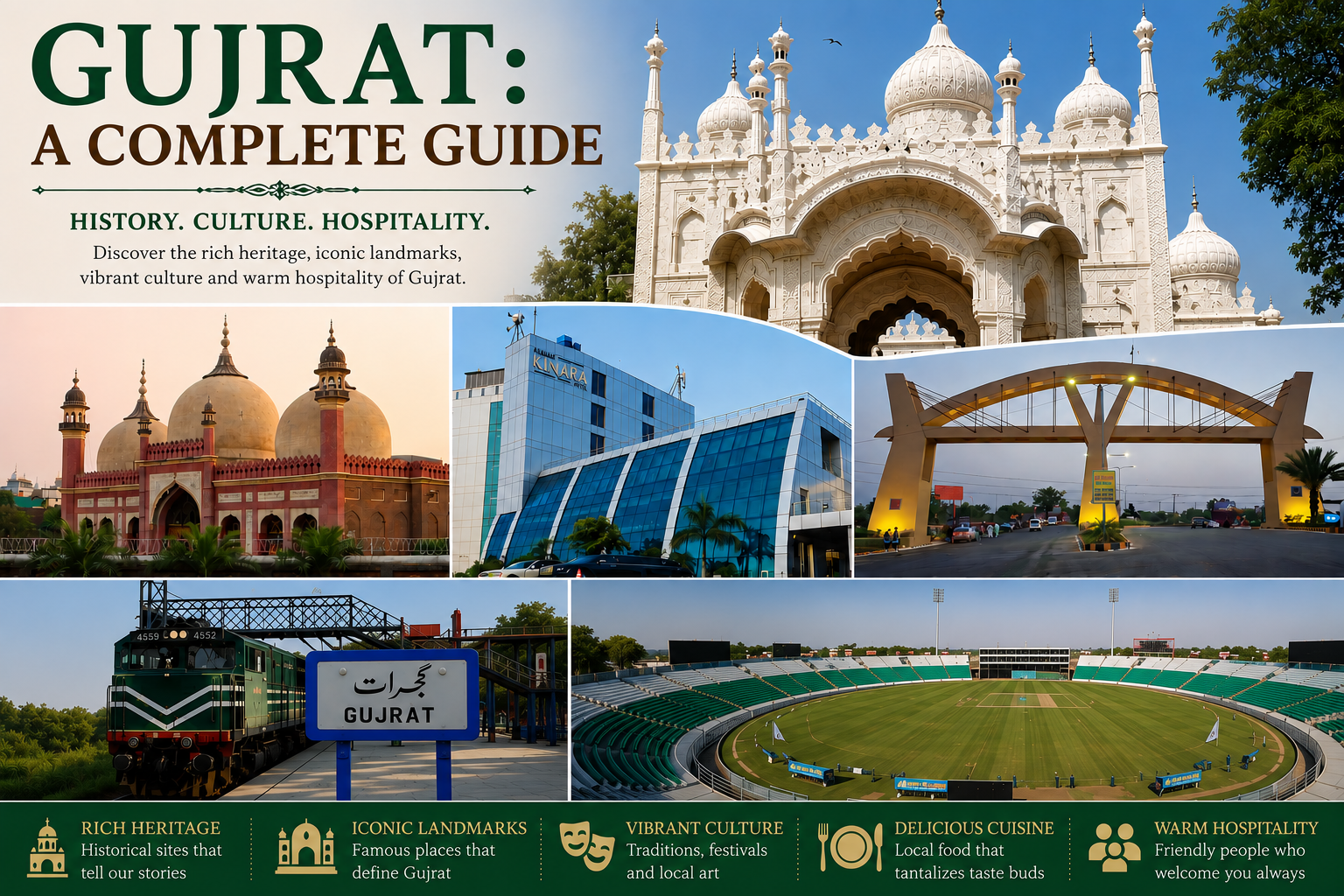
Gujrat: A Complete Guide
Gujrat is one of the great industrial cities of northern Punjab. It lies between two great rivers the Chenab and the Jhelum. It makes most of the electric fans in the country and exports its pottery and furniture across the world. It carries a proud Mughal heritage in its old fort and gate. It also sends thousands of its people overseas. This guide covers Gujrat for the curious traveller. It explains the history the industry the sights the diaspora the property scene and how to visit.
This guide offers a general overview. Figures for the population vary between sources.
Quick answer: Gujrat is an industrial city in the north of Punjab, on the Grand Trunk Road between Lahore and the north. It lies between the Chenab and Jhelum rivers around 120 kilometres from Lahore. It was a planned city and grew around a fort built by the Mughal emperor Akbar in 1580. It is famous for electric fans, pottery, furniture and ceramics. It forms part of the industrial Golden Triangle with Sialkot and Gujranwala. Its large overseas community sends home vital remittances. Autumn and spring are the best times to visit.
About Gujrat
Gujrat is a great industrial city in the north of Punjab. It lies on the Grand Trunk Road between Lahore and the north. It is a dense, enterprising city a vital link between the two halves of the province.
The setting lies between two rivers. The Chenab flows past the south and the Jhelum past the north. This fertile strip marks the northern edge of the Punjab plains.
Gujrat was one of only a few towns in the subcontinent planned before it was built. The old city rose on a mound above the plain a heritage that sets it apart from its neighbours.
It anchors the Golden Triangle. Gujrat, Sialkot and Gujranwala form this export driven cluster of northern Punjab. Their industries power a great share of the trade of the country.
History in Gujrat
The roots run deep beneath the mound. The old city rose on a hill that buries the remains of at least two earlier towns. One is thought to have fallen to the Mongols in the age of Alauddin Khilji. The long story lies underfoot.
The Mughals shaped the modern city. The emperor Akbar built a fort here in 1580 to settle tribal conflicts in the region. He encircled the town with a wall and five gates. Only the Shah Daula Gate survives today.
The Mughal emperors passed through Gujrat on their journeys to Kashmir. This brought building and prosperity as the city grew on the imperial route.
A great battle was fought here. The Battle of Gujrat in 1849 broke Sikh power for good. It allowed the British to annex the whole of Punjab. This made the city a turning point in the history of the region.
The British developed it further. They made Gujrat a railway outpost in the 19th century and incorporated it as a municipality in 1867.
Industry in Gujrat
Gujrat is famous above all for its fans. The city and nearby Gujranwala make almost all the electric fans in the country. Hundreds of factories fill the fan industry alone. The fans are exported to many countries abroad.
The fan story is one of enterprise. A few determined individuals built the industry from almost nothing in the early 1940s. It now carries the name of the city around the world.
The pottery is equally renowned. Gujrat is famous for the fine clay its potters have worked for ages. It is a national leader in ceramic tiles and sanitary ware.
The furniture is world class. Gujrati craftsmen have mastered the conditioning of wood. Their furniture carries an immaculate polish prized far and wide.
Other trades add to the mix. Footwear, brassware, carpets, PVC pipes and rice add further to the exports. Over a thousand industrial units of every size fill the district.
Sights in Gujrat
The Shah Daula Gate recalls the Mughal wall. It is the only survivor of the five original gates. It is a fine window on the old planned city and the imperial past.
The old fort area lies at the heart. Akbar built the fort here in 1580 on the ancient mound. Though little survives the site still marks the origin of the city.
The shrine of Shah Daula draws the devout. This Sufi saint gave his name to the surviving gate. His shrine is a spiritual landmark of the city.
The bazaars reward the wanderer. The markets sell pottery, brass, furniture and cloth. This is the living, trading heart of Gujrat.
Overseas community in Gujrat
Gujrat is famous for its diaspora. More than three hundred thousand people from the district live overseas. They work across Europe the Gulf and beyond. Kharian nearby is even nicknamed Little Norway for its many expatriates.
The remittances are a great engine. The overseas community sends home billions of rupees each year in foreign exchange. This money funds homes, businesses and land across the district.
The diaspora stays deeply connected. People from all three tehsils keep a keen interest in Gujrat and invest in its future a bond that shapes the district.
Property market in Gujrat
The property market is strong and distinctive. The remittances of the diaspora drive much of the demand. Overseas families invest heavily in land and homes, giving the market a steady base.
New housing societies ring the city and serve returning families and local business owners alike. Demand rises with the industry and the overseas money.
The location aids the market. The Grand Trunk Road the motorway and the railway all link the city to Lahore and Islamabad, lifting values across the district.
The property choice is varied. The old city offers heritage and trade. New societies offer modern living, while the outskirts offer room to grow.
Visiting Gujrat
Come in autumn or spring. Summer is hot on the plains. Winter is cool and pleasant. Autumn and spring bring the finest weather for exploring the city.
See the craft in action. The pottery and furniture workshops are the real draw. Watching the potters and carpenters at work is memorable.
Explore the old city. The Shah Daula Gate and the bazaars reward a wander. A local guide helps in the lanes. This is where the heritage of Gujrat still lives.
Use it to see the Triangle. Sialkot and Gujranwala lie close by. The industrial cities reward a trip. The dedicated guides cover them in detail.
Frequently asked questions
What is Gujrat famous for? Gujrat is famous above all for its electric fans, making almost all of them in the country together with nearby Gujranwala. It is also a national leader in pottery, ceramic tiles and sanitary ware, worked from its fine local clay for ages. Its craftsmen produce world class furniture with an immaculate finish. Footwear, brassware and carpets add to the trade. The city forms part of the industrial Golden Triangle and is known for its large overseas community.
Why is Gujrat a planned city? Gujrat is one of only three historical towns in the subcontinent that were planned before they were built alongside Fatehpur Sikri and Dipalpur. Those two were built for the royal army and as an imperial capital. Gujrat was from the start the people's town. It rose on a mound above the plain, clearly visible from the Grand Trunk Road. The Mughal emperor Akbar walled it and built its fort in 1580.
What is the Golden Triangle of Punjab? The Golden Triangle refers to the three great industrial cities of northern Punjab: Gujrat, Sialkot and Gujranwala. Together they drive a large share of the export economy of the country. Gujrat leads in fans, pottery and furniture. Sialkot is the world capital of footballs and surgical instruments. Gujranwala is a hub for fans, ceramics and food. The three cities have their own dedicated guides in this series.
Why do so many people from Gujrat live overseas? Gujrat has a long tradition of overseas migration, with more than three hundred thousand people from the district living abroad across Europe the Gulf and beyond. Kharian nearby is nicknamed Little Norway for its many expatriates. The overseas community sends home billions of rupees each year in foreign exchange. These remittances fund homes, businesses and land. They also shape the property market of the city.
When is the best time to visit Gujrat? The best time to visit Gujrat is autumn or spring, when the weather is mild and pleasant. The city lies on the plains and is hot in summer, while winter is cool. Whatever the season the pottery and furniture workshops are the real draw for a visitor. The Shah Daula Gate and the old bazaars also reward exploration. The nearby Golden Triangle cities of Sialkot and Gujranwala make easy day trips.
Industrial city between the rivers
Gujrat is an industrious city set between two great rivers. It cools the country with the fans it builds by the hundred thousand. It shapes fine pottery and furniture prized far beyond its borders. It carries a Mughal past in its old fort and its surviving gate. It reaches across the world through the people it sends abroad. Few cities of its size work so hard or travel so far.
You may come to Gujrat for the crafts the history or the industry. The city rewards the visit either way. You can watch the potters and carpenters at their ancient trades. You can stand at the Shah Daula Gate of the old walled city. Come in autumn or spring and explore the Golden Triangle. Gujrat is the industrious heart between the rivers.