Golra Sharif Railway Heritage Museum: A Guide for Visitors
The Golra Sharif Railway Heritage Museum is situated at a historic junction station on the edge of Islamabad. Where a yellow stone building and its old trees carry the atmosphere of a bygone age. The museum preserves more than 150 years of railway history, from steam locomotives and vintage carriages to the everyday objects of the old rail network. For anyone interested in history or simply looking for an unusual place to visit in the capital, it offers a step back in time.
This article explains what the Golra Sharif Railway Heritage Museum is, its history, what it holds and the area around it. Written for anyone getting to know Islamabad, it covers both the museum itself and its setting at the historic Golra Sharif junction near the capital.
The Golra Sharif Railway Heritage Museum
The Golra Sharif Railway Heritage Museum, also known as the Pakistan Railways Heritage Museum, is a railway museum located at the Golra Sharif junction station, on the edge of Islamabad near the F series sectors. It preserves the relics and memorabilia of the railways, dating back to the days of the British era.
The museum is situated at a working junction station on the main line of Pakistan Railways which connects the country from south to north towards Peshawar. The station lies to the southeast of the Margalla Hills and east of the ancient city of Taxila, in a setting that combines railway heritage with the wider history of the region. Trains still pass through the junction, so the museum is situated alongside a living railway.
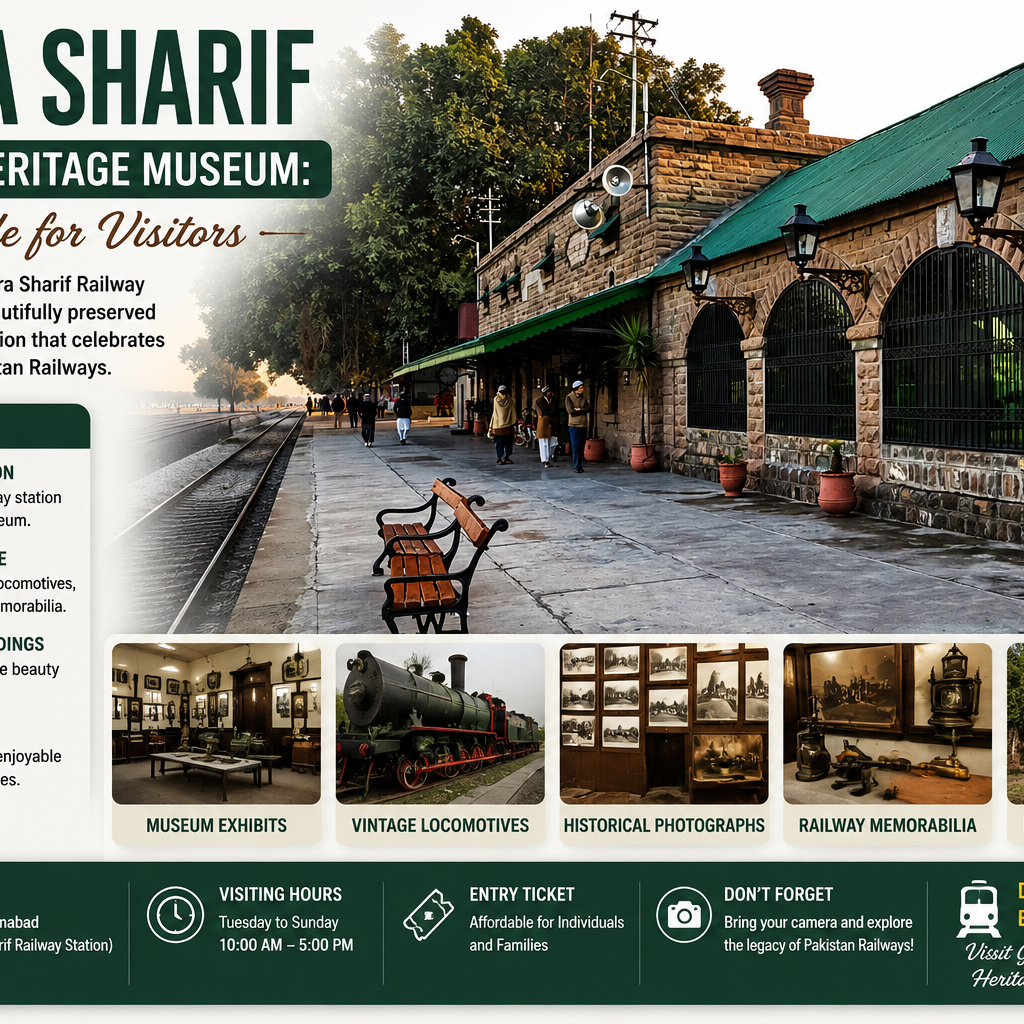
The museum was established in 2003 and later renovated and it holds artefacts covering more than 150 years of rail history. The collection is housed in galleries within the historic station building, with a large open yard outside displaying locomotives, carriages and other large exhibits. Together, these give visitors a full picture of the railway's past.
The station building itself is part of the attraction. Built in Victorian style yellow stone masonry, surrounded by very old banyan trees, it has a serene, historic atmosphere. The combination of the beautiful old building, the vintage trains and the peaceful setting has made the museum a popular spot for tourists, railway enthusiasts, families and the film and television industry alike.
Quick answer: The Golra Sharif Railway Heritage Museum is also called the Pakistan Railways Heritage Museum is a railway museum at the historic Golra Sharif junction station near Islamabad. Established in 2003, it preserves more than 150 years of rail history, with vintage locomotives, carriages and artefacts housed in a Victorian era station building.
The history of Golra Sharif station
The story of the museum begins with the station itself which has a long history reaching back to the British era. The Golra Sharif railway station was established in 1882, during British rule, as part of the North Western Railway network. It was upgraded to a junction in 1912, becoming an important point on the rail system.
In its working heyday, the junction was a busy and important place. It linked several routes, connecting towards Peshawar, Kohat, Havelian and Multan and served as a significant part of the railway network. Many trains passed through the station each day and it even served as a passage for royals travelling to the hills of what is now the Islamabad area. The station was a hub of activity, full of the bustle of a once dominant industry.
The idea of turning the station into a museum came in the early 2000s. Instructions were issued across the divisions of Pakistan Railways to gather old items such as furniture, tools and equipment and one railway officer saw this as a chance to create a heritage site. Through the diligence of the officers involved, often working with limited resources, the collection was assembled and the museum was created.
The museum opened its doors to the public in September 2003 and was officially inaugurated a few years later, in 2007. It was renovated in 2018 to improve the site further. Since then, it has grown into one of the capital's notable attractions, preserving the railway heritage of the country for visitors and future generations.
What the museum holds
The heart of the Golra Sharif Railway Heritage Museum is its collection which brings the history of the railways to life. The exhibits are housed in the galleries of the station building, with the larger items displayed in the open yard outside, giving visitors plenty to explore.
The indoor galleries hold a wide range of artefacts covering many facets of the railway system. Visitors can see mechanical models, signalling systems, communication tools and displays showing how railway operations evolved over time. Everyday objects from the old railways are preserved too, including furniture, crockery, clocks, lamps, lanterns, tools and even old advertising posters from the British period. These smaller items give a vivid sense of daily life on the railways of the past. The museum also touches on the social impact of the railways on the diverse society of the subcontinent.
The open yard is home to the larger exhibits and this is where the museum makes its strongest impression. Steam and other locomotives, carriages, cranes, trolleys and saloon cars are lined up, many of them now rare or extinct elsewhere in the world. Among the highlights are old steam engines, including one assembled in Canada and a German postal coach.
Some of the most notable exhibits are the luxury saloon cars from the British period. These include a saloon car associated with the last British viceroy and another historic carriage of great interest. The museum also holds memorabilia from different periods, including items connected to the history of the region and the railways over more than 150 years. Together, the indoor and outdoor exhibits make the museum a treasure of railway history.
Visiting the museum
The Golra Sharif Railway Heritage Museum is one of the more unusual and rewarding places to visit in Islamabad, offering history, architecture and atmosphere in one location. It is well suited to families, history lovers and anyone curious about the railways.
The museum is generally open daily, from morning until late afternoon, with shorter hours on Fridays. The entry fee is very modest, making it an affordable outing. A single ticket allows visitors to explore the galleries and the open yard, taking in both the small artefacts and the large locomotives and carriages.
Part of the pleasure of a visit is the setting. The Victorian station building, with its yellow stone walls and hall like rooms and the surrounding old banyan trees, create a peaceful, almost timeless atmosphere. Visitors often remark on the sense of stepping back in time and the station and trains offer excellent opportunities for photography. As a working junction, the station still sees trains pass through, adding to the living character of the site.
The museum has also inspired railway tourism in the wider region. A safari tourist train has run from Golra station, passing through historic areas towards the Attock Khurd railway station, offering scenic views of the Margalla Hills, tunnels and old bridges. This has added another dimension to the site, connecting the museum to the wider heritage of the railways. For a comfortable visit, the cooler months are ideal and a trip can easily be combined with other attractions in the area.
Quick answer: The Golra Sharif Railway Heritage Museum is generally open daily from morning to late afternoon, with shorter hours on Fridays and has a very modest entry fee. Visitors can explore galleries of railway artefacts and an open yard of vintage locomotives and carriages, set in a historic Victorian station building.
Places near the Golra Sharif museum
The Golra Sharif Railway Heritage Museum is situated on the edge of Islamabad, near the F series sectors, in a location that is both connected to the capital and close to areas of wider interest. The setting adds to the appeal of the museum and makes it easy to combine with other viis situated.
The museum lies to the southeast of the Margalla Hills which form the green backdrop to Islamabad and offer trails and viewpoints. To the west, it is situated near the ancient city of Taxila, one of the most important archaeological sites in the region and a centre of the old Gandhara civilisation which lies within reach for those interested in deeper history.
The museum is well connected to the rest of the capital. It is a short distance from the central areas of Islamabad, near the F 11 and F 13 sectors and reachable by road from across the twin cities. This places it close to the residential and commercial life of the capital while keeping its own quiet, historic character.
For the wider area, the sectors near Golra benefit from their position on this side of Islamabad, close to the Margalla Hills, the major roads and the developing western parts of the capital. The area has seen growth as Islamabad has expanded and its connectivity and proximity to both the city and the hills add to its appeal. For anyone drawn to a location with history and greenery close at hand, this part of the capital has a distinctive character and the historic Golra Sharif station and museum are among the features that define it.
Frequently asked questions
Where is the Golra Sharif Railway Heritage Museum located? The museum is at the Golra Sharif junction station, on the edge of Islamabad near the F series sectors, to the southeast of the Margalla Hills. It is situated a short distance from central Islamabad and is reachable by road from across the twin cities.
When was the Golra Sharif station built? Golra Sharif station station was established in 1882 during British rule as part of the North Western Railway network. It was upgraded to a junction in 1912 and became an important hub connecting several routes across the region.
When was the museum established? The museum opened to the public in September 2003 and was officially inaugurated in 2007. It was later renovated in 2018. It preserves more than 150 years of railway history at the historic station.
What can you see at the museum? Visitors can see vintage steam and other locomotives, carriages, cranes and saloon cars in the open yard, including historic luxury coaches. The indoor galleries hold railway artefacts such as signalling systems, tools, furniture, clocks and old advertising posters.
When is the museum open and what does it cost? The museum is generally open daily from morning to late afternoon, with shorter hours on Fridays. The entry fee is very modest and a single ticket covers both the galleries and the open yard. It is worth checking current timings before a visit.
What places are near the Golra Sharif museum? The museum lies southeast of the Margalla Hills and near the ancient city of Taxila, a major archaeological site. It is close to the F 11 and F 13 sectors of Islamabad and well connected to the central areas of the capital and the twin cities.
Final thoughts
The Golra Sharif Railway Heritage Museum is one of the most atmospheric and unusual landmarks near Islamabad. Set at a junction station that has stood since 1882, it preserves more than 150 years of railway history, from grand steam locomotives and luxury saloon cars to the everyday objects that once filled a busy station.
For those getting to know Islamabad, the museum offers a rare journey into the age of the railways, wrapped in the peaceful setting of a Victorian station building and its ancient banyan trees. Its location on the edge of the capital, near the Margalla Hills and the ancient city of Taxila, makes it easy to combine with other viis situated and its living junction keeps the spirit of the railways alive. Whether you visit the Golra Sharif Railway Heritage Museum for its locomotives, its history, its architecture or simply its timeless atmosphere, it remains one of the most memorable and rewarding places to explore near Islamabad and a lasting tribute to the country's railway heritage.