Faiz Mahal, Khairpur: A Complete Guide
Faiz Mahal is one of the most beautiful palaces in Sindh. It was the court and later the home of the Talpur rulers of Khairpur. Carved balconies, lattice screens and rounded domes decorate its front. Gardens and courtyards spread before it. The descendants of the old ruling family still live there today. This guide covers Faiz Mahal for the curious traveller. It explains the history the architecture the interior and how to visit.
This guide offers a general overview to help you plan a visit.
Quick answer: Faiz Mahal is a royal palace in Khairpur in Upper Sindh. Mir Sohrab Khan Talpur built it in 1798. He founded the princely state of Khairpur in 1783. The palace served first as the court of the ruler. It later became the royal residence. Its architecture blends Mughal, Rajput, Sikh and Sindhi styles. It holds a durbar hall, portraits and royal collections. The Talpur family still lives there. Visits need prior permission.
About Faiz Mahal
Faiz Mahal is the jewel of Khairpur. It is a royal palace in the heart of the city. Many regard it as one of the finest heritage buildings in the province. This beauty draws visitors from across the country.
The palace has other names. Locals often call it the Lal Bangla. Some accounts call it the Lakhi Mahal. That name refers to the great cost of building it. Both names remain in use today.
The palace has stood for over two centuries. Mir Sohrab Khan Talpur built it in 1798. Some accounts attribute the present building to a later rebuilding in the 1890s. The palace complex has grown and changed across the generations.
Talpur state of Khairpur
The Talpurs founded the state in 1783. Mir Sohrab Khan Talpur came to power after a great battle that year. He established the Khairpur branch of the Talpur family. He named the settlement after himself at first. It later took the name Khairpur.
The ruler built forts as well as palaces. Mir Sohrab Khan also raised the great Kot Diji Fort. That citadel guarded the frontiers of his new state. Its own dedicated guide covers the fort in more detail. The two buildings show the two faces of his rule.
The state endured for generations. Khairpur remained a princely state from 1783 until 1955. It survived the British period and the founding of the country. The state was then merged into the province. Accounts of the circumstances of that merger differ.
The family remains to this day. The descendants of the Talpur rulers still live at Faiz Mahal. The head of the family and his sons occupy the palace. This living connection is rare among heritage buildings.
Architecture of Faiz Mahal Khairpur
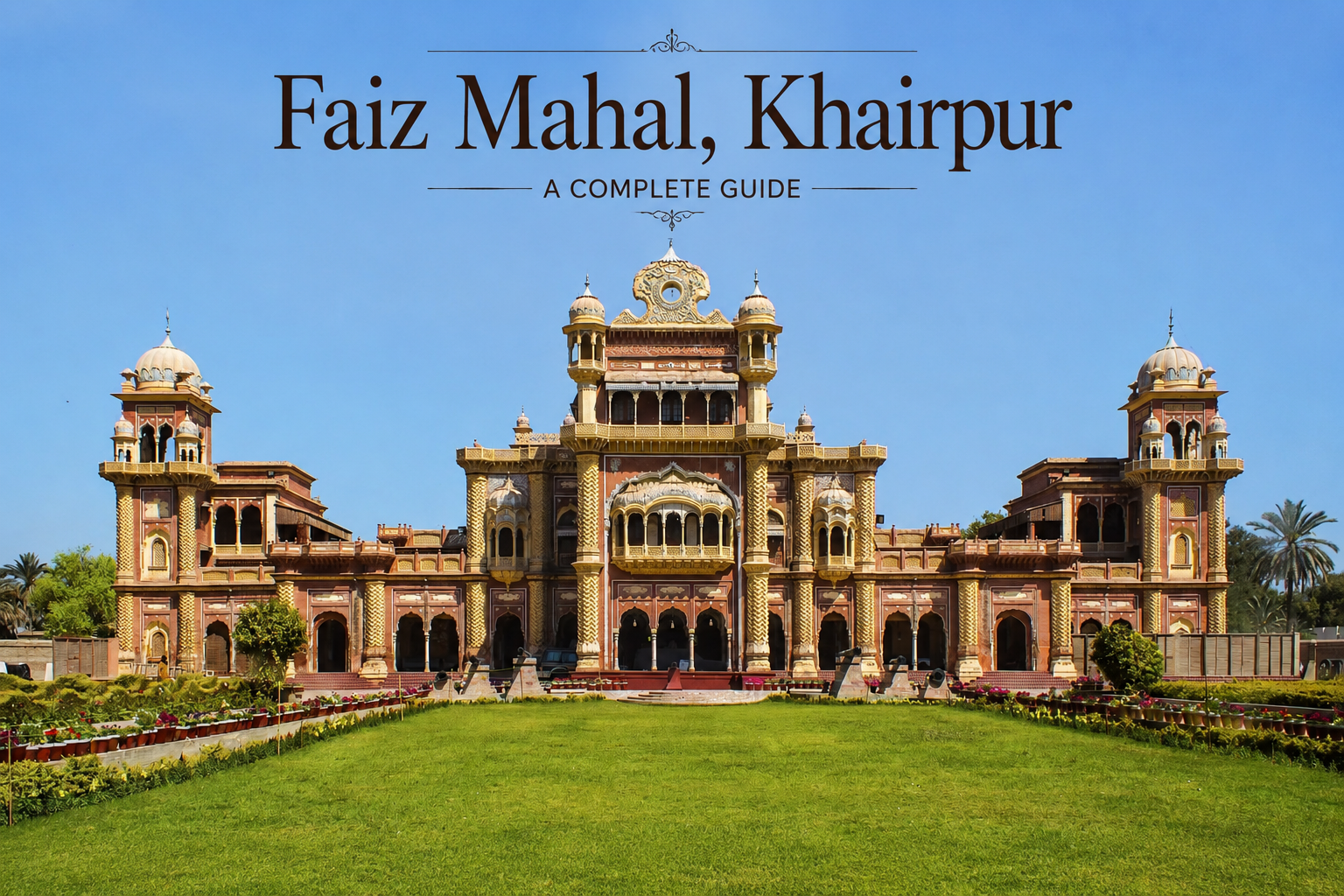
The design blends several traditions. Faiz Mahal draws on Mughal, Rajput, Sikh and Sindhi styles. This mingling reflects the wide connections of the Talpur court. It gives the palace a character all of its own.
The front is richly decorated. Carved jharokas project from the upper floors. These are overhanging enclosed balconies. Delicate jaali screens filter the light. Rounded domes crown the roofline. Together they make a highly ornamental facade.
The palace rises through several floors. It is a substantial multi storey building. Long corridors run through it. Arched verandas open onto the grounds. Sunlight through the arches is one of its great pleasures.
Gardens spread before the palace. Lawns and courtyards fill the approach. They frame the building beautifully. This setting adds greatly to the grandeur of the palace.
Original complex of Faiz Mahal Khairpur
The palace was built for a royal court. Faiz Mahal served first as the seat of the sovereign. The ruler received his nobles and guests here. This ceremonial role shaped the whole layout.
The complex held many rooms. The original building included the chambers of the ruler. Sixteen waiting rooms served the courtiers. Guest rooms housed royal visitors. A durbar hall and dining halls completed the plan.
The grounds served the royal household. A hathi khana housed the royal elephant. Stables held the horses. A mango orchard now covers the site of the stables. These details recall the daily life of a court.
Interior and the collections in Faiz Mahal Khairpur
The durbar hall is the heart of the palace. It holds portraits of the Talpur rulers. Photographs of royal weddings hang alongside them. This hall carries the whole story of the dynasty.
The rooms hold royal collections. Mounted deer heads recall the hunting expeditions of the family. Antique guns line the walls. Old furniture, carpets and artworks fill the rooms. These pieces give a vivid sense of court life.
The palace works as a private museum. It displays documents relating to the princely state. Portraits and photographs add to the collection. This archive is a valuable record of the history of Khairpur.
A Sufi poet is linked to the palace. Tradition connects Sachal Sarmast with Khairpur and its court. The poet lived in the district in the 18th century. His own dedicated guide covers his life and verse.
Visiting Faiz Mahal Khairpur
The palace is located in central Khairpur. Faiz Mahal is reached through the city. National Highway 5 passes close by. Karachi and Hyderabad both connect by road and rail. The dedicated guide to Khairpur covers the wider district.
Combine it with Kot Diji Fort. The great fort lies around half an hour away. Many visitors see both in a single day. Each has its own dedicated guide. The combination makes a full trip into Talpur history.
Arrange your visit in advance. The palace remains a family home. Access depends on prior permission. Contact the tourism authority or the family office before you travel. Guided tours are usually possible with notice.
Come in the cooler months. The district is hot, dry and dusty for much of the year. The months from November to February are the most comfortable. Morning light suits the ornamental facade best.
Frequently asked questions
Who built Faiz Mahal and when? Mir Sohrab Khan Talpur built Faiz Mahal in 1798. He had founded the princely state of Khairpur in 1783 after a great battle. The palace served first as the court of the sovereign. It later became the royal residence of the Talpur rulers. Some accounts attribute the present building to a later rebuilding in the 1890s. The complex has grown and changed across the generations.
Where is Faiz Mahal located? Faiz Mahal is located in the heart of Khairpur in Upper Sindh. National Highway 5 passes close by. Karachi and Hyderabad both connect to the city by road and rail. The great Kot Diji Fort lies around half an hour away. Many visitors see both in a single day. This makes Khairpur a rewarding stop on a tour of Upper Sindh.
What is the architecture of Faiz Mahal like? Faiz Mahal blends Mughal, Rajput, Sikh and Sindhi styles. Carved jharokas project from the upper floors. These are overhanging enclosed balconies. Delicate jaali lattice screens filter the light. Rounded domes crown the roofline. The building rises through several floors with long corridors and arched verandas. Lawns and courtyards spread before the front.
Can you visit Faiz Mahal? You can visit Faiz Mahal, though it remains a family home. Access depends on prior permission. Contact the tourism authority or the family office before you travel. Guided tours are usually possible with notice. The palace works as a private museum. It displays portraits of the Talpur rulers, royal photographs antique guns and documents of the princely state.
Who lives in Faiz Mahal today? The descendants of the Talpur rulers still live at Faiz Mahal. The head of the family and his sons occupy the palace. This living connection is rare among heritage buildings of this age. The family has carried out extensive renovation work in recent years. That effort has restored much of the original splendour of the building.
Living palace of the Talpurs
Faiz Mahal is a rare survival among the heritage buildings of Sindh. It was the court and the home of the Talpur rulers of Khairpur. Its carved balconies, lattice screens and rounded domes blend several traditions. Its durbar hall holds the portraits of a dynasty. Its rooms hold the guns, carpets and photographs of a vanished court. The family of the last ruler still lives within its walls.
You may come to Faiz Mahal for its architecture, its collections or its history. This royal palace rewards the visit either way. You can admire the ornamental facade from the gardens. You can look at the portraits ranged across the durbar hall. You can pair the trip with Kot Diji Fort nearby. Arrange permission first and come in the cooler months. Faiz Mahal is a palace where the past is still lived in.